



Leonardo da Vinci once wrote, “Music may be called the sister of painting.” During the Renaissance, various art forms were viewed not as isolated disciplines but as connected forms that complemented each other. As a result, the tradition of pairing musical elements with the visual arts became common practice.
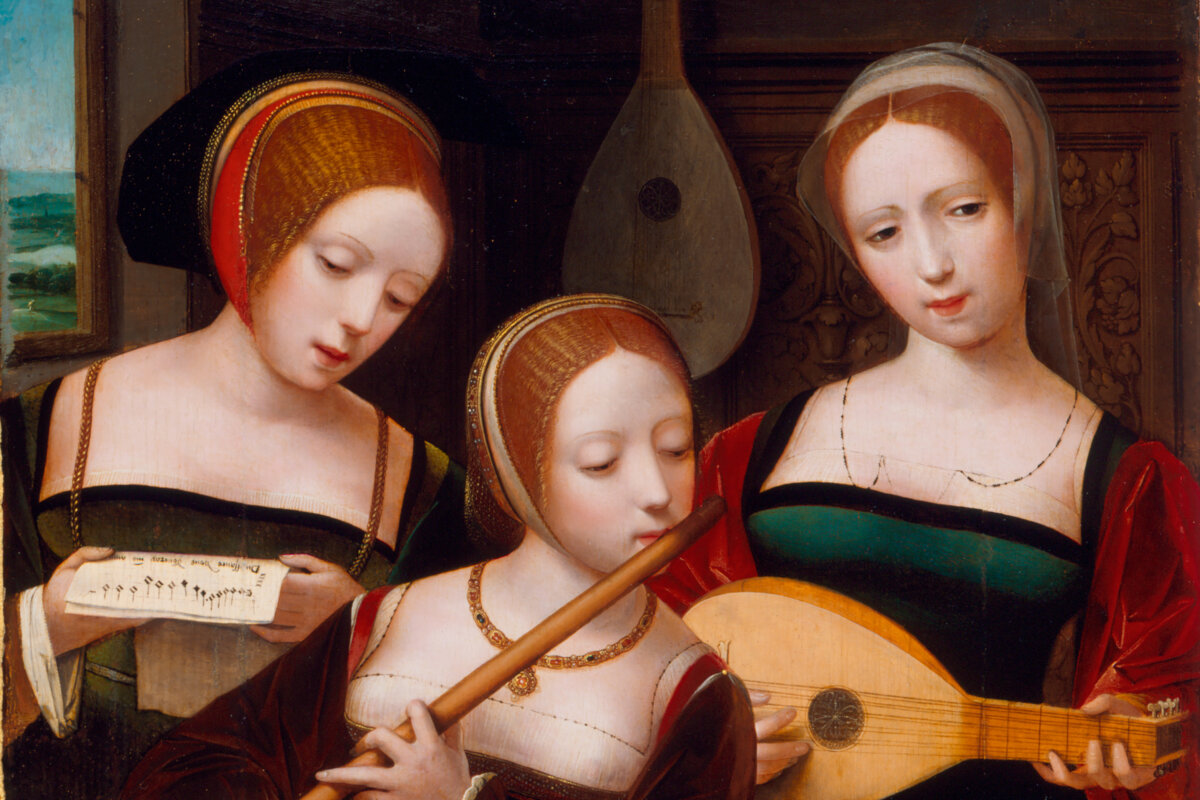
The Northern Renaissance painting “Three Musicians” depicts the interconnectedness of music and visual art. It portrays some of the period’s revered artistic values, communicated through a scene of three musicians—a lute player, flutist, and vocalist. The artwork continues to inspire students and art enthusiasts today through the blending of music, beauty, emotion, and storytelling on canvas.
Adding to the oil painting’s intrigue is the mystery of its maker. To this day, speculation continues about who created “Three Musicians,” adding another layer of wonder to one of the Flemish School’s most popular and enduring works of art.
Timeless Values of the Northern Renaissance
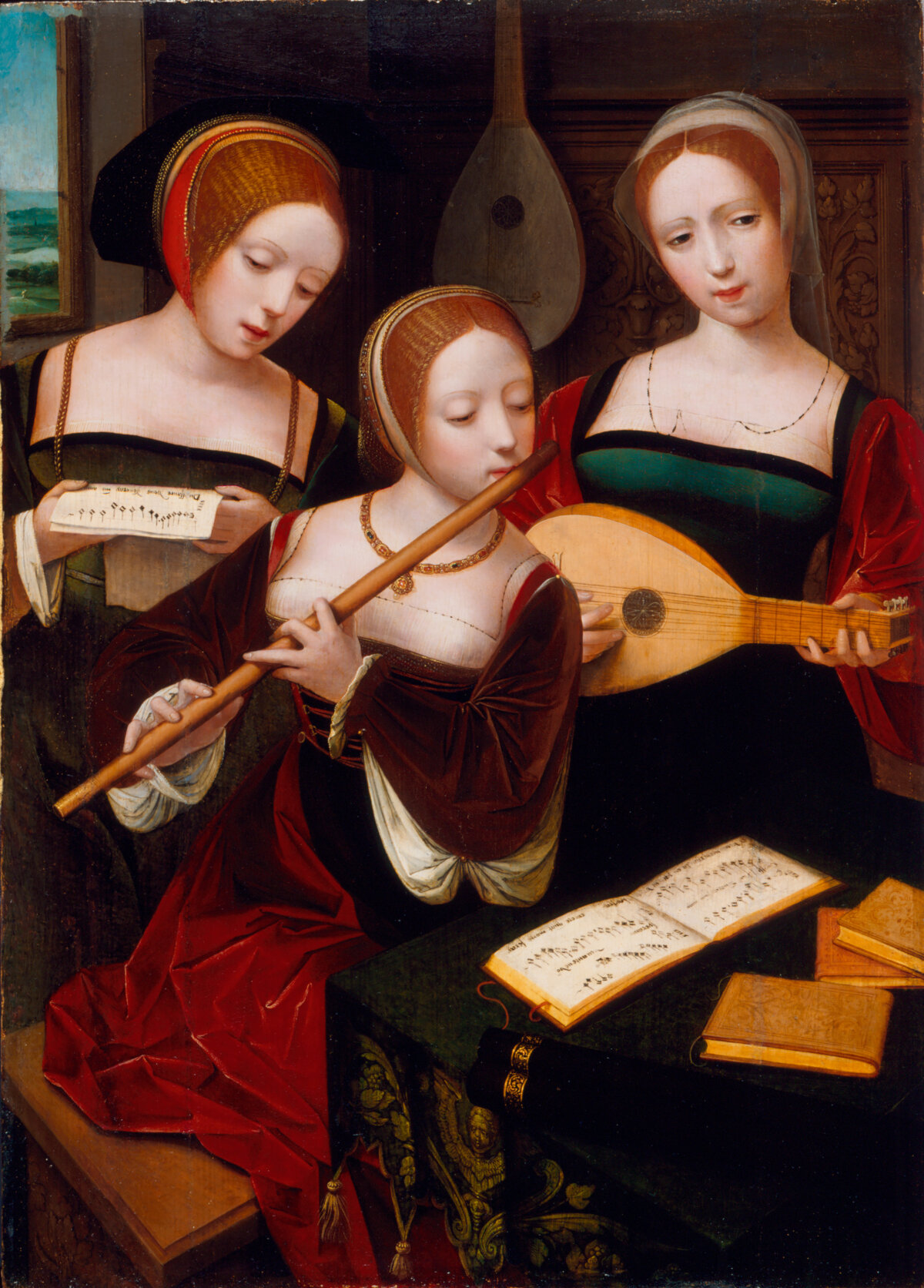
The anonymity behind the “Three Musicians” (circa 1530) continues to fuel theories of authorship. Art historians have long posited the painting wasn’t the work of one artist, but several in the Antwerp area of what is now Belgium. While searching for a way to identify the works by the artist, or group of artists, a pseudonym was given: “Master of the Female Half-lengths.”
The Master of Female Half-lengths expressed “the high artistic and moral humanistic values of the Northern Renaissance,” according to the archive Artvee. “Three Musicians” represents the Flemish belief in music’s ability to connect with the divine, the significance of ordinary life, the capacity of music and art to nurture the soul’s goodness, and the cultivation of beauty through love and devotion.
For the Flemish, detailed realism was a core principle of artistry, and everyday scenes, like musicians practicing, were staples of the repertoire. Music represented emotional complexity and the need for humans to explore the richness of their respective inner worlds as well as the richness of the world surrounding them.
During the Renaissance, music could be heard everywhere. “Music was an essential part of civic, religious, and courtly life,” writes Andrea Bayer of The Met’s Department of European Paintings.
‘I Will Give You Joy’
Music was a central theme in many of the Master of the Female Half-lengths’ works. For “Three Musicians,” a specific song was incorporated into the work not simply for music’s sake, but to communicate a cultural message.
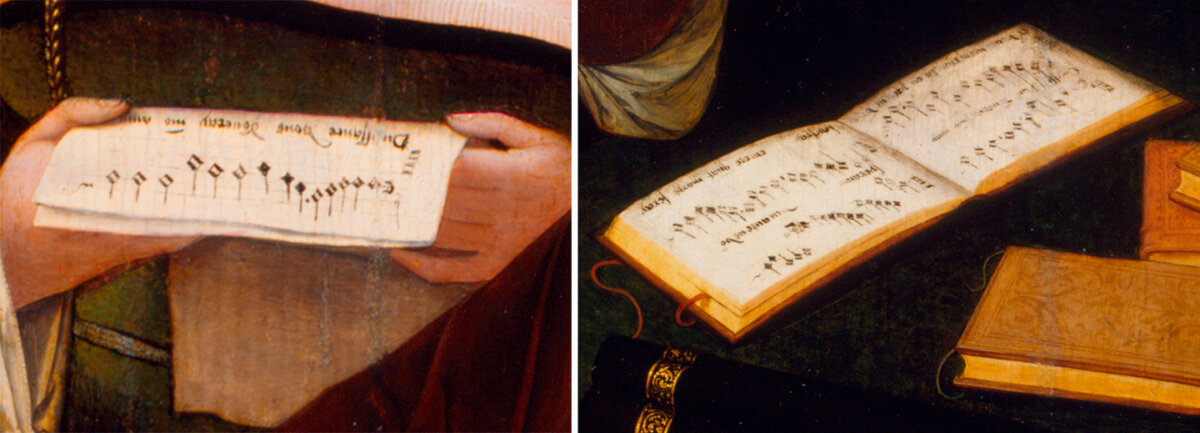
A book of sheet music lies beside the three musicians in the painting, while a page rests in the female vocalist’s hands. Its notes form the melody of a 16th-century French song, “Jouissance vous donneray,” or “I Will Give You Joy.” The song is known as a “chanson,” a medieval-style composition that emphasizes lyrical storytelling over instrumental work.
“Jouissance vous donneray” centers on the common theme of courtly love. The passion-filled tune was composed by Claudin de Sermisy and includes heartfelt lyrics by the poet Clément Marot. The song was beloved at the time, and its romantic theme captivated European listeners, who valued courtly love as an important cultural practice that gave great meaning to life.
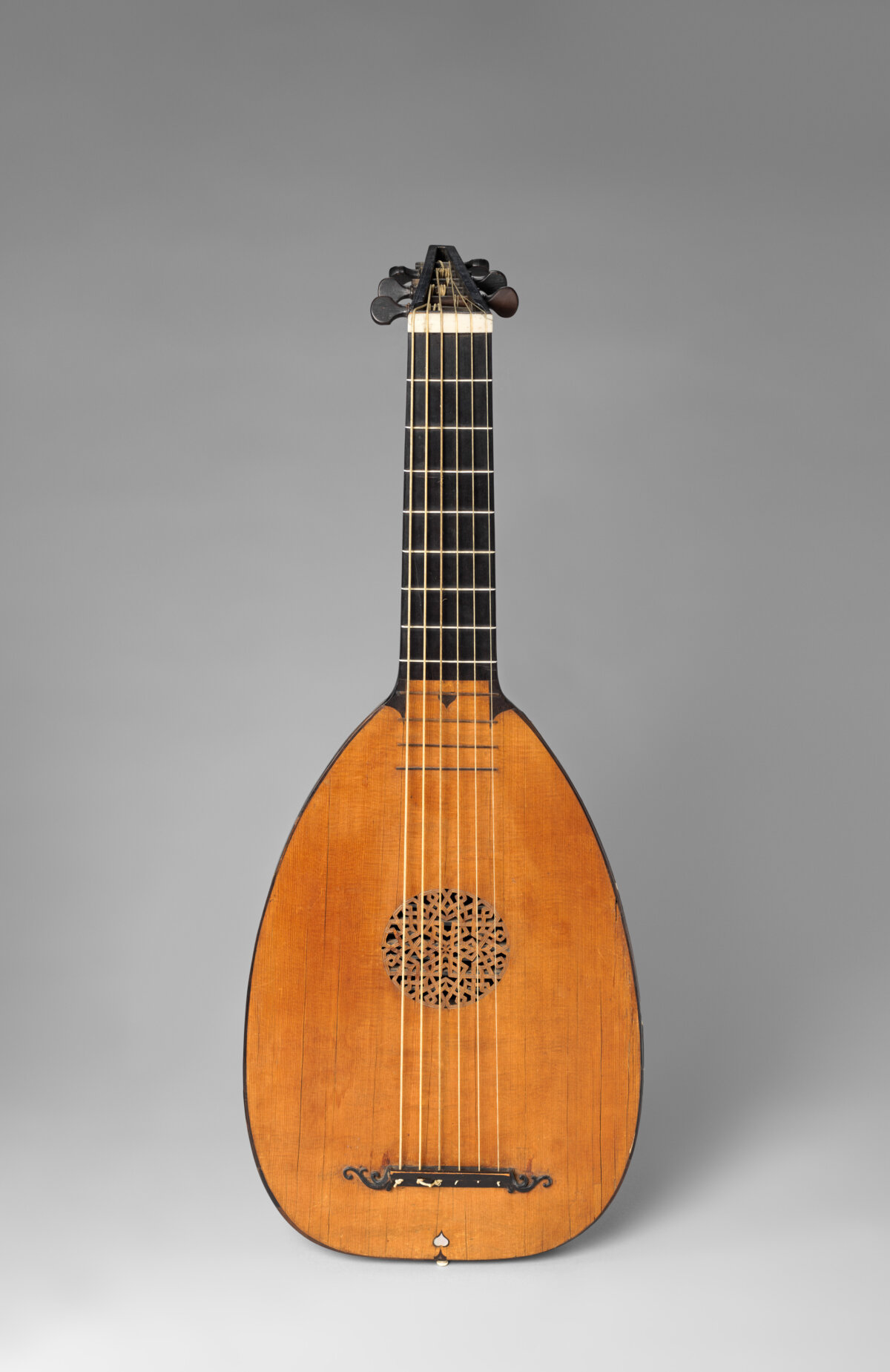
Instruments featured in “Three Musicians” weren’t chosen at random but signify artistic traditions that influenced culture. The lute, a predecessor of the modern guitar, featured a gentle sound. The Metropolitan Museum of Art writes that “lute players began to use their fingers, instead of a plectrum, to pluck the strings,” leading into the 16th century. Playing the lute fingerstyle created an intimate, organic tone perfect for romantically tinged compositions like “Jouissance vous donneray.” The lute’s balanced sound represented harmony to listeners, and its gentleness represented love and the delicate nature of time’s passage.
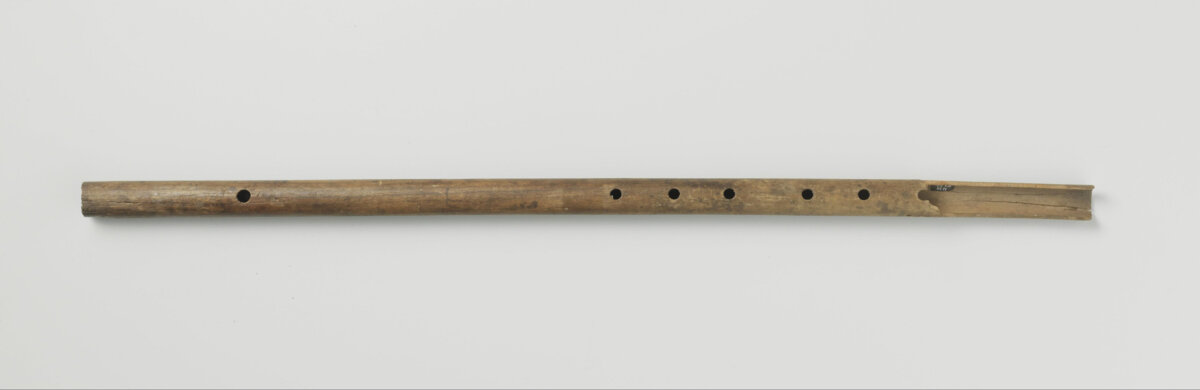
Flute players were often stars of the Renaissance, sporting a streamlined instrument capable of melodic movement and nuanced emotion. The flute is “simple yet versatile, making it perfect for music of the renaissance,” notes GT Musical Instruments, which specializes in restoring and crafting historical instruments. The workshop adds that the flute is “[f]or those who love sound, who love poetry, who want to access the beauty of the past and bring it into the present.”
The instrument’s symbolic meaning depended on context. Sometimes it communicated power, as in military settings, or prestige, as in aristocratic ones. In “Three Musicians,” the flute’s understated makeup and refined melody symbolize love, honor, and connection. The Met notes that “the subjects of love, beauty, and attraction mesmerized Renaissance men and women.”
Human Potential Cultivated through Virtue
The rich detail of “Three Musicians” was created not to simply delight the viewer’s senses, but also to engage their mind. Music was one of the time’s indispensable art forms.
In “Three Musicians,” art and music combine to communicate one of the culture’s revered philosophical and spiritual concepts: divine harmony. The painting bridges the spiritual and earthly forms through values of love, joy, and connection, reflecting the Renaissance ideal of human potential cultivated through virtue.
“Three Musicians” embodies many of the Flemish School’s chief Renaissance values that, like the painting itself, remain meaningful today.
What arts and culture topics would you like us to cover? Please email ideas or feedback to features@epochtimes.nyc
