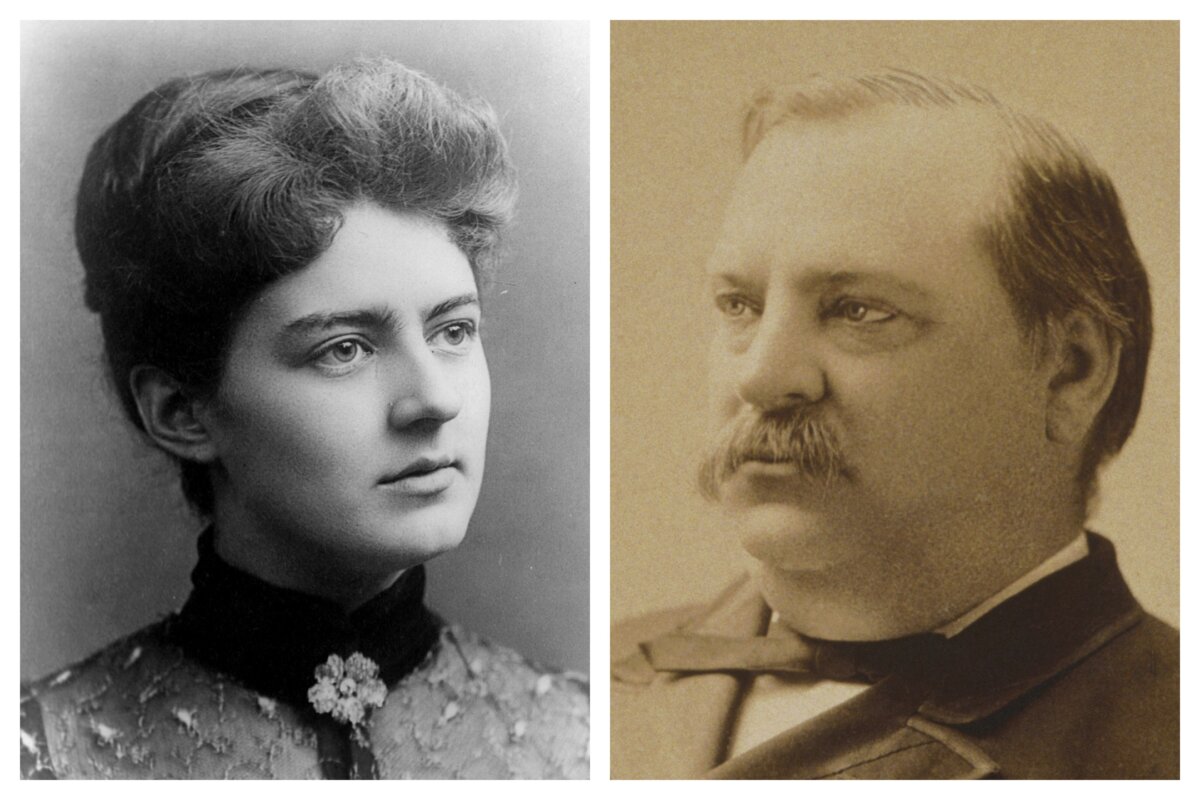
At age 21, she was the youngest first lady in American history. Her husband was 27 years older and had held her in his arms when she was an infant. Theirs was the only presidential White House wedding. She was the only first lady to deliver a baby in the White House and the first presidential widow to remarry.
The first lady who laid claim to these honors was Frances “Frank” Folsom (1864–1947), who married President Grover Cleveland in the Blue Room on June 2, 1886. The paparazzi of the day instantly took to this beautiful, considerate, and vivacious young woman, describing her dresses in minute detail in the papers, repeating a phrase she might have dropped, and following her like rock star groupies.
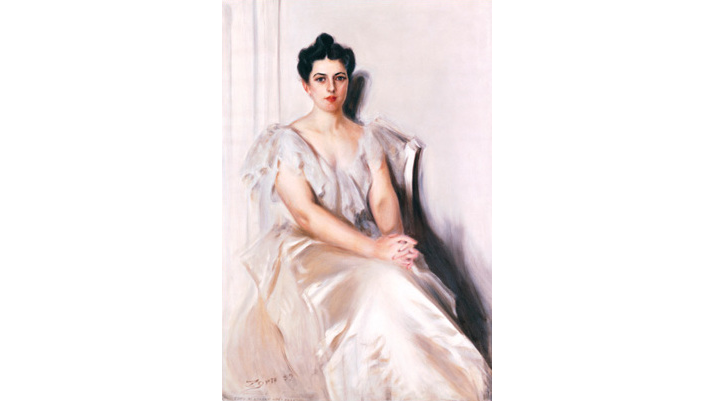
Her portrait and photographs appeared in newspapers and magazines across the country. Without her permission, companies featured her in advertisements for products like liver pills and ashtrays.
Historian and motivational speaker Barry Bradford wrote, “She became our first superstar first lady. She was the Jacqueline Kennedy of the 19th century. … So great was her charm and poise, despite her youth, that a bitter political opponent of Cleveland was reported to have gotten a huge laugh when he said, ‘I detest him so much that I don’t even think his wife is beautiful.’”
Beneath all the fireworks and behind all the glitter of her popularity was a young woman of surprising character and strength.
A Secret Proposal
Born in Buffalo, New York, Frances was the daughter and only child of Emma and Oscar Folsom. Her father’s good friend and law partner, bachelor Grover Cleveland, was a frequent visitor to the Folsom home, often bringing Frances gifts and known to her as Uncle Cleve.
When Folsom died in a carriage accident—he was a fast and reckless driver—Cleveland served as one of his pallbearers and as administrator of his estate, carefully providing for 11-year-old Frances and her mother. As Frances grew older, he took an interest in her education and helped secure her entry to Wells College in 1882. Around that time, he also sought and received Emma’s permission to correspond with her daughter, a sign of an impending courtship.
Forced to stay at Wells for final exams, Frances missed Cleveland’s 1885 presidential inauguration, but came a few weeks later to the White House. In August, Cleveland proposed by letter, and Frances accepted.
Emma insisted that she and Frances first tour Europe so that her daughter could contemplate her future, and it was further agreed that the proposal would be kept secret. Convinced that the president was going to marry Emma and that she had crossed the Atlantic in search of dresses and a bridal gown, a crowd of reporters and well-wishers greeted their ship on its return, only to be informed the next day by the White House that the president intended to marry not the mother but the daughter.
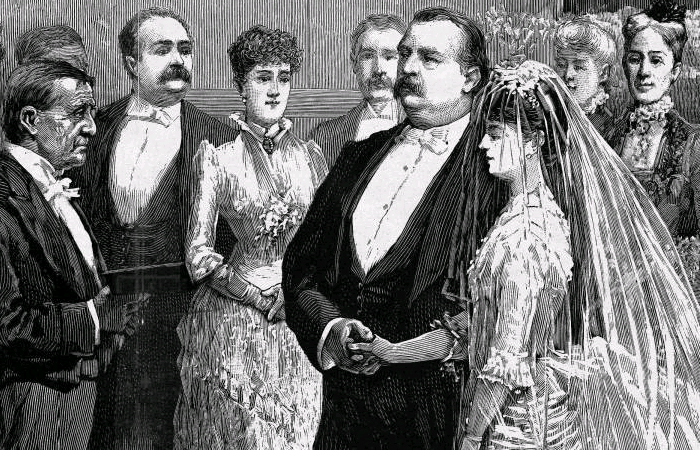
Less than a week after their return, on June 2, 1886, the longtime bachelor and his young bride were wedded in the White House, and Frances became an immediate sensation.
Grace Under Pressure
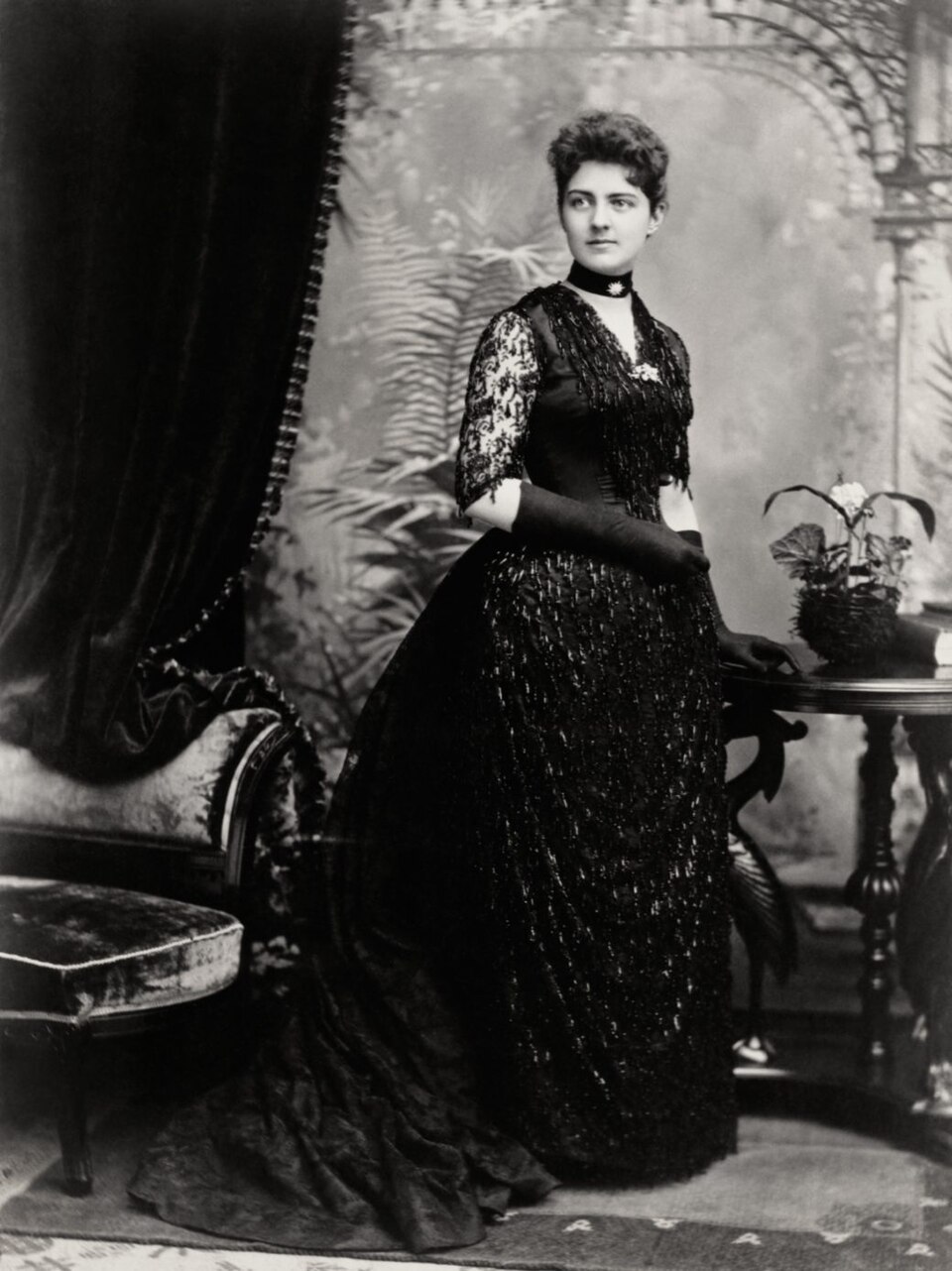
While her upbringing and education gifted Frances with poise and charm, few women her age, then or now, would have been prepared for the publicity, adulation, and responsibilities that followed her marriage. Nevertheless, Frances took to her new role of first lady as if she were born to it.
After replacing her sister-in-law Rose as White House hostess—Rose was only too happy to return to writing and lecturing—Frances showed a talent for entertaining visitors and brought some sparkle to the social calendar. She also persuaded her husband to accompany her to plays and go on carriage rides, outings which put a happier public face on the presidency.
Aware of the many people who wished to visit the White House—many simply to meet her—she hosted public socials. She demonstrated her concern for working women by scheduling many such events on Saturdays. Often, several thousand people attended this “open house.”
Frances also befriended members of the White House staff. When saying her goodbyes to them after Cleveland lost the 1888 election to William Harrison, she revealed both a sense of humor and a steely resolve, “I want you to take good care of all the furniture and ornaments in the house, and not let any of them get lost or broken, for I want to find everything just as it is now, when we come back again four years from today.”
Protector of the President
Her request proved prophetic. In 1893, after winning the election, Cleveland returned to the Oval Office, becoming the first president to serve split terms. During his first term, Cleveland had often acted to protect his bride and wife from the demands of publicity and crowds. In this second term, Frances, in turn, protected him when he underwent two cancer surgeries that removed a part of his jaw.
In 1893, America was in the midst of a severe recession. Fearful that news of Cleveland’s illness would bring on a surge of national panic and undo the stock markets completely, Frances covered her husband’s absences from special events by explaining that he was overworked or suffered from rheumatism. Only years later was the truth revealed.
This same loyalty extended to her children. With three little daughters now in residence, and with the large number of visitors on the property, the Clevelands ordered the grounds closed whenever they were in residence, a controversial decision given her earlier openness to the public.
On saying goodbye to the staff and to the White House a second time, Frances Cleveland was overcome with emotion and wept. She and her husband moved to Princeton, New Jersey, had two more children, both boys, and by all accounts, lived happily until his death in 1908. In 1913, she married a Wells College professor, Thomas Preston. For the rest of her life, she actively supported both Wells and Princeton as well as several social causes.
While giving her credit for her support of women’s education and her work with different charities, most historians judge Frances as a so-so first lady, and many Americans have never heard of her. If for no other reason, however, she was remarkable at least for summoning up the courage and grit at so young an age to take on the responsibilities of first lady.
In that regard, her character was as rich and bountiful as her beauty.
What arts and culture topics would you like us to cover? Please email ideas or feedback to features@epochtimes.nyc