The Soviets detonated their first atomic bomb in 1949, years ahead of what the American intelligence community had predicted. This leap in nuclear technology was only made possible by their stealing technology from the New Mexico-based Los Alamos National Laboratory. The theft of nuclear technology came by way of a group known to history as the Atomic Spies.

Espionage was at the center of the Cold War between the United States and the Soviet Union. The two superpowers spied on each other for decades, concerned primarily with their opponent’s military capabilities.
The Soviet Union’s Iron Curtain cut through the heart of Europe—separating the West from the East. Part of the East, though not part of the Soviet Union, was the People’s Republic of China (PRC), led by Chairman Mao Zedong.
Communist China became a nuclear power in 1964, thanks in large part to the Soviets sharing their technology. Over the course of 15 years, the stolen secrets from Los Alamos made the world an even more dangerous place. Although it was the Soviets who occupied most of the attention from the U.S. intelligence communities, the Chinese soon proved to be the greater threat, and they did it the same way the Soviets had: spying at Los Alamos.
A Nuclear Navy
Ten years before the Chinese detonated their first atomic bomb, the Americans commissioned the world’s first nuclear-powered submarine, the USS Nautilus (SSN-571). In May 1955, the submarine traveled a record-breaking 1,381 miles without resurfacing. That same year, (as the Soviets launched their first nuclear-powered submarine), it traveled 1,383 miles to the Soviet protected waters of the Arctic. The nuclear submarine was invulnerable to enemies, capable of traveling submerged faster, quieter, and longer than any other submarine.
By this time, the Navy’s submarines had been capable of firing missiles for nearly a decade. The problem was they had to surface to do so, making them vulnerable to attack. With the development of a nuclear-powered submarine, naval command ordered the development of nuclear-powered missiles capable of being launched from a submerged submarine.
On Dec. 30, 1959, the USS George Washington (SSBN-598), the world’s first nuclear-powered ballistic missile submarine was commissioned. Carrying aboard two newly developed A-1 Polaris missiles, the submarine became the first to successfully fire a missile while submerged. News of its success came directly to President Dwight D. Eisenhower: “Polaris from out of the deep to target. Perfect.”

The U.S. Navy continued to develop what it called its Fleet Ballistic Missile. By 1966, the A-3 ballistic missile could deliver multiple warheads, dramatically increasing the missile’s power and accuracy. In eight years, the Navy had developed 41 Fleet Ballistic Missile submarines.
The following decade, the Chinese began to inch closer to America’s nuclear program through the Los Alamos National Laboratory and, with it, the world’s most powerful military technology.
The Split and Visit
Around this time, and shortly before China detonated their first nuclear weapon, an interesting development was taking place between the Soviets and the Chinese. Their diplomatic relations were crumbling. The Chinese believed the Soviets were softening with the West, especially after the death of Joseph Stalin, who Mao greatly admired.
Mao believed reforms were counter to the Communist cause. The Americans were on the receiving end of a “divide and conquer” tactic that they hadn’t actually implemented, but were happy to see all the same.
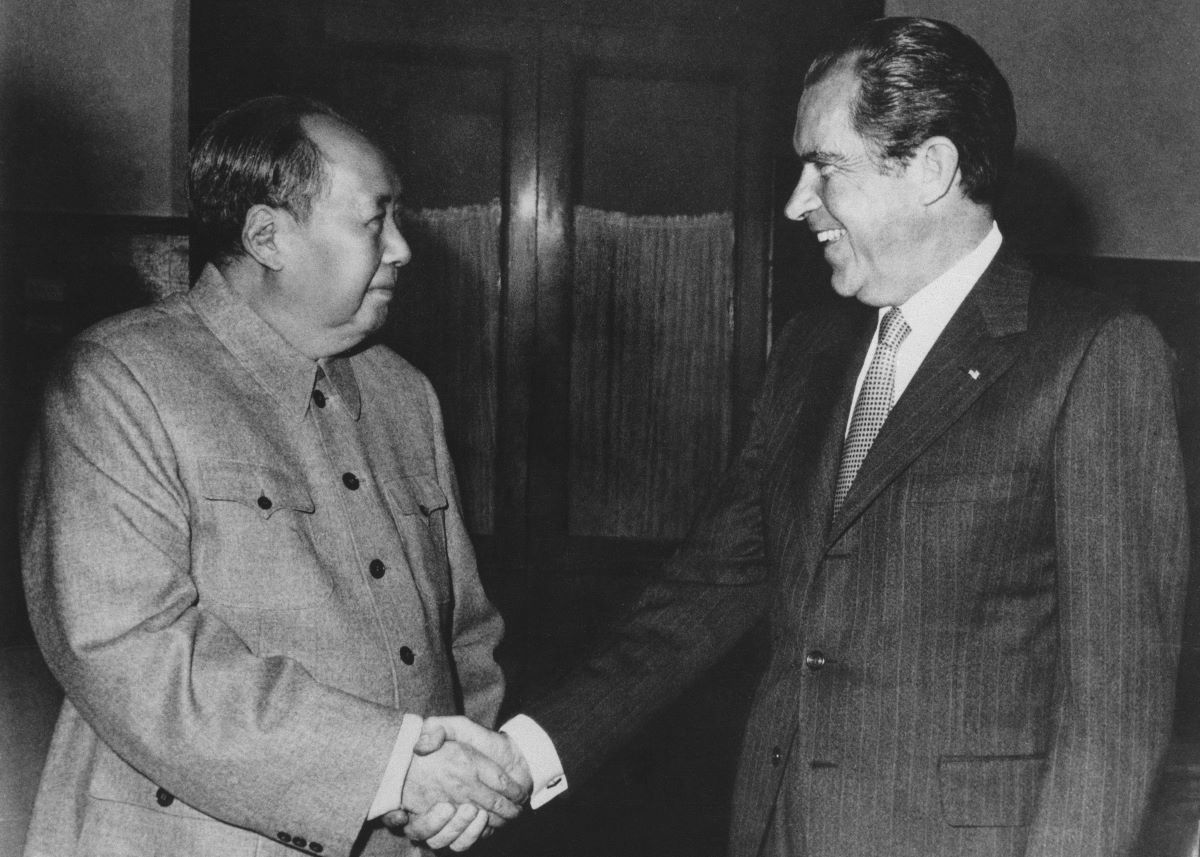
President Richard Nixon chose to take a major step to capitalize on the divide. He personally visited China and Mao in 1972. In what seemed a rather hypocritical act, Mao looked to be softening to the West by welcoming the American visit—the first of such kind in Communist China. Over the next two decades, relations indeed softened, especially after the death of Mao in 1976.
However, two decades later, the Americans got a very unpleasant surprise, which was a direct result of the cooling of Sino-American relations.
Nuclear Developments
A year before Nixon visited China, the U.S. Navy deployed its successor to the Polaris called the Poseidon C-3. This new generation of missile possessed longer range, more accuracy, and more payload—each missile carried as many as 14 nuclear warheads capable of reaching different targets through its Multiple Independent Reentry Vehicles (MIRV) technology. America’s submarines carried 16 individual missiles, accounting for approximately 224 nuclear warheads. The Poseidon C-3 remained in operation into the early 1990s.
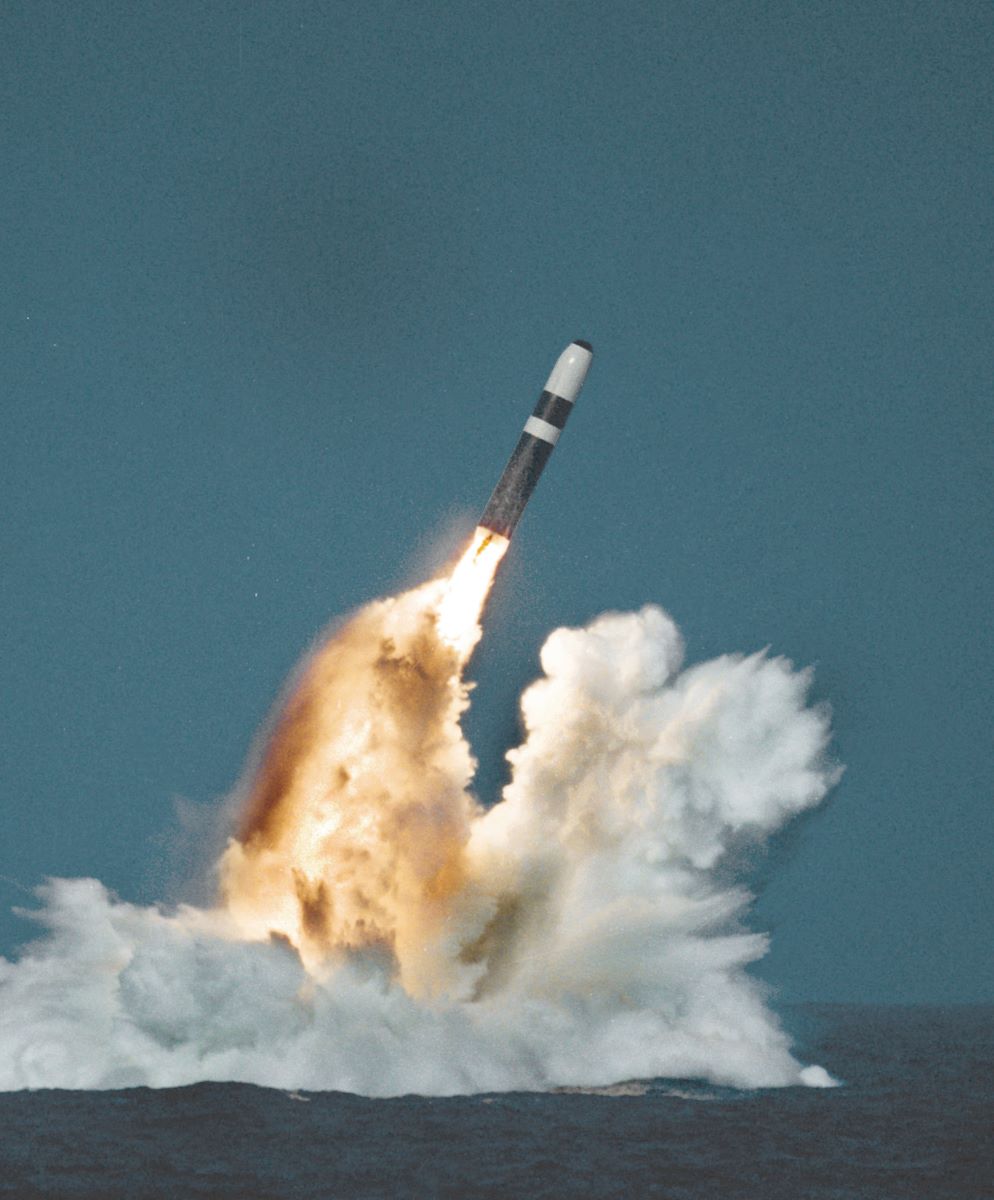
Hardly had the Poseidon C-3 been placed aboard America’s submarines then the Navy began working on its next generation of ballistic missiles. By the end of the 1970s, the Trident I C-4 was being deployed aboard submarines, which possessed longer range and more accurate, though fewer (eight), nuclear MIRVs. Additionally, the Navy had developed the Ohio-class submarine, capable of carrying 24 Trident I C-4 missiles. These 18 new SSBNs, the largest submarines the Navy had ever built, were deployed over 16 years, from 1981 to 1997.
Throughout the 1980s, the Navy continued to develop the next generation of the Trident, and, by 1990, the new version was ready. That year, the first Trident II D-5 missile was placed aboard an Ohio-class SSBN.
Soviet Fall, Chinese ‘Walk-In’
The following year, the Soviet Union collapsed, and Americans rejoiced at the end of the Cold War. The PRC had kept an eye on the USSR’s decline and fall and decided to implement elements of capitalism into its economic system. It also continued to try to sidle up to the United States. With the Soviet Union gone, the Chinese inched closer to the Americans, a relationship fully embraced by America’s new president, Bill Clinton. The first Cold War was over, but a second one had already begun, and espionage was again at its center.
In June 1995, the Central Intelligence Agency received a “walk-in”; in the spy world, this is defined as “an unheralded defector … or a mole who literally walks into an embassy or intelligence agency without prior contact or recruitment.” The walk-in handed the CIA a package of documents labeled “Secret.” What the documents showed confirmed lingering suspicions among many U.S. government officials.
During the early 1990s, U.S. intelligence had gathered information on the PRC’s recent nuclear warhead tests. The details of these warheads appeared eerily similar to that of American-made weaponry. The walk-in’s documents showed detailed information on American thermonuclear warheads, including the W-88 Trident D-5—“the United States’ most sophisticated strategic thermonuclear weapon.”
A Nuclear Breach
The secretary of energy was briefed on the intelligence breach in late 1995, followed by the national security advisor (NSA) in April 1996. The FBI began its investigation that summer. Testifying before the House Select Committee on U.S. National Security and Military/Commercial Concerns with the People’s Republic of China, the NSA stated that President Clinton was not briefed about the situation until early 1998. The Select Committee before which the NSA testified was not assembled until the summer of 1998.
According to the Select Committee, the PRC had conducted a “mosaic” 20-year effort to gather intelligence on American nuclear technology by studying declassified material and academic publications, interacting with American scientists, and utilizing their access to the laboratories of the Department of Energy, including Los Alamos. The Committee noted that the United States did not become fully aware of the extent of the breach until the PRC sent its walk-in to the CIA.
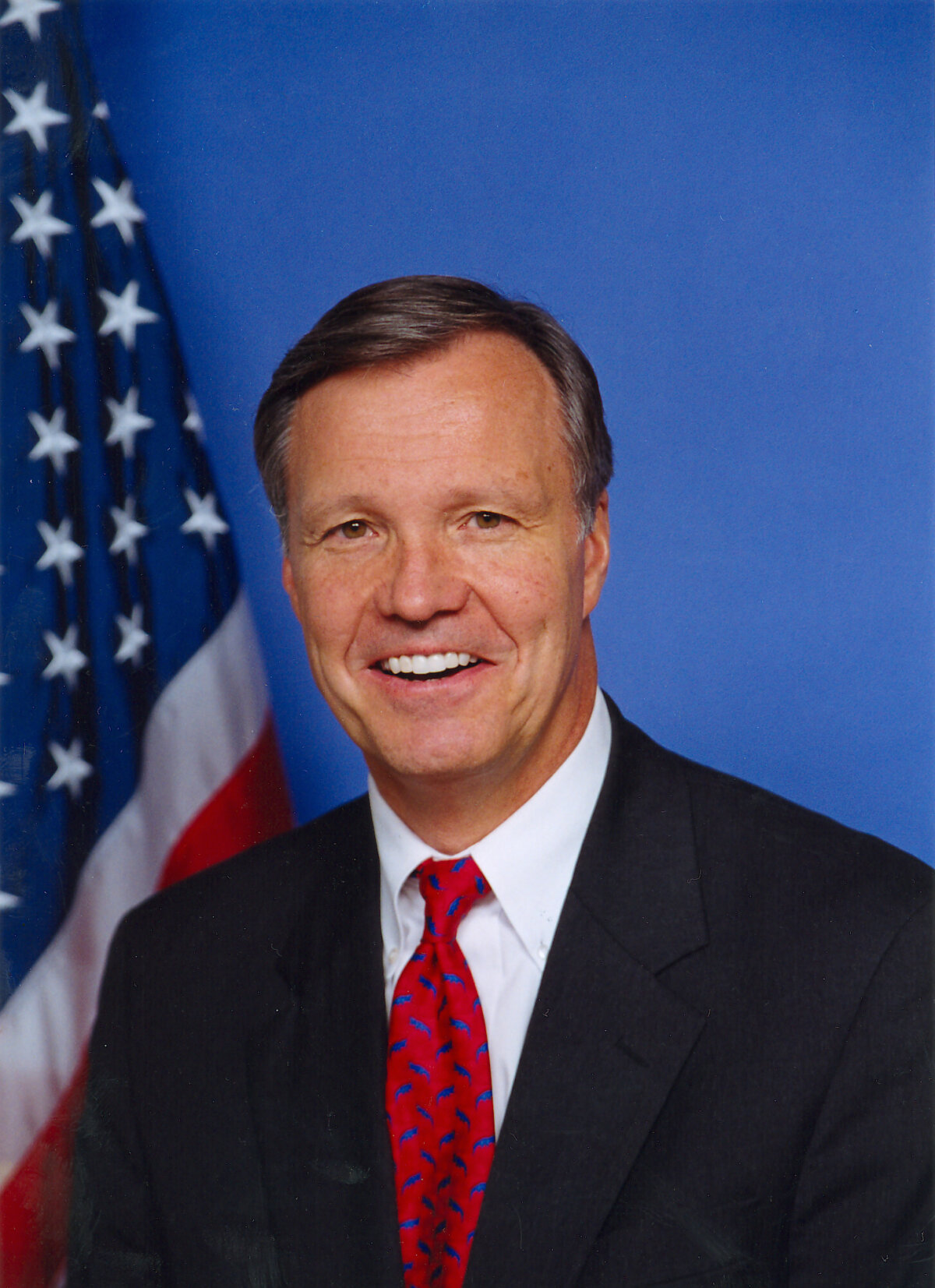
The bipartisan committee of five Republicans and four Democrats, chaired by Rep. Christopher Cox (R-Calif.), released the classified Cox Report in January 1999. The findings were damning and revealed one of greatest intelligence breaches in U.S. history.
In a summary of its findings, the Cox Report surmised, “The People’s Republic of China has stolen classified information on all of the United States’ most advanced thermonuclear warheads, and several of the associated reentry vehicles. … The stolen U.S. secrets have helped the PRC fabricate and successfully test modern strategic thermonuclear weapons. The stolen information includes classified information on seven U.S. thermonuclear warheads, including every currently deployed thermonuclear warhead in the U.S. intercontinental ballistic missile arsenal. … The stolen information also includes classified design information for an enhanced radiation weapon (commonly known as the ‘neutron bomb’), which neither the United States, nor any other nation, has ever deployed.”
Counterintelligence measures began to be implemented, though rather slowly. Congress provided additional funds for such measures. But the damage had been done. It was during this week in history, on May 25, 1999, that the redacted Cox Report was made public. The American public was now made fully aware that the Cold War had never truly ended. The Soviets had merely been replaced by a new enemy: the People’s Republic of China.
Never miss a This Week in History story! Sign up for the American History newsletter here.
What arts and culture topics would you like us to cover? Please email ideas or feedback to features@epochtimes.nyc