PG-13 | 1h 40m | War, Drama | 2026
I know some Vietnam War history but don’t know much about World War II’s D-Day. I remember at one point thinking that the American M60 belt-fed heavy machine gun used in Vietnam didn’t look like anything from the 1960s. Its hulking brutality reminded me more of a relic of the Industrial Revolution, more like cars of the 1930s and 1940s.
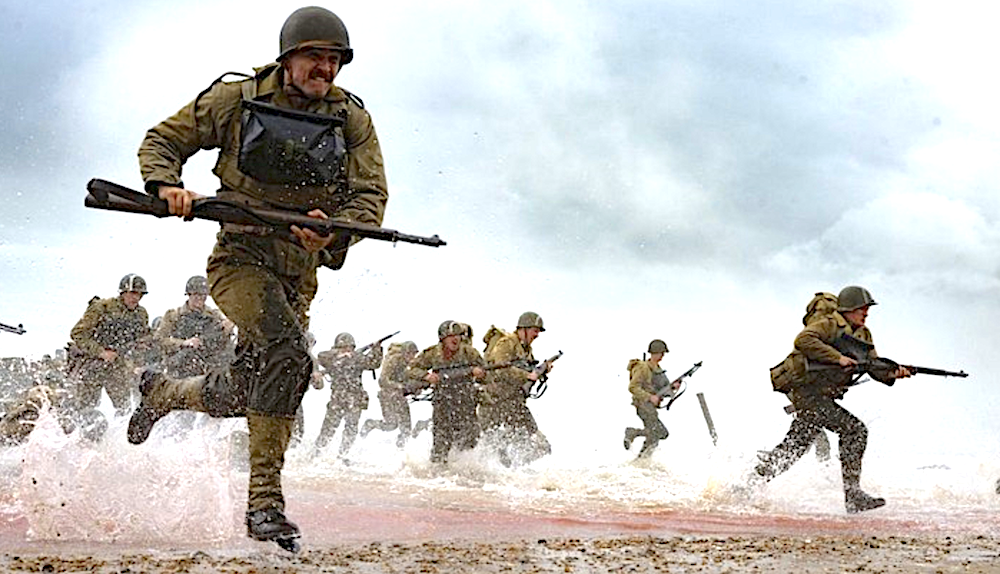
“Pressure,” a brilliant WWII drama specifically about D-Day, features “Hitler’s buzzsaw,” the nightmarish German belt-fed MG 42 machine gun that sawed our boys to bits on the beaches of Normandy. I thought, “Now I know where the M60 came from.” Google: “Yes, the M60 was heavily inspired by the MG 42, though it is not a direct copy.”
The Nazis were very good at war, but the Americans were better. The MG 42 was born to beget fascism, but instead it begat the M60 that attempted to kill communism.
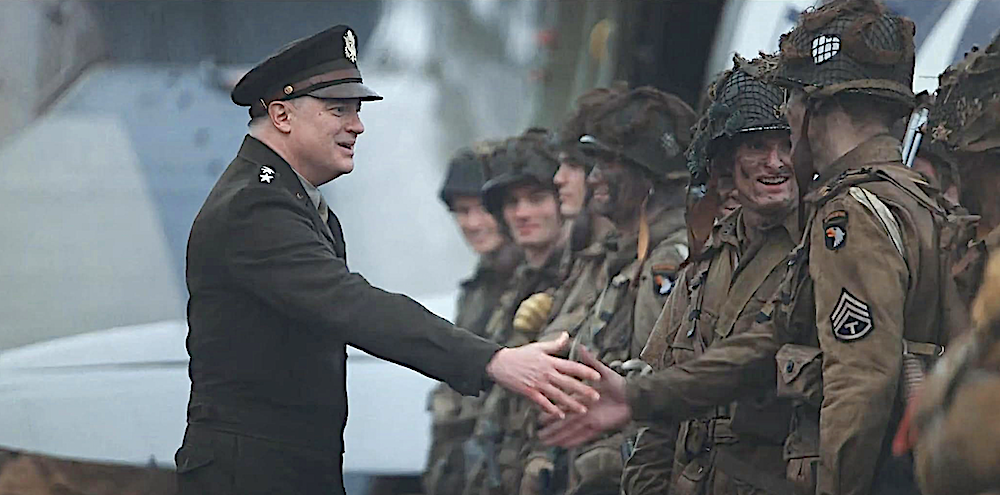
When asked how he won the war, Gen. Dwight D. Eisenhower (whose last name, interestingly, in German, means “Iron-smasher”) said, “We had better meteorologists than the Germans.”
A Tale of Two Weathermen
“Pressure” presents a fact-based yet largely fictitious story about the relationship between Eisenhower and his unswervingly courageous weatherman, Scottish meteorologist James Stagg (Andrew Scott).
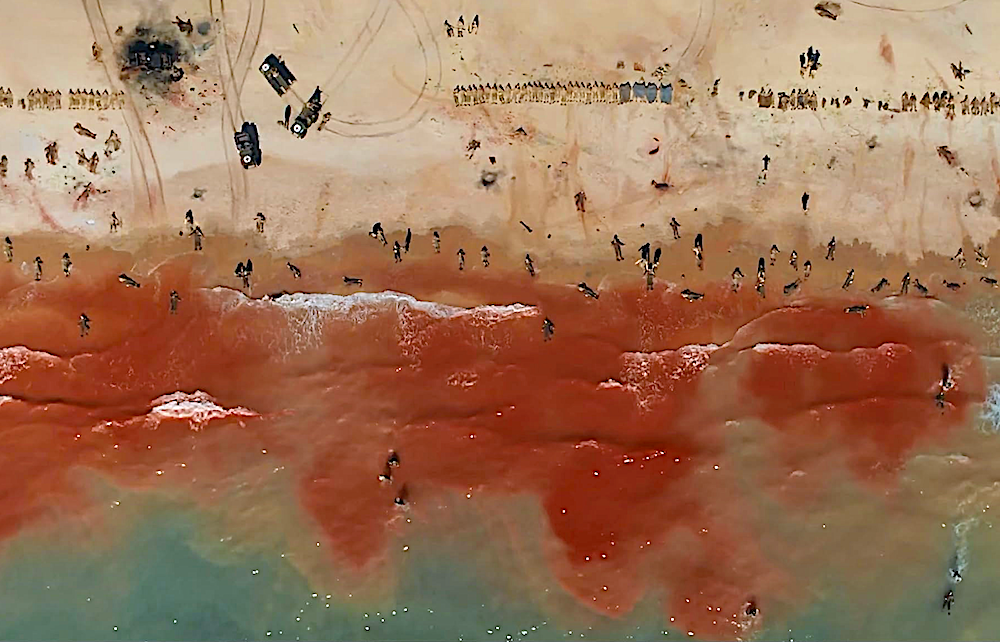
In the tense, 72-hour countdown to the D-Day landings, with the fate of the free world hanging in the balance, Stagg had the unenviable task of advising Eisenhower as to whether the invasion was a go or no-go.
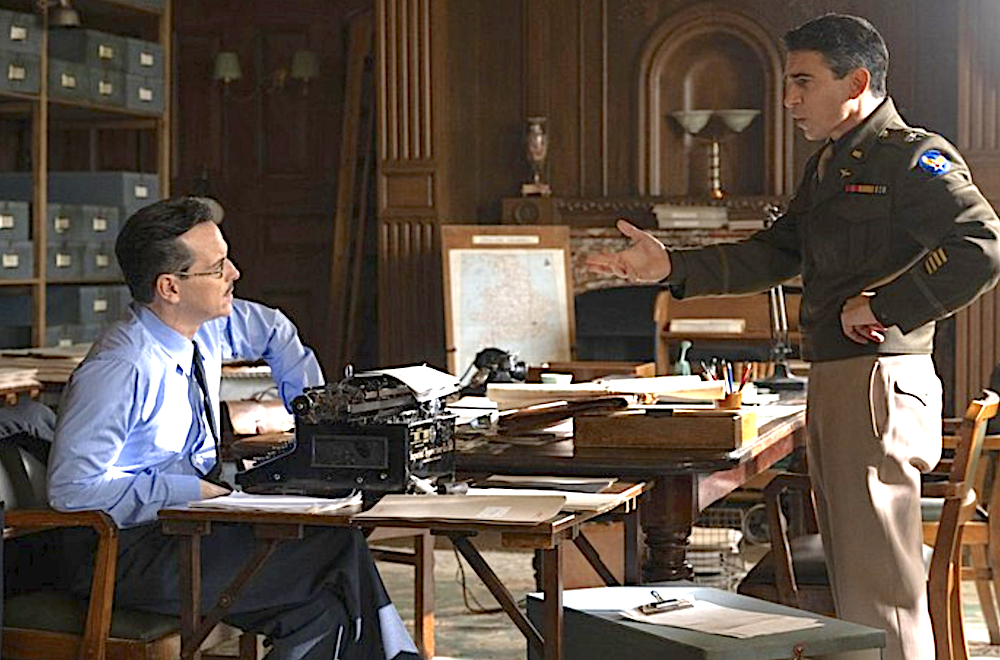
That is, they must decide whether to launch the biggest, most dangerous maritime invasion in history or risk the catastrophic consequence of German becoming the global language. And in Stagg’s era—long before computers and satellite imagery—weather forecasting was still as much art as it was science.
For the American, British, and Canadian Allied forces to launch a coordinated attack, the ocean waves needed to be no higher than 10 feet, and the skies needed to be clear enough to provide bombing runs with visible targets. In other words, attacking under poor conditions risked devastating casualties, but too long a delay risked German intelligence wising up to the operation.
Stagg and Krick
Andrew Scott plays the unpopular Stagg as a hyper-stoic, serious man, whose expertise and authority are constantly in question due to his terrifying forecasts warning of severe, destructive storms with waves up to 18 feet (a movie exaggeration).
Will Eisenhower listen to him, whose conclusions are based on rigorous science, moral integrity, a quiet passion for his outwardly boring occupation, and a deep respect for and awe of nature? Or will the general take the advice of Stagg’s American counterpart (and Eisenhower’s longtime favorite), the grandstanding Irving P. Krick (Chris Messina)? Krick’s vehement predictions—based solely on historical weather patterns—describe a safer window. He knows that’s what everyone would like to hear.
Chris Messina has a blast portraying Krick as a supremely confident clown who posits, without a doubt, that the skies on June 5, 1944, will be clear. Stagg’s sure that if the Allies attack on June 5, it will be an absolute disaster.
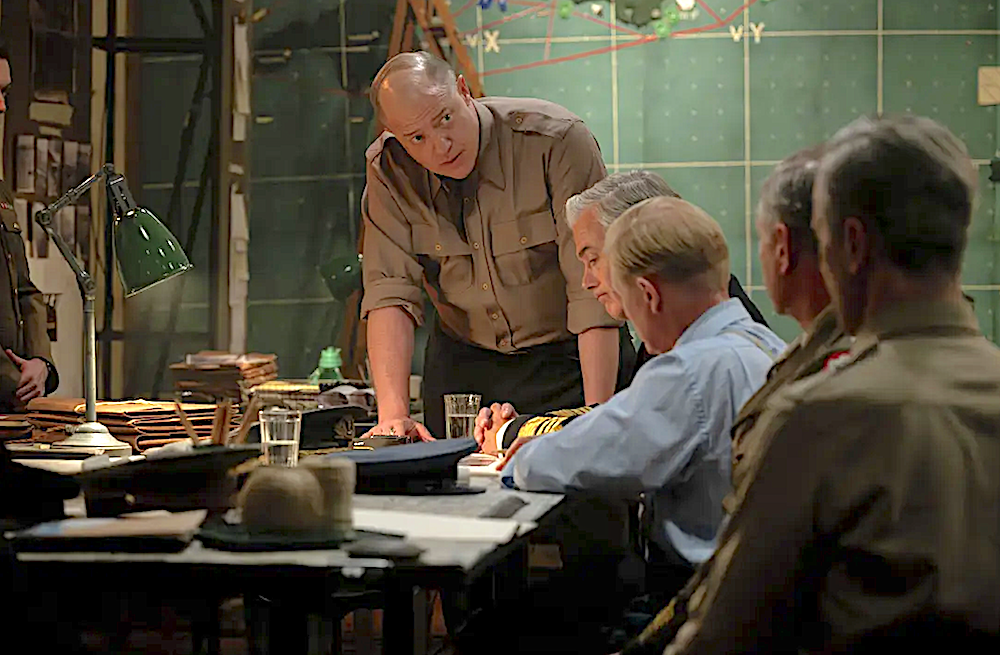
Performances
The film departs quite a bit from history by depicting Eisenhower as a vociferous hothead, constantly hollering at staff and especially at Stagg. Eisenhower was known to have an explosive temper, but here he hits the ceiling too early and has nowhere to go, which, in reality, would have most likely undermined his authority. In reality, Eisenhower, while highly authoritative, tended to project a calm demeanor. He relied more on consensus building and coalition diplomacy than on browbeating.
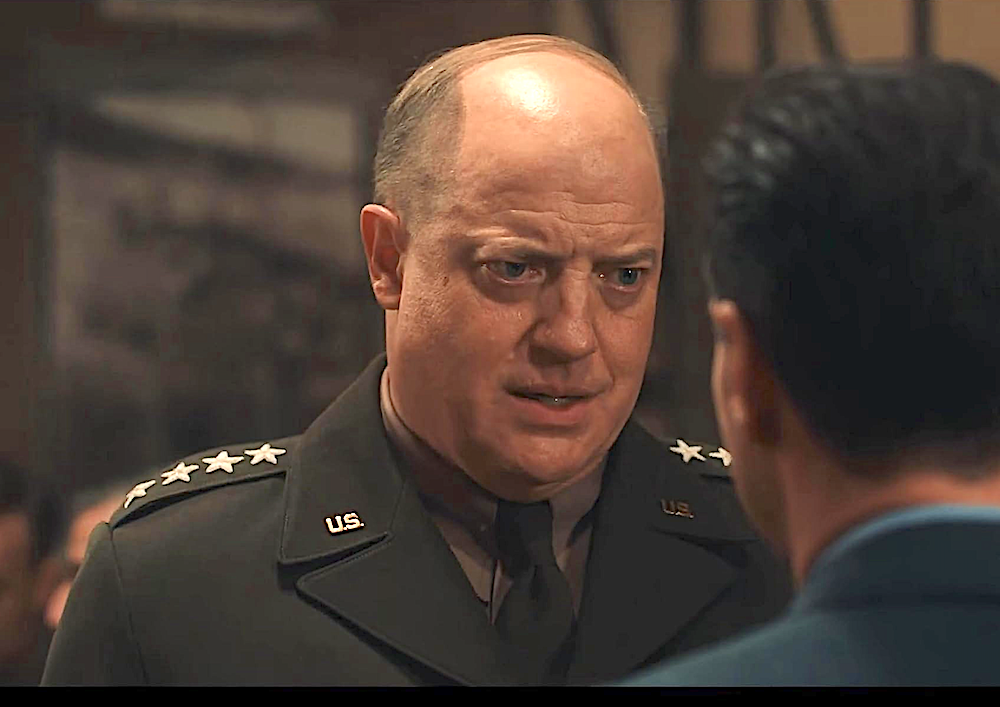
Still, Brendan Fraser captures something essential about Eisenhower: He has the right shade of light blue eyes and the thousand-yard stare of a man carrying the weight of the world on his shoulders.
Ike knew that most naval invasions against defended territory fail, and that if they waited even slightly too long, the slavering German dogs of war would gnaw their bones. Another nickname for the German MG 42 was the “bone saw.” Seeing MG 42’s in action in the maws of German fortified bunkers is still bothering me a day later.
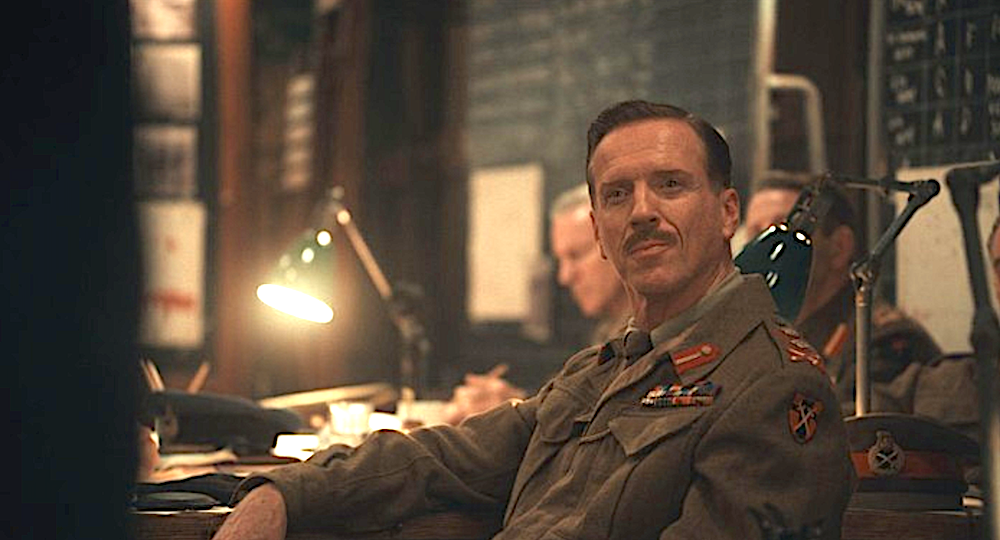
Damian Lewis in the small role of Gen. Bernard Montgomery, commander of the British forces, is splendid, ramping up the operational anxiety in the command room. The Irish Kerry Condon as the Irish Capt. Kay Summersby—Eisenhower’s driver, assistant, and historically debatable girlfriend—is likewise splendid.
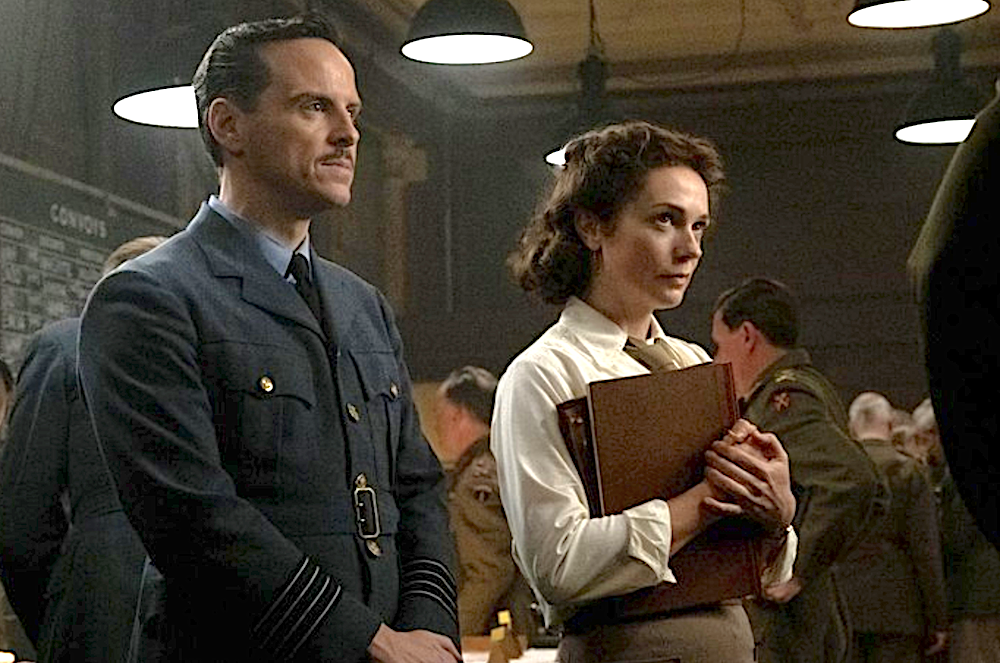
However, “Pressure” is Stagg’s (and Scott’s) movie. The pressure on him is intensified to the point of rendering him near-catatonic. He so convincingly staggers under the weight and overwhelming dissonance of it all, that it generates a powerful atmosphere throughout. You may find yourself on the verge of tears from start to finish.
Yet it’s a feeling less of sadness and more of respect for the level of devotion to the cause on display. It’s an homage to the courage of those under unthinkably heavy moral pressure to make the hard choices regarding barometric pressure. “Pressure” is an instant war movie classic.
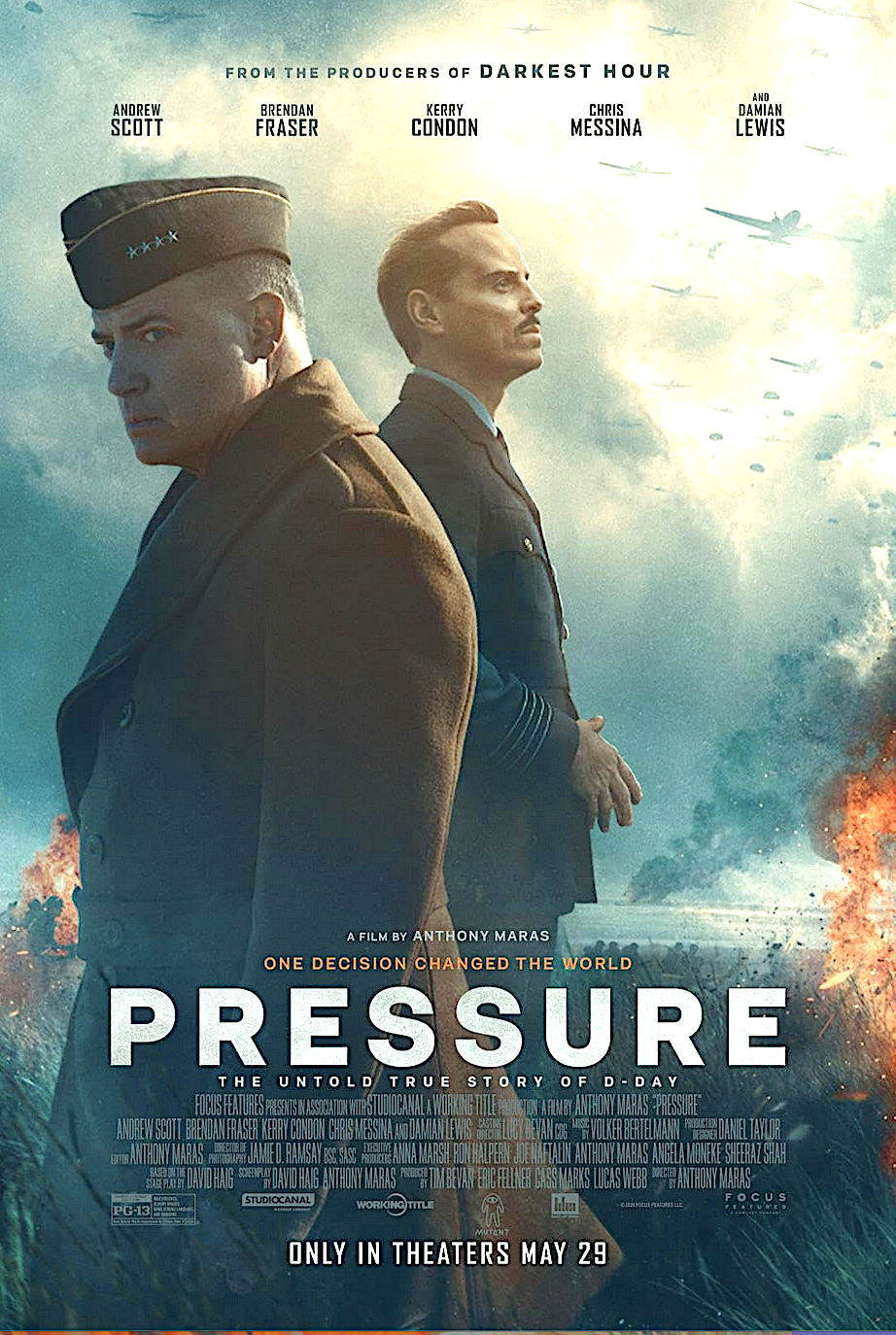
‘Pressure’
Director: Anthony Maras
Starring: Brendan Fraser, Damian Lewis, Andrew Scott, Chris Messina, Kerry Condon
MPAA Rating: PG-13
Running Time: 1 hour, 40 minutes
Release Date: May 29, 2026
Rating: 5 stars out of 5
Would you like to see other kinds of arts and culture articles? Please email us your story ideas or feedback at features@epochtimes.nyc