



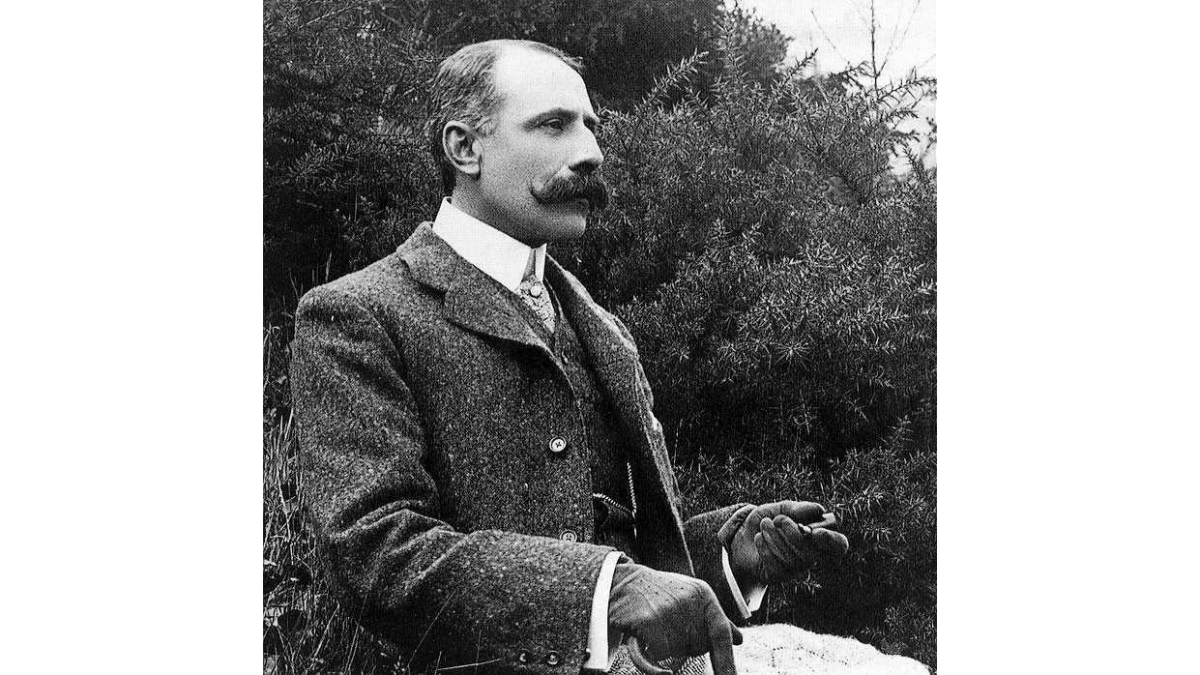
In July 1888, Edward Elgar finished a musical miniature for violin and piano titled “Liebesgruss.” At the time, the name “Elgar” merely belonged to a young provincial musician: an amateur conductor, violinist, and teacher who had largely set aside hopes of a full-time professional career as a violinist.
Circumstances were not ideal; Elgar wrote to a friend in 1884, “My prospects are about as hopeless as ever … I have no money—not a cent. I am living here alone, and am very miserable.”
A Love Gift for Alice Elgar
However, “Liebesgruss” marked a spot of joy amid the hardships of life. The German title translates into “Love’s Greeting” in English, a curious fact given that it is the only work given a clear German name by the composer.
In actuality, the piece was a musical love token for Caroline Alice Roberts, an accomplished author who had been his pupil a few years prior. The daughter of Maj. Gen. Sir Henry Roberts, Alice (an admirer of German literature and the arts), had become close to the young composer. Earlier, she had given him a poem she had written, titled “The Wind at Dawn,” and Elgar reciprocated with an engagement present, an intimate chamber piece.
They would be married in 1889, though not without significant opposition. Alice’s family was dismayed by her match with a provincial musician of modest social standing and Catholic background. Despite effective estrangement, Alice persisted, acting as Elgar’s manager and staunchest supporter in the following years. Given Elgar’s status as a Catholic in predominantly Protestant Victorian England, Alice also served as an important social intermediary, helping bring his work to the attention of English society’s upper circles.
Eventually, Elgar would become one of England’s leading composers, achieving national recognition and securing a lasting place in British musical life. Yet few believed more in his creative potential in those early days than Alice Elgar, who played an irreplaceable role in shaping his career and believed in him more than he believed in himself. Perhaps no example demonstrates this more clearly than the subsequent success of Liebesgruss.
The Little Salon Piece
Today, the name “Liebesgruss” is little known, but the music has reached international audiences. Back in 1888, in need of some spare cash, Elgar submitted the piece to publisher Schott & Co. for the small sum of 2 guineas. Schott then made some changes.
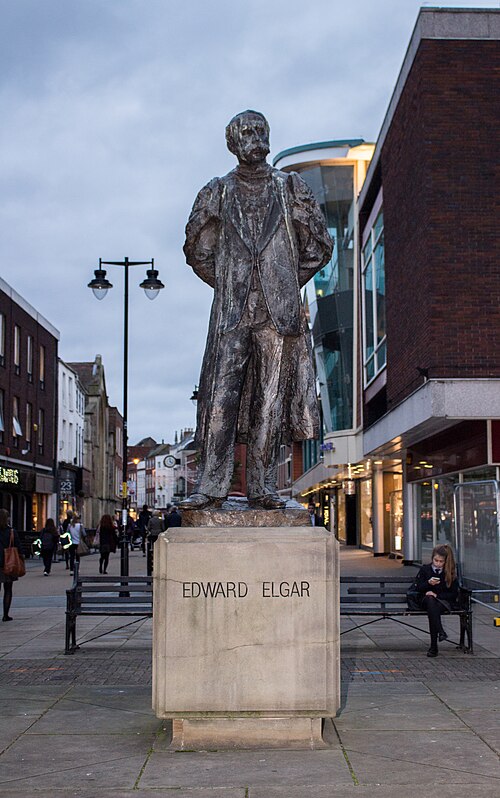
They weren’t changes to the music, rather to the presentation. The name of the composer would be presented as “Ed. Elgar,” which helpfully disguised the composer’s English origins. Furthermore, “Liebesgruss” would be retitled “Salut d’amour,” a common rebranding tactic designed to appeal to international audiences. “Salut d’amour” is now one of Elgar’s most popular instrumental works, an intimate salon piece which earned the publishers a tidy sum.
Elgar, however, earned no royalties—only his 2 guineas.
Today’s recording of Edward Elgar’s “Salut d’amour,” Op. 12, is by Itzhak Perlman with Samuel Sanders on the piano. (Listen)
This charming three-minute work has a flowing, conversational feel elevated by the choice of E major, a typically bright and hopeful key. Here, it’s transposed here to D major, also a bright key. The melody is simple and heartfelt, carried by the violin’s smooth singing tone.
The choice of the violin harkens back to Elgar’s earlier career as a capable violinist. His choice of the instrument’s middle to upper register gives the sound a lyrical, warm feeling, tapping into the violin’s expressive nature.
The sweet, graceful simplicity of the music has led to numerous arrangements, from solo piano and orchestral arrangements by Elgar himself to popular versions with cello and flute. The beauty and timelessness of the work are undeniable, drawing from its humble roots as a token of devotion.
What arts and culture topics would you like us to cover? Please email ideas or feedback to features@epochtimes.nyc

