



NR | 1 h 53 min | Western | 1936
Producer-director Cecil B. DeMille’s introductory text explains that “The Plainsman” is set at the end of the American Civil War. His film salutes men who expanded the frontier and tries to do justice to the courage of the plainsmen of the West.
With the coming of peacetime, thousands of government orders for guns are canceled overnight. So, gun-traders start trading guns with frontier Indians, in return for invaluable furs.
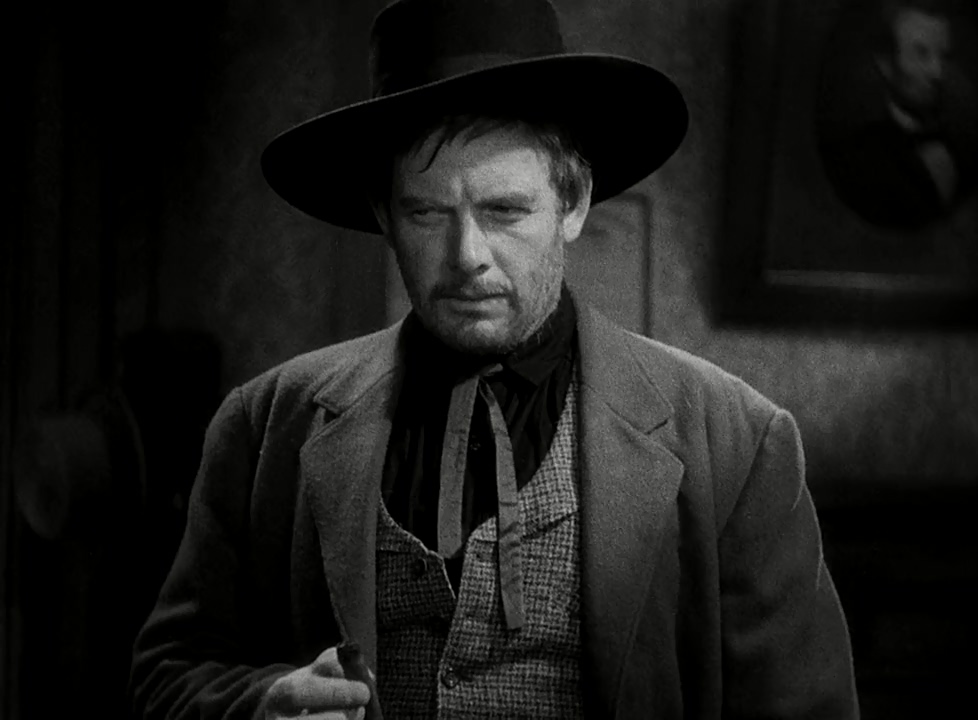
Gun-runner John Lattimer (Charles Bickford) starts plying deadly repeating rifles to the Cheyenne, led by Yellow Hand (Paul Harvey). But the Cheyenne are killing U.S. soldiers by the hundreds with those very guns; apparently, in retaliation for raids on what they see as their land.
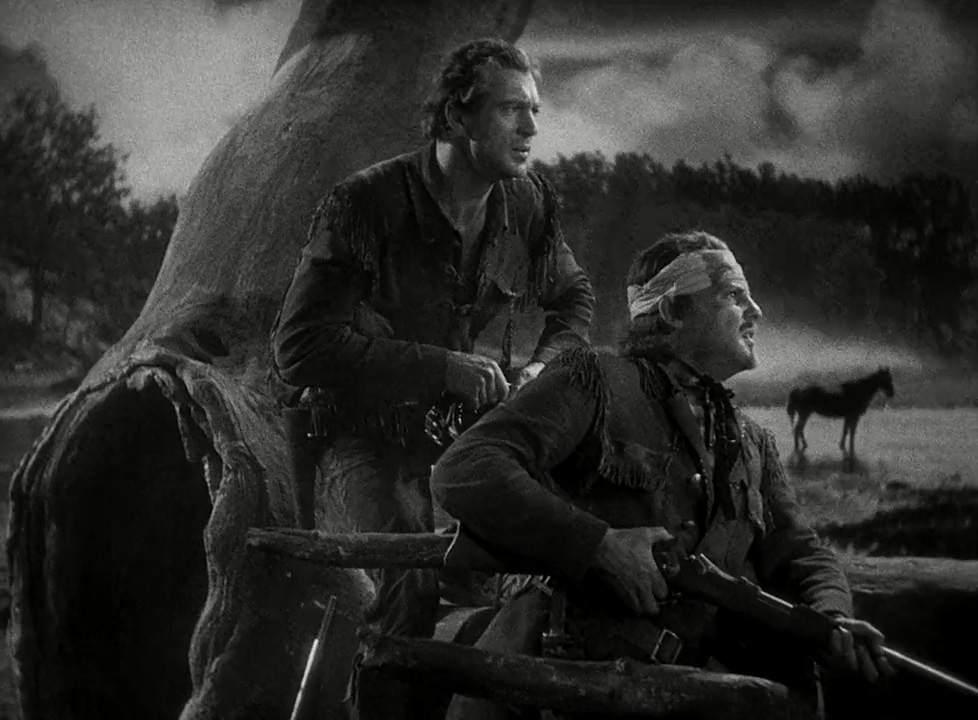
That brings together two friends, desperate to stop the bloodshed: “Wild Bill” Hickok (Gary Cooper) and “Buffalo Bill” Cody (James Ellison). Knowing they’re skilled scouts and gunmen, U.S. Gen. Custer (John Miljan) has a job for them. Hickok must track down and hopefully talk sense into Yellow Hand. Cody must lead a unit of Custer’s men, guiding much-needed ammunition to fighting units at Fort Piney, besieged by Cheyenne.
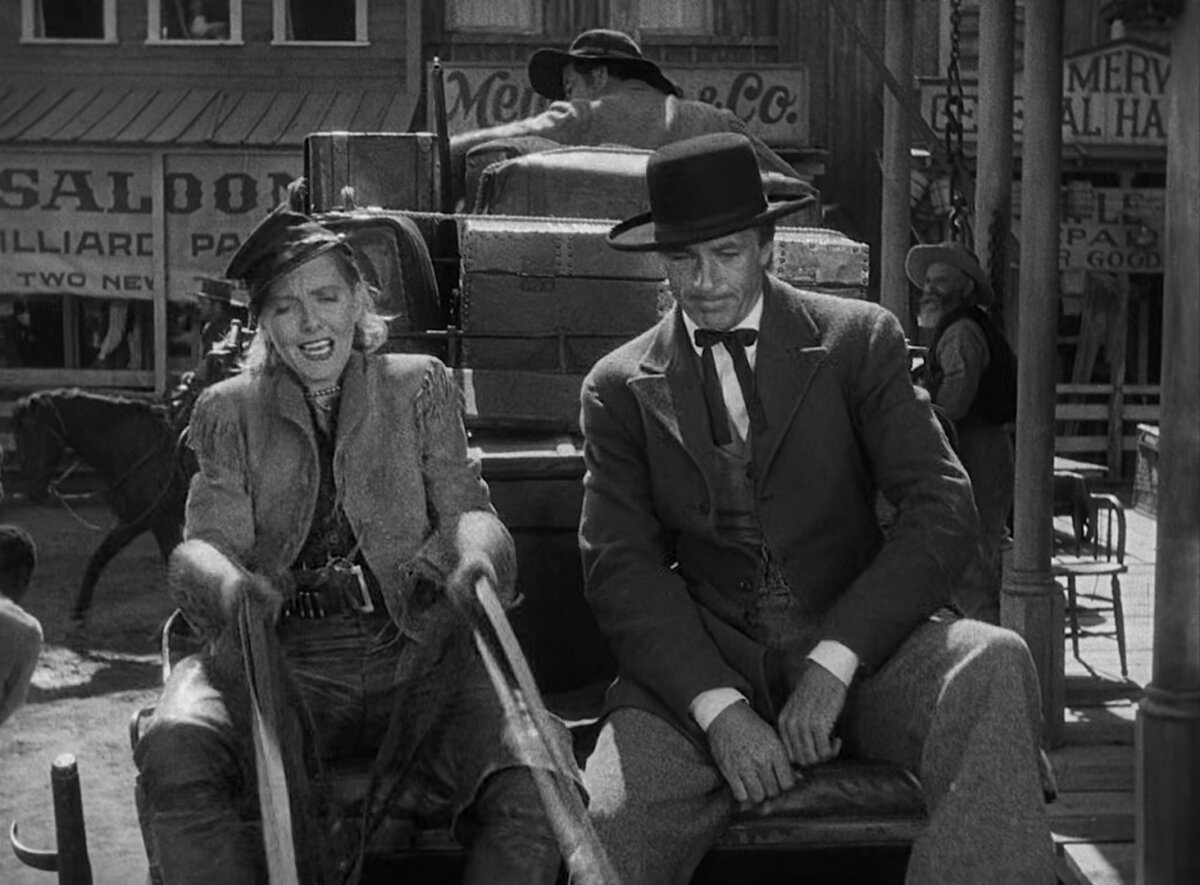
But Cody has just married Louisa (Helen Burgess). Calamity Jane (Jean Arthur), who fancies Hickok, has just shown up. Beckoned by duty, Hickok pretends not to care for Jane, while Cody struggles to leave his bride behind.
Soon, both men are battling the Cheyenne. Wounded, they recover with help from their ladies before setting out to confront Lattimer, the culprit fueling the fighting in the first place. All roads, it seems, lead to the town of Deadwood.
Unfairly, Jane’s character is portrayed as a caricature of a woman, head over heels in love with Hickok. Arthur tries to give her depth, but the script stays too one-dimensional for her to make much headway. Ellison’s Bill is a gentler foil to Cooper’s Bill, although he lacks Cooper’s screen presence.
DeMille wastes no time. His first two scenes explain and extol righteous violence to uphold law, order, and sovereignty.
The first scene? President Lincoln (Frank McGlynn Sr.) and his administrators wonder how to usefully occupy hordes of returning disbanded soldiers that America’s fledgling industrial establishment can’t absorb. They have to be farmers in the Wild West.
But a legacy of conflict with the Indians lingers. So, Lincoln warns that a freedom that’s forever fraught with the threat of violence isn’t worth it. One official muses, “If only the frontier could be made safe for the plough.” Lincoln is candid; it “must” be made safe.
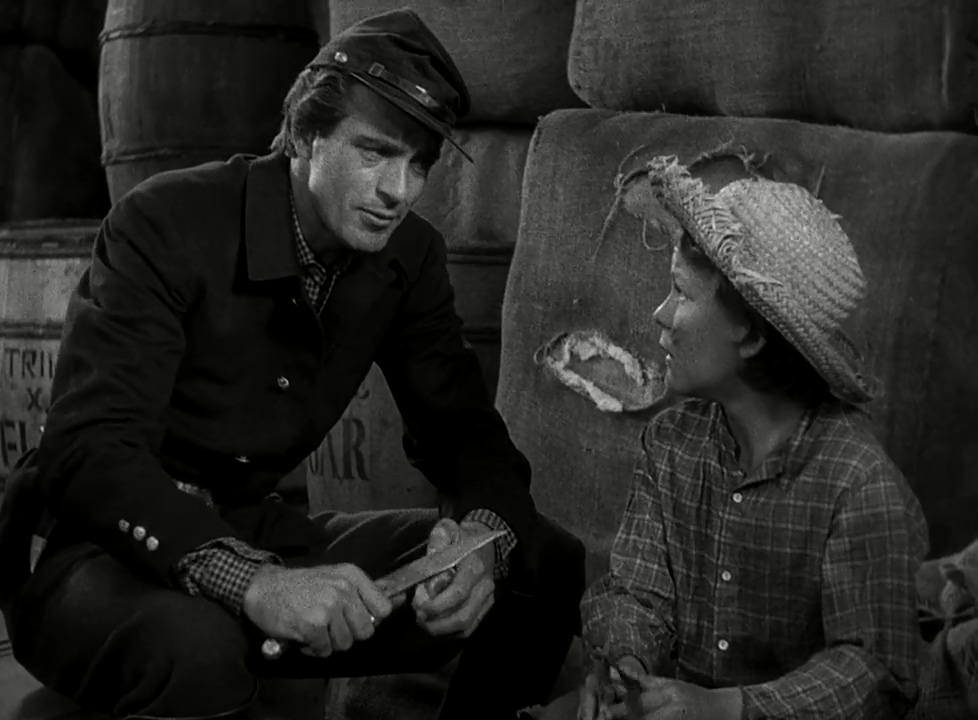
The next scene? Hickok’s chatting up a boy playing with his catapult; Hickok sportingly calls it a gun. The boy admires Hickok’s knife and is wide-eyed with tales of the heroics of men like Wild Bill and Buffalo Bill, but he’s unaware that he’s talking to one of them.
Hickok, too, is unaware that the boxes he’s sitting on, innocuously marked “farming tools,” are loaded with Lattimer’s guns. Before he leaves, Hickok gifts his knife to the starstruck boy.
What does Lincoln leave unsaid? If it takes bullets and guns to preserve peace and prosperity, so be it. What does Hickok, albeit less loftily, leave unsaid? Indifference or pretended helplessness is no response to lawlessness. Boys with catapults must learn this from righteous men with knives or guns.
Louisa tries to dissuade Cody from joining Custer’s dangerous mission. Hickok reminds her of the call of Lincoln (he’s been assassinated off camera) to protect the lawless plains. She’s dismissive: “Lincoln’s dead. What right have the dead to tell the living what to do?” Hickok snaps, “His words are alive!”
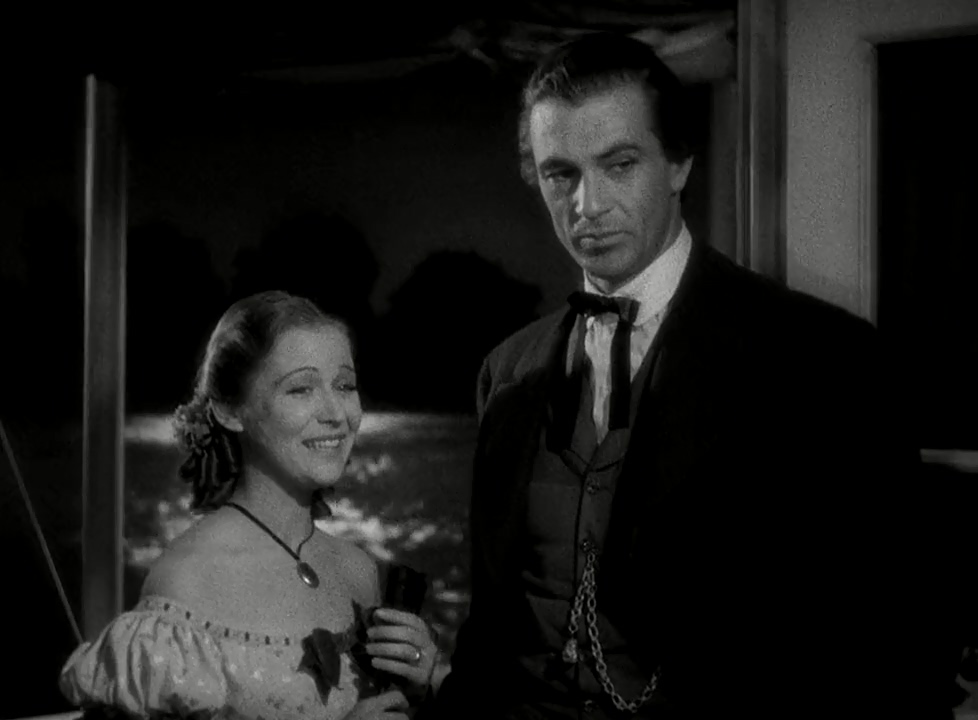
Earlier, Hickok had pithily warned her about why and how the West was Wild: “There’s no Sunday west of Junction City, no law west of Hays City, and no God west of Carson City.”
No matter how spruced up some stories about these two real-life men are, here they embody hundreds of others who stepped into the breach in crises, without seeking the badges that were later given them, or the awards that weren’t.
A Film Innovation
Some trivia buffs believe George Lucas revolutionized the opening credits tradition with the forward-onward “crawl” in his Star Wars films. They’re mistaken. Others, rightly, trace Lucas’s inspiration to older 1930s traditions. The Buck Rogers show featuring the crawl was released in 1939. But it’s the Flash Gordon show, released in April 1936, that seems to have expanded the opening credits frontier by pioneering the crawl.
DeMille adopted it in “The Plainsman,” released in November 1936, then repeated it in his “Union Pacific” (1939).
You can watch “The Plainsman” on Prime Video, Apple TV, and YouTube.
‘The Plainsman’
Director: Cecil B. DeMille
Starring: Jean Arthur, Gary Cooper, James Ellison
Not Rated
Running Time: 1 hour, 53 minutes
Release Date: Nov. 16, 1936
Rated: 3 stars out of 5
What arts and culture topics would you like us to cover? Please email ideas or feedback to features@epochtimes.nyc
