The phrase “thinking outside the box” gained popularity in the American lexicon in the 1960s and 1970s as a creative exercise to teach unconventional problem-solving.
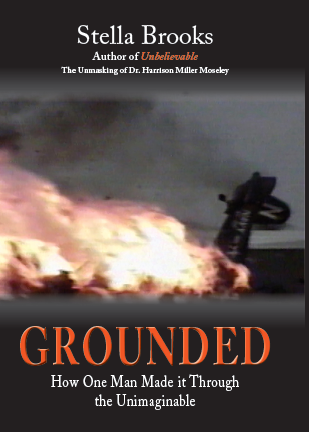
One proponent of that technique was a Vietnam-era Navy pilot who survived a tragic plane crash in 1999 and lived nearly a quarter-century as a functioning quadriplegic. His uplifting life story is poignantly portrayed in the book “Grounded: How One Man Made It Through the Unimaginable.”
Author Stella Brooks provides the compelling life story of charismatic Laird Ashley Doctor, an avid aviator who refused to give up on life after his accident. On the contrary, he defied conventional expectations for someone saddled with severe physical limitations and found new and creative ways to indulge his love of flying and staying active.
More importantly, the accident that would have crushed the spirits of many taught him resilience and humility, spiritually transforming him into a man of deep faith.
A Cutting-Edge Field
Laird Doctor was an only child of loving parents, David and Irene Doctor. The Doctors were a close-knit Jewish family with many family members living nearby. Laird’s family called him Laddie as a boy and Lad as an adult. While he remembered celebrating Jewish holidays as a child, he admittedly wasn’t religious in later years.
In college, he developed an interest in the new, cutting-edge field of sports medicine. Two professors at California State University, Northridge asked Doctor to assist in designing a premier sports medicine department. Heeding their advice, he earned a doctoral degree with the plan to return to California State as a professor overseeing the sports medicine laboratory.
The Vietnam War changed all that.
A Fly-Boy Is Born
Rather than accept a random military assignment after receiving his draft notice, Doctor tried to enlist in the Air Force, but there was a waiting list. He was referred to the former Naval Air Station Alameda, where he promptly enlisted.
Three months later, Doctor became a commissioned ensign in the Navy. He learned to fly various aircraft during training in Mississippi, Texas, Georgia, and Florida. His quick grasp of piloting different aircraft made him one of the Navy’s elite pilots.
One criticism of the book is that nothing was shared of Doctor’s Vietnam experience other than his training stateside and the fact he flew an A-5 Vigilante, a supersonic bomber.
After a brief courtship, he married Dottie in 1967 and became a father to Katherine Leah Doctor in 1971. Following the war, Doctor was eager to return to working in sports medicine. However, the university thought he’d missed too much over nine years and that the science had passed him by. Frustrated, he accepted a job handling large commercial loans at a bank.
After the war, Doctor thought he was done flying for good. His father suggested that he join a group of World War II veterans who had a clubhouse in a hangar at Van Nuys Airport in Los Angeles. The group formed the Condor Squadron, non-profit group of aviation enthusiasts, that performed at airshows and staged mock dog fights.
Through the squadron, Doctor eventually was elected president of a racing association and served as an FAA-designated check pilot for the Reno Air Races, which is considered the world’s fastest motorsport, a position he held for 18 years.
Doctor’s experience and knowledge of aircraft earned him a solid reputation with pilot enthusiasts. His expertise was in high demand at air shows and air races across the country. It also earned him the position of director and chief pilot at the Cavanaugh Flight Museum in Addison, Texas, which he considered the perfect job.
Tragedy in Oshkosh
On a fateful day—July 29, 1999—800,000 people attended the Experimental Aircraft Association’s 47th annual AirVenture show at Wittman Regional Airport in Oshkosh, Wisconsin. The show is the largest of its kind in the world.
Doctor was flying a blue Corsair, a piston-engine fighter plane and one of World War II’s greatest aircraft. The plan was for the planes to take off one at a time, two Bearcat planes first, followed by the two Corsairs.
Corsair planes were designed with a high nose and aft-placed cockpit, meaning that a pilot couldn’t see in front of him while taxiing until enough speed was gained to raise the tail.
“The Air Boss’ duty was to report any and all information critical to the pilots’ safety and the safety of others. It wasn’t until Doctor could obtain the speed needed to raise the tail that he could see the horrific sight right in front of him,” Brooks wrote.
Doctor’s plane clipped the right wing off the Bearcat that was still inexplicably on the runway. The Corsair spun off the runway, cartwheeled into the grass, broke into three parts, and exploded into flames.
A Powerful Vision
The accident left Doctor paralyzed from the neck down, with limited neck movement due to spinal cord damage that required more than 14 surgeries to repair.
While hospitalized, Doctor had a spiritual awakening. He experienced visions of angels, escalators leading to heaven, and Jesus. “God knew that the only way he was going to get me to understand that I can’t do it without Him was to prove it,” Brooks recorded Doctor saying.
It was Doctor’s newfound faith that enabled him to overcome the myriad physical and mental challenges ahead of him and move forward with his life. He believed that God wasn’t done with him yet and didn’t want him spending the rest of his days in a nursing home watching television.
Over the next several years, Doctor experienced countless ups and downs adjusting to his new life, but he was determined to convince other handicapped individuals to think beyond their limitations. With the help of friends, he became interested in flying radio-controlled aircraft, though that generally requires using one’s hands. Doctor taught himself to control the plane by using his mouth and chin for basic aerobatics.
An avid gun enthusiast before the crash, Doctor was likewise able to pass a handgun test and obtain a concealed handgun license by employing a wheelchair-mounted camera and using his mouth to push the switch to fire the gun. Thinking outside the box enabled Doctor to show others what quadriplegics could do when they tried.
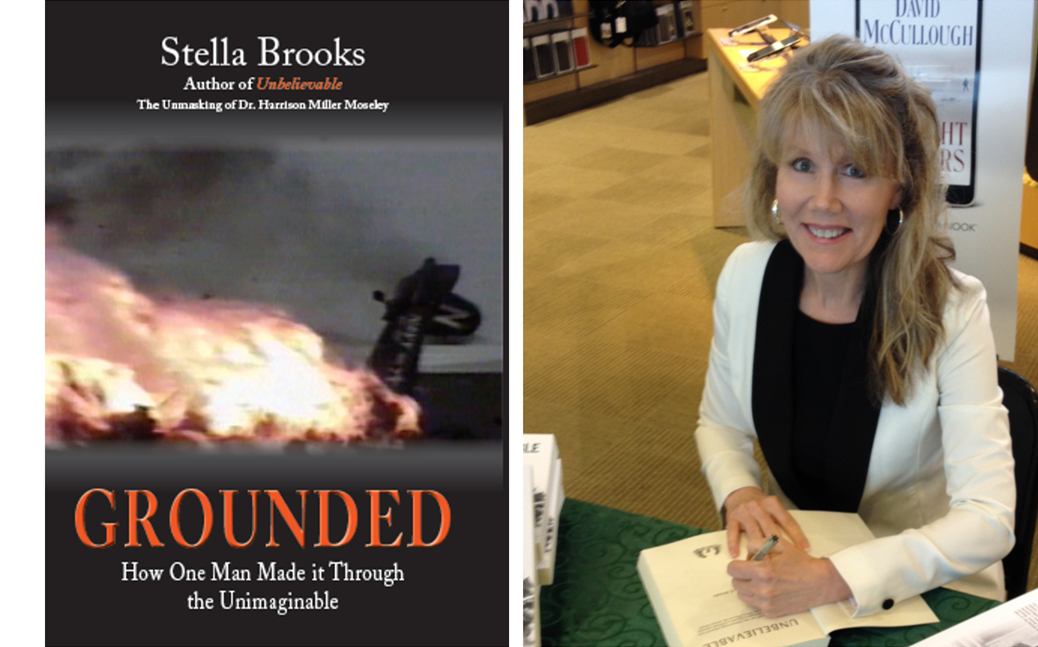
The author populated her book with many fascinating anecdotes and memorable moments that Doctor shared with her, though the narrative is sometimes choppy and hard to follow. However, Doctor provided many personal photos to Brooks, and much of the book’s minute details on plane specifications and the specificity of his health challenges indicate that the author spent considerable time interviewing her subject.
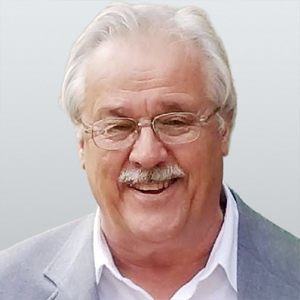
Lad Doctor passed away in January 2023 but “Grounded” is helping to keep his legacy and inspirational story alive.
‘Grounded: How One Man Made It Through the Unimaginable’
By Stella Brooks
Stella Brooks: Oct. 23, 2020
Hardcover, 244 pages
What arts and culture topics would you like us to cover? Please email ideas or feedback to features@epochtimes.nyc