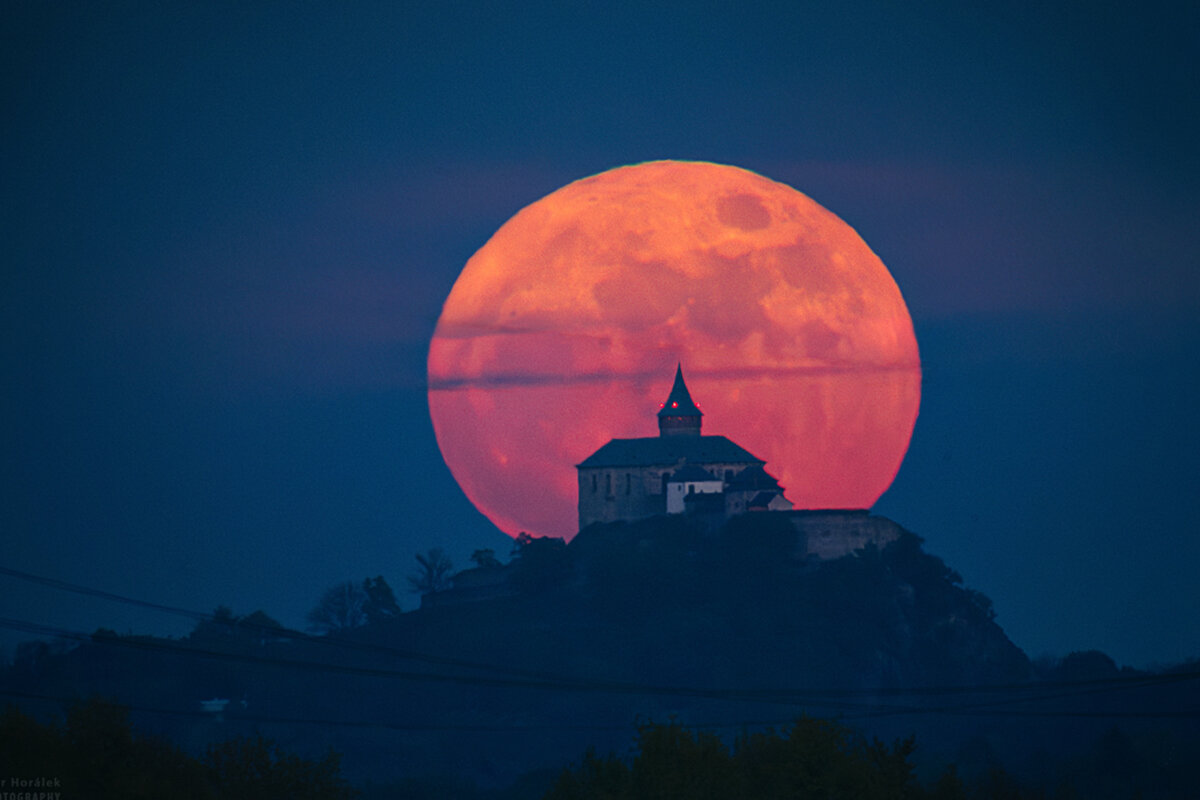
Most astrophotographers would probably settle for a rickety abandoned barn as a foreground for their Milky Way photos. But Petr Horálek prefers a 15th-century castle perched majestically on a sharp peak and a full moon looming red in the background.
For centuries, the sheer slopes of a volcanic formation, located in East Bohemia, Czech Republic, have protected warlords within this heavily fortified Gothic fortress, standing like a lone sentinel over the Elbe lowlands. Abandoned ages ago, left to rot, and later restored, Kunětice Castle is a living museum today.
Over four miles away, near the village of Osičky, Horálek positioned his camera with mathematical precision on a crisp evening in early May. His purpose was exact: to capture Kunětice Castle’s ramparts and towers right where the full moon would soon rise, swelling like a giant amber jewel.
Horálek, 39, a science popularizer and educator who first took up astronomy at age 11, kept in mind several calculations during this excursion. He told The Epoch Times that accurately lining up the moon’s path behind the fortress foreground is “actually not that difficult” but requires a simple scientific solution.
“You just need to know the azimuth of the moon’s position relative to the castle,” he said, referring to the compass angle measured in degrees from true north to pinpoint celestial bodies. He uses apps like Planit Pro or PhotoPills to locate the lunar position.
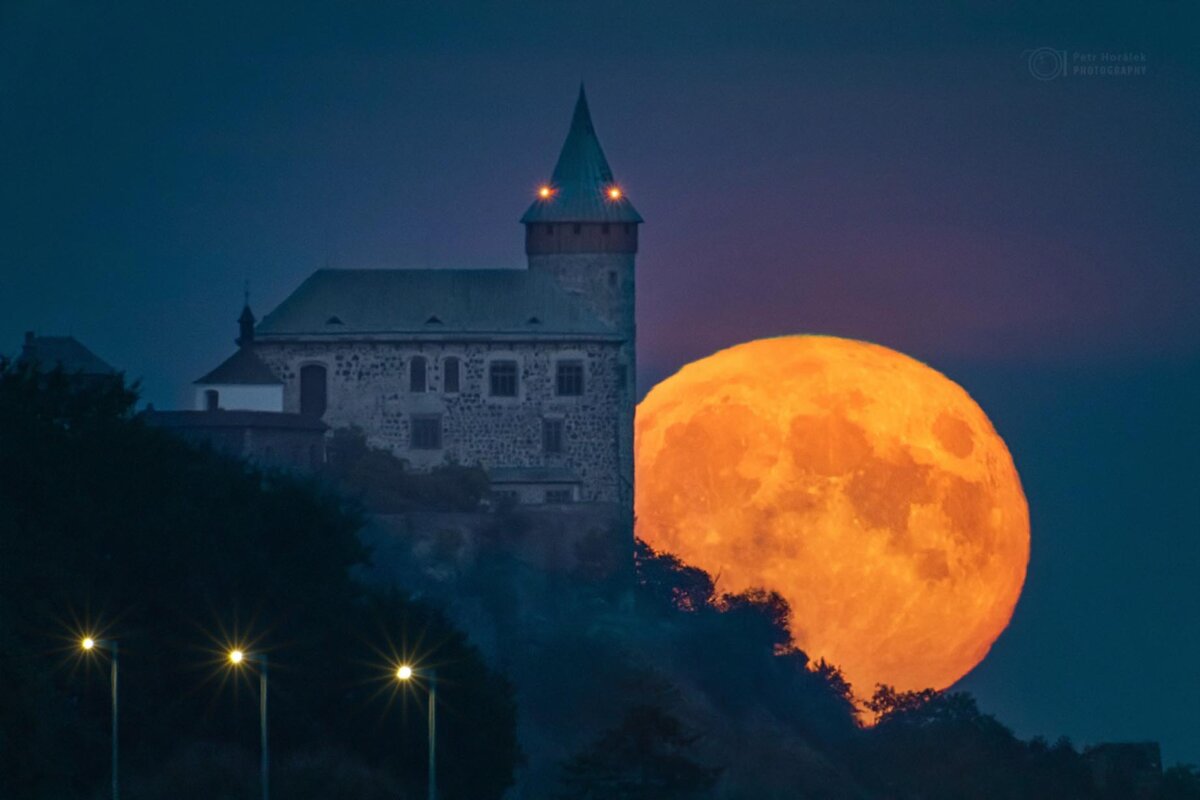
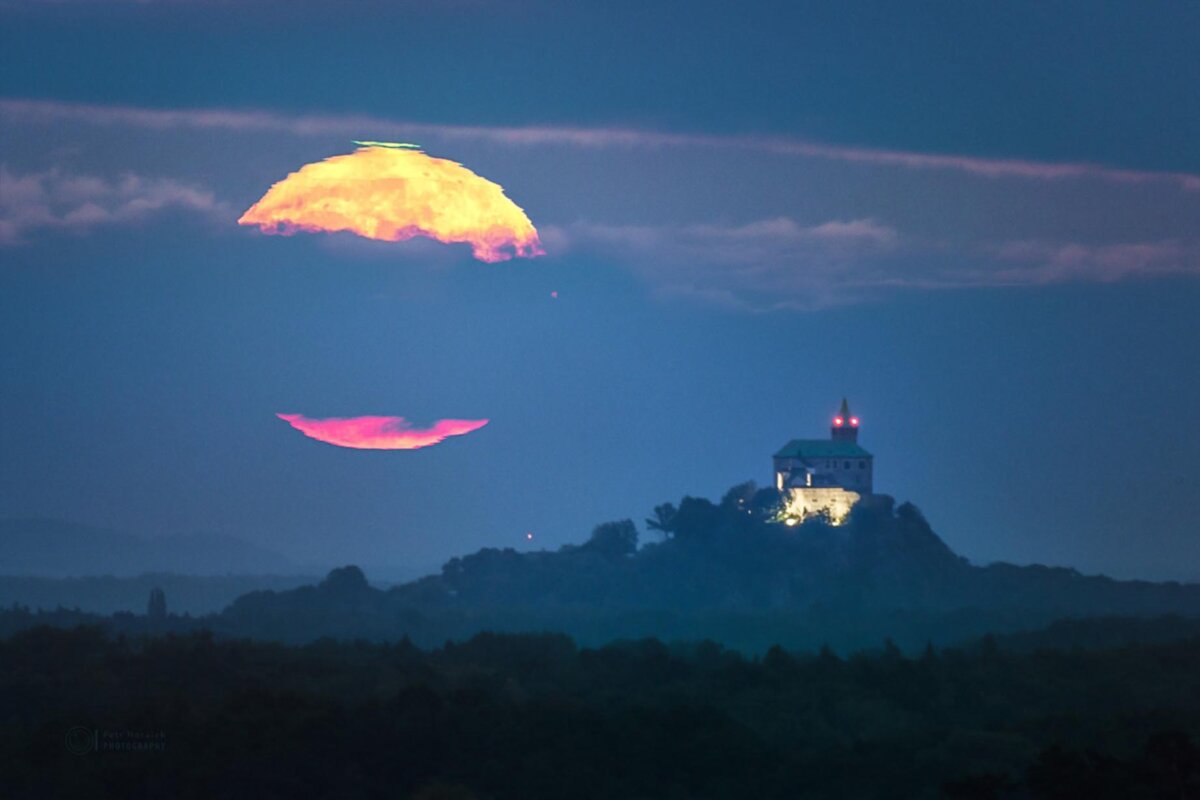
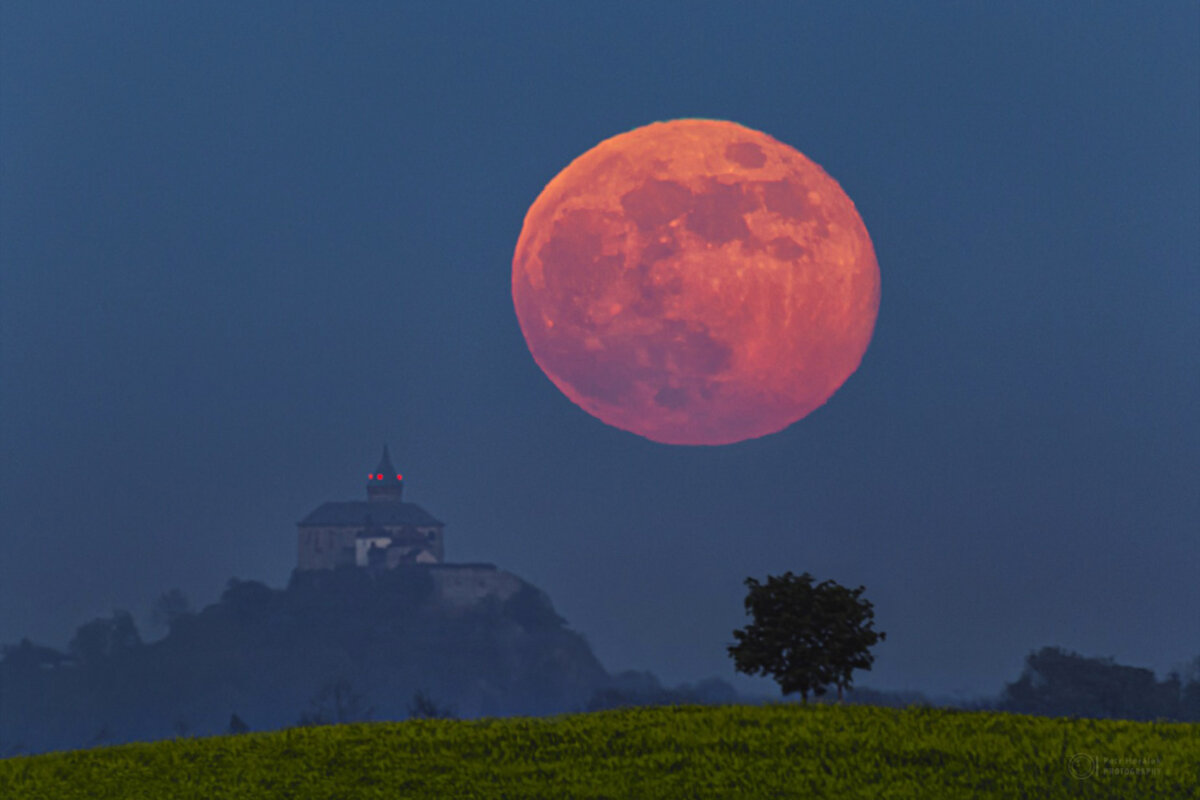
But the real trick isn’t tracking the moon—it’s magnifying it. For this project, Horálek utilized an optical effect called lens compression to make the lunar disk appear gargantuan while miniaturizing the walls and towers of Kunětice Castle. By placing miles of countryside between his tripod and the fortress, the building shrinks in his viewfinder while the distant moon appears unchanged. Magnifying both with his 1,400mm telephoto lens then makes the castle surge back into view and the moon swell to colossal proportions.
Executing this tricky shot at night across a vast distance, however, is always a gamble. During his wait, the wind vibrated his lens while clouds threatened to block the horizon. A sharp evening chill gripped the air after the day’s heat—a thermal change capable of causing atmospheric refraction, distorting the picture. Meanwhile, the lunar disk moved at a sprint through his high-powered lens, allowing mere seconds to capture the alignment.
He clicked the shutter.
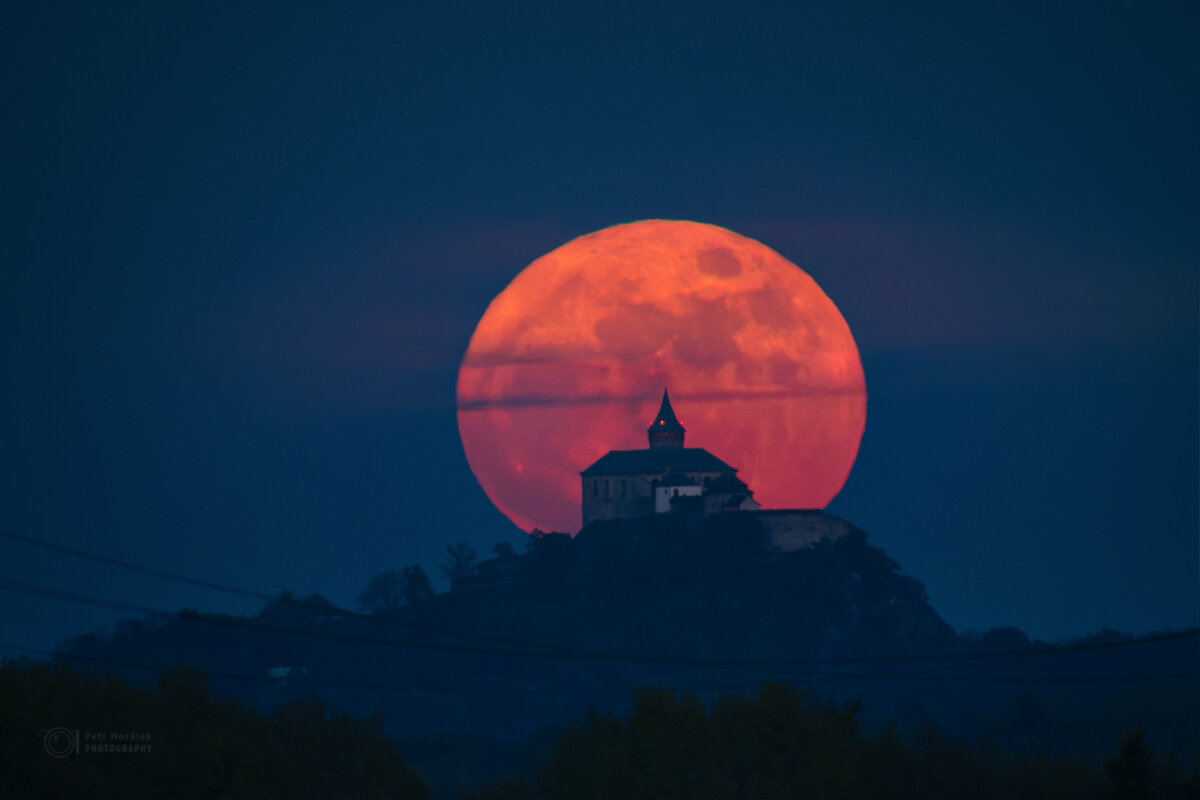
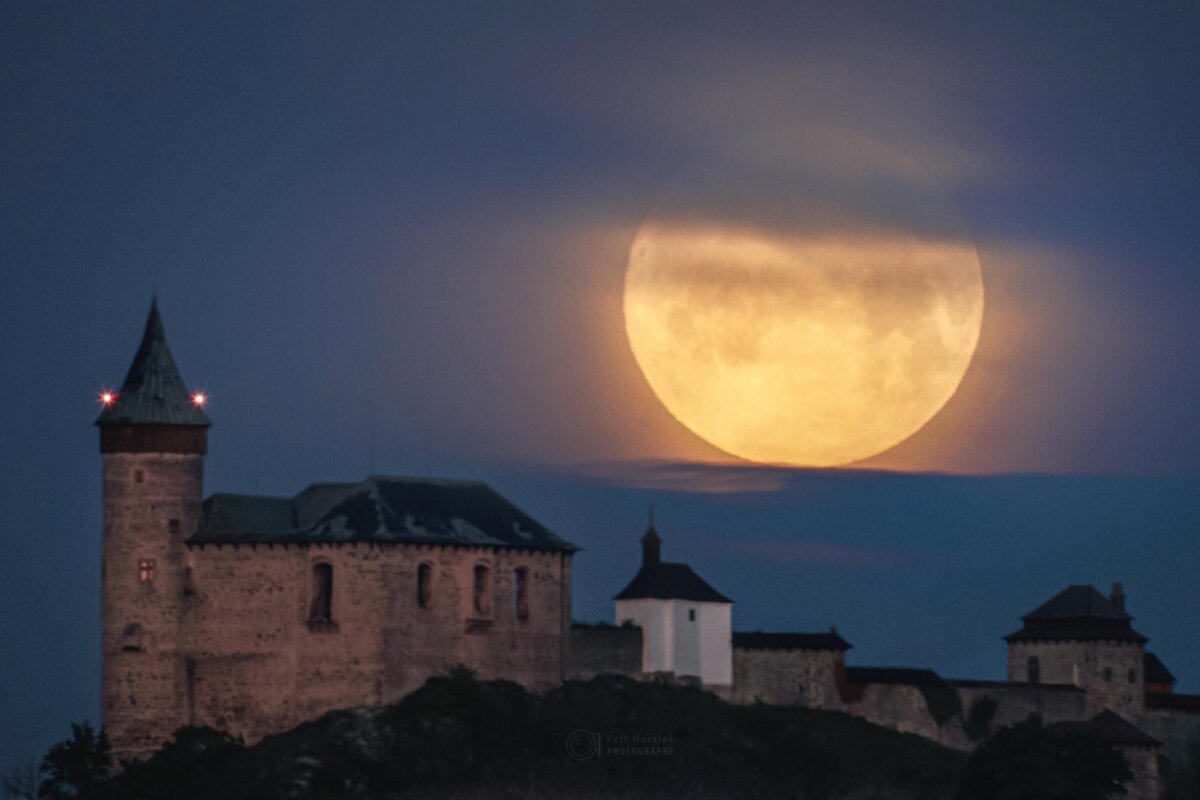
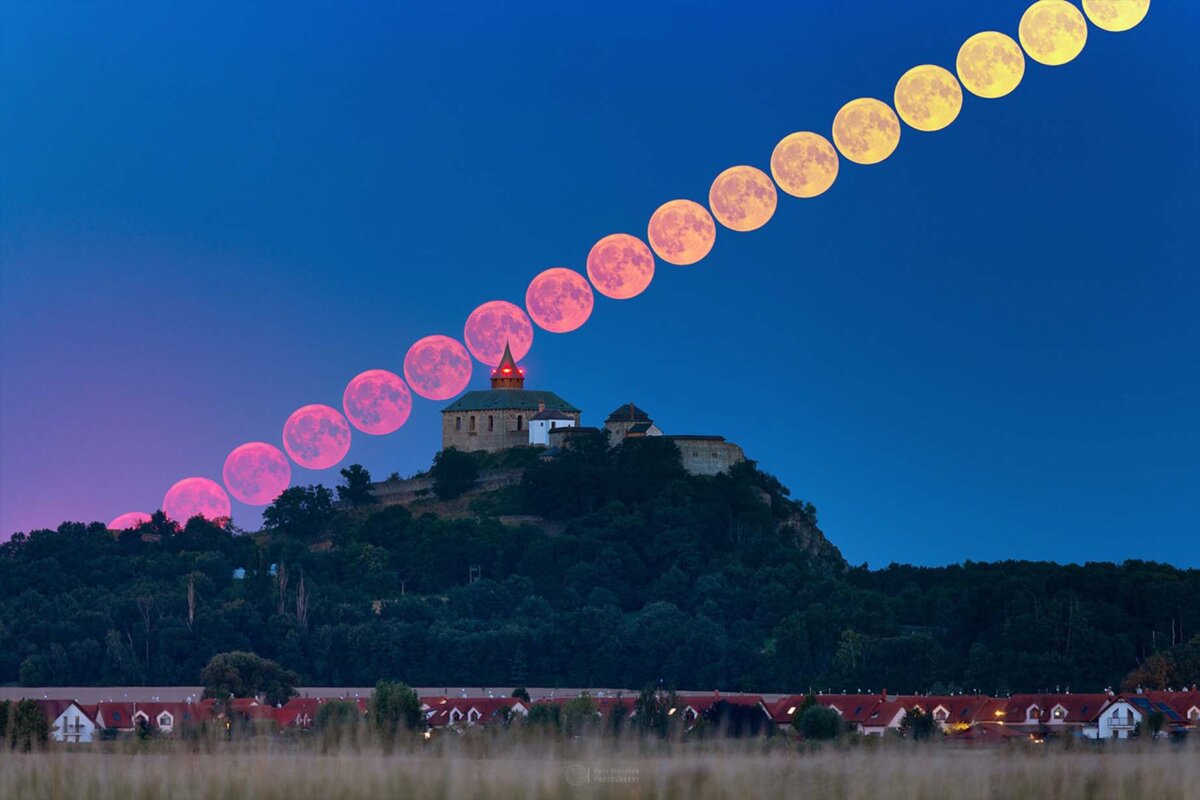
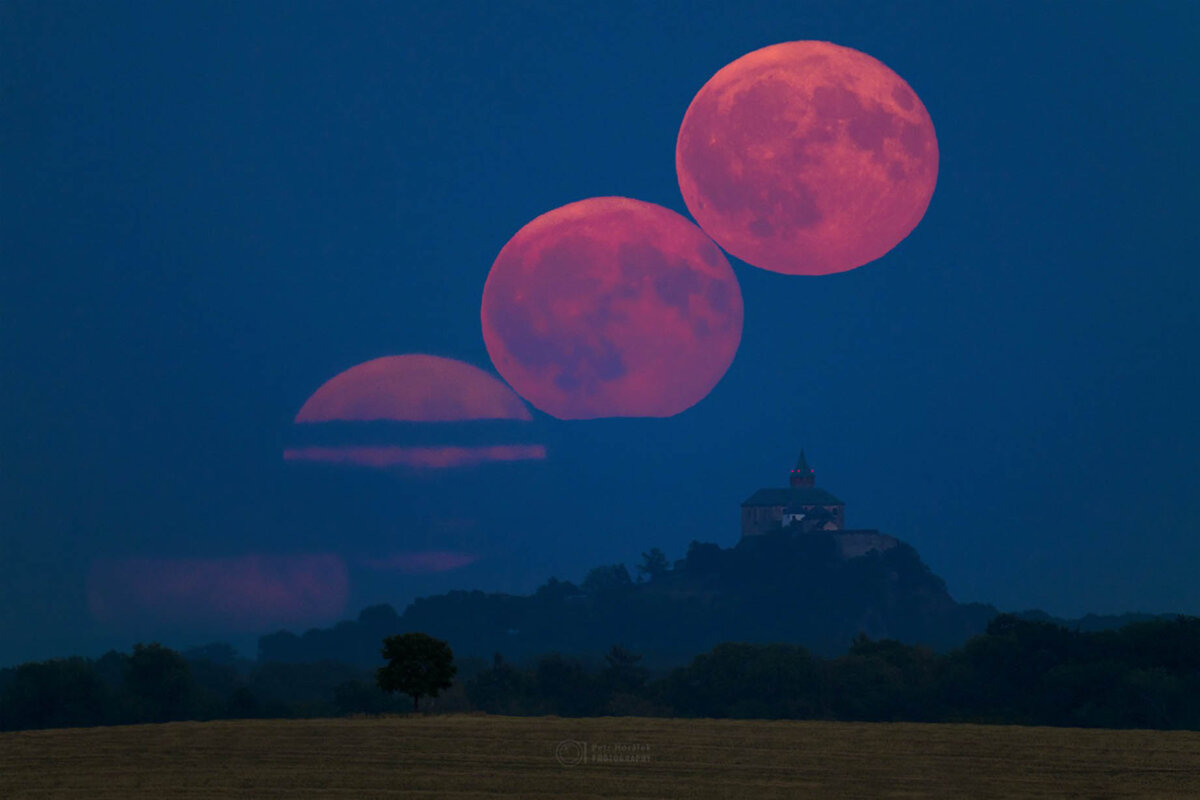
The results exceeded his hopes by a large margin. “When it works out it’s always a great joy,” he said. “Often the photoshoot was ruined by distant clouds very low above the horizon.” Other times the hour was too late, and the castle became cloaked in darkness.
Yet the unpredictable environment is part of the appeal. “Each time the phenomenon looks completely different, unique, and unrepeatable,” he added. Atmospheric anomalies are part of the charm.
Horálek, who lives in Seč and teaches astronomy at Silesian University in Opava, began his astronomy journey in 1997 when his grandmother first showed him the Big Dipper. He didn’t pick up a camera until 2010, after chasing a total solar eclipse to the Cook Islands. That adventure pushed him to save up for his own gear and unlocked a passion that “never left me,” he said. Now a writer and speaker, he devotes time to inspiring public interest in astronomy.
“The night sky often seems boring, unchanging, and distant to the average observer,” the astrophotographer said. “Many do not feel that they should devote their time to looking at it. But people are wrong about this—there is so much going on in the sky that a quick glance and interest will open the door to a completely different world.”
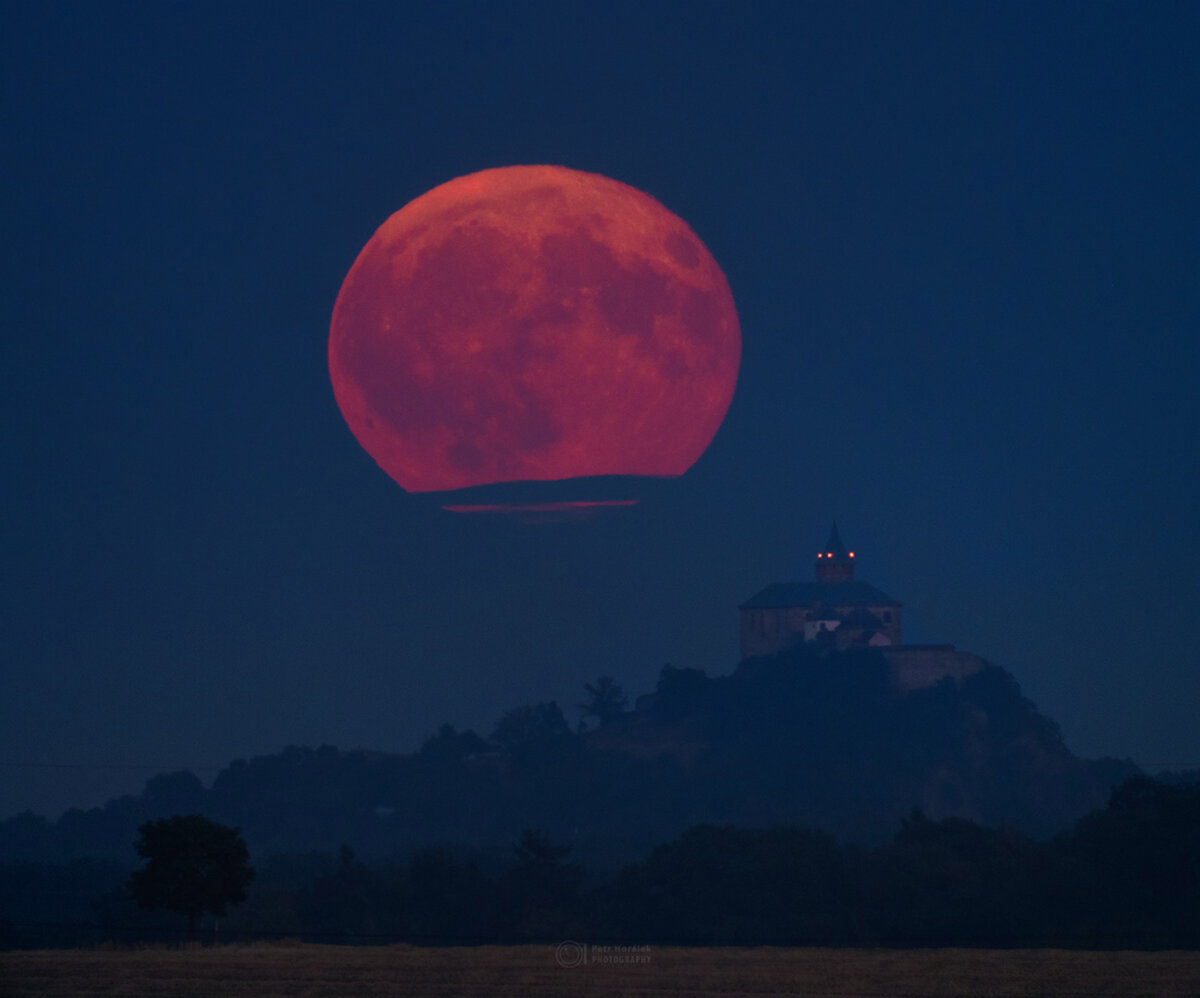
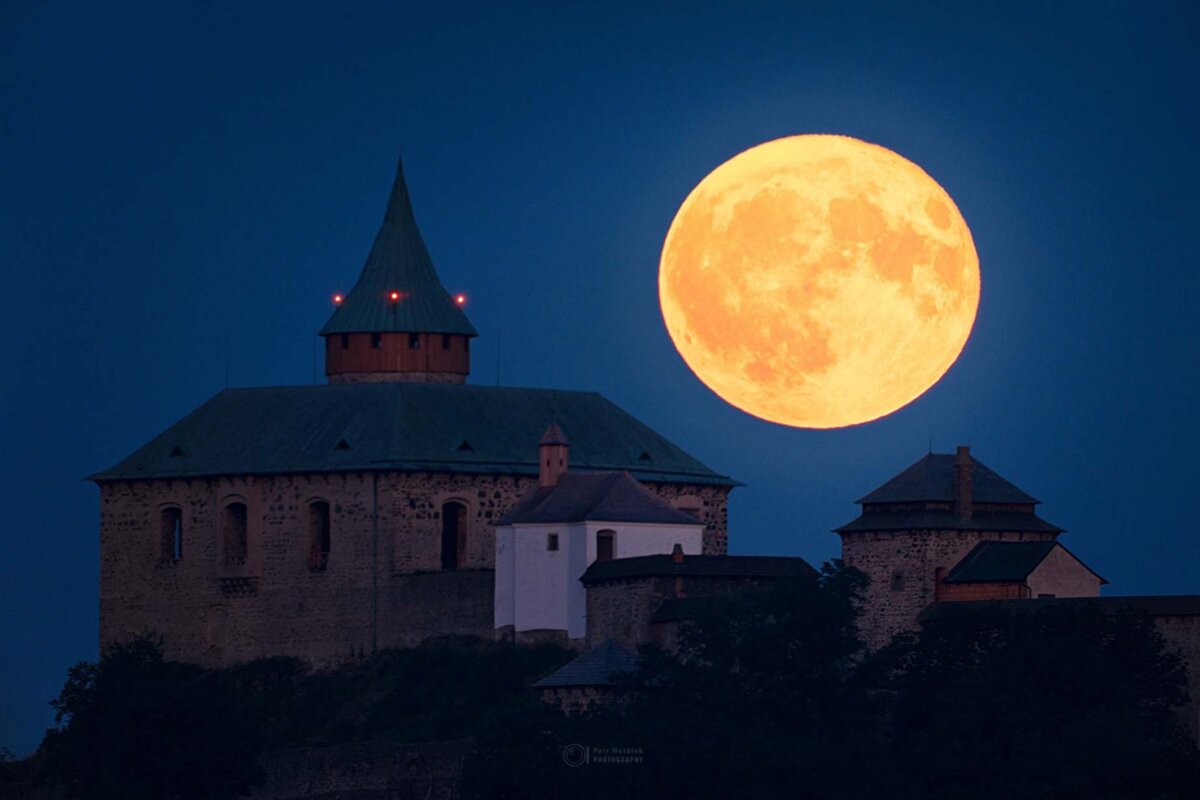
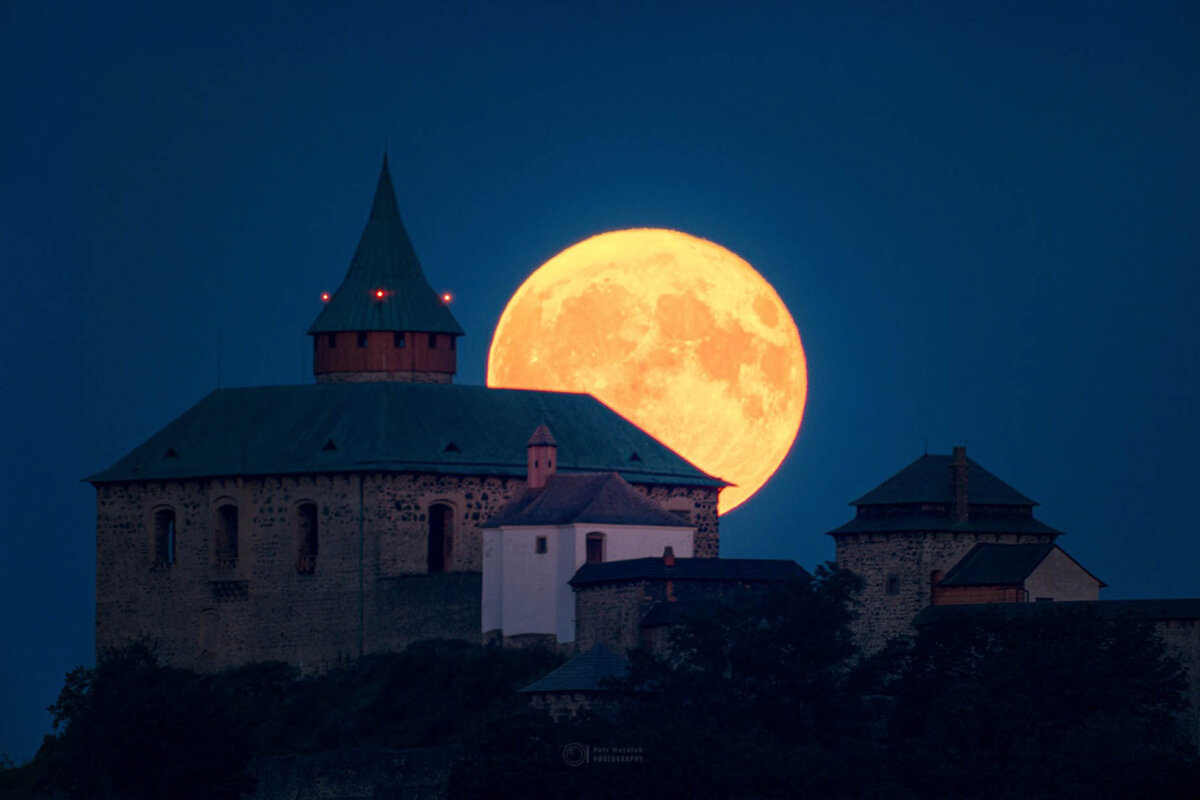
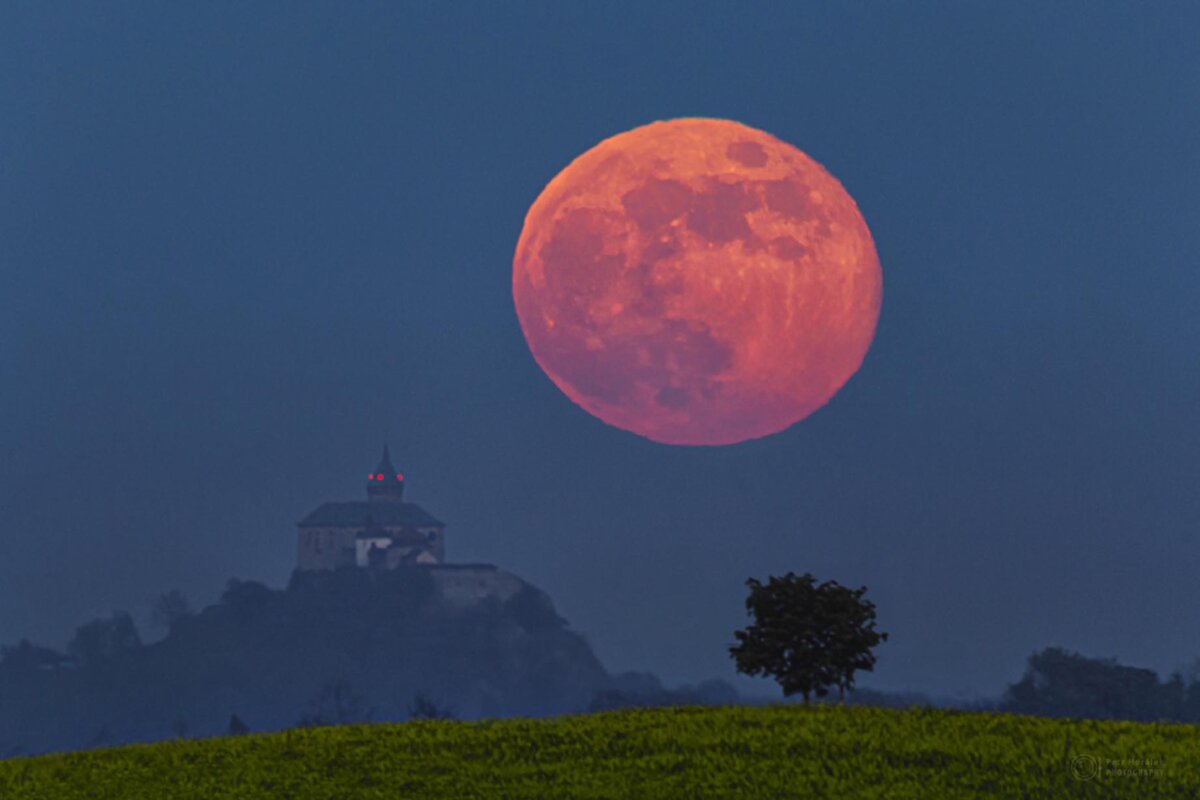
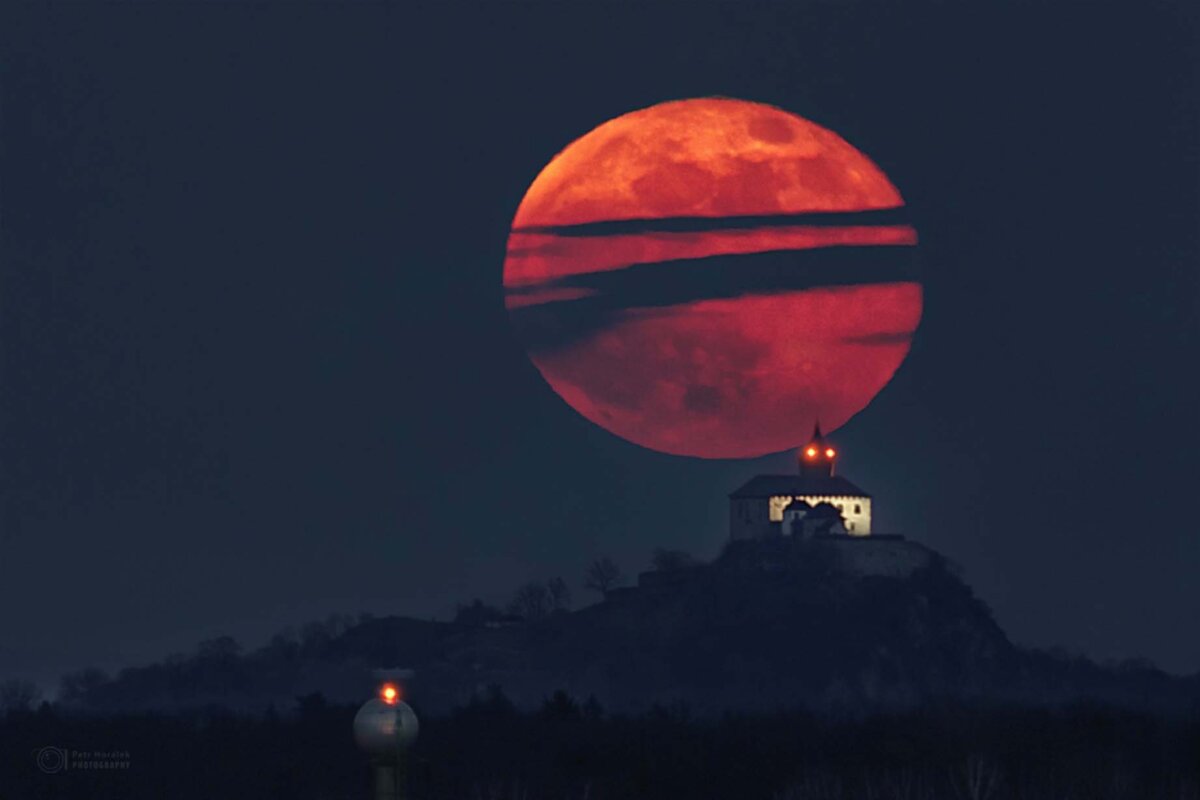
Horálek first shot Kunětice Castle during COVID “when everything was limited and this became the only escape from the unpleasant reality,” he said.
Standing alone in dark fields during lockdowns, he grew fascinated by the history within the castle’s walls.
“Originally established in the 14th century, it gained prominence under the powerful Pernštejn family, who transformed it into a formidable Gothic fortress with Renaissance elements,” he said. “Over the centuries, the castle suffered damage during wars and periods of neglect, eventually falling into ruin before undergoing gradual restoration in modern times.”
The castle’s greatest appeal lies in its “unusual majesty,” Horálek said, noting it can be viewed from many distant corners to compose striking alignments with full moons, shooting stars, and the occasional comet.
For Horálek, capturing the moon against the historic building connects humanity with the vast cosmos. “Humanity is extremely rare and fragile in the vast emptiness of the universe,” he said, reflecting on his work. “We should appreciate the fickle privilege of our existence on this fragile planet Earth.”