For years, music education in America remained centuries behind Europe because Americans were initially focused on developing a rugged land than creating art.
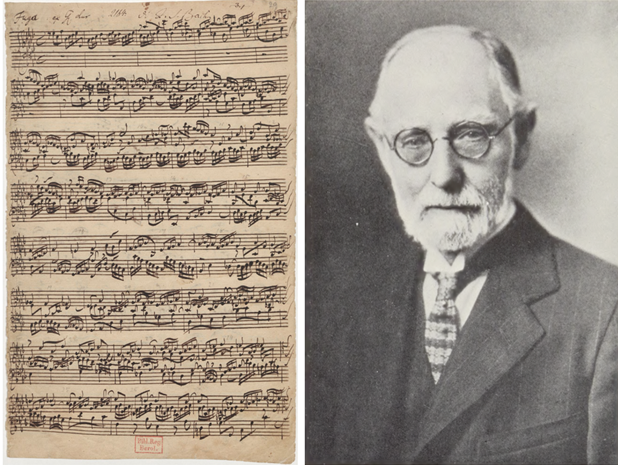
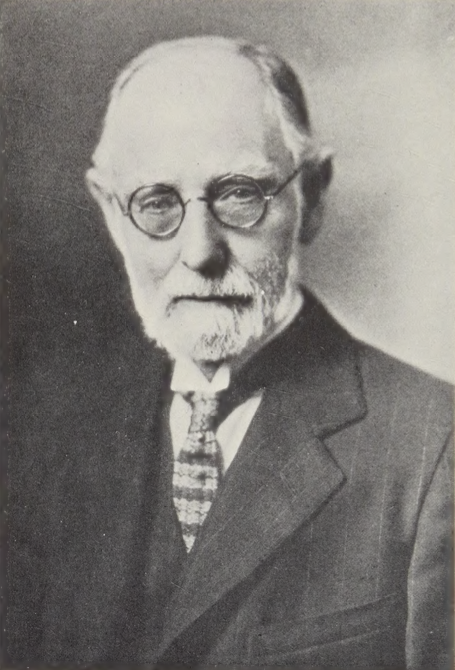
One little-known educator, Percy Goetschius (1853–1943), made great strides to change that. He encouraged the study of traditional classical music through his writing and teaching of music theory at one of America’s foremost musical schools, Juilliard.
More than an art, classical music is a science based on a mix of sounds and sensations. Music theory is the study of how music is structured harmonically and rhythmically. It often involves a historical background as well as an analysis of chord structure and why certain melodies are pleasing to the ear.
Understanding these principles and analyzing how the great composers of the past have applied them is a vital part of any formal music education.
An American Abroad
Goetschius was born in Paterson, New Jersey, on Aug. 30, 1853. He was the only son of Mary Ann Berry and John Henry Goetschius, a civil engineer. He left his private school at age 12 due to poor health and became a surveyor’s assistant to spend more time outdoors. In a few years, he joined his father working as an engineer.
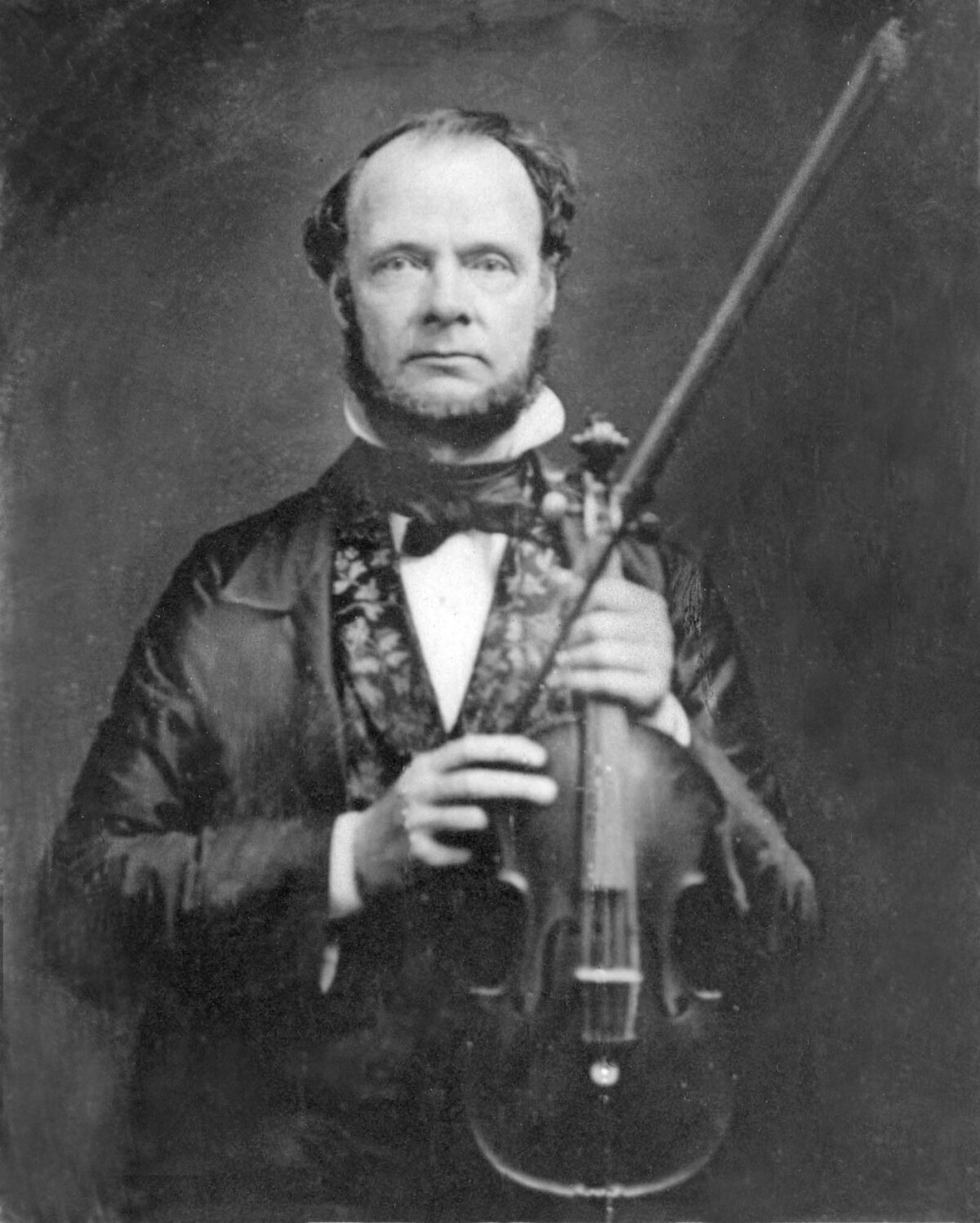
Meanwhile, Goetschius taught himself to play the piano and the flute. He received encouragement in his musical training from renowned violinist and conductor Ureli Corelli Hill, a family friend and his father’s client.
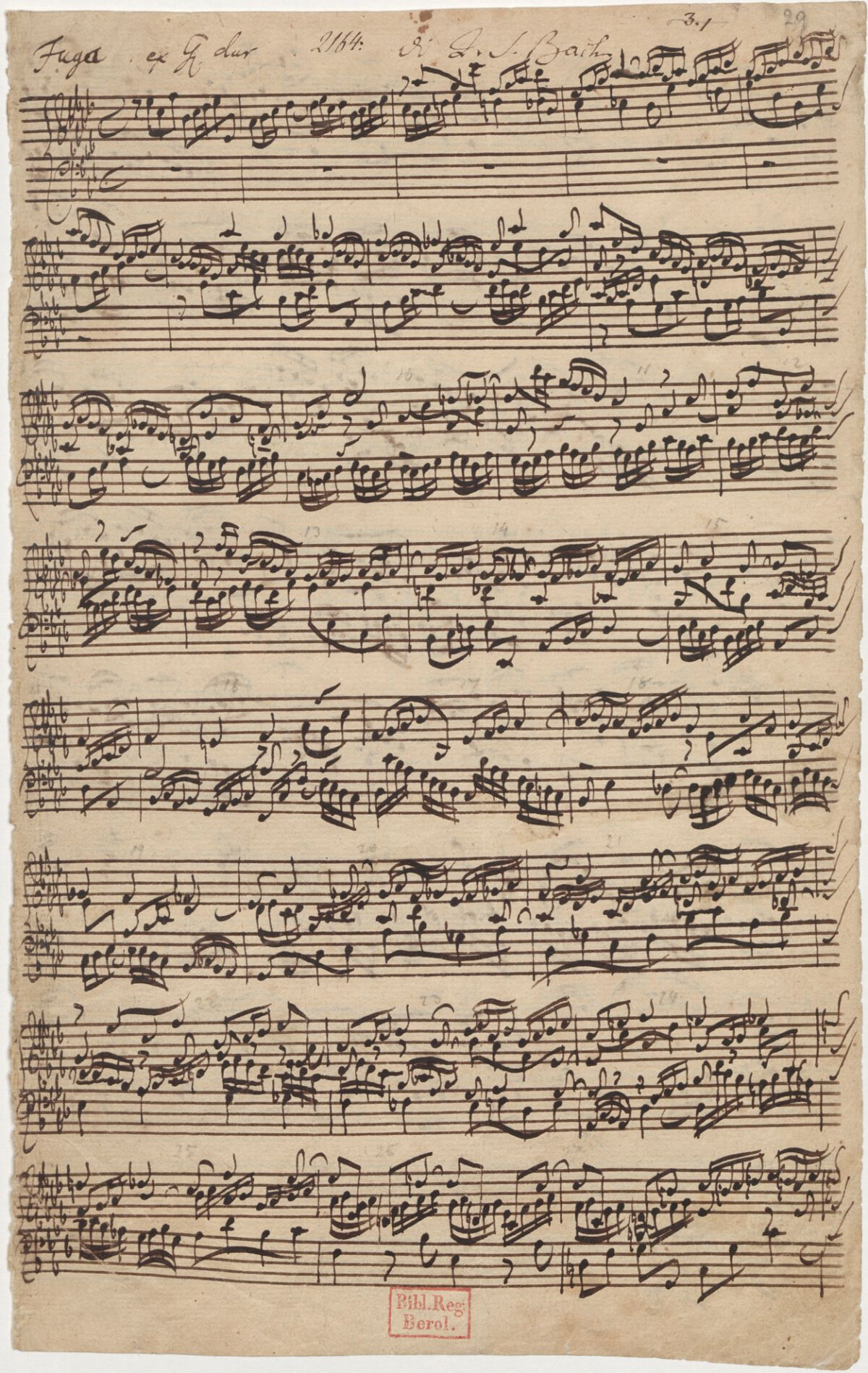
Hill gave young Goetschius a copy of “The Well-Tempered Clavier,” a keyboard textbook written centuries earlier by Johann Sebastian Bach. He also arranged for him to attend the Philharmonic Society of New York’s rehearsals.
From the ages of 15 to 20, Goetschius served as organist at two Presbyterian churches in Paterson and played the piano for a local choral group.
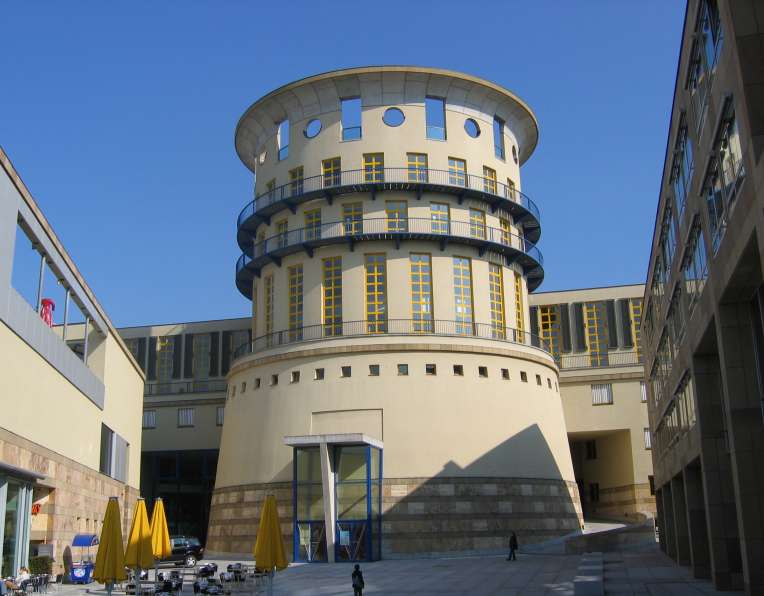
There were few opportunities for classical music education in the United States at that time. In 1873, the 20-year-old went abroad to study, despite his father’s objections. At the Stuttgart Royal Conservatory in Germany, he studied piano, composition, and music theory, graduating in 1876.
He’d been teaching English-speaking classes at Stuttgart when still a student. After his graduation, he joined the faculty, teaching harmony, composition, and music history.
He supplemented his teaching by reviewing concerts and operas for German publications. In 1885, the King of Wurttemberg conferred on him the title of royal professor of music, an honor which he regarded highly.
Teacher of Music
In 1890, Goetschius returned to the United States to accept the position of chair of music theory, history, and advanced piano at Syracuse University in New York. He only taught there for two years before moving to Boston to teach harmony, composition, counterpoint, and music history at the New England Conservatory of Music.
This position was also short-lived, though, as he quickly found himself at odds with the conservatory’s director. He resigned in 1896 to set up a private studio in Boston, and the following year he became the organist and choirmaster at First Parish Church in Brookline.
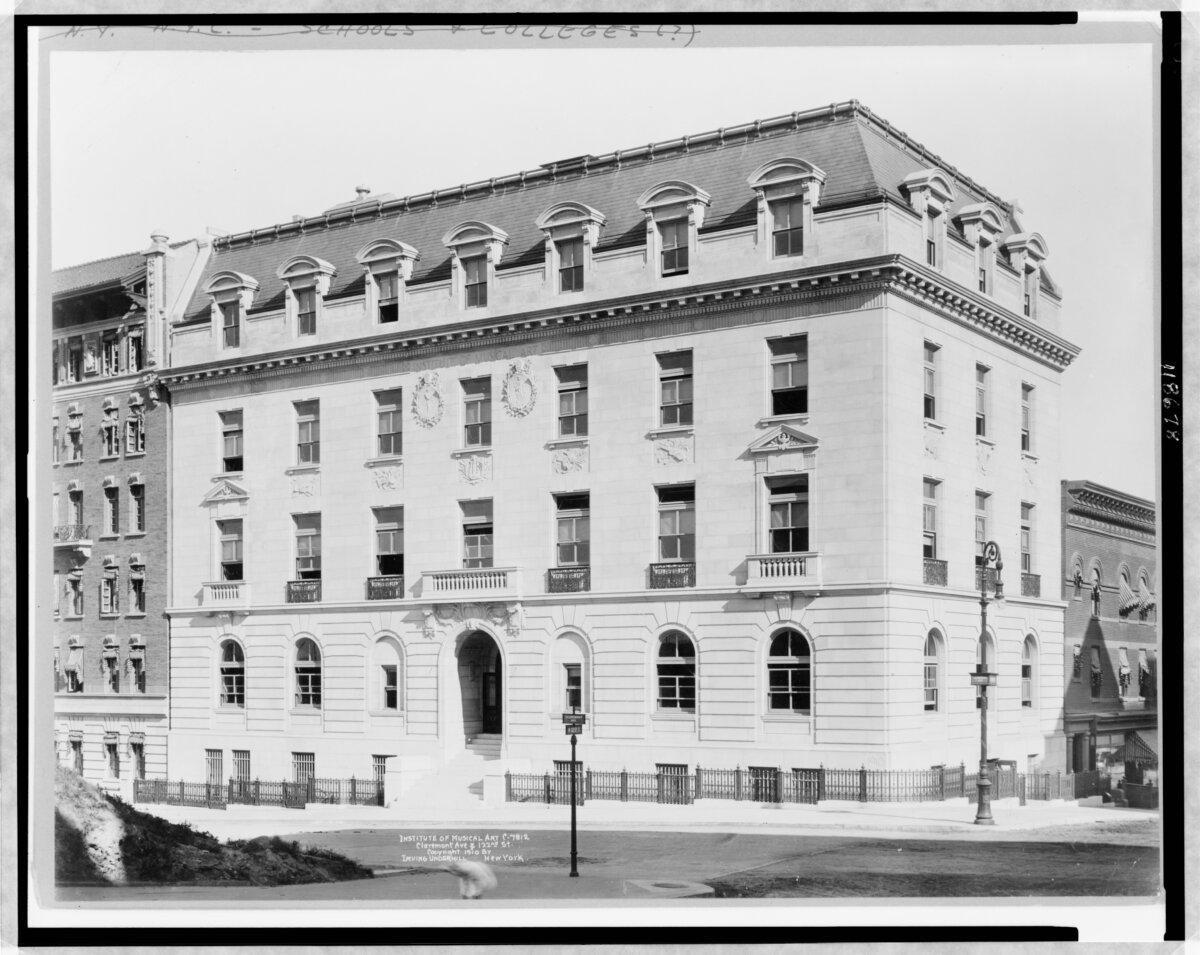
Goetschius found his most important teaching role in 1905, when he became head of the department of theory and composition at the Institute of Musical Art in New York City, which would later become the famous Juilliard. He remained there until his retirement in 1925.
After he retired, he turned his time and attention to the most in-depth writing project of his life: the Analytic Symphony Series. This series of piano arrangements was published by the Oliver Ditson Company in the 1920s through the ’40s. The series included commentaries on famous symphonies by traditional masters like Wolfgang Amadeus Mozart, Ludwig van Beethoven, and Franz Schubert.
During his 20-year tenure at the Institute of Musical Art, Goetschius helped the newly formed conservatory grow into one of the nation’s most respected music schools. Future renowned composers and music theorists flocked to study with “Papa” Goetschius, whose stern appearance belied a pleasant sense of humor and an enjoyable teaching style.
Among his students was future educator and composer Howard Hanson, himself a prodigious musician. In a later interview, Hanson recalled his studies with Goetschius:
“I studied, of course, with Percy Goetschius back in 1914 in New York and I learned a lot about counterpoint from him, but very little attention was paid to original composition; they were mostly exercises that we did. We wrote canons and fugues and different forms.”
Author of Music Theory
As a teacher of both composition and music theory in the early 20th century, Goetschius sought to stem the tide against modern trends in classical music.
While avant-garde European composers like Igor Stravinsky and Maurice Ravel experimented with new harmonic styles, this American educator taught his students that the major scale is a “natural phenomenon.” He warned them against subverting it with unnatural chords and irregular tonality.
Goetschius was unafraid to criticize respected masters. Ravel, Claude Debussy, Richard Strauss, and Richard Wagner didn’t impress him. He felt Wagner used “wandering harmonies.” Instead, he preferred the traditionally beautiful music of German masters J.S. Bach, Felix Mendelssohn, and Johannes Brahms.
Goetschius was more concerned with maintaining music’s natural order than achieving success. For instance, when former student Hanson won the Pulitzer Prize for his Fourth Symphony, Goetschius wrote him a congratulatory letter. Still, Hanson recalled that “he wanted to warn me against using modern devices.”
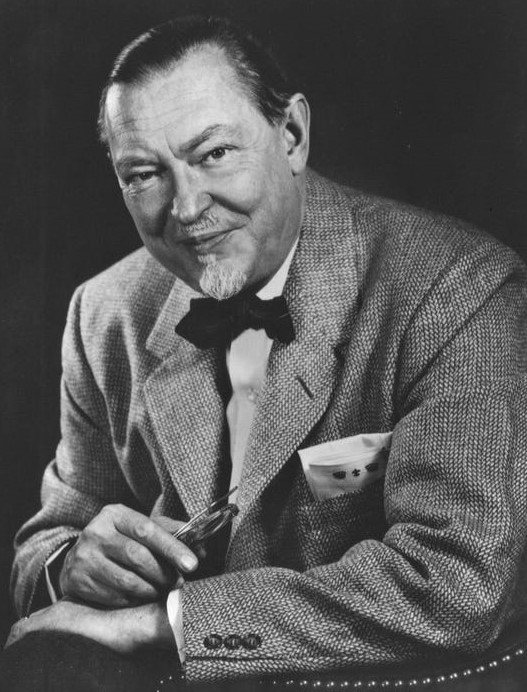
Perhaps his obscurity stems from the fact that his name is so hard to pronounce. In an interview quoted in Charles Earle Funk’s “What’s in a Name?” he explained: “My family name is (or should be) pronounced ‘get’she-us.’”
Percy Goetschius’s influence on the music world extended far beyond his classroom. He penned over 15 textbooks on music theory and composition, many of which were written during his time in Stuttgart. These books were reprinted many times during his 90-year lifetime.
Although the textbooks themselves are rarely used today, the principles advanced therein continue to be taught as core tenets of music theory.
What arts and culture topics would you like us to cover? Please email ideas or feedback to features@epochtimes.nyc.