




“The Untouchables” (1987), a fictionalized portrayal of 1930s Prohibition-era Chicago, is far from perfect. But it’s one of the most entertaining examples of the power of masculine incorruptibility.
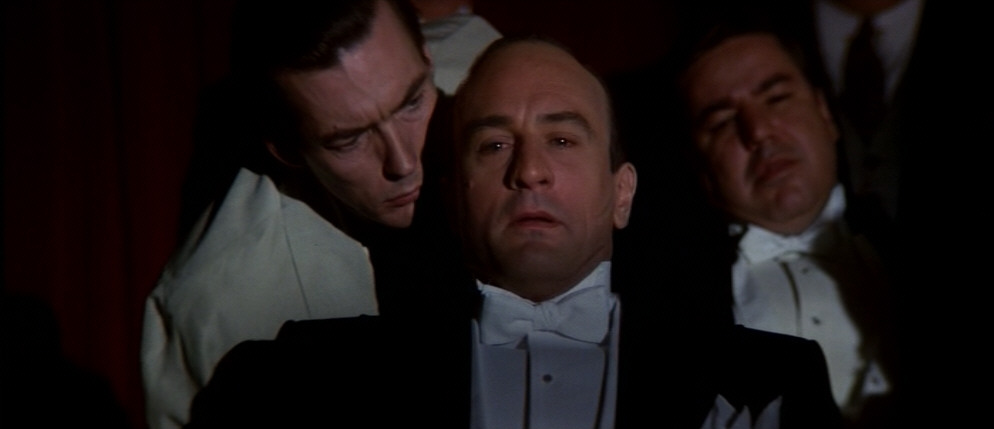
Ruthless bootlegging mob boss Al Capone (Robert De Niro) circumvents Prohibition by corrupting and co-opting the Chicago Police Department (CPD). So, the federal government empowers federal agent Eliot Ness (Kevin Costner) to stop Capone.
Whom can he trust? CPD cops are on the take, starting with Chief Mike Dorsett (Richard Bradford); he’s loyal more to power-drunk, tax-evading Capone than to the taxpaying citizens of Chicago.
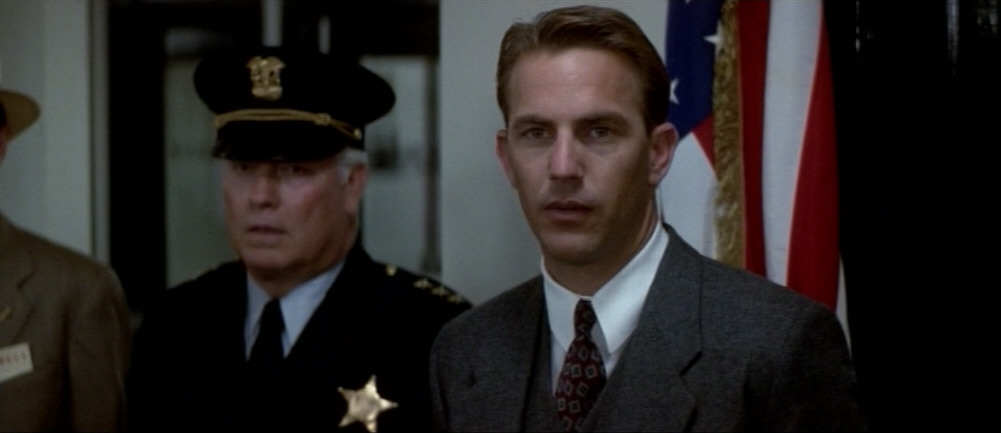
Ness handpicks men of integrity who end up being nicknamed “The Untouchables” because they’re beyond Capone’s hypnotic hold: unyielding beat cop Jimmy Malone (Sean Connery), academy rookie marksman George Stone (Andy Garcia), and mild-mannered accountant Oscar Wallace (Charles Martin Smith).
Ness takes his strength from the support of his wife, Catherine (Patricia Clarkson). But the cocktail of bribes, blackmail, and brutality poured out by Capone and his cronies nearly knocks out Ness and his men.
This film features a handful of morally imbued law enforcers standing alone against the mob. Instead of glamorizing villains, it spotlights old-fashioned heroes—those with towering convictions.
Its star-studded cast elevates the job of law enforcement to a vocation, almost on par with the priesthood and soldierly patriotism. And it’s unapologetically about men.
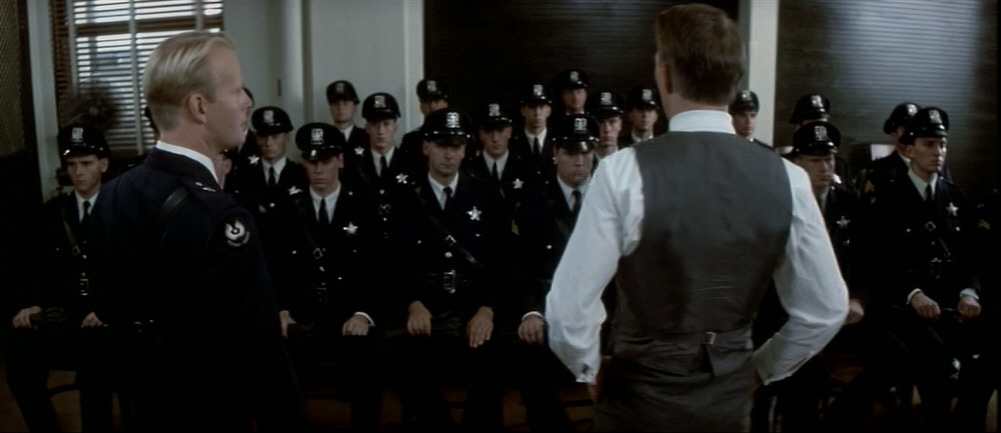
Ness is dead serious when recruiting; he prefers bachelors. As a husband and father, he knows the stakes. If he can help it, he’d rather not have grieving widows and their children on his conscience.
The testosterone-fueled risk-taking instinct in men isn’t incidental. It helps them brave danger they might otherwise shun. It’s why men, rather than women, are the obvious choice for the most daring, most dangerous jobs, where the likelihood of disability or death is highest.
This is true of soldiers, firefighters, search-and rescue responders, bomb-disposal experts, and the like. It’s also true of law enforcers like Ness, who, in the public interest, routinely put themselves in the line of fire.
That speaks to the tremendous weight on the shoulders of boys as they become men. Parents and guardians who’re supposed to help toughen those very shoulders also carry this responsibility.
Boys who imbibe both respect and restraint become men like Ness; they are instinctive, even fierce, protectors, especially of women and children. Boys who don’t imbibe either respect or restraint become like Capone. These bullies prey on those who’re weaker, and it’s not just women and children.
But macho looks and muscle alone don’t make a man. Six-footers Ness and Malone thrive on their physicality; together and separately, they both confront crooks in riveting scenes. Both dwarf the 5-foot-10-inch Stone and 5-foot-4-inch Wallace, but when the chips are down, Stone and Wallace hold their own, too.
Steely men don’t mind being in a ridiculed minority. If they’re standing up for their moral convictions as Ness and his men do, they’ll stand up against what sometimes feels like an entire city.
It may be socially convenient for some activists to piously claim they want nothing to do with righteous violence wrought by soldiers on a battlefield or by police in a boulevard shootout. Such activists, however, take their freedom and prosperity for granted; they rely on a peace that others have fought and died for. It’s like cutting the branch one sits on.
Individual Choices
Institutions don’t make mistakes; individuals do. The “system” may be rotten. But it got that way step by step, as individuals made craven choices, then hardened them into a habit until it became a reflex.
For decades, Chief Dorsett feathered his nest by enabling crooks like Capone. In contrast, Ness promptly, publicly shows alderman John O’Shea (Del Close) the door the very first time he tries to bribe him.
It’s by doing the right thing the first time that Ness gives himself the chance of doing it the second time and every time after that. That’s the opposite of mob mentality. It’s behavior that’s driven by what’s right, not by what the mob is doing.

Catherine is heroic in standing by Ness, not pleading for him to move the goalposts because she can’t stand the stress and danger his crusade entails. Ness weathers humiliation; watch him cope with the consequences of his first “liquor raid.” Malone shrugs off ostracism from lifelong colleagues such as Dorsett.
Capone fears prison, but it’s where Ness and team want him. Is prison a form of righteous violence? Of course. It’s brick or steel that forcibly holds a man in time and space against his will. Paradoxically, it’s also a stern symbol of abiding freedom. Freedom is unsustainable if threats to it aren’t warned by threats of punishment; it’s society’s “time-out” to those who misbehave. How else do people learn to obey rules, if they don’t pay a price when they break them? That’s as true of sports fields as it is of the streets.
Briefing the CPD, Ness is sensible enough to know that some of the men probably are habitual drinkers in private. As they publicly enforce the law, he asks that they “be pure” in private, too. He exercises the same ethics that society expects of people in supposedly loftier roles than policing; this includes a judge delivering a verdict or a priest pardoning a sin. They’re not blameless. No one is. It’s just that they must be held and must hold themselves to higher standards than others. Ness is forthright; his men can’t credibly enforce the law if they don’t obey it themselves.
Odd, isn’t it? The word “idealistic” is often used derisively, as if it’s a character flaw, akin to an accusation. Obviously, Ness is considered a boy scout. Yet he wears that unspoken sobriquet with pride as a badge of honor. His actions show that unless leaders aspire to excellence in their own standards of behavior, those who claim to follow them will readily settle for mediocrity in theirs.
Catherine slips a little note into Ness’s lunch pack that reads, “I’m proud of you.” What does she find so attractive and endearing about him? It’s his unbending, morally upright character. Metaphorically at least, that’s something she’ll happily raise her glass to.
Check the Internet Movie Database website for plot summary, cast, reviews, and ratings. You can watch “The Untouchables” on Kanopy, Hoopla and Prime Video.
These reflective articles may interest parents, caretakers, or educators of young adults, seeking great movies to watch together or recommend. They’re about films that, when viewed thoughtfully, nudge young people to be better versions of themselves.
What arts and culture topics would you like us to cover? Please email ideas or feedback to features@epochtimes.nyc
