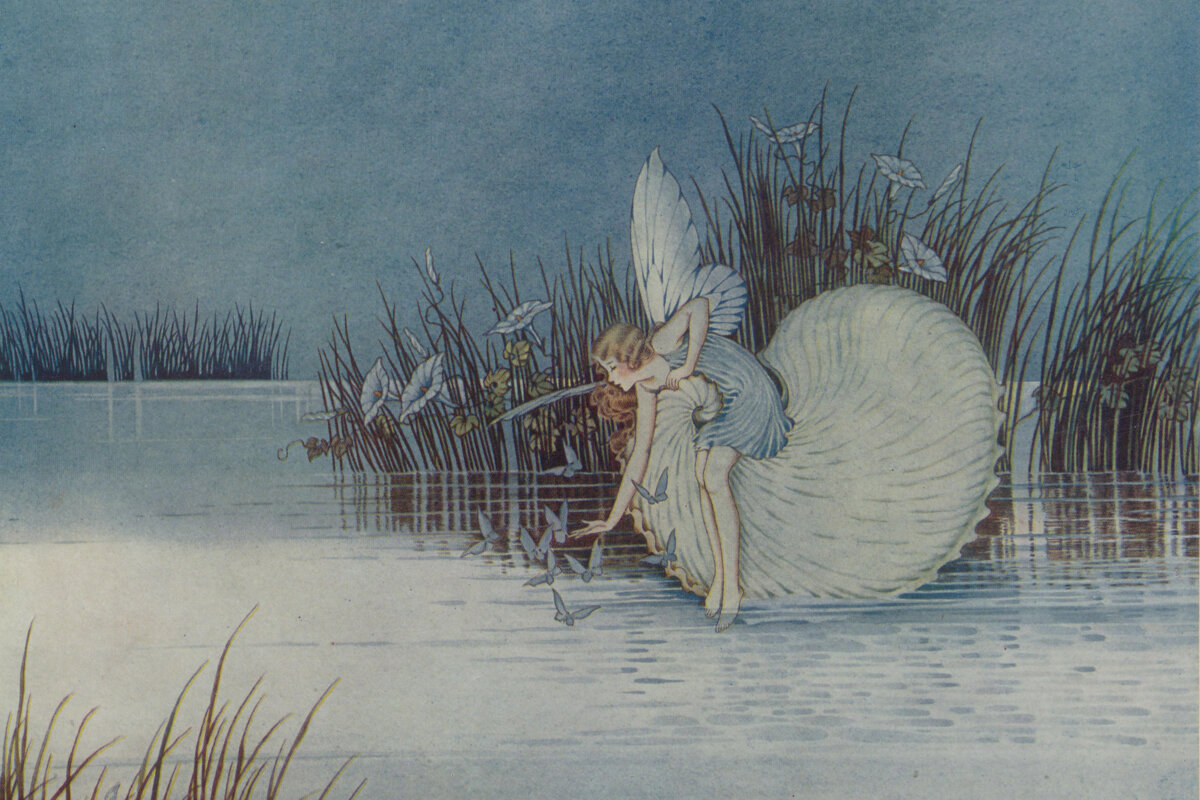
At the turn of the 20th century, as rapid industrialization swept through the Western world, publishers and readers alike turned toward fantasy. Between 1890 and 1910, fairy tales surged in popularity, fueled by nostalgia and a booming children’s book market that prized lush, imaginative illustration. Into this golden age stepped a young woman from Melbourne, Australia: Ida Rentoul Outhwaite.
Ink and Imagination
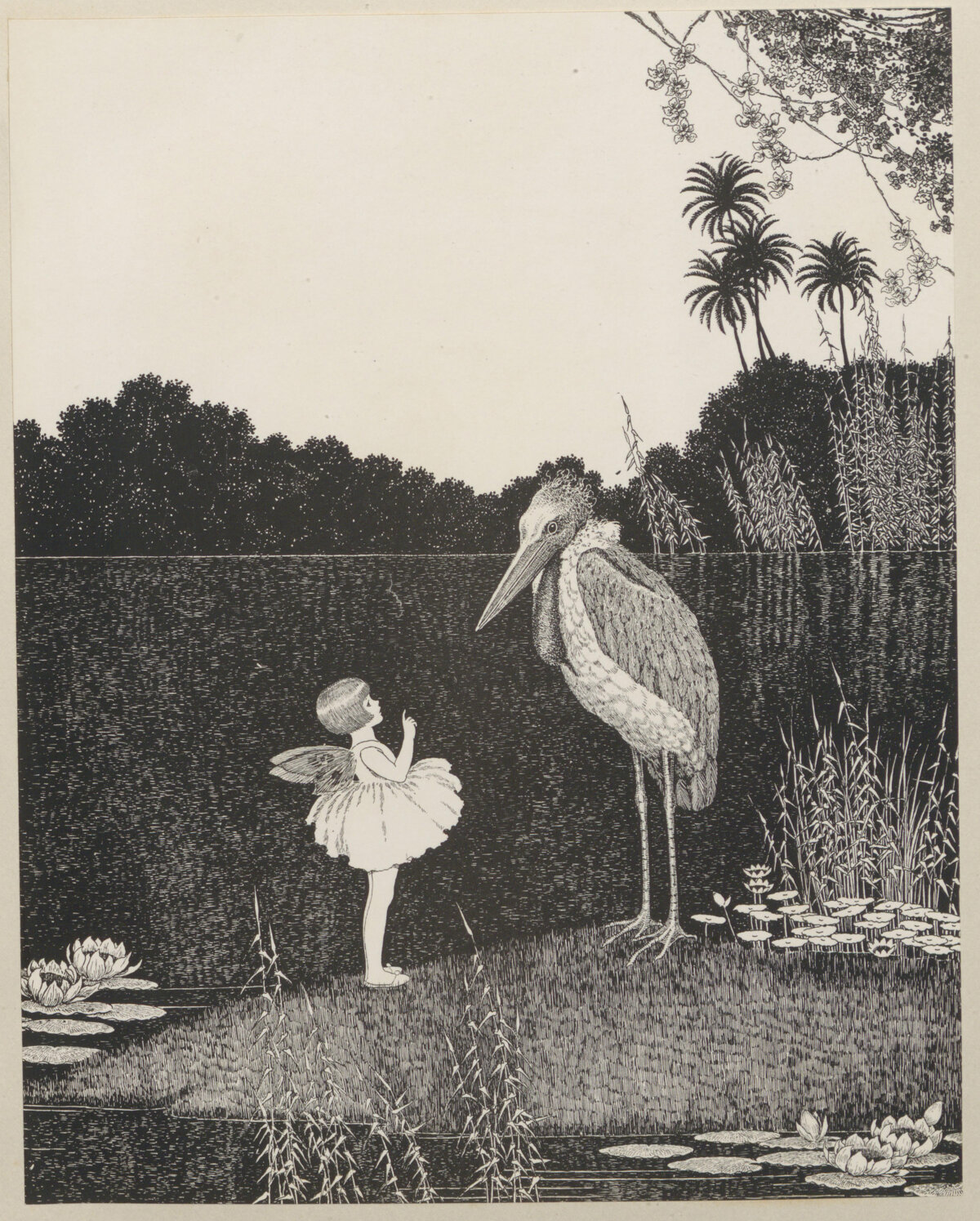
Born on June 9, 1888, in Carlton, Victoria, Outhwaite grew up as the youngest of four children in an ambitious, intellectual family. Her father, the Rev. John Laurence Rentoul, was an Irish-born Presbyterian minister and chaplain-general of the First Australian Imperial Force. The household was steeped in language and literature. Annie Rattray Rentoul, her older sister, became her earliest and most important creative collaborator.
Outhwaite’s first published illustration appeared in New Idea magazine in 1903, when she was just 15 years old. The drawing accompanied a story by Annie Rentoul, and it kicked off a lifelong partnership. By 1904, the two sisters had produced “Mollie’s Bunyip,” a book remarkable not only for its illustrations, but also for its setting.
Rather than placing its magical adventures in the forests of England or the countryside of Germany, the book rooted its fairies and creatures in the Australian bush. Kookaburras perched alongside elves. Lyrebirds moved through a landscape that readers in Melbourne and Sydney recognized as their own. In the post-Federation years, when Australian artists were actively building a national cultural identity, that was no small feat.
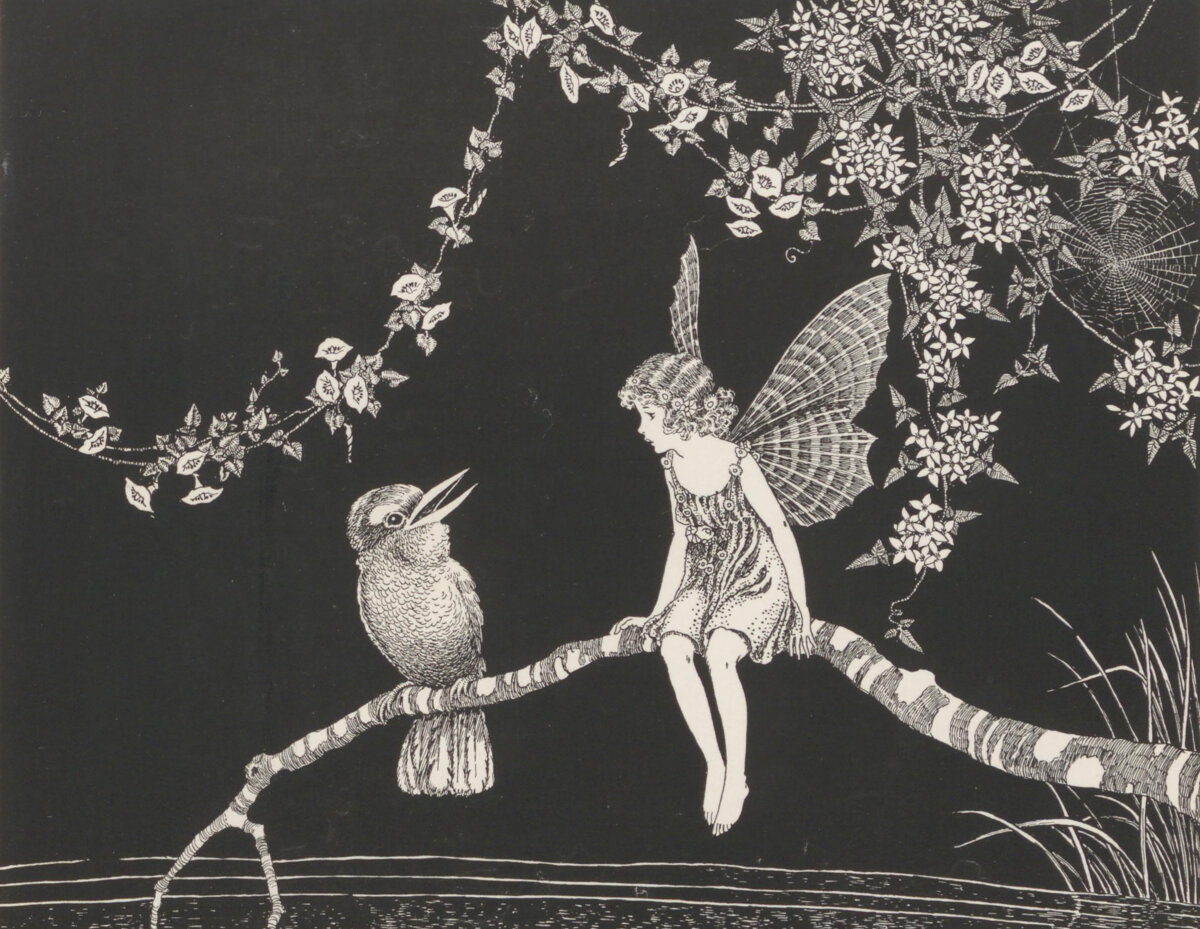
Outhwaite worked primarily in pen and ink during this early period, contributing illustrations to “Mollie’s Staircase” and “Gum Tree Brownie.” In 1907, she and Annie Rentoul exhibited at the Australian Exhibition of Women’s Work, where they displayed “Australian Songs for Young and Old.”
Marriage and Inspiration
On Dec. 9, 1909, she married Arthur Grenbry Outhwaite, a barrister and later managing director of the Perpetual Executors and Trustees Association of Australia. After the marriage and the birth of four children—Robert, Anne, Wendy, and William—she transitioned from pen and ink to watercolor. The shift was transformative. Watercolor provided the soft atmosphere that her subject matter demanded, and it was in this medium that she produced her most distinctive and celebrated work. Her children modeled for her illustrations, giving her figures a warmth that leaps off the page.
The illustrations from this period share consistent subjects: enchanting fairies converse with frogs and birds, or gather for tea with koalas around whimsical mushroom tables. Having begun illustrating in her teen years, Ida Outhwaite likely drew on her own growing sense of self and the world around her: Female figures are commonly at the center of these scenes, whether fairies with dainty wings or girls adventuring through fantastical landscapes.
The publication of “Elves and Fairies” in 1916 marked a turning point both for Ida Outhwaite and Australian publishing. Produced entirely in Australia by publisher Thomas Lothian, the book was conceived as a luxury art object: cloth-bound, printed on high-grade paper, and filled with full-color watercolor plates alongside black-and-white illustrations. It was one of the first fine art books printed in the country, released just months after Lothian issued a similarly ambitious volume on the work of Frederick McCubbin.

Arthur Outhwaite’s business instincts proved integral to the book’s success. He provided a personal subsidy of 400 Australian pounds to ensure production quality and directed the royalties toward the Red Cross, which secured patronage from the governor-general and drew considerable public attention. The book generated immediate excitement around Ida Outhwaite’s work and set the stage for an international career.
From 1916 to 1933, she held nearly annual solo exhibitions, with shows in Paris and London in addition to venues across Australia. Critics in Europe noted technical affinities with contemporary illustrators, including Aubrey Beardsley, Arthur Rackham, Edmund Dulac, and Kate Greenaway. At a London exhibition in 1920, Queen Mary purchased one of Ida Outhwaite’s works. That same year, she signed a contract with London publisher A. & C. Black, which brought out five of her books over the following decade.
Fairyland and Beyond
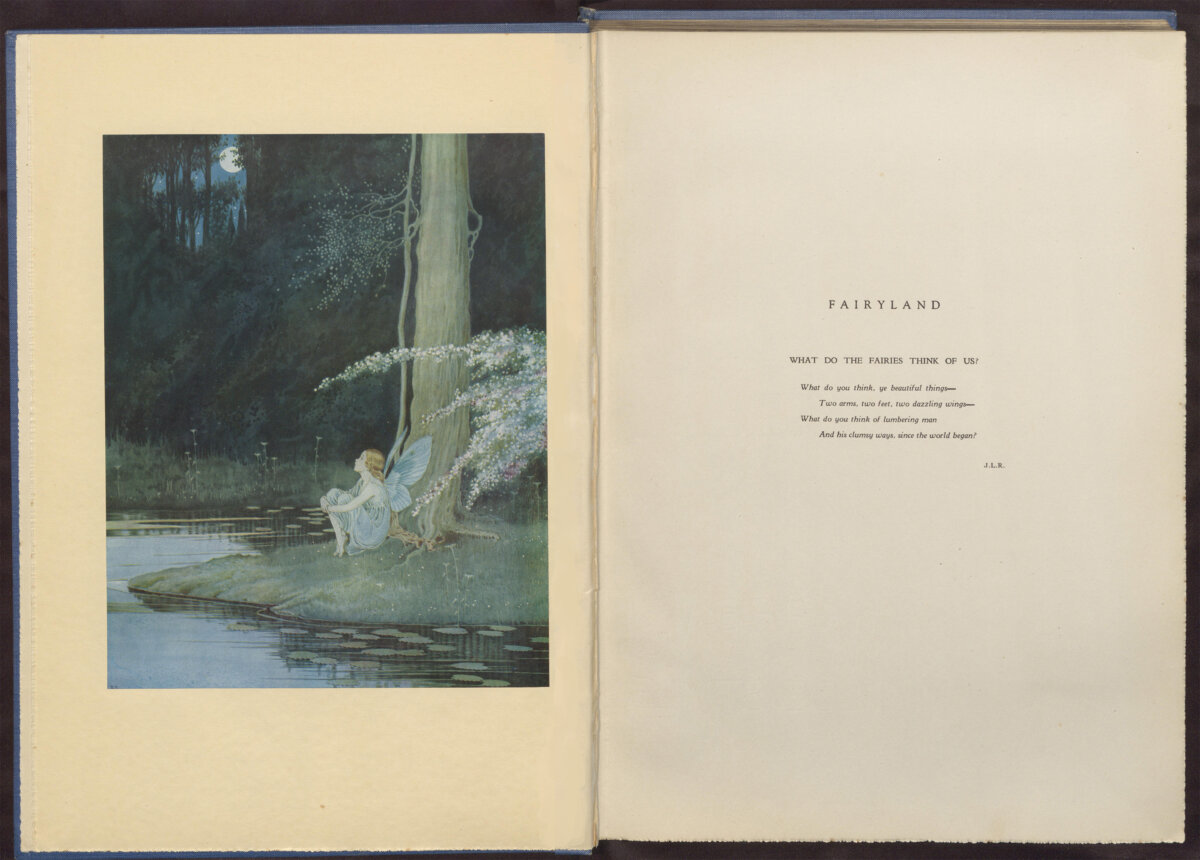
The collaboration with A. & C. Black produced several major works. “The Enchanted Forest” (1921) featured a text written by her husband. “The Little Green Road to Fairyland” (1922), a collaboration between Ida Outhwaite and Annie Rentoul, became arguably the most popular of all their shared projects. “The Little Fairy Sister” (1923) and “Fairyland” (1926), another lavish volume with text contributed by both Arthur Outhwaite and Annie Rentoul, followed in subsequent years.
Throughout this period, Ida Outhwaite’s illustrations retained characteristic qualities: precise draftsmanship, delicate washes of color, and figures rendered with a particular combination of grace and solidity. Australian fauna remained a constant presence, the imagery of the colonial fairy tradition woven together with the specific textures of the natural world she had grown up with.
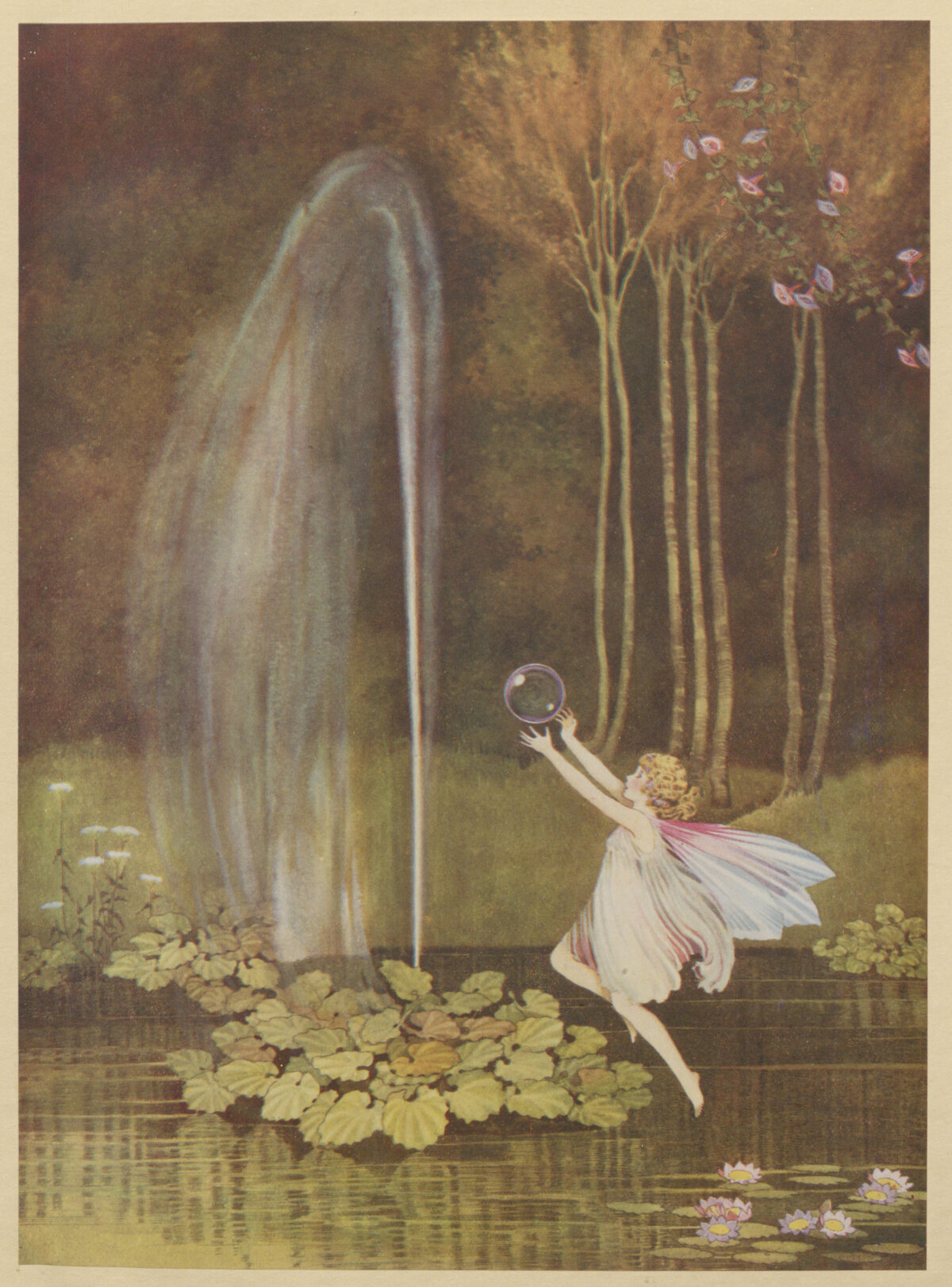
By the early 1930s, Ida Outhwaite’s popularity had begun to wane. Her last exhibitions were held in 1933. The texts, many of them constructed around existing illustrations rather than driving them, had come to seem sentimental against the shifting tastes of the era. Ida Outhwaite later reflected that World War II effectively closed the door on the genre, suggesting that the war “stopped the taste for fairies,” that the sentimentality the illustrations embodied simply had no place in the world that followed.
The years brought personal losses as well. Arthur Outhwaite died in 1938, and both of their sons were killed in action during the war. In later life, she found companionship in sharing a flat in Caulfield with Annie Rentoul, who had spent decades teaching Greek, Latin, and ancient history at Presbyterian Ladies’ College, the same school where Ida Outhwaite had once been a student.
Lasting Impressions
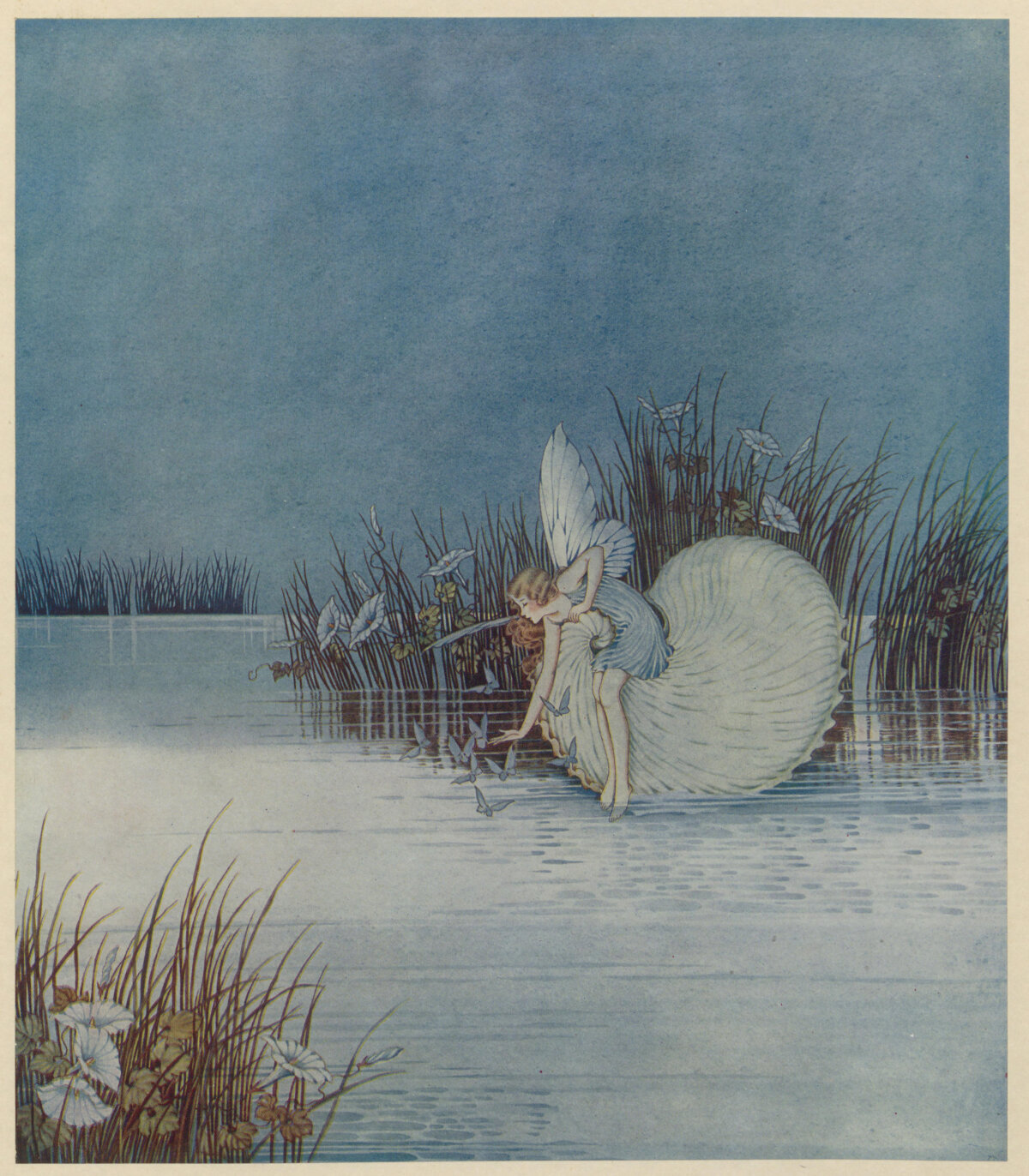
Through her work, Ida inspired fellow artists such as Edith Alsop, Ethel Spowers, and Ethel Jackson Morris. Her imagery even found its way into stained glass, with four windows in the adjoining hall of St. Mark’s Anglican Church in Fitzroy, Victoria. Decades later, her work continued to be celebrated: In 1985, Australia Post issued a postage stamp featuring an illustration from “Elves and Fairies.” A portrait of her by Amalie Colquhoun is preserved in the National Library of Australia.
In recent years, Ida Outhwaite’s original prints have attracted significant prices at auction, riding a broader cultural resurgence of interest in golden age illustration. Scholars who engage seriously with her body of work note that the illustrations function on multiple levels. The images are technically accomplished and delightful, but they also present a singular vision: winsome figures, whether human or fantastical, moving through wild and unpredictable landscapes with an optimistic spirit.
Although the fairy tale era she helped define has long passed, the enchanted worlds Ida Rentoul Outhwaite created live on, collected, exhibited, and loved by new generations who continue to find magic in her work.
What arts and culture topics would you like us to cover? Please email ideas or feedback to features@epochtimes.nyc.