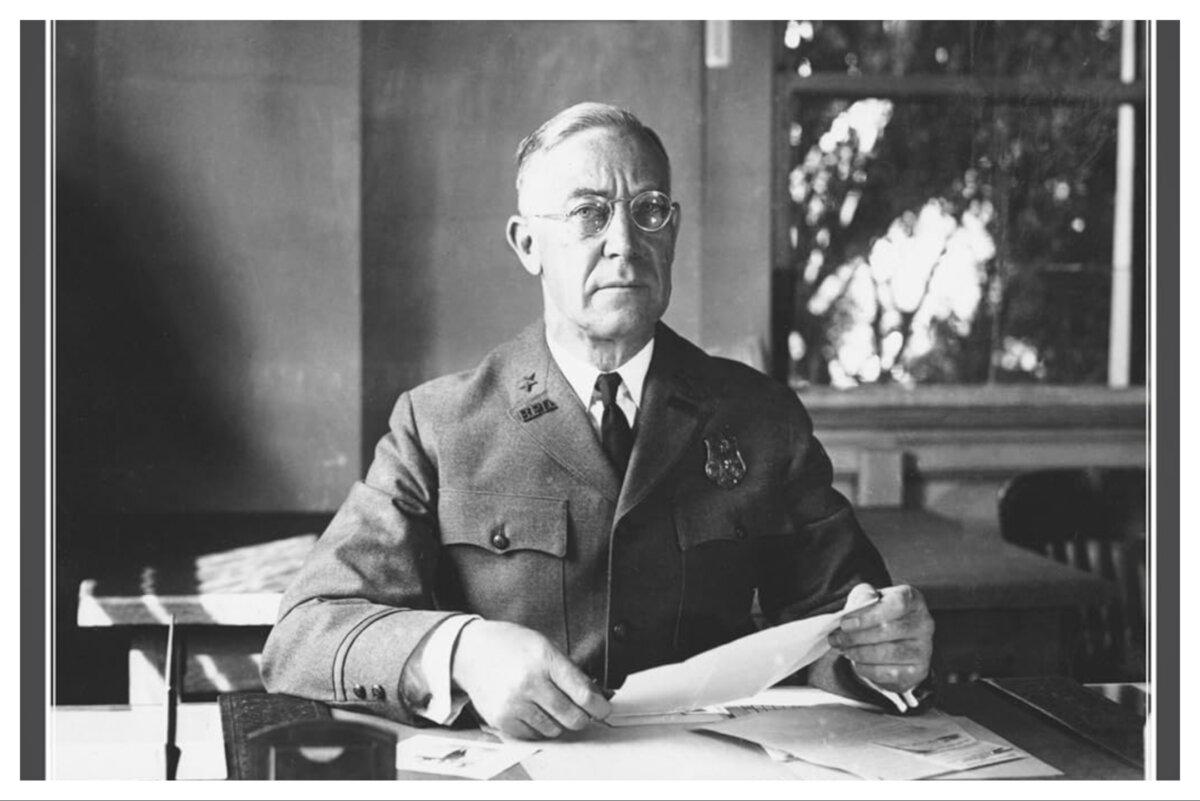
Twelve-year-old August Vollmer boarded a train with his mother, Philippine. They were moving to San Francisco. New Orleans’s police chief had just been murdered by mobsters. Crime, however, was not the motivating factor for moving from Louisiana’s major port city.
Philippine’s health had been deteriorating for several years after she was forced to take over the family grocery story following her husband’s death. She had finally succumbed to selling the business and moving the family to a better climate. Interestingly, the wife of the deceased police chief was aboard the same train. There was no way for Vollmer to know it, but he was heading straight toward a lifetime of policing. In fact, he would become arguably America’s most important law enforcement officer.
August Vollmer’s (1876–1955) arrival in California, not only ended his time in Louisiana, but also ended his formal education. In 1888, with the family now in a new town and a mother whose health restricted her capacity to work, Vollmer was forced to take up employment. He worked for a firm in San Francisco for several years, though he had his sights set on opening his own business.
Despite his educational shortcomings, he was a voracious reader and consistently sought ways to learn. He attended lectures at the local university, frequented the library, requested reading recommendations from local professors, and maintained a stance of being a lifelong learner.
Vollmer established a strong network of friends in San Francisco and in Berkeley, where the family moved in 1890. As a teenager, he and his friends hunted, fished, sailed, and camped. He and a friend agreed to form a business partnership and together they opened a fuel and feed store, which became quite successful. During this period, he also helped found the North Berkeley Fire Department.
A War Hero
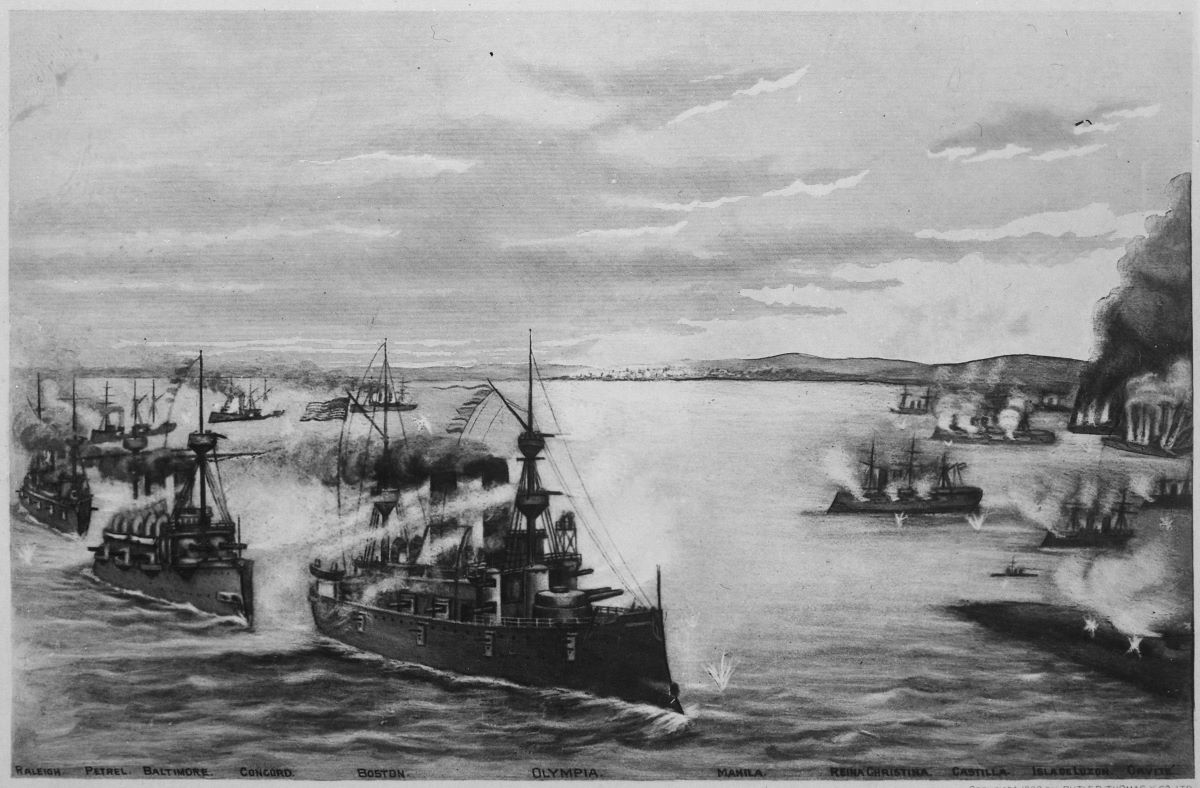
When the Spanish-American War broke out in 1898, Vollmer enlisted. He was sent to the Philippines and fought in the country’s capital of Manila. After the defeat of the Spanish, the Americans had to face down insurgents led by Emilio Aguinaldo. Vollmer was placed aboard a makeshift gunboat. The vessel had been a riverboat, but was now covered in steel sheets and armed with three-inch guns. He and his fellow soldiers were involved in numerous engagements over the course of several weeks.
Vollmer proved himself a capable soldier and was thus issued a mission to infiltrate behind Aguinaldo’s guerilla fighters to reach the Macabebe tribe in hopes of securing their alliance. The mission was a success.
Vollmer left the Philippines to return home in August 1899. Upon his return to Berkeley, he accepted a job as a postman for several years. His objective with the job was to meet people, create a large network, and ultimately reenter the business world, utilizing said network. He indeed created a network of friends and supporters, but the support was not for business, but rather politics.
Becoming Marshal
Vollmer became a trusted member of the community, and that trust helped ensure his popularity. That popularity increased dramatically from his role in a dramatic event involving a runaway railcar. As the car was barreling its way toward a passenger train, Vollmer raced toward it, leaped aboard, and pulled the brakes before it collided with the train.
His network of friends and supporters encouraged him to enter the political fray. They recommended he become the town’s marshal, a position that had long been ridiculed for its corruption. There were some, however, who suggested the position might corrupt him and he should therefore pass on the opportunity.
Vollmer saw it as a chance to improve the community and the office of marshal. He was elected in 1905. He immediately brought his military experience to bear on the office, instituting new practices in the police department.
A First Big Test
Vollmer’s policing methods were almost immediately put to the test in a case that practically reads like a hard-boiled detective story. An international criminal by the name of Matthew Kennedy, famously known then as “Kid” McMunn, arrived in Berkeley with his sights set on a local bank. He was wanted in scores of cities throughout the United States, Canada, Mexico, and Australia for the crimes of robbery, fraud, and murder.
On the night of Sept. 28, 1905, McMunn and several accomplices were casing the bank when a plainclothes policeman neared McMunn. The criminal pulled his gun and ordered the officer to raise his hands. When the officer removed his hands from his pockets, he pulled out his own gun, knocked McMunn’s gun out of the way, and fired, killing McMunn instantly. McMunn’s accomplices fired and fled, but the officer was unharmed.
When McMunn’s body was brought to the morgue, Vollmer had a plainclothes officer watch for and follow any suspicious visitors. When a grieving woman arrived to see the body, Vollmer’s officer followed the woman, a prostitute known as “Little Egypt” who lived in San Francisco’s Barbary Coast. After interrogation, she identified the accomplices and where they were staying. The three were summarily arrested.
Lasting Innovations
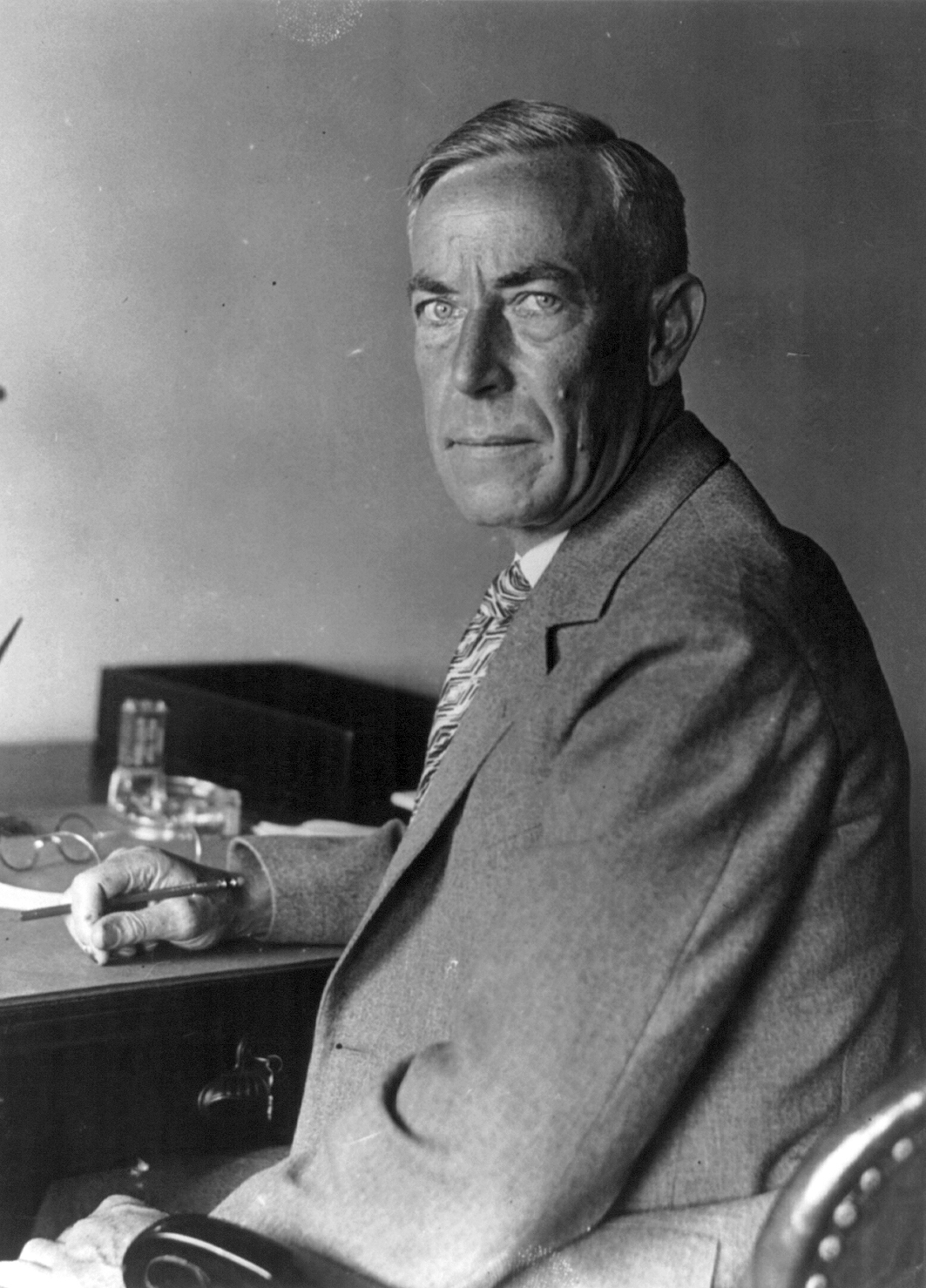
Four years later, Vollmer created the rank of police chief, becoming Berkeley’s first. As a constant reader and learner, he studied policing methods used around the country and Europe. He was always looking to improve his police department, and policing in general. As a way for his police officers to reach crime scenes sooner, he instituted the use of bicycles. Although locals laughed at the idea, the method worked and was actually the precursor to police cars and police motorcycles.
Vollmer understood that communication was key for his officers, and technology had presented a way to make communication more efficient and effective: the telephone. He had phone stations placed throughout the city, which increased the success rate of reporting crimes and catching criminals.
Innovation and technology were helpful, but Vollmer knew that catching criminals—or even preventing crime before it happened—was contingent on the men and women (he was one of the first police chiefs to hire a female officer) in the force. He created a fitness criteria—both physical and mental—for officers. Officers needed to be emotionally mature, educationally adept, and in good shape. His methods inspired other police departments in California and across the country.
The Berkeley police chief (as well as a brief stint as Los Angeles Police Department chief in 1923) utilized military methods to track criminals and certain crimes happening in the city by cross-referencing locations and times of offenses. Along with efforts to stop crime before they took place, Vollmer instituted an adolescent intervention social program, which focused on students who might be susceptible to the criminal life.
‘A Truly Complete Man’
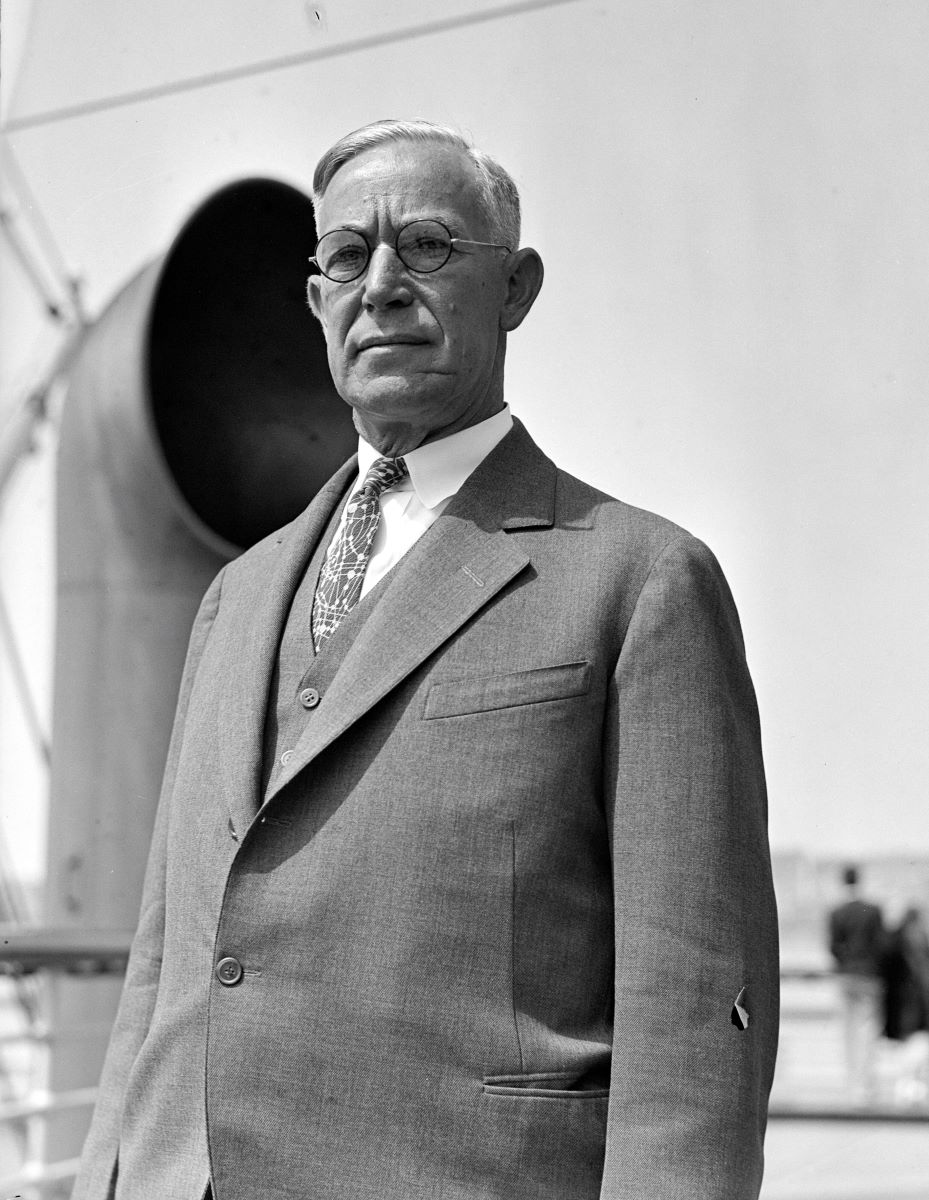
The war hero and police chief who had only attained a fourth grade education was not only perceived as a community legend, but a brilliant policing mind. Due to that brilliance, the University of California, Berkeley allowed him to start a summer training program for police, which later led to degree programs. The Berkeley police chief became the first to require his officers to obtain a degree.
Vollmer wanted his officers to be educated, and he proved to be a formidable example of the educated lawman. Along with writing papers and articles on the subject of policing, he became a professor at the University of Chicago in 1929. The University of California, Berkeley made him a tenured professor in 1932, where he taught full-time until 1937. He wrote three books—two of which he co-authored.
The International Association of Chiefs of Police presents the annual August Vollmer Leadership in Forensic Science Award, which “recognizes the proactive, innovative use of forensic technologies by law enforcement agencies and units.”
For all of Vollmer’s efforts and innovations, he has become known as the Father of American Policing and the Father of Police Administration.
Two years before Vollmer’s death in 1955, his biographer, O.W. Wilson wrote, “August Vollmer may be considered a truly complete man. By his works of a lifetime he has shown that he possesses the qualities which he listed, many years ago, as desirable for a policeman: the wisdom of Solomon, the courage of David, the strength of Sampson, the patience of Job, the leadership of Moses, the kindness of the Good Samaritan, the faith of Mary, the diplomacy of Lincoln, and the tolerance of Confucius.”
What arts and culture topics would you like us to cover? Please email ideas or feedback to features@epochtimes.nyc.