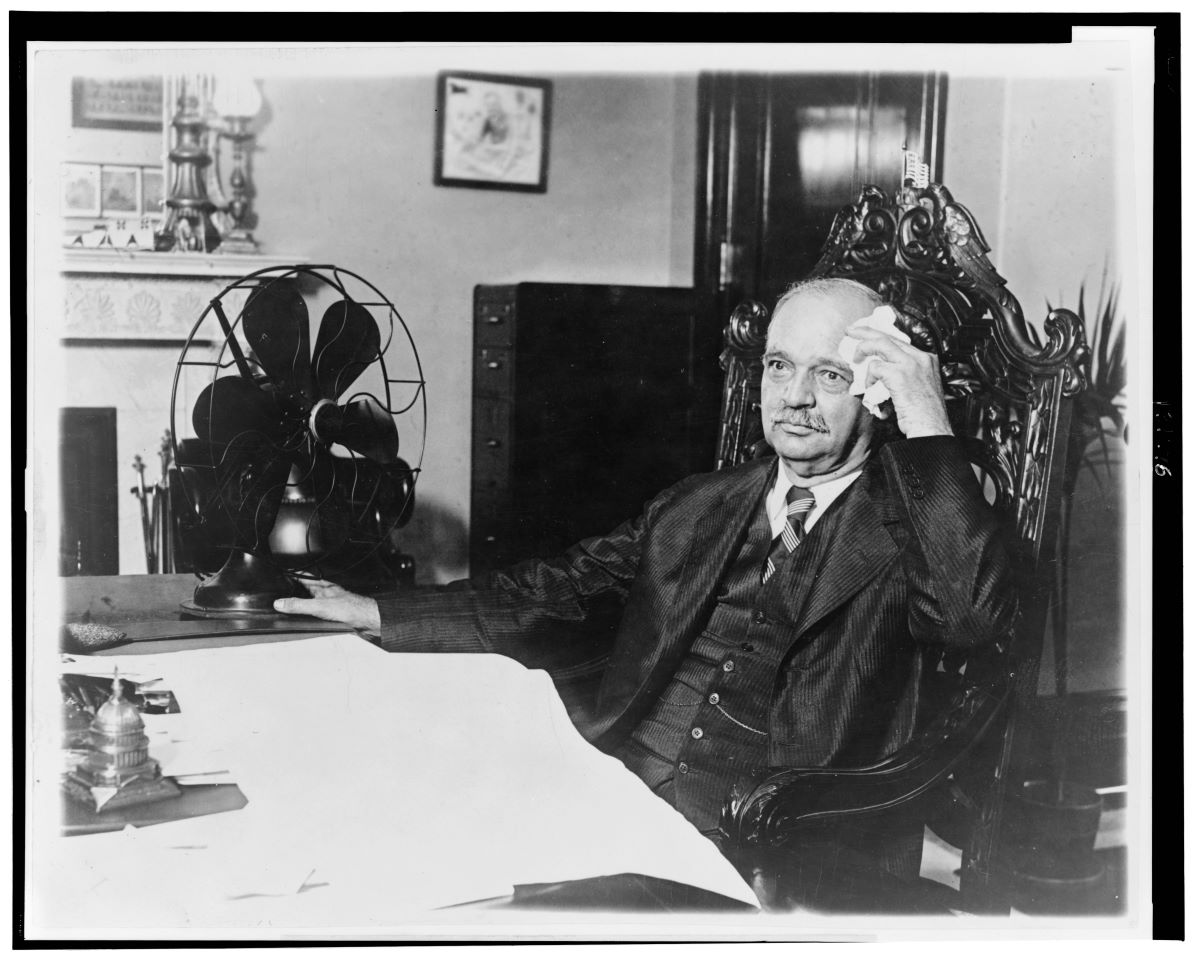
Before vice presidents became media fixtures and campaign celebrities, Charles Curtis climbed one of the most unusual political ascents in American public life. Born in Kansas Territory before statehood and raised amid the hardships of frontier life, Curtis rose through legal apprenticeship, political discipline, and an instinct for compromise to become vice president of the United States under Herbert Hoover in 1929.
Few politicians from territorial Kansas climbed further in national politics than Curtis. He grew up in modest circumstances, lost his mother at a young age, and spent decades mastering the procedural workings of Congress. Though his tenure as vice president was overshadowed by the onset of the Great Depression, Curtis became one of the Republican Party’s most skilled legislative tacticians and, perhaps, one of the most overlooked national figures of his generation.
A Nontraditional Upbringing
Curtis was born on Jan. 25, 1860, in North Topeka, Kansas Territory, just one year before Kansas entered the Union. His father, Orren Curtis, was of English, Scottish, and Welsh ancestry and served in the Union Army during the Civil War. His mother, Ellen Pappan Curtis, was of one-quarter Kaw ancestry with French heritage through her family line. After her death, Curtis spent much of his childhood with his maternal grandparents near Council Grove, Kansas, where members of the Kaw Nation lived before their relocation to Indian Territory.
Family accounts indicate that Curtis spent part of his youth riding horses across the plains and became an accomplished horseman. He reportedly raced horses as a young man and developed the competitive temperament that later served him well in politics. Curtis also spoke the Kaw language Kanza and some French during childhood, before English became his dominant language.
When the federal government relocated the Kaw Nation to Indian Territory in the 1870s, Curtis remained in Kansas. According to family accounts, his grandmother encouraged him to stay in Topeka and pursue his education and opportunity there.
Curtis attended public schools in Topeka and later studied law through apprenticeship, a common path at the time. He was admitted to the Kansas bar in 1881 at age 21 and quickly entered public service. In 1884, he was elected county attorney of Shawnee County, Kansas, where he gained attention for enforcing state prohibition laws.
Political Rise
His rise continued in 1892 when he won election to the U.S. House of Representatives as a Republican. He served seven terms in the House before moving to the U.S. Senate in 1907, where he developed a reputation as one of Washington’s most effective behind-the-scenes negotiators.
Curtis was not known as a fiery speaker or ideological crusader. His strength lay in finding the middle ground. He excelled at reading political moods, easing disputes between factions, and assembling support for difficult legislation. Colleagues respected his patience, memory for detail, and ability to navigate competing interests inside the Republican Party.
One of the most significant—and controversial—laws tied to his name was the Curtis Act of 1898. The legislation dissolved tribal courts in Indian Territory and accelerated allotment policies that had begun under the Dawes Act. Supporters argued that the measure helped prepare the territory for eventual statehood and expanded federal administration in the region. Critics later contended that it weakened tribal governments, reduced Native legal autonomy, and hastened the loss of tribal landholdings. Historians continue to debate its long-term consequences.
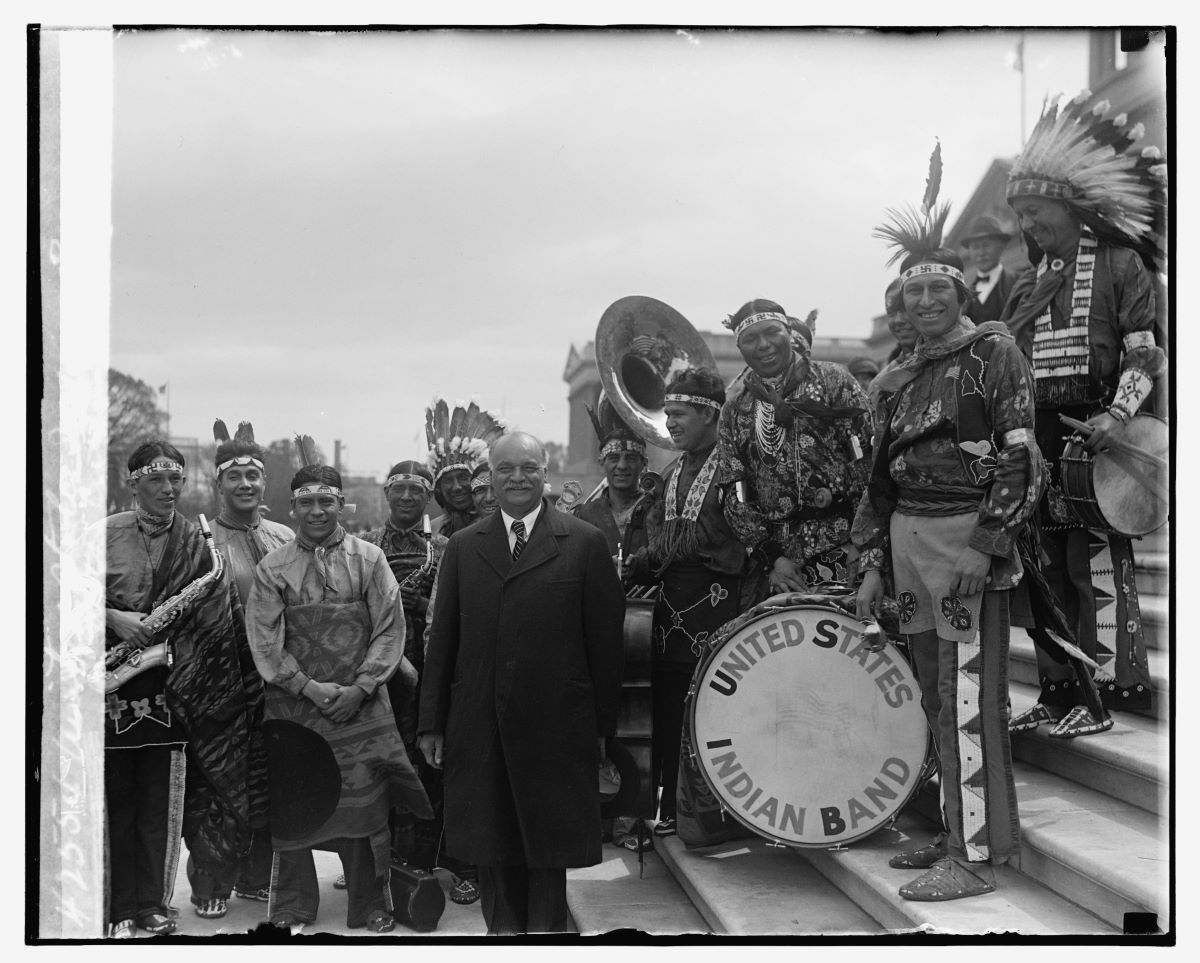
Curtis supported women’s suffrage and later backed the Indian Citizenship Act of 1924, which granted U.S. citizenship to Native Americans born in the United States. Economically, he aligned with mainstream Republican policies of the era, favoring protective tariffs, restrained federal spending, and commercial expansion.
By the 1920s, Curtis had become one of the most powerful Republicans in Washington. He served as Senate majority whip and later Senate majority leader, positions that placed him near the center of Republican legislative strategy during the administrations of Warren G. Harding and Calvin Coolidge. Indeed, few congressional leaders of the era possessed a stronger grasp of Senate procedure or partisan give-and-take.
Political Ambitions
In 1928, Curtis briefly sought the Republican presidential nomination. The party instead selected Hoover, whose international reputation as a humanitarian and former commerce secretary made him the stronger national candidate. Curtis accepted the vice-presidential nomination, helping balance the ticket with decades of congressional experience and ties to western Republicans.
The Hoover-Curtis ticket won decisively in 1928, carrying 40 out of 48 states. Their victory, however, was quickly eclipsed by the Wall Street crash of 1929 and the beginning of the Great Depression.
Like most vice presidents of his era, Curtis wielded limited formal authority. He presided over the Senate and remained politically engaged, though Hoover relied heavily on his own advisers. Curtis supported administration efforts aimed at restoring business confidence, encouraging voluntary cooperation among industries, and easing financial instability, but those measures failed to halt the widening banking crisis and deepening economic contraction.
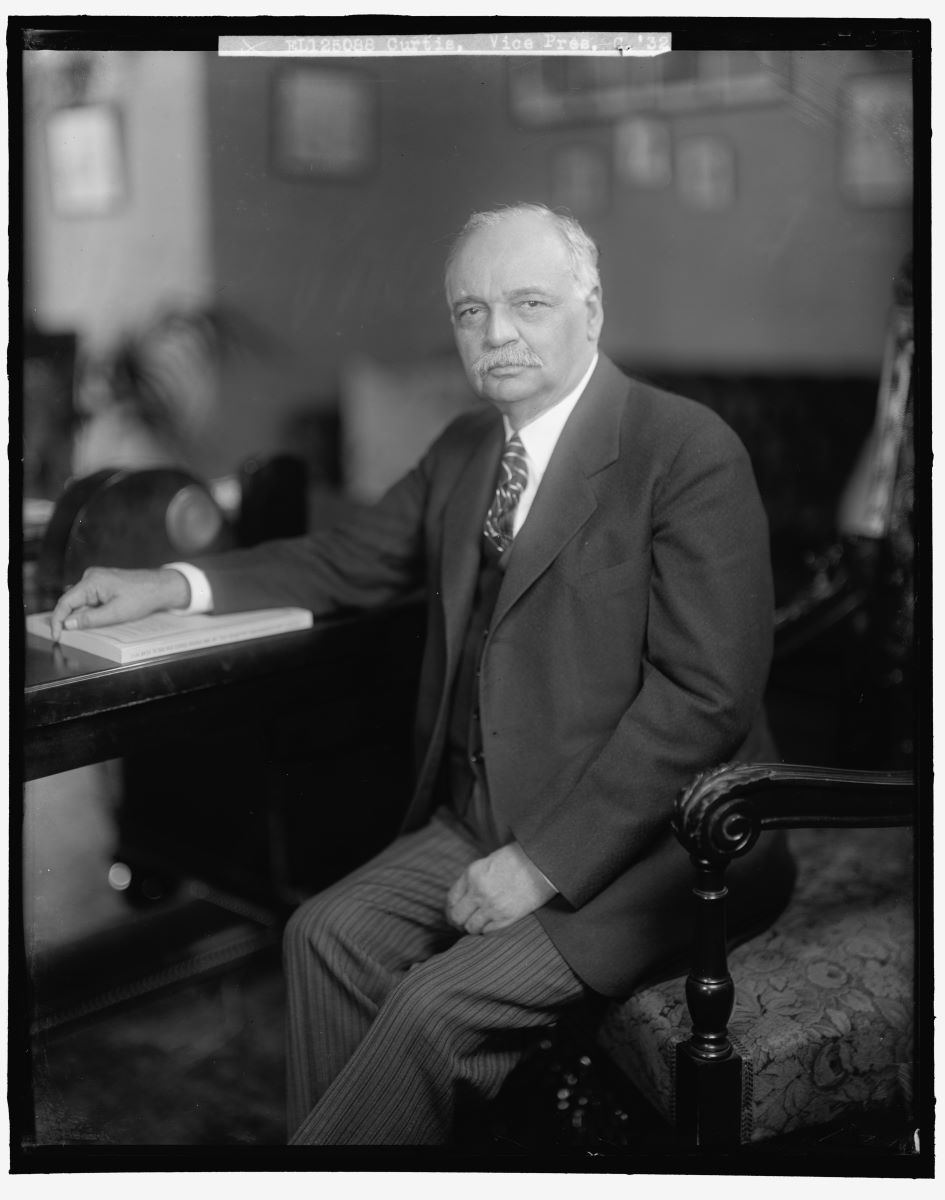
By 1932, public anger over unemployment, bank failures, and mounting foreclosures helped propel Franklin D. Roosevelt to victory over Hoover and Curtis.
After leaving office, Curtis returned to law practice in Washington, and largely withdrew from public life. He died on Feb. 8, 1936 and was buried in Topeka, Kansas.
Curtis remains a consequential but often unnoticed political figure. He spent decades shaping congressional legislation, managing Republican strategy, and navigating tariff debates, patronage disputes, and sectional divisions during the years when western expansion, industrial growth, and Progressive Era reforms reshaped the federal government.
He embodied several competing currents in early 20th-century America: western state-building, Republican machine politics, and federal assimilation policies toward Native nations. His vice presidency arrived just as the American economy began unraveling and, perhaps, obscured the breadth of a political career that had once placed him near the center of national Republican leadership.
What arts and culture topics would you like us to cover? Please email ideas or feedback to features@epochtimes.nyc.