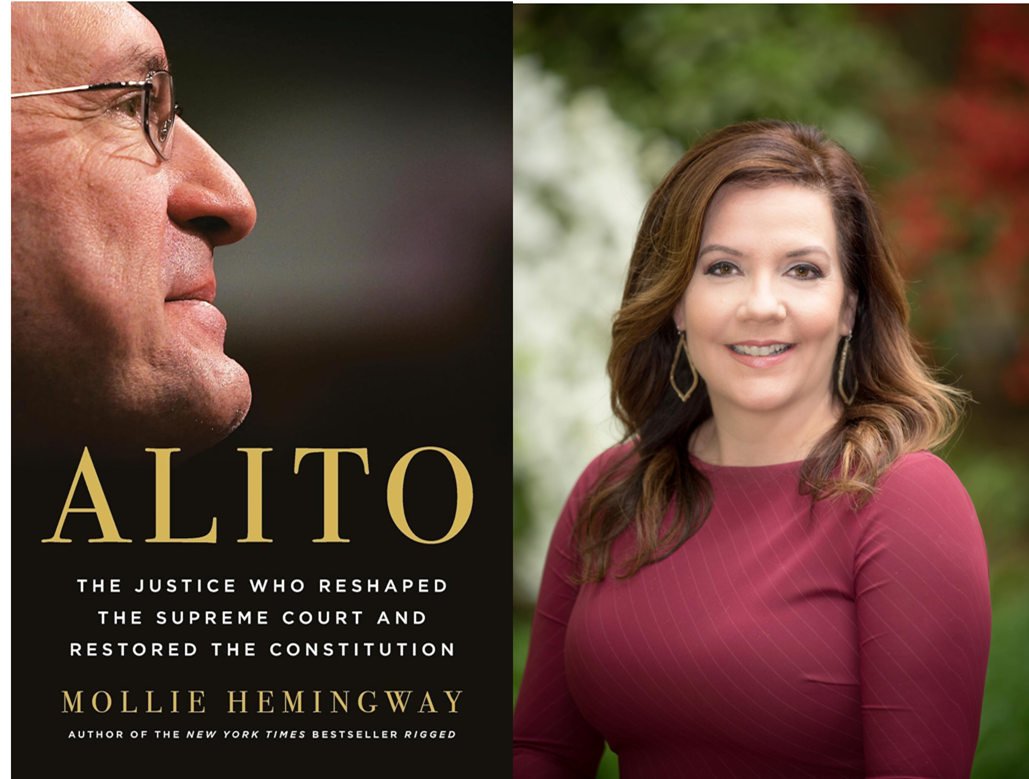
Before the Supreme Court’s 2022 decision in Dobbs v. Jackson Women’s Health Organization, which overturned the landmark 1973 Roe v. Wade ruling on abortion access, Justice Samuel Alito was rarely the center of political and media attention. But after Alito authored the majority opinion in Dobbs, he found an extraordinary level of attention suddenly aimed at him.
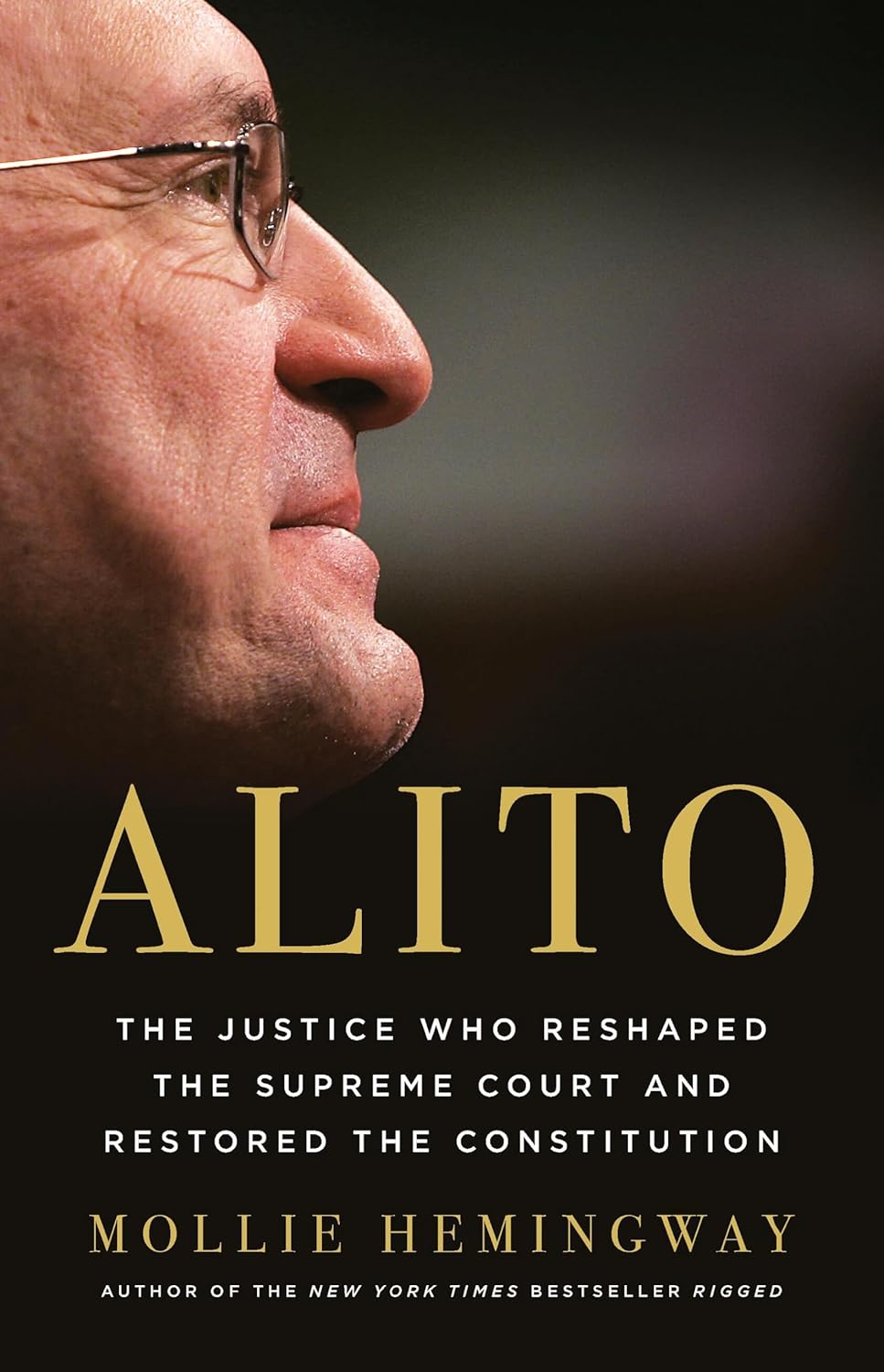
Mollie Hemingway has penned a vigorous new biography on Alito, titled “Alito: The Justice Who Reshaped the Supreme Court and Restored the Constitution.” Her book offers a fascinating glimpse into the thoughtful man who unexpectedly changed history from the nation’s highest court.
A Rising Star
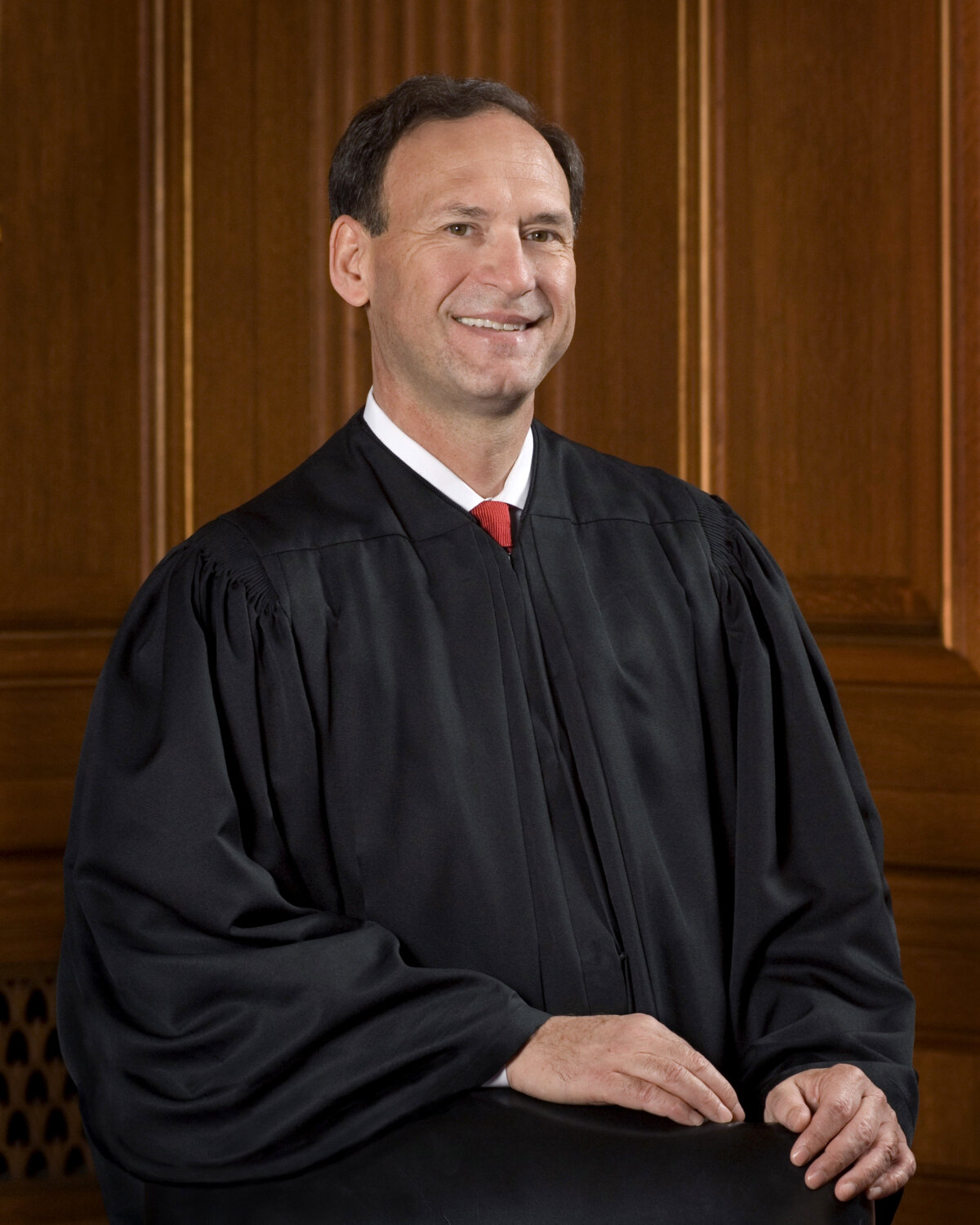
Hemingway hails Alito as an old-fashioned American success story. Born in 1950 to Italian immigrants, he grew up in a blue-collar, multiethnic New Jersey neighborhood; he recalled that it was a “warm, but definitely unpretentious down-to-earth community.”
Alito’s principles were evident when he went on to Princeton in 1968. Despite the student and faculty fervor against the Vietnam War, Alito joined the ROTC and proudly wore his uniform on campus. He later graduated from Yale Law School, where he edited the Yale Law Journal.
Alito’s early career saw a rapid rise through the judicial branch of government, culminating in his 1990 appointment to the U.S. Court of Appeals for the Third Circuit.
His elevation to the Supreme Court to fill the vacancy by the retiring Sandra Day O’Connor occurred under President George W. Bush. John Roberts was Bush’s first choice, but he was abruptly shifted to replace Chief Justice William Rehnquist after his unexpected death. Bush’s second choice was White House Counsel Harriet Miers, but she withdrew amid Senate opposition to her lack of judicial experience.
Inside the Court
Hemingway’s book is best when it reveals the behind-the-scenes protocol and interactions at the Supreme Court. Some amusing anecdotes involve the “hazing” of newly appointed justices, who are tasked with mild indignities such as attending the monthly cafeteria committee meeting and being the last to speak when the justices hold private conferences.
There is also zesty gossip about the private behavior of the justices, with unexpected examples of Clarence Thomas’s warm sense of humor and Sonia Sotomayor’s bossing around of the Supreme Court police officers.
Once he settled into the Supreme Court, the laid-back Alito was mostly overlooked by media observers and political pundits. They lionized his extroverted fellow justices Antonin Scalia and Ruth Bader Ginsburg.
A rare blip of scrutiny occurred during the 2010 State of the Union speech when President Barack Obama made an unflattering reference to the Supreme Court’s ruling in the Citizens United case. Cameras captured an annoyed Alito muttering “Simply not true” in response to the president’s remarks. This created a minor media furor, with Obama supporters chiding the justice for perceived rudeness.
After that incident, Alito hasn’t returned to the State of the Union audience. Hemingway repeatedly cites other cases of media bias in Supreme Court coverage. She points out that liberal justices rarely receive criticism and conservative justices rarely receive praise from legacy media organizations.
New Dangerous Ground
The media leaking of the Dobbs decision ahead of the official ruling marked an unprecedented breach of security. Hemingway offers no theories on who was responsible, but glumly notes that the collegial nature of the court’s operations was forever damaged.
After the Dobbs ruling, Alito became the target of several articles in far-left media outlets designed to question his ethics and integrity. But Alito wouldn’t be steamrolled by slanted coverage. He caught wind that ProPublica planned a scurrilous smear campaign against him. Proactively, he authored an opinion piece in The Wall Street Journal revealing the attack and denouncing its salacious claims as patently false.
Not surprisingly, Alito’s self-defense created uproar among leftist journalists who weren’t used to being challenged by their subjects. Hemingway cites the fury by New York Times editorial board member Jesse Wegman. The journalist stewed that Alito was “an exceptionally touchy guy” who displayed “bitterness and superciliousness” in his preemptive effort to protect his reputation.
Opponents to the Dobbs ruling imperiled the safety of the justices. The court’s conservative justices were doxxed and protesters began demonstrating outside the private residences. Jen Psaki, President Biden’s press secretary, brazenly stated that the administration encouraged those demonstrations. Alito received emailed death threats, and his office received an envelope containing powder designed to resemble anthrax. Hemingway adds that none of the court’s liberal justices spoke out against this behavior.
The uproar over Dobbs has dialed down, and Alito continues with his work. At 76 years old, he shows no signs of slowing down. He continues to make speeches and engage in forums where he carefully explains his concept of constitutional law and the purpose of the Supreme Court in the checks-and-balances structure of government.
Hemingway quotes an unnamed federal judge who calls Alito “all steak and no sizzle.” The same culinary analogy can be said about Hemingway’s portrait of this influential justice. In this case, the literary steak is cooked to perfection.
‘Alito: The Justice Who Reshaped the Supreme Court and Restored the Constitution‘
By Mollie Hemingway
Basic Liberty: April 21, 2026
Hardcover, 352 pages
What arts and culture topics would you like us to cover? Please email ideas or feedback to features@epochtimes.nyc