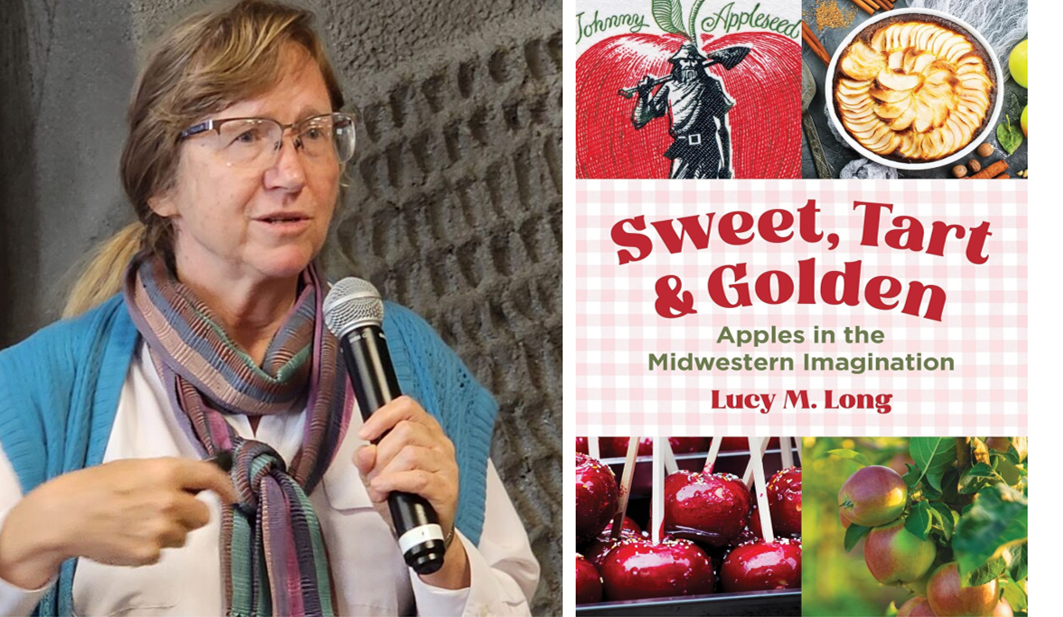
Few fruits carry as many symbolic meanings as the apple. It has been used to represent disastrous temptation (think of Adam and Eve’s one-way ticket out of Eden) and a wretched anomaly within a group of people (the notion of how “one bad apple” could spoil the whole bunch).
But the apple also has positive connotations. After all, who needs a doctor when consuming an apple a day? And consider how an uncommonly wonderful individual can be “the apple of your eye.”
For historian and folklorist Lucy M. Long, the apple is an integral part of the American Midwest’s history. Long, the founder and director of the Center for Food and Culture, has produced a fascinating overview of the fruit’s impact on the region.
The result is the publishing equivalent of a great slice of homemade apple pie, with thick and rich chunks of apple history and minutiae lovingly baked into a tasty presentation.
The Apples Arrive
Apples are not native to North America; crab apples are an exception, although Long notes that they are a different botanical species. The fruit’s history can be traced back to ancient Kazakhstan and spread across Europe and Asia via the Silk Road caravans.
British settlers at the Jamestown colony brought the first apple seeds and saplings to the Western Hemisphere in 1607. These settlers initially relied on apples mostly to make hard cider. German immigrants in the 18th century included the fruit in their cooking. Rotted apples also had an important colonial purpose, with farmers feeding them to livestock and incorporating them into compost.
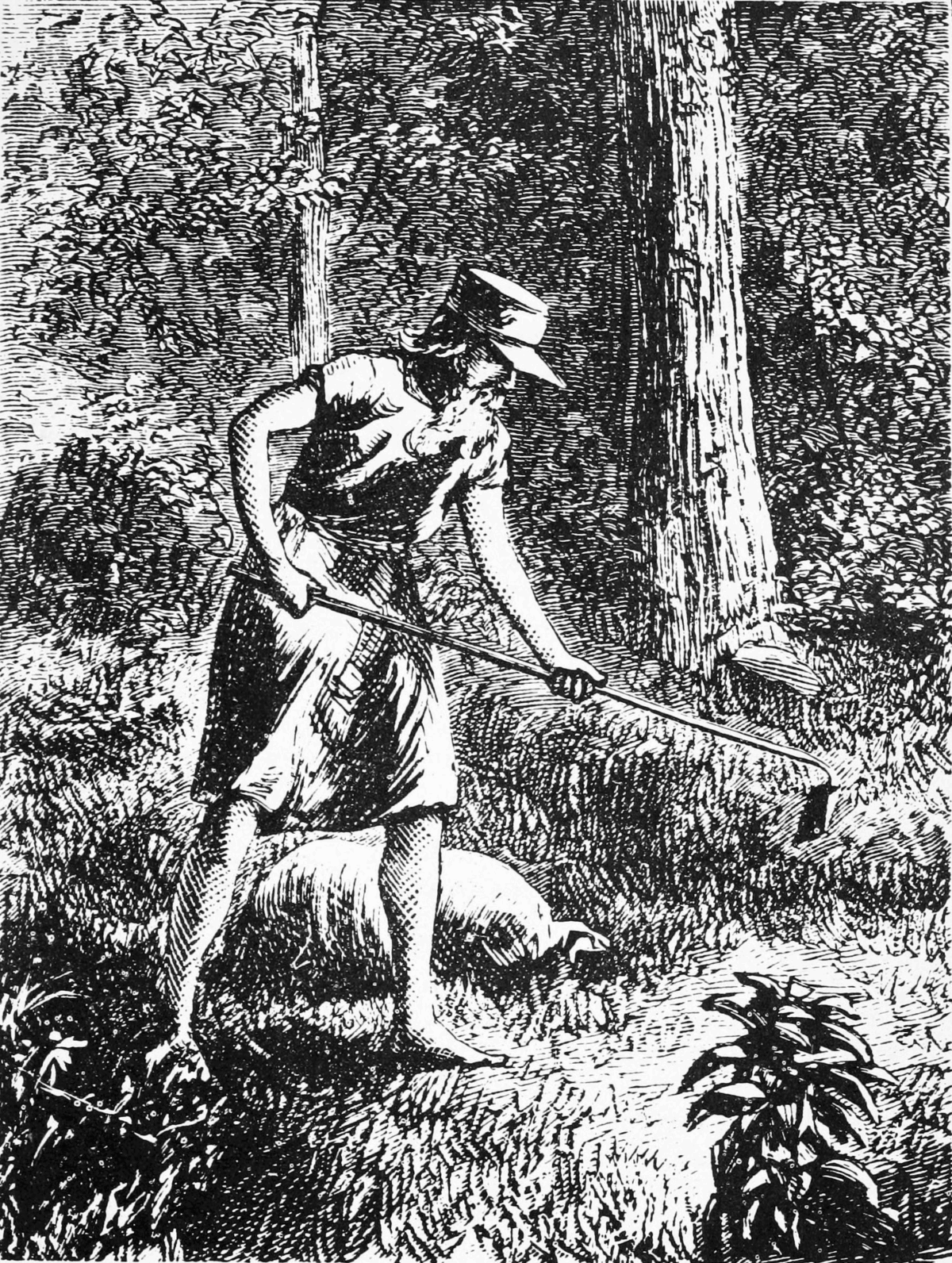
With the opening of the Northwest Territory in 1787, apple orchards were created to show proof of residency on the frontier land. A further expansion of apple territorial presence was the result of Massachusetts native John Chapman, who later picked up the nickname Johnny Appleseed. Long does an excellent job in separating the reality of Chapman’s work from the jolly legends associated with Johnny Appleseed. This contrasts with the fancifully eccentric figure of folk tales who wore a steel pot as a hat while sprinkling seeds on his journeys.
Chapman was a serious entrepreneur who made a living selling apple trees. He was savvy enough to purchase or lease lands near planned settlements, thus enabling him to have trees ready when new residents arrived.
Long also details Chapman’s adherence to the utopian religious principles of the theologian Emanuel Swedenborg, who instructed his followers to “live a life of integrity and kindness.” Chapman’s faith extended into his business practices. Rather than grafting branches onto rootstock, he raised his trees from seedlings, which he considered more respectful of nature.
His sincerity didn’t affect his return on investment, as Long observes that Chapman died a wealthy man.
So Many Uses
Long goes into entertaining detail about the many ways that apples found their way into the American diet. Many of these culinary concoctions underwent surprising changes over time.
Apple fritters are a tasty guilty pleasure at many festivals and fairgrounds. The author uncovers their first intoxicating appearance in an 1824 cookbook; the recipe called for soaking the sliced fruit in brandy and white wine before baking. Apple butter’s history dates back to the Middle Ages, when German-speaking populations used it for medicinal purposes.
Social politics also played a role in apple production. Ax-wielding zealots of the late 19th-century temperance movement sought to stop hard cider production by invading orchards to chop down apple trees. Farmers responded by growing sweeter-tasting fruits strictly for baking. As a result, hard cider appreciation fell sharply, and its American popularity never truly recovered.
Long further details how apples have become an economic staple in the Midwest. Apple-focused festivals have been popular regional events for decades. Culinary tourism is a vibrant industry with artisanal orchards selling their crops directly to consumers.
A Chemical Scandal
The author has a less sunny view of how industrialized farm production affected both crops and the American consumer. The roots of the campaign against industrialized farming began in the 1940s, when activists and scholars began documenting the environmental degradation caused by these oversized operations.
The excessive reliance on the chemical daminozide created a food industry crisis in the 1980s. It was sprayed on apples to prevent premature dropping from trees before they ripened and turned red. The chemical, better known by its brand name Alar, was found to degrade into a carcinogenic substance when heated.
Major food producers, including Gerber and Mott’s, refused to buy Alar-treated apple products, and some supermarket chains boycotted these items. The news program “60 Minutes” got wind of the scandal and produced a harsh investigative report. After years of delay, the Environmental Protection Agency banned Alar in January 1989.
Long concludes her book with an appendix of diverse recipes, including several that originate far from the Midwest. These include the classic Waldorf Salad (created in New York’s celebrated Waldorf-Astoria Hotel) and a Korean delicacy called Bulgogi, “Fire Meat.”
“Sweet, Tart and Golden” truly lives up to its title. Long brings a loving approach to her writing while offering frank and often unexpected insights into the subject. By the book’s conclusion, the reader is truly satisfied to be part of this apple-happy odyssey.
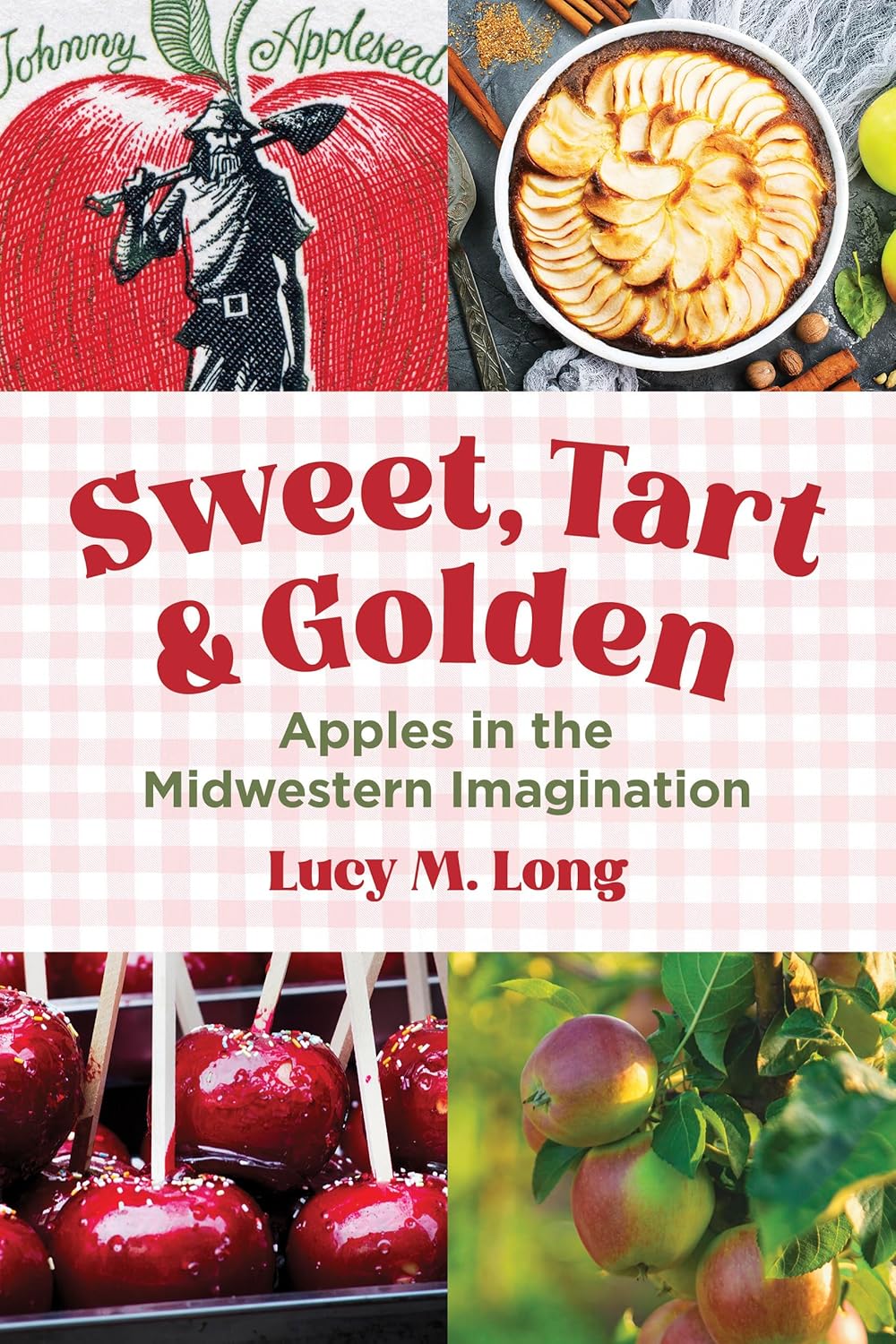
‘Sweet, Tart and Golden: Apples in the Midwestern Imagination’
By Lucy M. Long
3 Fields Books/University of Illinois Press: April 14, 2026
Hardcover, 200 pages
What arts and culture topics would you like us to cover? Please email ideas or feedback to features@epochtimes.nyc