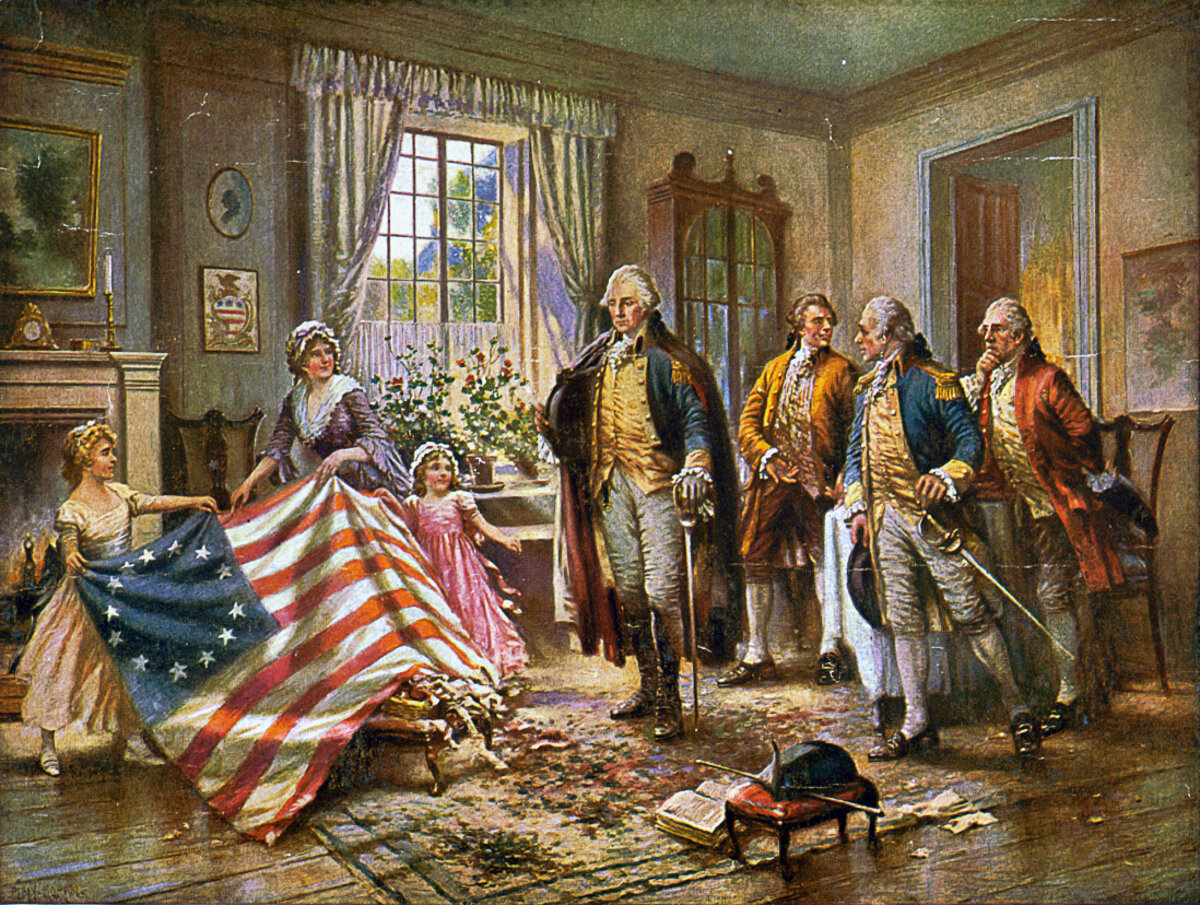
Betsy Ross is one of the few women widely remembered for her connection to the American Revolution. Yet relatively little about her life is known. Historical documentation is scarce, and stories cherished for more than 150 years have faced increasing scrutiny.
Can Ross’s role in making the first star-spangled banner be proven as fact 250 years later, or is it merely a charming legend passed down through her family?
The story of Ross as creator of the flag comes from her grandson, William J. Canby. In March 1870, Canby brought this family legacy to the public’s attention by presenting a paper to the Historical Society of Pennsylvania. As the United States prepared for its centennial celebration, Canby believed that the American people should know how their first flag came to be.
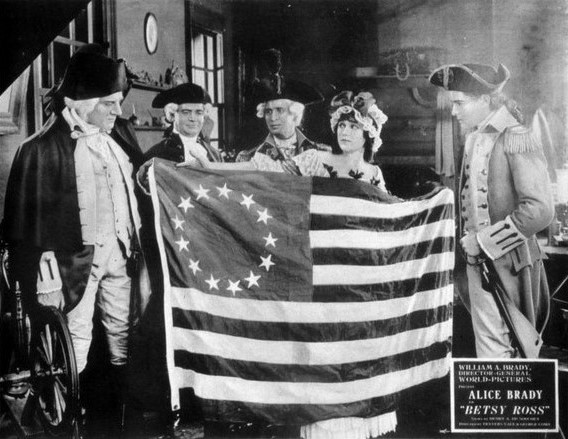
Rather than jumping right into his family memories, Canby began by explaining his efforts to verify the so-called legend that he knew through oral tradition.
The paper’s first section details that search. He noted that the only official documentation about a national flag is the congressional resolution of June 14, 1777, which states, “That the flag of the thirteen United States be thirteen stripes, alternate red and white: that the union be thirteen stars, white in a blue field, representing a new constellation.”
Canby explained why he thought that the absence of further documentation gave plausibility to his family’s recollections. He then proceeded to give the first telling of the Ross story.
The 1st Flag
As the story goes, in June 1776, a committee consisting of George Ross, Robert Morris, and George Washington visited widow and upholsterer Elizabeth Ross. George Ross was the uncle of her late husband, and Washington was a fellow parishioner at Christ Church in Philadelphia.
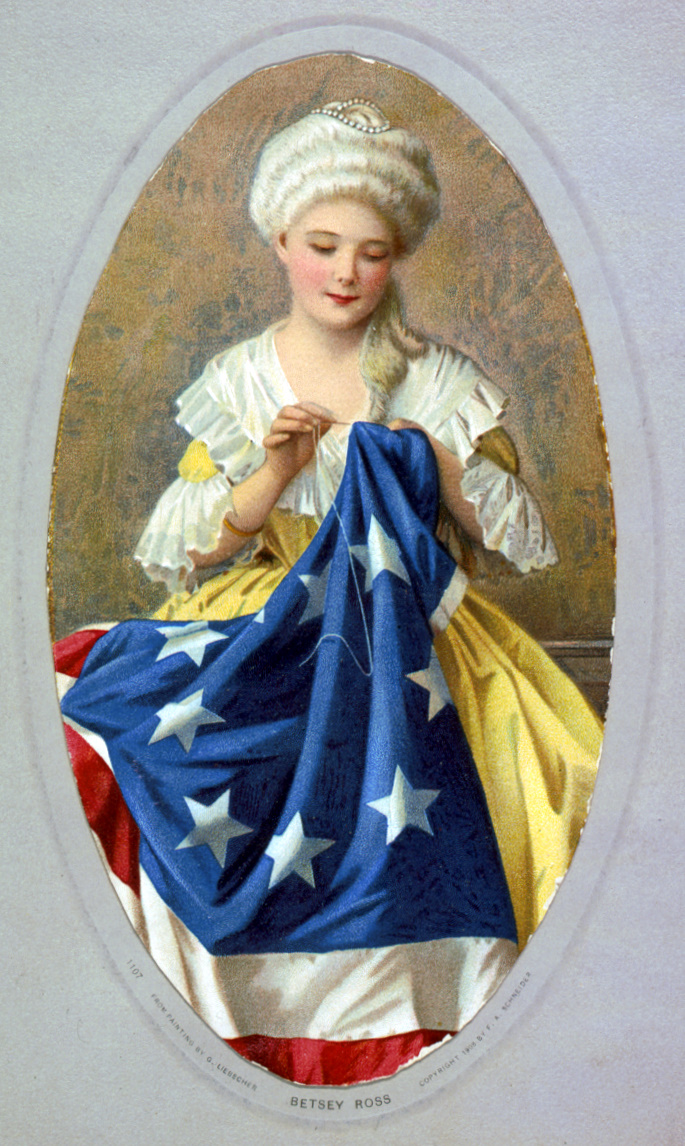
The story is often told that Betsy Ross was a successful flagmaker at the time, but she worked primarily as an upholsterer. According to Canby’s account, the committee approached her because her skill with a needle was respected and asked her to produce a flag for the new nation.
The paper states that George Ross presented her with a rough design. Canby, therefore, didn’t give his grandmother credit for designing the “star-spangled banner” entirely on her own. Instead, he credited her with suggesting modifications that improved its symmetry and appearance.
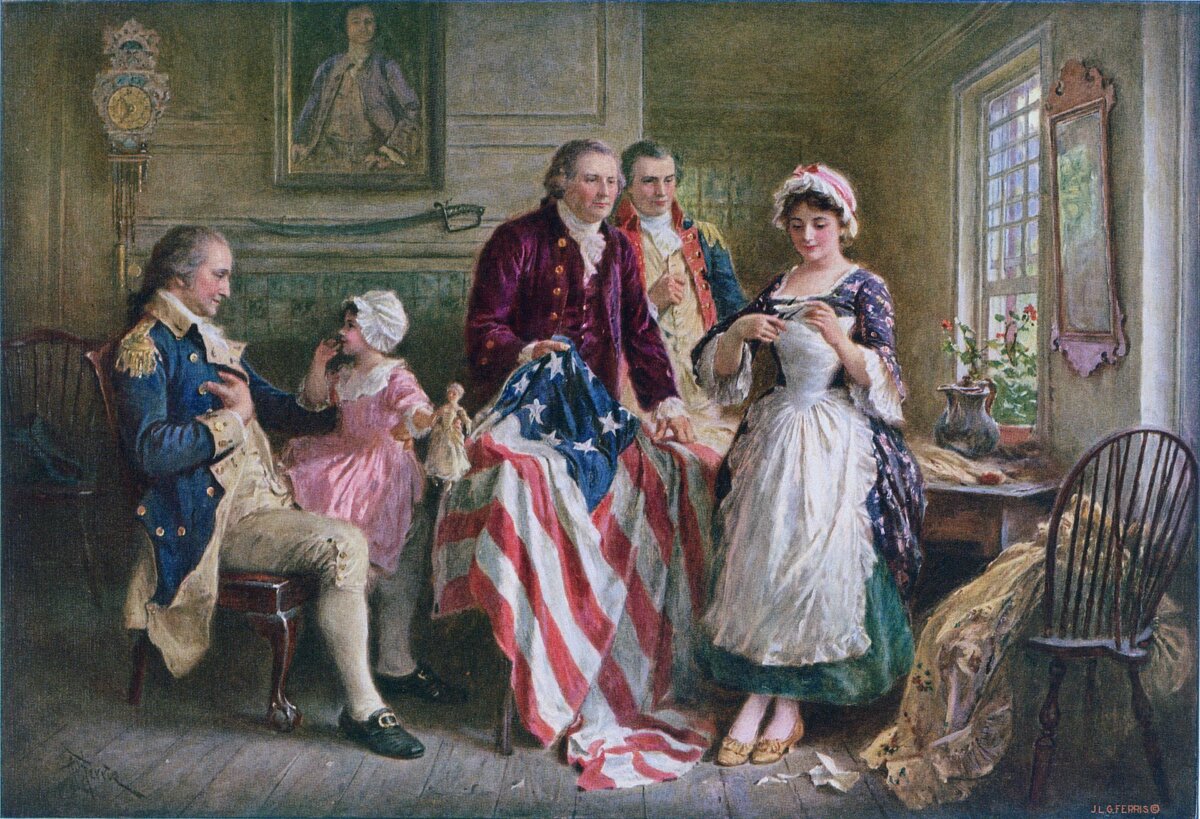
The design change most often attributed to Ross is the five-pointed star. According to family tradition, she demonstrated that a five-pointed star could be cut from folded fabric with a single snip of the scissors, reportedly saying, “Nothing easier.” Canby claimed that the revised design was found to be so favorable that Washington drew up the new design right in Ross’s back parlor.
As Ross had never made a united American flag before, Canby wrote that the committee supplied her with an old ship’s colors so she could study the fabric and stitchwork. He also claimed that she followed a painted model produced by Philadelphia artist William Barrett.
According to Canby’s story, the design of the original “Old Glory” was immediately accepted. He wrote that it was raised on a ship in Philadelphia’s harbor for review before being presented to Congress alongside the committee’s report.
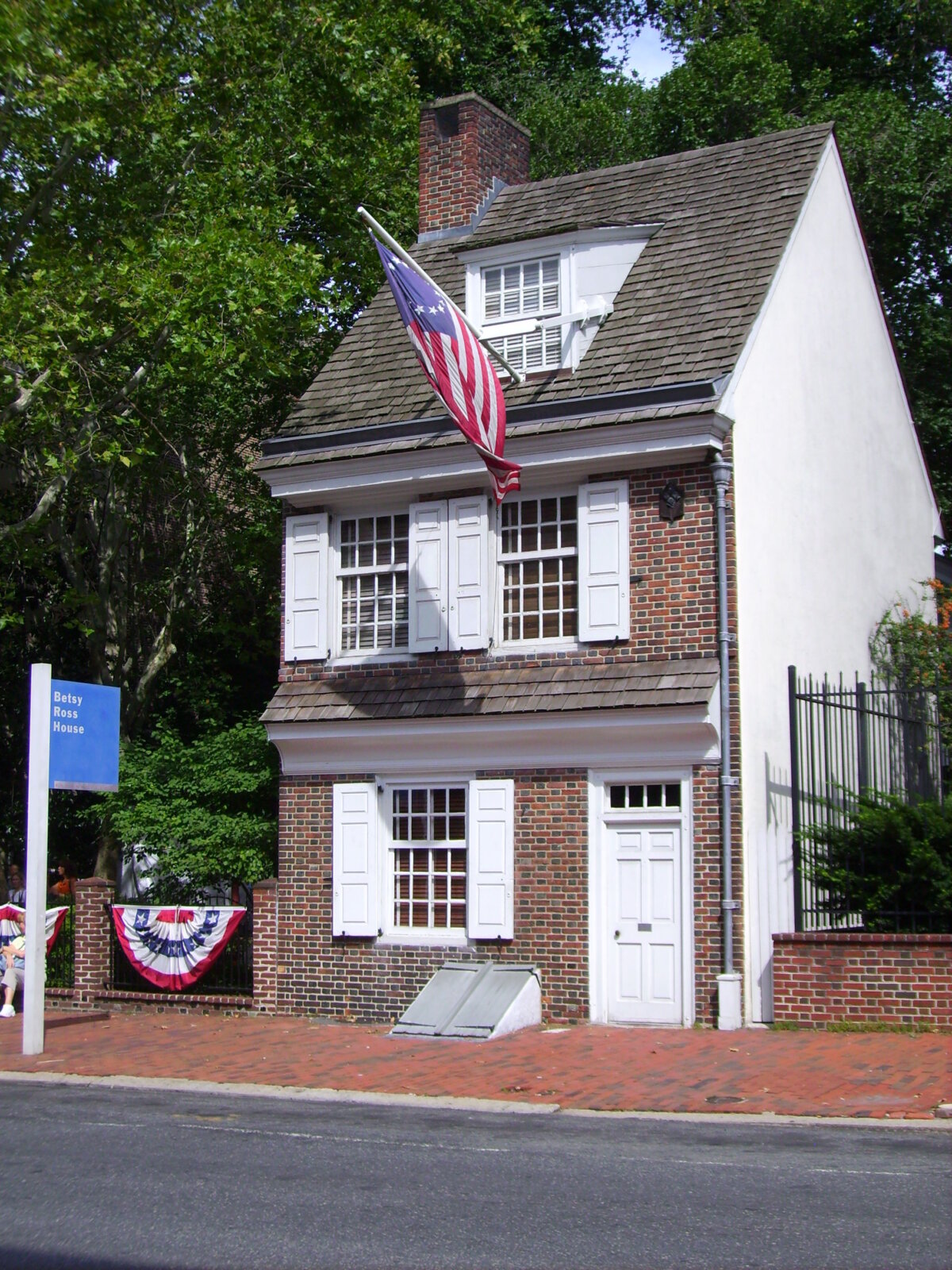
Canby further claimed that Congress approved the design and that Ross subsequently received government contracts to produce flags. Historians generally agree that Ross made military colors and naval flags during the Revolutionary era, although the extent of her role remains debated.
Skepticism
Like many charming old tales, this story has been questioned by historians because no contemporary documentation directly links Ross to the design or creation of the first American flag. Skeptics ask: Where are the congressional records, receipts, or firsthand accounts?
Supporters of the Ross tradition argue that several points of proof make a strong case in its favor, now available on the Betsy Ross website. One is the recollections of close relatives. In addition to his own testimony, Canby presented sworn affidavits from Ross’s granddaughter, niece, and daughter, all of whom testified that they had heard the same story repeatedly from her.
Supporters argue that rejecting the account requires questioning not only Canby’s honesty but also the accuracy of stories passed down by several close relatives. Critics counter that family recollections recorded decades after an event are not the same as contemporary evidence.
Two existing physical relics cited in support of the Betsy Ross story are the Schuyler flag and the Wetherill star. At the Fort Ticonderoga Museum in New York, a flag associated with Gen. Philip Schuyler is sometimes identified as an early Ross-style flag and is thought to be the oldest American flag in existence.
This Betsy Ross flag was ordered by Gen. Philip Schuyler, a New York delegate to the Continental Congress in April 1777, during his tenure in Philadelphia. Since George Ross was on the War Board, which assigned Schuyler to the Continental Army’s Northern Division, he would have told Schuyler to get the new flag from the official flagmaker.
Supporters also argue that a five-pointed fabric star is displayed at Philadelphia’s Free Quaker Meeting House. According to tradition, the star was discovered in 1925 in the family safe of Samuel Wetherill, a friend of Betsy Ross who reportedly preserved it as a keepsake.
While supporters view it as evidence of the family story, historians doubt the fabric is a surviving relic and generally regard its connection to Betsy Ross as unproven.
Feminine Patriotism
Betsy Ross’s life is an example of the American spirit that made the new nation succeed. As the eighth in a family of 17 children, young Elizabeth Griscom apprenticed herself to an upholsterer at an early age.
She married fellow upholsterer John Ross when they were of age, which led to her expulsion from the Society of Friends, because he wasn’t a Quaker. Nevertheless, she remained devoted to her faith in God’s providential care throughout the challenges of her 84-year life.
She was widowed after about two years of marriage, barely in her 20s. However, it was not long before she opened her own modest upholstery business, the trade through which she is believed to have made the first flag.
During the remaining 60 years of her life, she married and outlived two more husbands, Joseph Ashbourne and John Claypoole, and had four daughters. Because she was widowed more than once and because Claypoole was paralyzed due to illness, Ross continued working to support herself and her family. According to her grandson, she refused to wallow in any misfortune or challenge.
Canby recalled that when contemplating how she would find the resources to make all the flags the committee ordered, she rejected the idea of luck and insisted instead on divine providence as she said: “We are not creatures of luck: Have I not found that the Good One has never deserted me, and He will not now?”
The same can be said of our nation 250 years later.
What arts and culture topics would you like us to cover? Please email ideas or feedback to features@epochtimes.nyc.