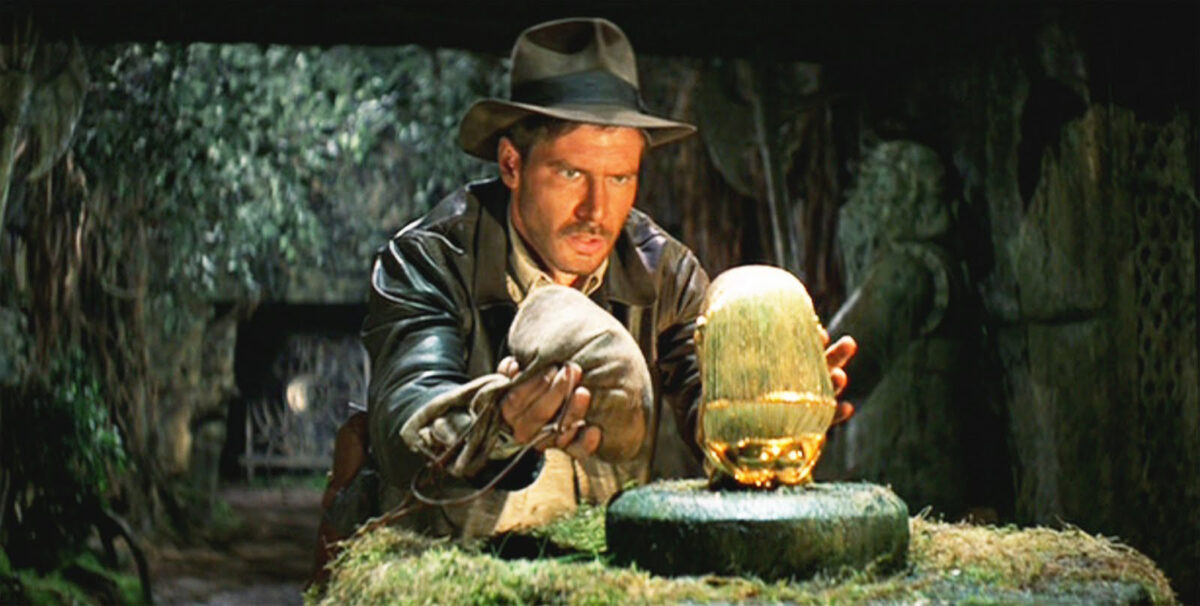
Two old friends met on a beach in Hawaii. For a place that exuded relaxation, one of the friends held in a mountain of anxiety. It was the summer of 1977, and George Lucas had joined Steven Spielberg to physically and mentally escape what he feared might be an episode could devastate his film career.
His first two feature films, “THX 1138” and “American Graffiti,” had met with financial and critical success, specifically the latter. It had earned five Oscar nominations, including for director. His third film was, in every way, by far his most elaborate. “Star Wars: Episode IV—A New Hope” opened on May 25, 1977, and Lucas awaited the phone call to tell him the news of its success or failure.
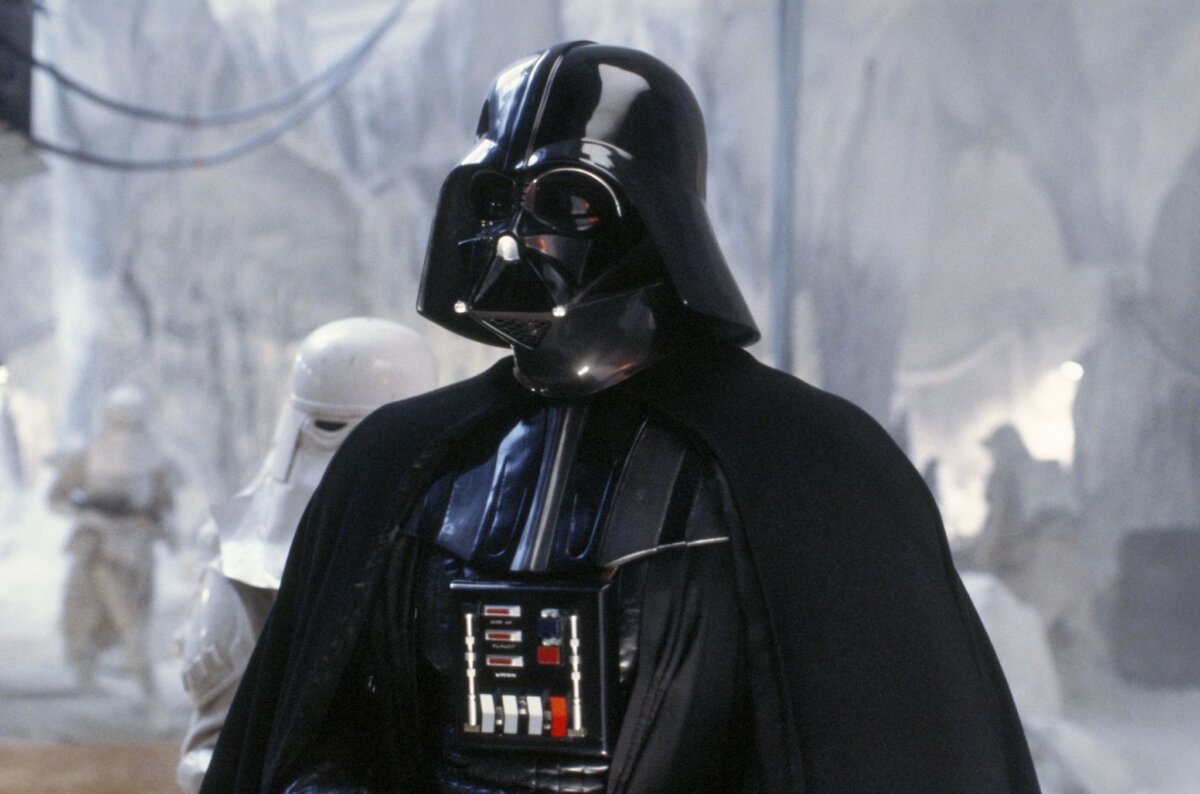
“We were just waiting for the grosses to come in; it was like waiting for election returns,” Spielberg recalled. “It turned out to be a landslide for George Lucas.”
Lucas sighed in relief and asked Spielberg what his next project would be. Spielberg had recently finished “Close Encounters of the Third Kind,” which wouldn’t be widely released until December. United Artists (UA) had produced one of his previous films and requested a future collaboration.
Spielberg told Lucas he wanted to direct a James Bond film, a franchise that UA owned at the time. Lucas said that he had an idea better than Bond.
A Heroic Idea
Lucas and Spielberg shared an affinity for the classic Saturday matinee serials of the 1930s, 1940s, and 1950s, like those of Republic Pictures. The films jumped from action sequence to action sequence and revolved around more than a mere protagonist; they revolved around a hero.
Lucas had come up with an idea several years before his Hawaii getaway. It was an idea that led to two of the movie industry’s most iconic franchises. He wanted to combine the classic serial with a modern fairy tale. His first version of this idea, set in outer space, had recently come to fruition with “Star Wars,” in a galaxy far, far away. Now it was time to create one a bit closer to home.
Before Lucas mentioned the idea to Spielberg and well before had fleshed out his idea for “Star Wars,” he discussed it with his friend and fellow film director, Philip Kaufman. Lucas told his idea for an archaeologist hero who found ancient artifacts that were connected to the supernatural. Kaufman loved the idea and suggested the archaeologist pursue the holy grail of ancient artifacts: the Ark of the Covenant.
Lucas and Kaufman spent several weeks discussing what Lucas called “The Adventures of Indiana Smith,” but Kaufman was soon hired to direct the 1976 film “The Outlaw Josey Wales,” starring Clint Eastwood. Eastwood eventually fired Kaufman and took the reins as director. The firing led to the Directors Guild of America establishing what is known in Hollywood as the “Eastwood Rule”; it prohibits an actor or producer from firing a director and becoming the director themselves. Nonetheless, Lucas had shelved the archaeologist idea and moved on to his “Star Wars” project.

Discussing Indiana
With “Star Wars” completed and successful, Lucas took Indiana Smith off the proverbial shelf. After presenting the idea to Spielberg, Lucas had found his director. There was a small caveat for Spielberg regarding the protagonist’s name. He liked “Indiana,” which Lucas named after his dog, but he didn’t like Smith. Lucas said, “Alright. What if we call him Indiana Jones?” (The full name would become Dr. Henry Walton “Indiana” Jones Jr.)
Luckily, Lucas had chosen well with Spielberg. The two settled on the style of the film, the character’s name, and the ancient supernatural artifact the character would pursue. It now came down to writing the script.
Spielberg had recently received a script from screenwriter Lawrence Kasdan. It was for the romantic comedy “Continental Divide,” and Spielberg was its executive producer. It was also the first film produced by Spielberg’s Amblin (it was called Amblin Productions until it was later changed to Amblin Entertainment). Spielberg thought Kasdan would make a good fit for the archaeological action film.
One of the great creative sessions took place, from Jan. 23 to 27, 1978, in a small house in a Los Angeles suburbs. According to Spielberg, he, Lucas, and Kasdan “spent three days with a tape recorder.” The entire transcript of that conversation was recently unearthed. It details many of the accepted and discarded ideas for the film and includes a section between Kasdan and Kaufman, specifically about the Ark of the Covenant.
A Hero’s Trademarks
Among those conversations was what type of hero Indiana Jones should be. During the conversation, Lucas stated, “The main thing is for him to be a super hero in the best sense of the word, which is John Wayne, Clint Eastwood, Sean Connery tradition of a man who we can all look up to and say, ‘Now there’s somebody who really knows his job.’”
Lucas knew what he wanted Indiana Jones to look like, as well.
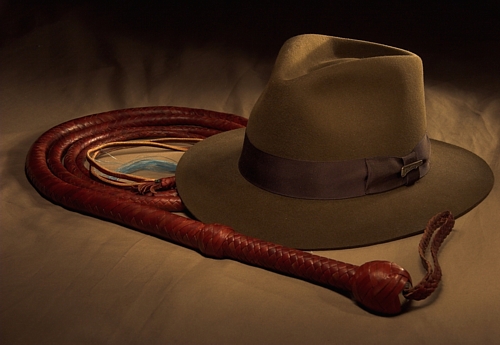
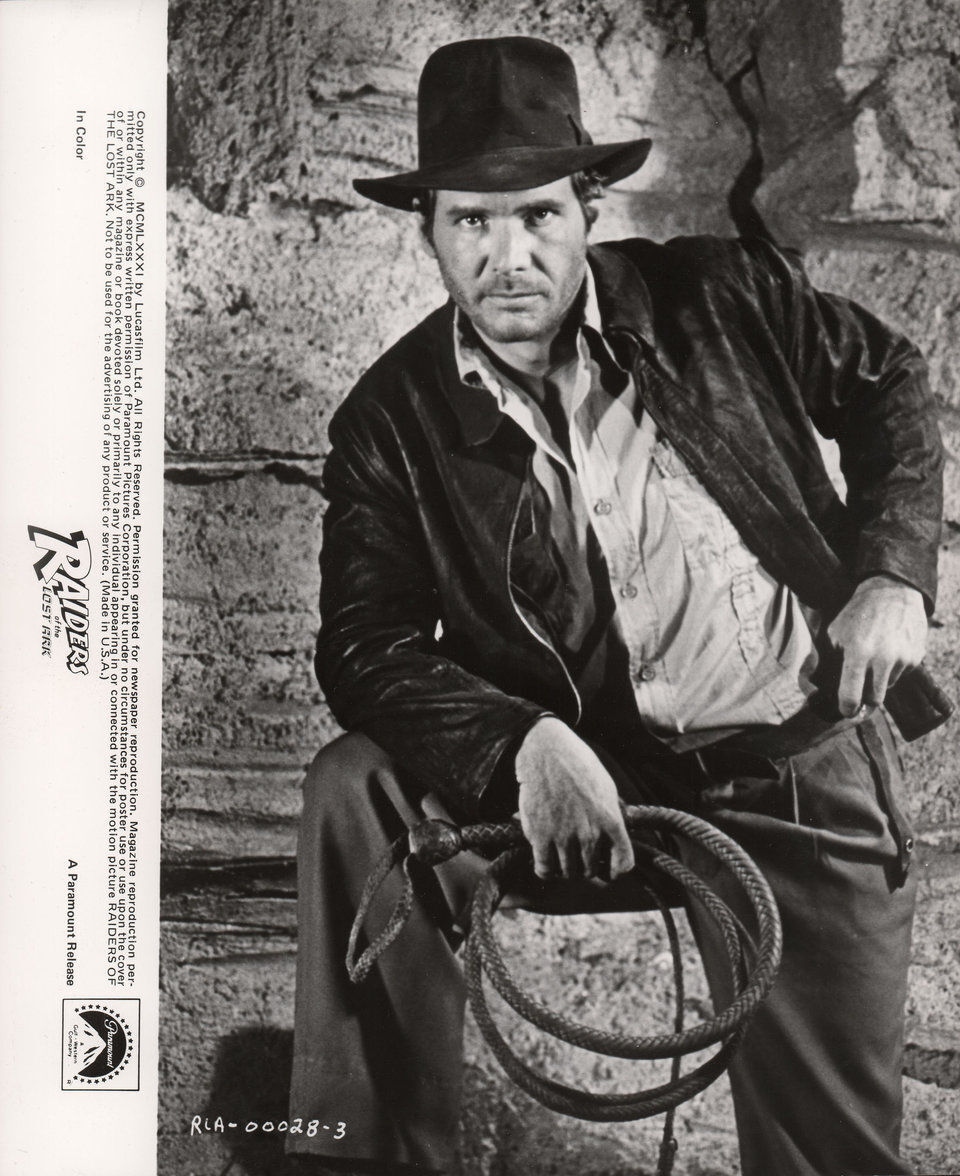
“The image of him, which is the strongest image, is the ‘Treasure Of Sierra Madre’ outfit [worn by Humphrey Bogart], which is the khaki pants, he’s got the leather jacket, that sort of felt hat, and the pistol and holster with a World War One sort of flap over it.”
“He’s going into the jungle carrying his gun. The other thing we’ve added to him, which may be fun, is a bull whip. That’s really his trademark.”
Although Indiana Jones would be a “super hero in the best sense of the word” and would certainly look like one, he still needed to be vulnerable in some way—the three believed he should have some kind of phobia. Spielberg suggested their hero’s fear should be of snakes.
Finding ‘Indiana’
After the thorough conversation, Kasdan got to work compiling the ideas into a working script. Once the script was written, it came down to casting—to finding their leading man. Spielberg suggested Harrison Ford, but Lucas was reluctant because Ford had been in his last two films, most famously as Han Solo in “Star Wars.”
The duo held auditions for actors not named Harrison Ford, and after Tom Selleck tried the role, Lucas and Spielberg believed they had found their man. But Robert A. Daly, the head of CBS, contacted Spielberg and informed him that they had just reached a series agreement for Selleck to play the lead role in a new show called “Magnum P.I.” Selleck was out.
It appeared fate was calling for Ford. Lucas contacted Ford and told him he would be sending him a script and needed him to read it within the hour. When Ford read the script, he loved it. Lucas then told him to meet with Spielberg.
Considering the now historic connection between Ford and Spielberg, it’s hard to imagine that prior to this moment, the two had never met. By the time Ford was finished with his meeting, he was selected as Indiana Jones.
Fund. Shoot. Release.
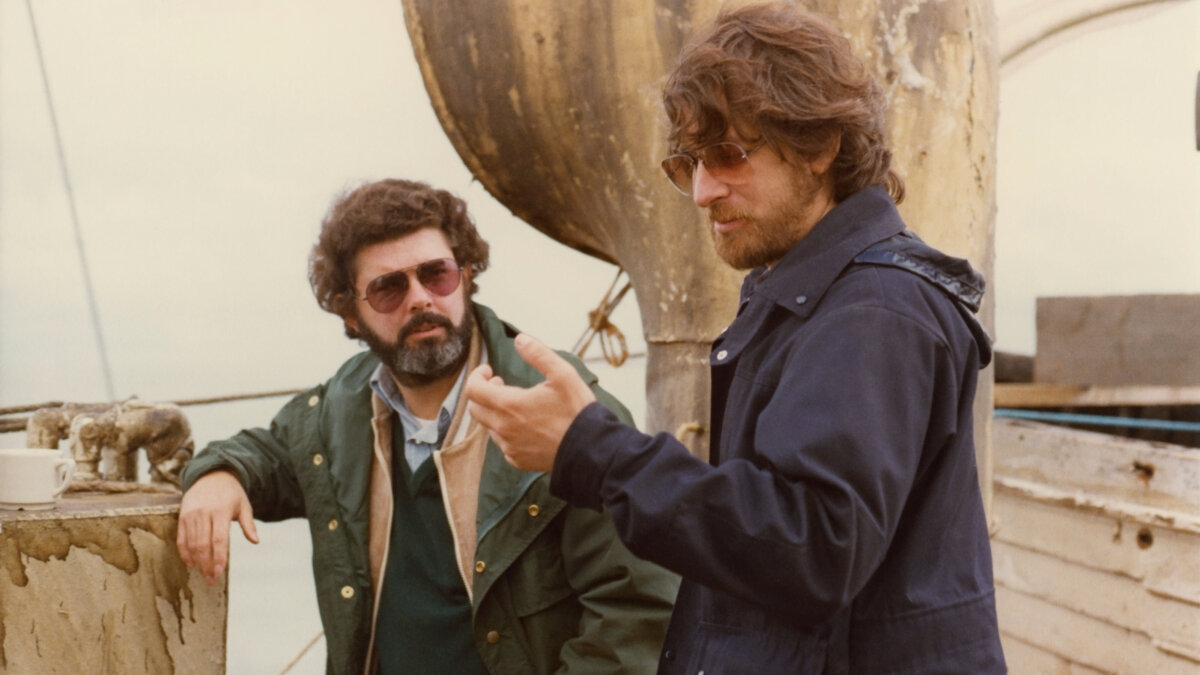
The script was written and the leading role was cast. Now, it came down to the small issue of money. Lucas feared that no production company would be willing to fund it because it would be too expensive. Lucas’s “Star Wars” had cost $11 million to make (about $60 million today). Lucas told Hollywood executives he could make it on a $20 million budget. The executives balked at the number, believing it would cost far more.
The executives had a point. The film would encompass so much adventure it would be, as Spielberg envisioned at those opening conversations in 1978, like “designing a ride at Disneyland.”
Lucas, however, finally convinced Paramount to sign on. The budget was $18 million (which was later increased to $20 million) with a strict shooting schedule of 85 days. Spielberg, whose directorial reputation included going over budget and past schedule, established an internal schedule of 73 days.
In May 1980, Lucas’s second “Star Wars” film “The Empire Strikes Back,” which Kasdan co-wrote, was released. Kasdan and Lucas, however, had little time to relish in the film’s immediate success. Shooting for “Raiders of the Lost Ark” began in France on June 23.
The night before the first scene was shot, costume designer Deborah Nadoolman was concerned Ford’s costume was missing its sense of authenticity. Sitting next to Ford, she asked to borrow his Swiss Army knife. Using his knife and a steel brush, she went to work on his jacket.
“I personally aged that jacket, and I had metal splinters in my hand for weeks and weeks and weeks,” she recalled.
She had already dedicated herself to making Ford’s hat look authentic. Finding the hat had been no easy task. There were plenty of brown fedoras to choose from, but she finally decided on a brown Aussie-styled fedora she discovered at Herbert Johnson Hatters near Savile Row in London.
For a seasoned archaeologist, much like the jacket he would wear, it needed to look well worn, and, as Nadoolman stated, well-loved. She crumpled it, sat on it, had Ford sit on it, and gave it a nice firm beating.
“I had to have a hat that … if you saw it in silhouette, would instantly be recognizable,” she said.
That silhouette has become instantly recognizable for the last 45 years. It was during this week in history, on June 12, 1981, that “Raiders of the Lost Ark” opened in theaters, eventually becoming one of the most familiar and beloved franchises in American film history.
The franchise is so beloved due to Lucas, Spielberg, and Kasdan’s commitment to creating a “super hero in the best sense of the word.” As a testament to that commitment, Indiana Jones has long held the second spot in the American Film Institute’s 100 Heroes, just behind Atticus Finch from “To Kill a Mockingbird.”
Never miss a This Week in History story! Sign up for the American History newsletter here.
What arts and culture topics would you like us to cover? Please email ideas or feedback to features@epochtimes.nyc[