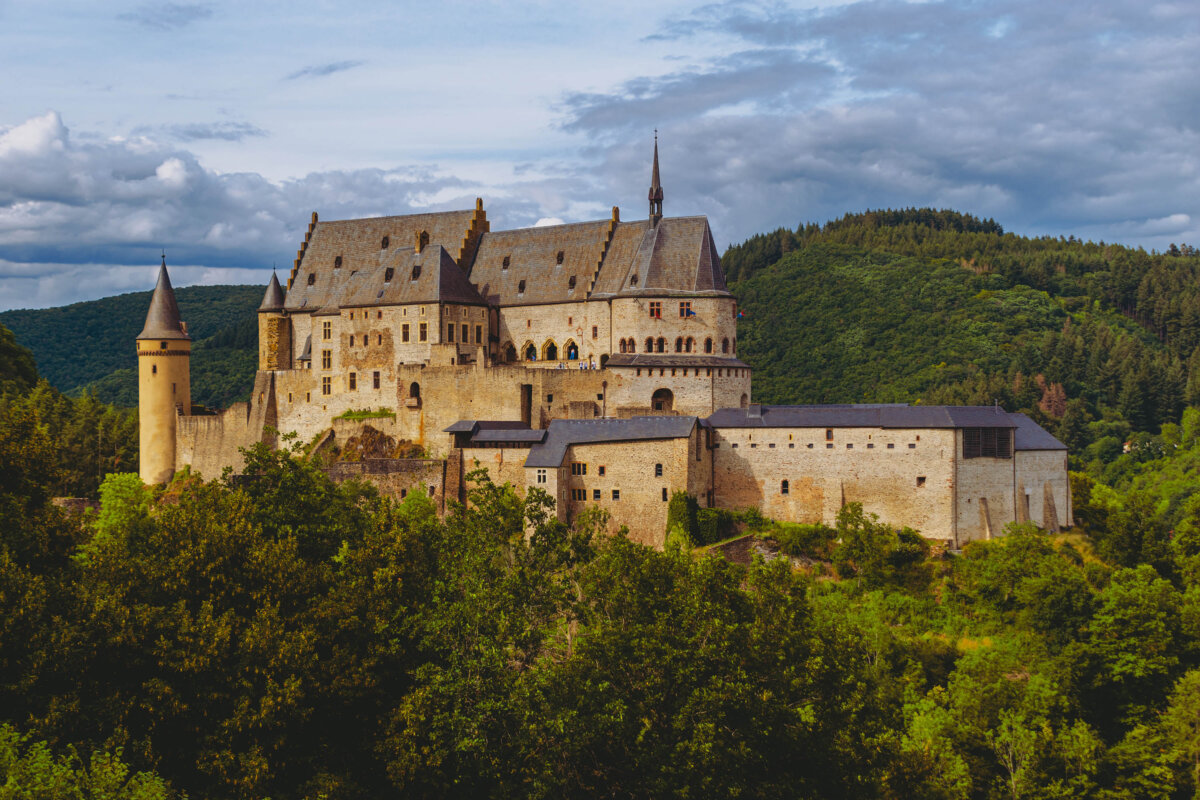
Vianden Castle looms more than 1,000 feet high on a promontory where a Roman castellum, or watchtower, once stood. The stone-block fortification is 300 feet long, with a main tower, a smaller tower, and a spire presented as the main features from this view. (andrewj.jackson/Shutterstock)
Approximately 30 miles north of Luxembourg City is a castle built originally as a military fort by Romans. It later evolved into a fortress in the Romanesque style. Over the last 10 centuries since construction began, Gothic and Renaissance aspects were added.
Although many people mistakenly assume that Luxembourg is a part of Germany, it’s a 999-square-mile country surrounded by Germany, France, and Belgium. More than 100 castles exist in the Luxembourg, with Vianden Castle among one of its largest. Dwarfing homes built beneath its shadow, the castle is situated high atop the Vianden’s rocky cliff, affording panoramic views of the vast landscape, as well as roads leading into town.
Vianden Castle’s original architectural style is recognized as Romanesque, which emerged around the 11th century when the fortification’s construction is thought to have begun. Besides the standard medieval castle features—towers, turrets, and arrow slit windows—its semicircular arches communicate the Romanesque style.
Around the 14th century, Gothic elements were added, such as pointed arches, rib vaulting, and tracery windows. The last prominent design influence occurred in the 1600s and is most notable in a few of the room’s Renaissance wooden-beam ceilings.
Initially, the castle consisted of living quarters for the ruling nobility and their families, as well as a kitchen, chapel, and standard fortified walls. Later, successive counts added a “newer” Gothic-style chapel, as well as a Renaissance-style banquet hall and bedroom.
Vianden Castle was last used as a fortification during World War II. From the 1960s to 1990, extensive renovation enabled the historic site to be opened to the public for visits, demonstrations, and tours.
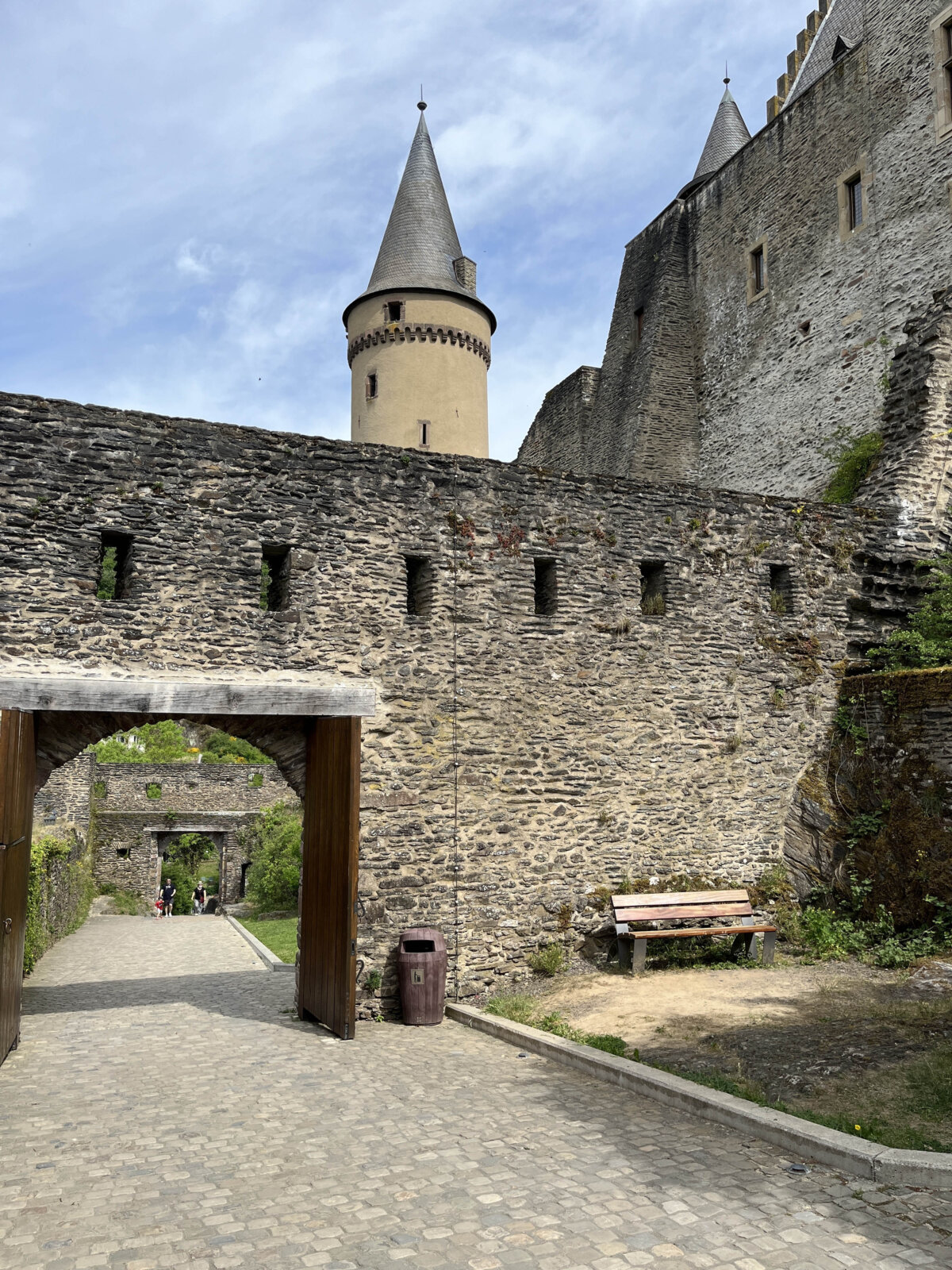
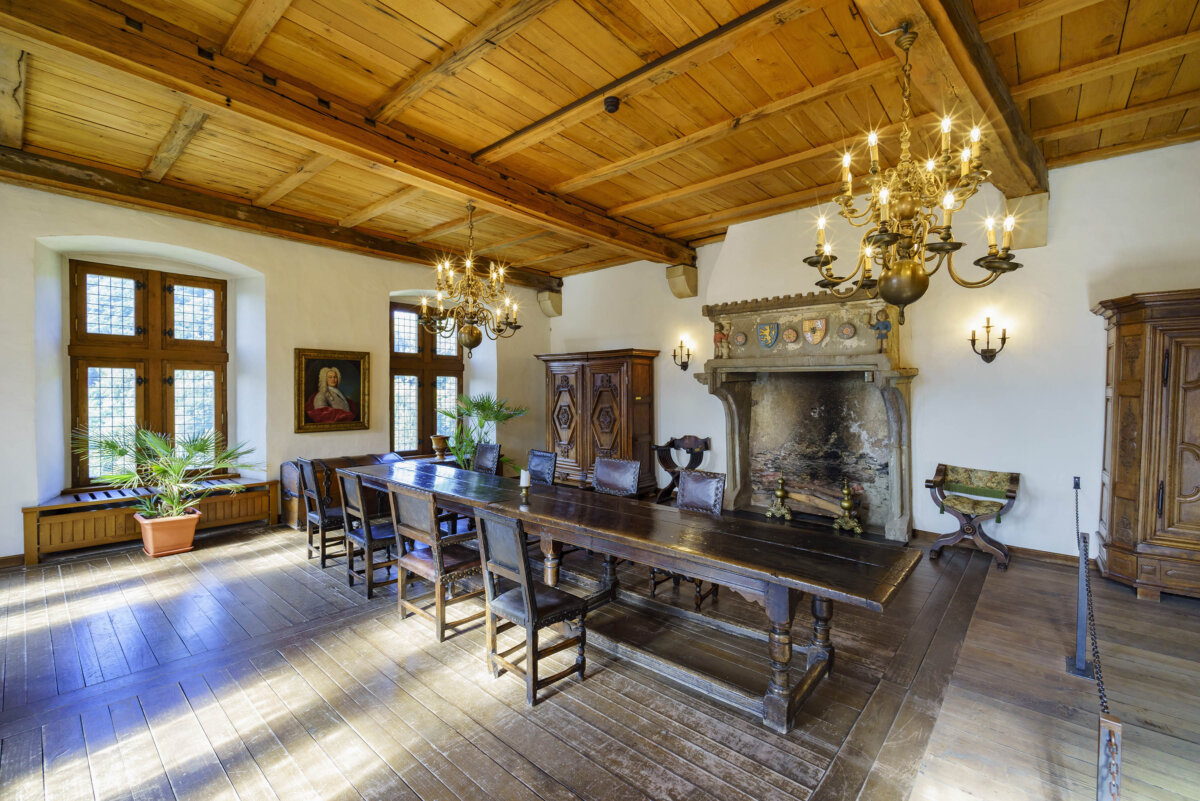
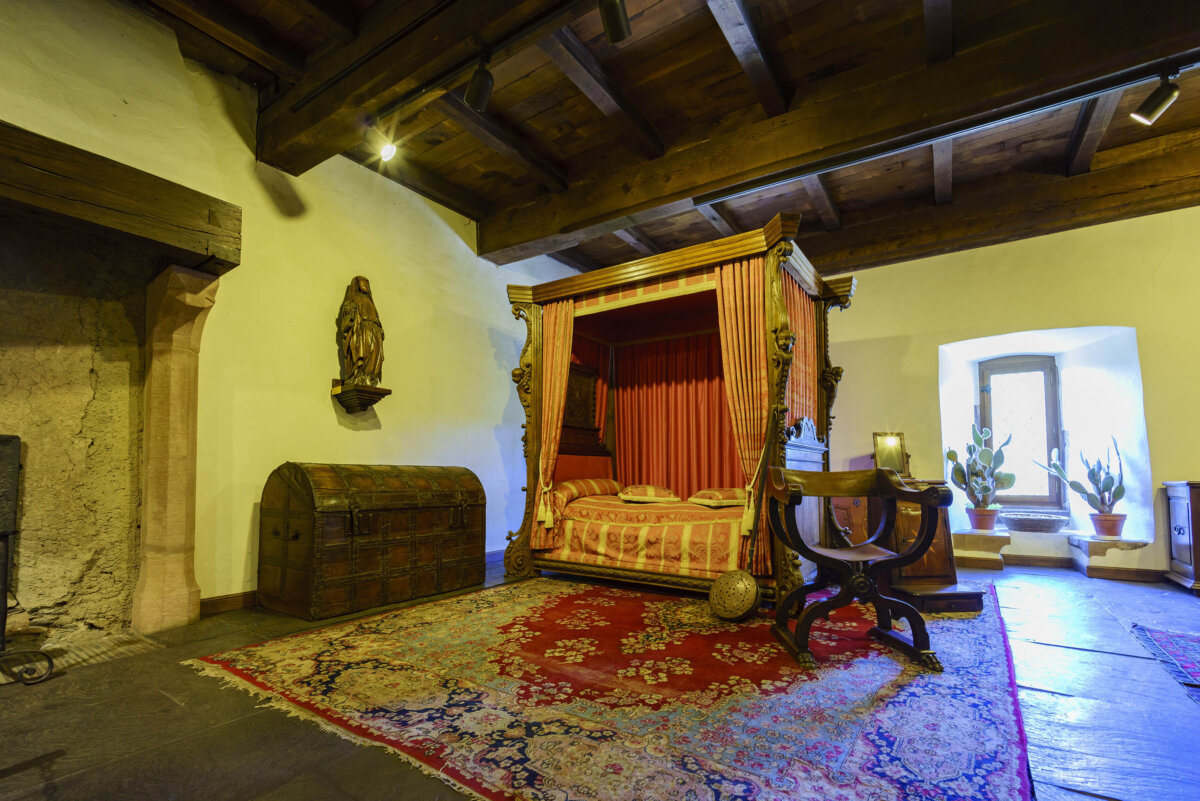
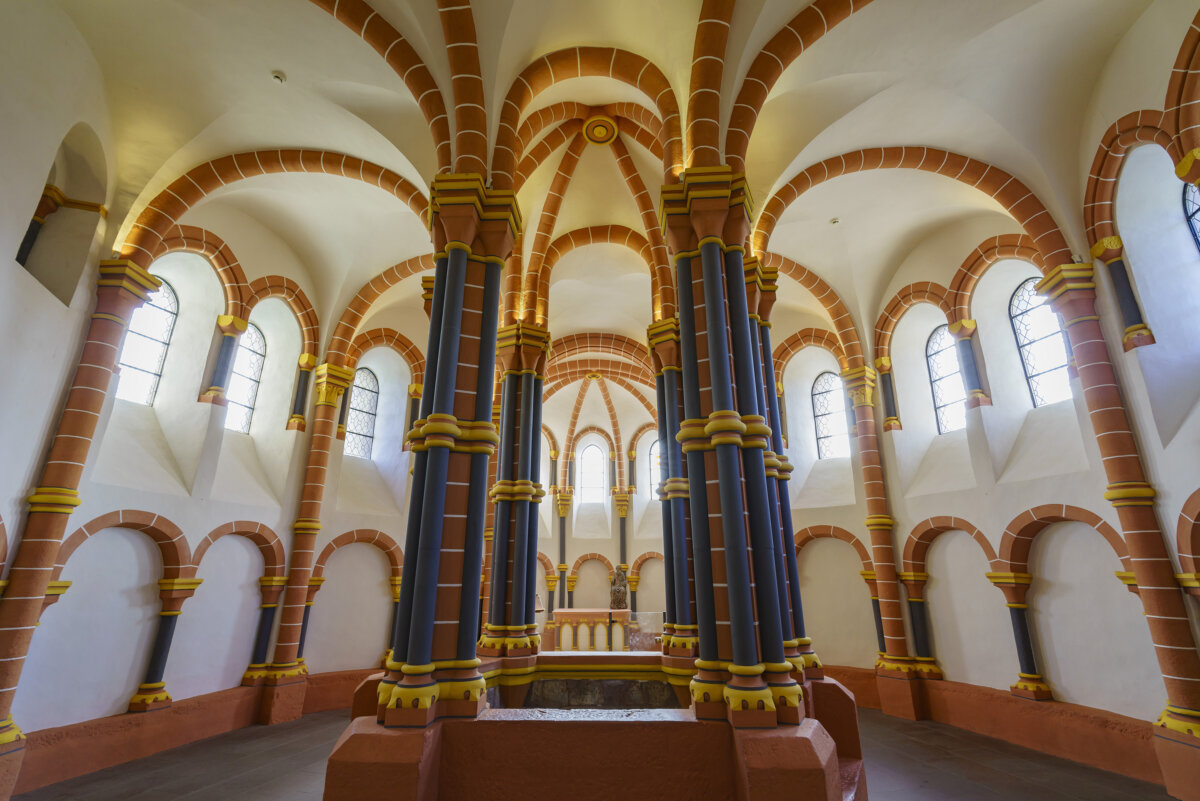
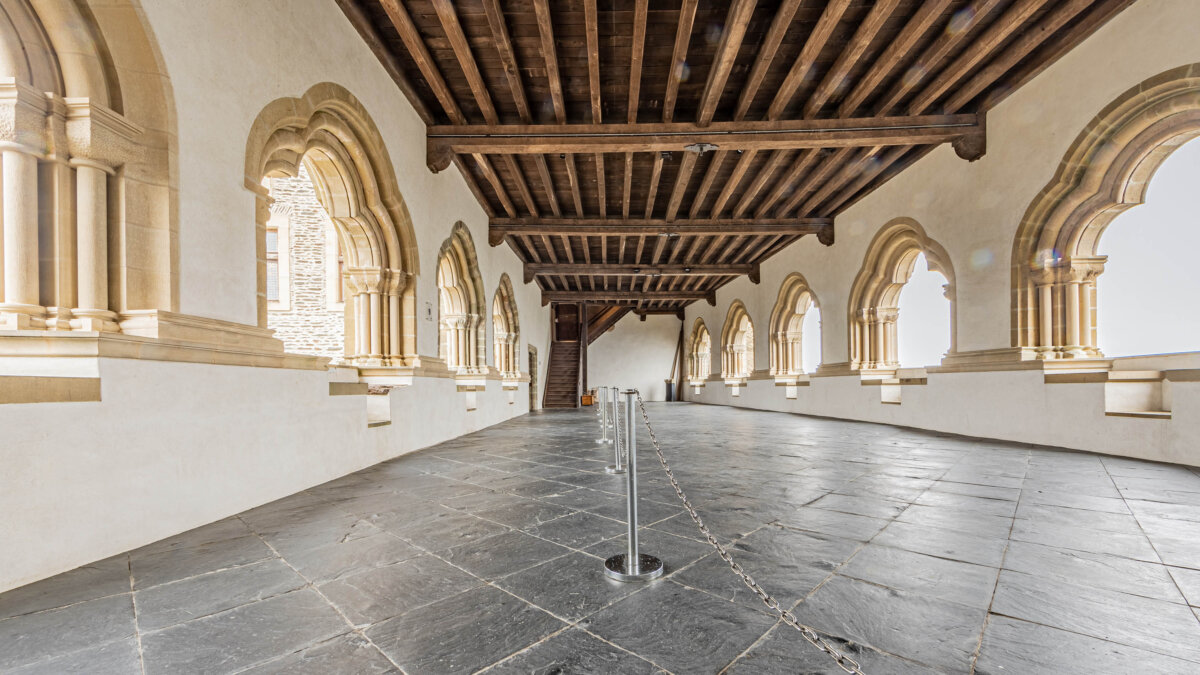
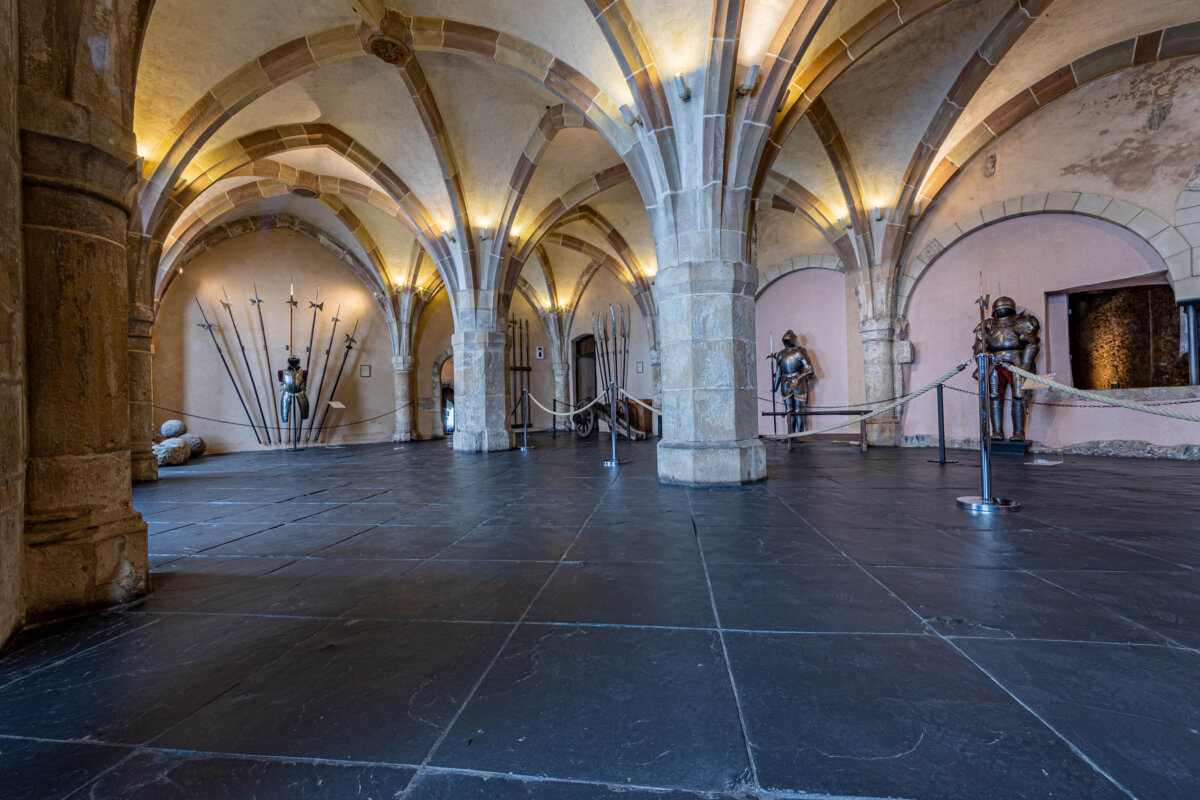
Beneath the conical roof of Vianden Castle’s main tower is what is called a stringcourse, or decorative band. It’s a common Renaissance accent. The castle was once accessible by four gates, including this one. Numerous arrow slits, openings to see out or shoot from, are built into the carefully stacked stone of the castle. (Samuel Geisler/Shutterstock) Referred to as the Banqueting Hall, the room was used for dining and entertaining and is furnished with carved, hardwood furnishings crafted from the 17th to 19th centuries. The wood-beam ceiling and wood floor are in the Renaissance architectural style. Decorative emblems representing the House of Nassau are embedded in the stone fireplace. (Kit Leong/Shutterstock) Thick wooden beams conveying Renaissance aesthetics are prominent in this Vianden Castle bedroom. Also indicative of Renaissance style is the bedroom’s red-and-gold color scheme in the bed canopy’s fabric and the Oriental carpet. The rustic fireplace features a wood-beam mantel and is flanked by carved stone columns. (Kit Leong/Shutterstock) The most ostentatious presentation at Vianden Castle is in its upper chapel. Stacked blue columns support a ceiling with rib vaulting that join at a decorative ceiling medallion. The room’s arches and the vaulting showcase terra cotta blocks that contrast with white stucco walls. This ornate upper level chapel was reserved for nobles. (Kit Leong/Shutterstock) The lengthy 92-foot-by-30-foot long Byzantine Gallery has 10 trefoil-arch windows, supported by small columns that open to the outdoors. Archery was practiced in this space, which has a wooden-beam ceiling, supported by cross beams with corbels, and a stone floor. (Foto Para Ti/Shutterstock) A rib-vaulted ceiling, with contrasting color stone blocks and Gothic arches provides the backdrop for medieval body armor, cannons, and weaponry artifacts. Arms Hall, at about 70 feet long, also showcases large hexagon stone columns, blind arches (decorative arch-shaped elements applied to the wall’s surface with no opening), and pilasters. (Foto Para Ti/Shutterstock)
What arts and culture topics would you like us to cover? Please email ideas or feedback to features@epochtimes.nyc.
A 30-plus-year writer-journalist, Deena C. Bouknight works from her Western North Carolina mountain cottage and has contributed articles on food culture, travel, people, and more to local, regional, national, and international publications. She has written three novels, including the only historical fiction about the East Coast’s worst earthquake. Her website is DeenaBouknightWriting.com