



Johann Sebastian Bach died on July 28, 1750 in Leipzig after a period of worsening health. He passed quietly in the company of his family, and was buried in St. John’s cemetery in Leipzig. He left as a respected, locally known church musician, and was placed in a simple coffin and lowered into the ground, likely in a shared or unmarked grave plot, with no permanent marker.
Bach’s modest reputation receded further after his death. Compared to the novel simplicity and elegance of the Classical era, Bach’s command of complex counterpoint and polyphony was considered “old-fashioned.” Jean-Jacques Rousseau indicated the change in musical taste, deriding contrapuntal music writing as “remnants of barbarism and bad taste, like the portals of our Gothic churches.” Bach disappeared from public view.
The efforts of composer Felix Mendelssohn changed that. A performance of Bach’s “Saint Matthew Passion” in 1829, which hadn’t been heard publicly in decades, sparked massive interest in the baroque master. What followed was the famous “Bach Revival” of the 19th century, a reassessment of Bach’s legacy that elevated him from his status as a forgotten craftsman.
Scholars, performers, and institutions across Europe systematically collected, published, and performed his works. The Bach-Gesellschaft, founded in 1850, undertook the task of publishing a complete edition of his compositions, a project that took nearly 50 years to complete.
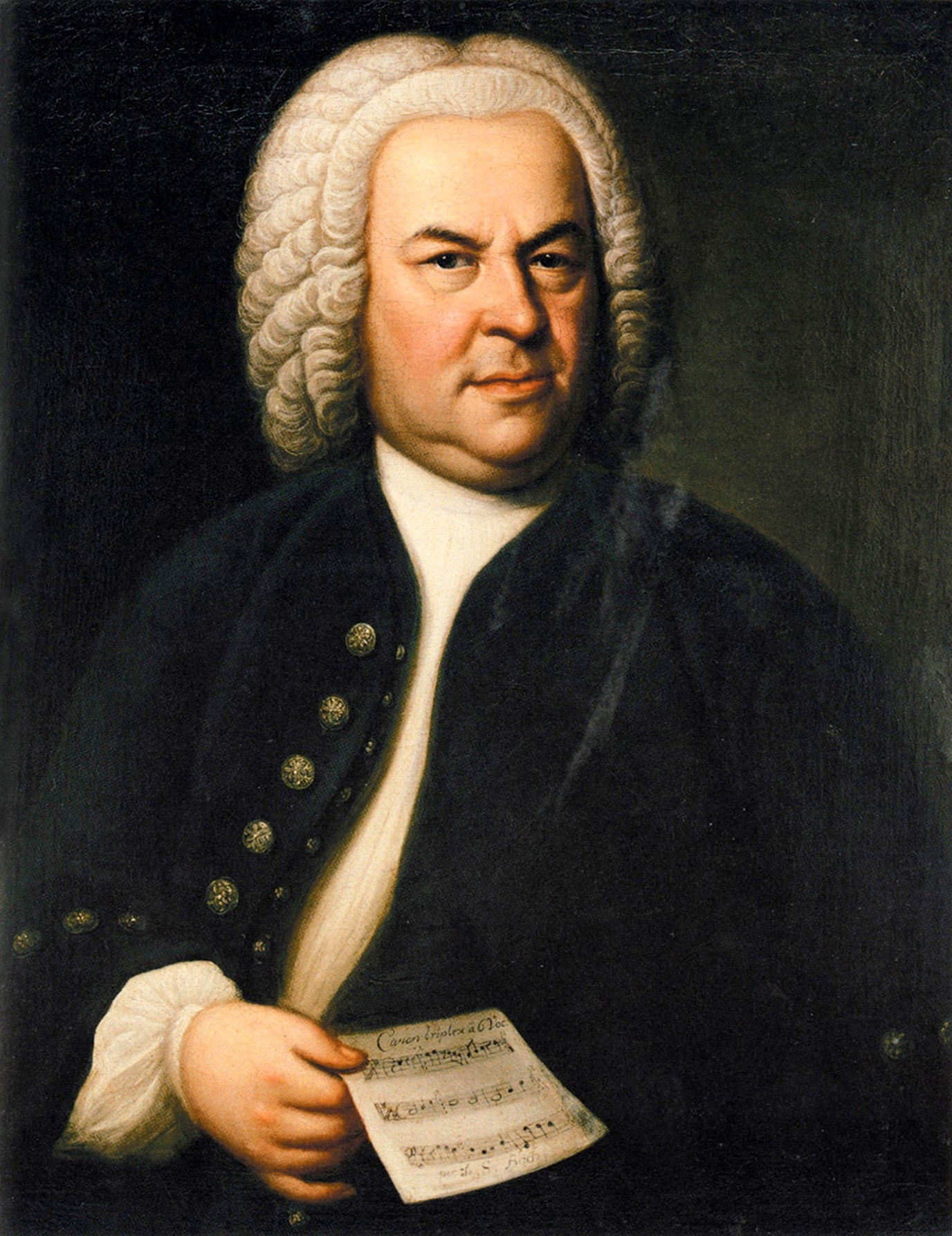 Baroque composer Johann Sebastian Bach, 1746, by Elias Gotlob Houssmann. (Public Domain)
 A Storied Ascension
As the 19th century progressed, Bach’s reputation ascended to something approaching the mythological. Composers from Chopin to Brahms to Wagner paid him reverence. He came to be seen not merely as a master of counterpoint but as the very foundation upon which Western classical music had been built—the figure Schumann famously described as a kind of musical god.
By the turn of the 20th century, the man who had been lowered into an unmarked grave was widely regarded as the greatest composer who had ever lived.
It wasn’t until 1894 that Bach’s remains were uncovered. During excavation work at St. John’s churchyard in Leipzig, workers discovered an old oak coffin tentatively believed to belong to Bach. After anatomical analysis, the remains were cautiously identified as his. They were reinterred inside St. Thomas’s Church in 1900, where Bach now rests in a proper tomb, which has become something of a pilgrimage site for musicians and music lovers.
Bach’s journey from forgotten to immortalized has a stunning musical equivalent. Amid a career consisting of masterpieces such as the “Mass in B minor” and “The Well-Tempered Clavier,” one work is shrouded in more mystery and controversy than any other.
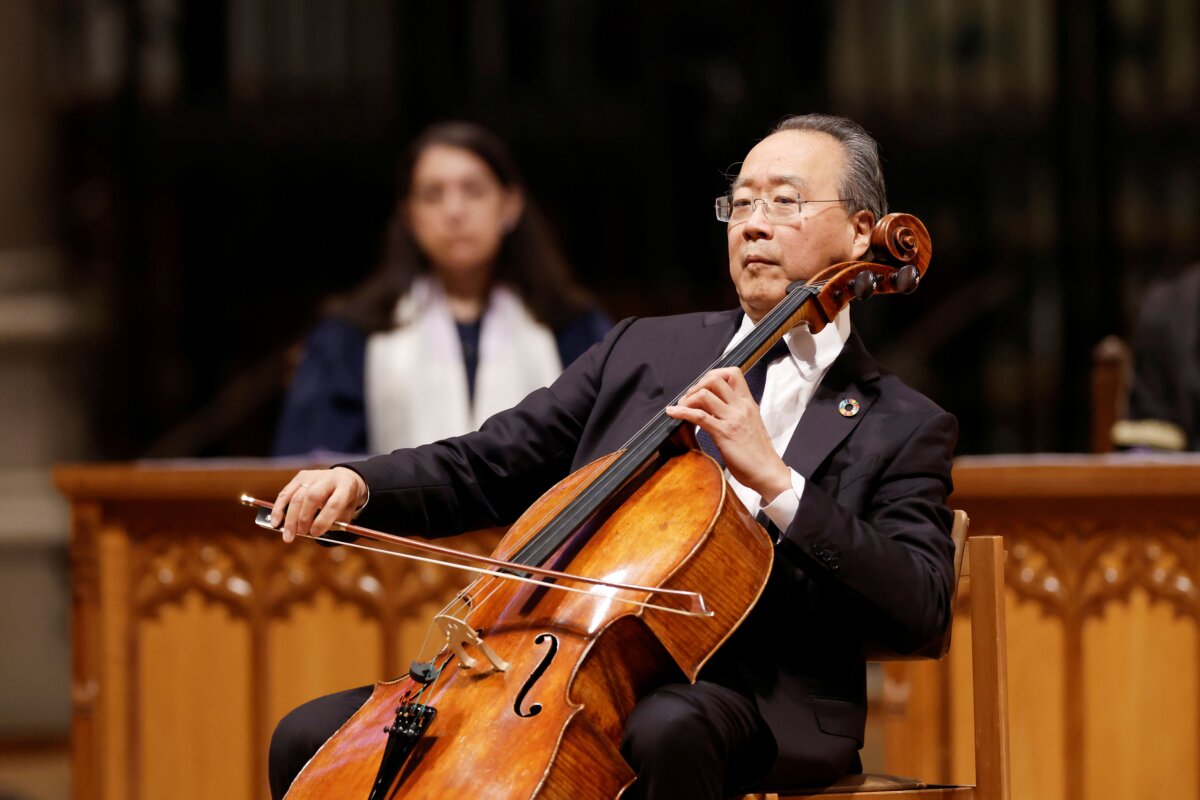
This is J. S. Bach’s “Six Suites for Unaccompanied Cello” BWV 1007–1012. It has undergone a journey as remarkable as that of its composer. Here is a recording by cellist Yo-Yo Ma. (Listen)
The famous “Prelude” of the “Six Suites” begins with luscious arpeggios, outlining the harmonies of G major. While the stream of notes seems innocuous at first listen, Bach uses the motif to imply multiple voices in a distinctly polyphonic fashion. As the music progresses, the notes paint a serene yet improvisatory image.
What makes the “Six Suites” so remarkable?
Besides being perhaps the most beloved music of the entire cello repertoire, the “Six Suites” were almost lost forever. Like Bach himself, the work was ignored for over a century before being resurrected. Interesting, no original autograph manuscript was ever found, and the different versions of the score contradict each other in confounding ways.
Next week, in the second part of this trilogy covering the “Six Suites,” we’ll explore the controversy surrounding the surviving manuscript sources before concluding with the celebrated rediscovery of the music by Pablo Casals.
What arts and culture topics would you like us to cover? Please email ideas or feedback to features@epochtimes.nyc
