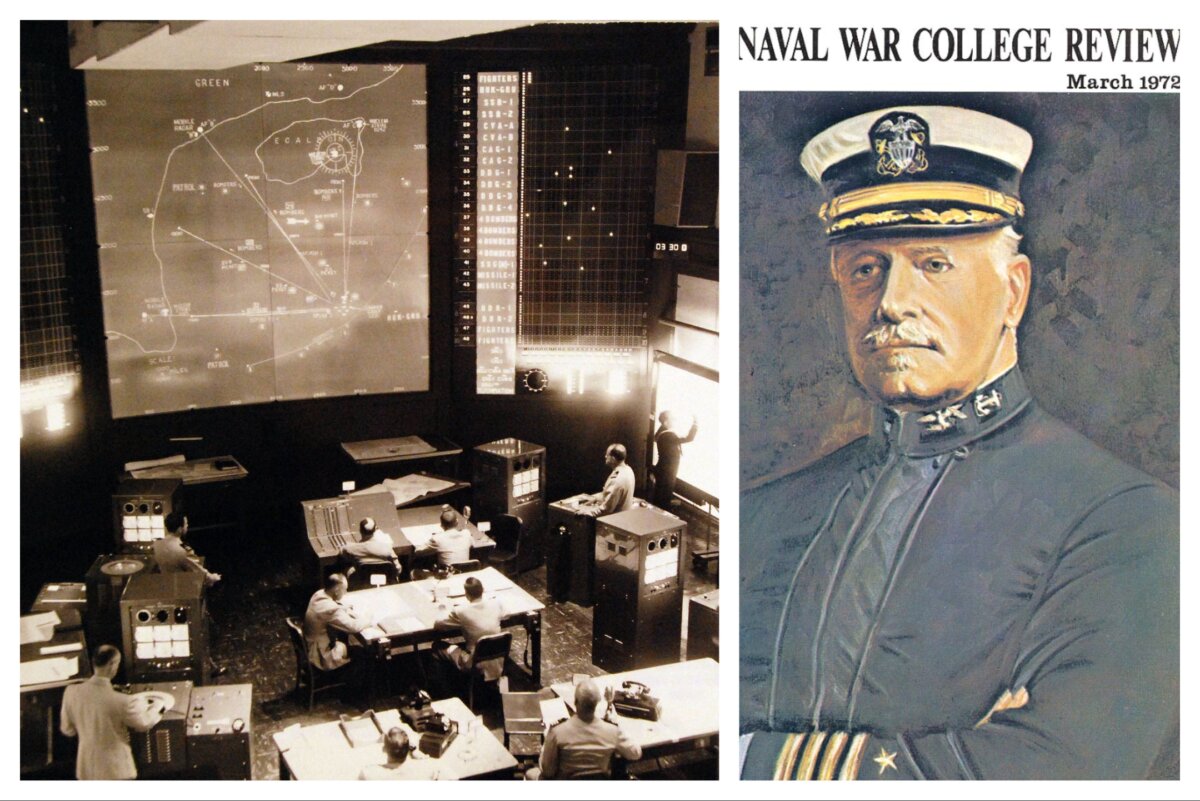
William McCarty Little (1845–1915) was born to wealthy New York City parents who often vacationed in Newport, Rhode Island. Little took a liking to the coastal city and, more importantly, the ocean itself. His affinity for the sea and naval matters would lead him to becoming one of the most important naval officers and instructors in American history.
An Officer in the Making
Little began his naval career inside the classroom at the United States Naval Academy, which, due to the Civil War, was moved from Annapolis, Maryland, to his more familiar surroundings of Newport. Little graduated in 1866, shortly after the end of the war (the school had returned to Annapolis by this time). While studying at the Academy, he met an officer who would leave a lasting impact on the U.S. Navy and Little himself—Stephen B. Luce, who eventually rose to the rank of rear admiral.
Little served aboard numerous ships over the years, including vessels of the North Atlantic Squadron. A career in the Navy, however, didn’t promise quick promotion. It was considered the “dark ages” of the military branch, but this didn’t keep Little from impressing many of his fellow and superior officers.
He was a talented seaman, who took education on naval matters seriously. He spoke and wrote several languages fluently, including French, a benefit of growing up with family property in France. Additionally, he was handsome, charming, and consistently presented himself professionally while in uniform. These qualities also helped him earn the hand of Anita Chartrand, the daughter of a prominent Cuban family in Newport.
Forced Into Retirement
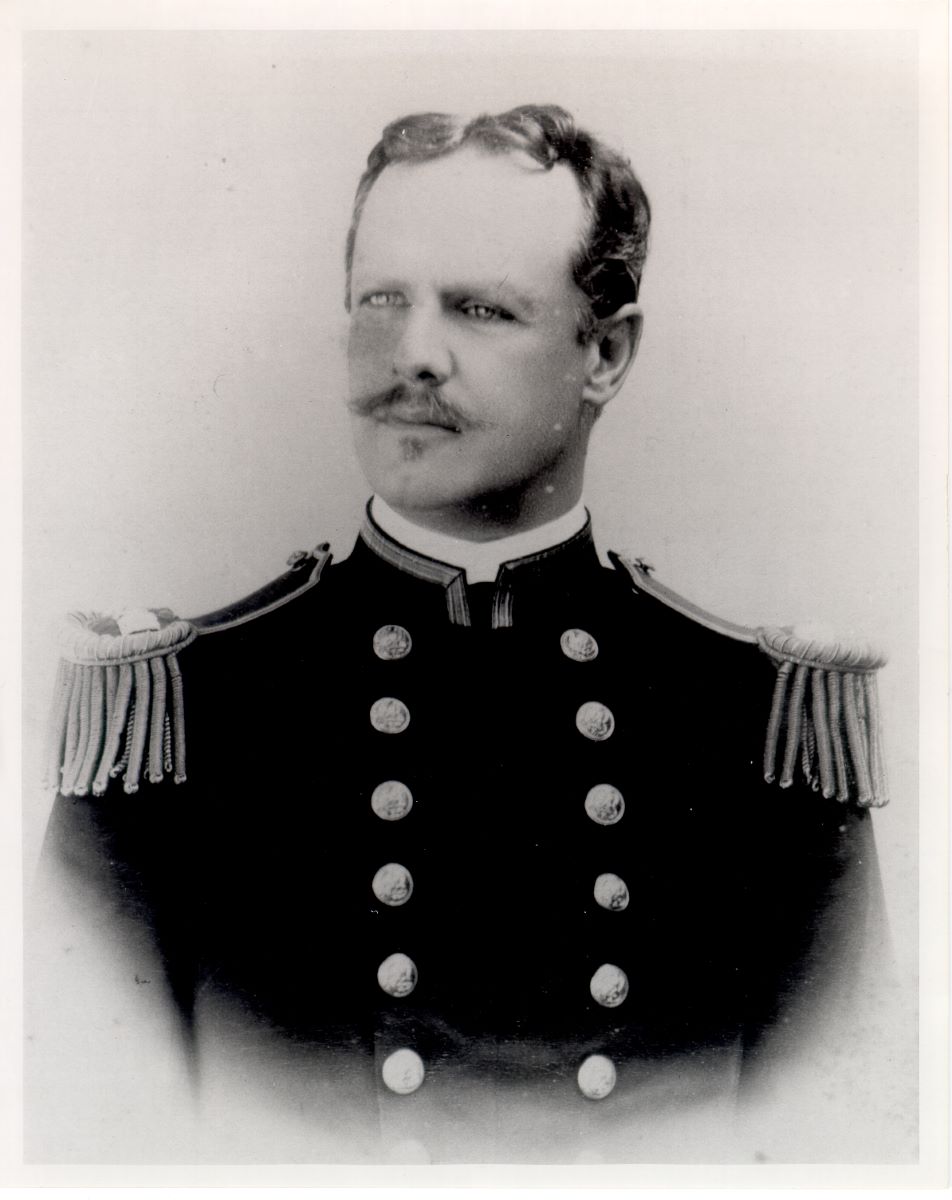
By good fortune, Newport became home for his family life and career in 1872, as he was stationed at the Navy Department’s recently established Torpedo Station on Goat Island in the Newport Harbor. But his good fortune soon came to a painful halt.
In 1876, he suffered a gun accident which cost him the sight in one of his eyes. The injury resulted in an extended leave of absence. After his recovery, he returned to active duty. His work as a navigation officer, requiring close study of charts and maps, often with poor lighting, placed immense strain on his good eye. The strain became severe while serving aboard the USS Adams off Alaska and threatened him with blindness.
He was ordered to return to New York for medical care. It was a timely order and his sight recovered sufficiently, though not completely. The Navy then ordered him to join the Asiatic Station in the Far East. Little was rightly concerned that he would not receive proper medical care in the region, and, after receiving his orders, he addressed his concerns. That address had unintended consequences.
The Navy Department’s medical board ruled that his condition required immediate discharge. Despite Little’s objections, his flawless record of service, and the fact that he was still under 40, he was forced into early retirement. Little retired to the place he felt most comfortable: Newport.
Introducing the War Game
If Little had to retire, his retirement was well-timed and well-placed. His close friend and former fellow naval officer, Luce, had been advocating for a new naval school. Luce proposed the school “apply modern scientific methods to the study and raise naval warfare from the empirical stage to the dignity of a science.” Thus, in 1884, the same year Little was forced to retire, the Naval War College in Newport was founded.
Luce knew Little was a brilliant naval officer and that he was now available to help with the college. As an unpaid volunteer, Little became one of the founding members and became one of its prized lecturers. He was tasked to formulate several lectures, specifically on the idea of war games. During Little’s naval career, he had spent eight months in Europe, which included time in Germany, where he studied the Kriegspiel (war game). About 60 years before the founding of the Naval War College, the Prussians had invented the modern war game.
In 1887, through a series of lectures, Little introduced the concept of war gaming to the U.S. military, firstly to the Navy. The practice of war gaming between staff members and, at times, students, soon followed, as he began developing visual representations of past naval battles upon which cadets could interact. By 1894, student-involved war gaming at the Naval War College became an annual event, which continues to this day.
According to Little, the objective was “to afford a practice field for the acquirement of skill and experience in the conduct or direction of war, and an experimental and trial ground for the testing of strategic and tactical plans.”
A Well-Deserved Promotion
During the school’s early years, the Navy brass and even Congress thought little of the College, leaving it grossly underfunded. It was the efforts of Little and another officer, the College’s second president, Alfred Thayer Mahan and his groundbreaking lectures called “The Influence of Sea Power Upon History 1660–1783,” that forced the Navy and Congress to take notice.
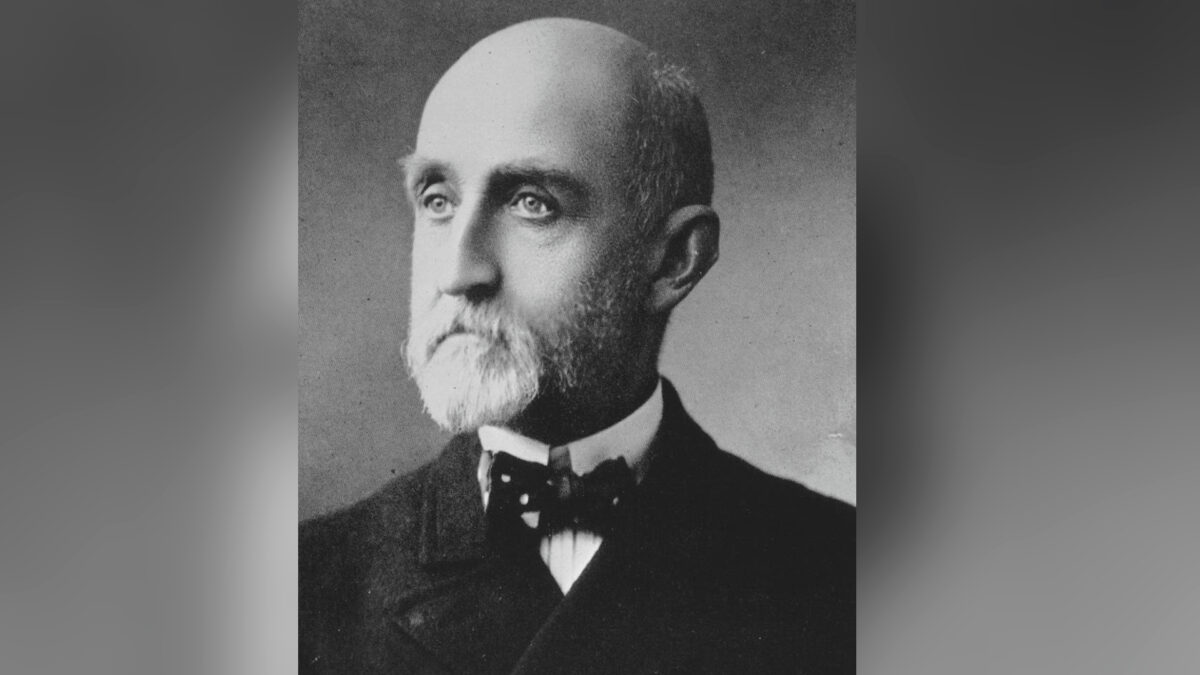
In 1898, a few years after the launch of the annual war games, the Spanish-American War began and Little was called out of retirement. He served during the war at the Newport Naval Training Station as an executive officer. After the war, he returned to the College in 1900.
The following year, he helped ensure war gaming was included into the U.S. Army’s curriculum. In 1903, by special congressional resolution, Little was promoted to rank of captain and permanently assigned as a member of the college’s faculty in appreciation of his efforts at the Naval War College.
The Legacy of Little’s War Games
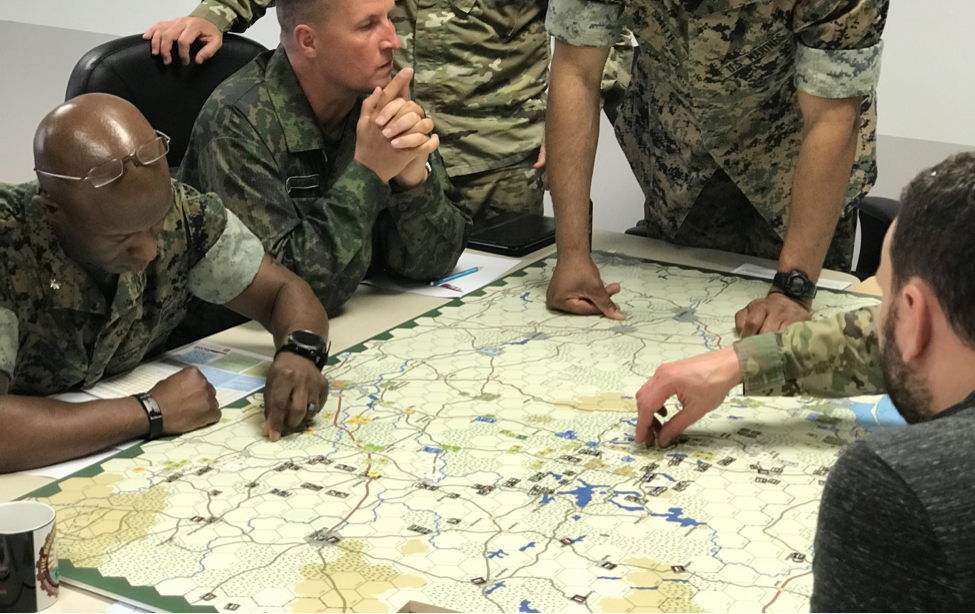
Over the following decade, Little and faculty members continued to develop war gaming strategies. During his famous 1912 lecture on war gaming, he told his audience:
“[W]ar itself has been declared to be a game, and rightly so, for it has the game characteristic of the presence of an antagonist. It has, however, another characteristic which differentiates it from most other games. … In the game of war … the stake is life itself, nay, infinitely greater, it may be the life of the nation, it certainly is its honor. We are its champions: what sort of a figure shall we cut when, at the tournament, the trumpets sound the charge, and it is found that we have neglected to practice in the joust. What fencing is to the swordsman, what the jousting field was to the knight, the war game is to the modern strategist.”
After nearly 30 years of service at the school, Little retired in 1915. Shortly after, that same year, he died. His legacy of war gaming, however, continued, making significant impact on future naval officers and the success of the Navy itself.
Nearly 20 years before his retirement, the U.S. Navy recognized the rising power of Imperial Japan and the growth of its navy. In 1897, the Naval War College under the leadership of Little began formulating ways to defeat Imperial Japan at sea in what became known over the ensuing decades as War Plan Orange. After the defeat of Japan in World War II, Adm. Chester W. Nimitz reflected on how the U.S. Navy was able to defeat what was at the start of the war the world’s greatest naval power: “The war with Japan had been reenacted in the game room here by so many people in so many different ways that nothing that happened during the war was a surprise.”
What arts and culture topics would you like us to cover? Please email ideas or feedback to features@epochtimes.nyc.