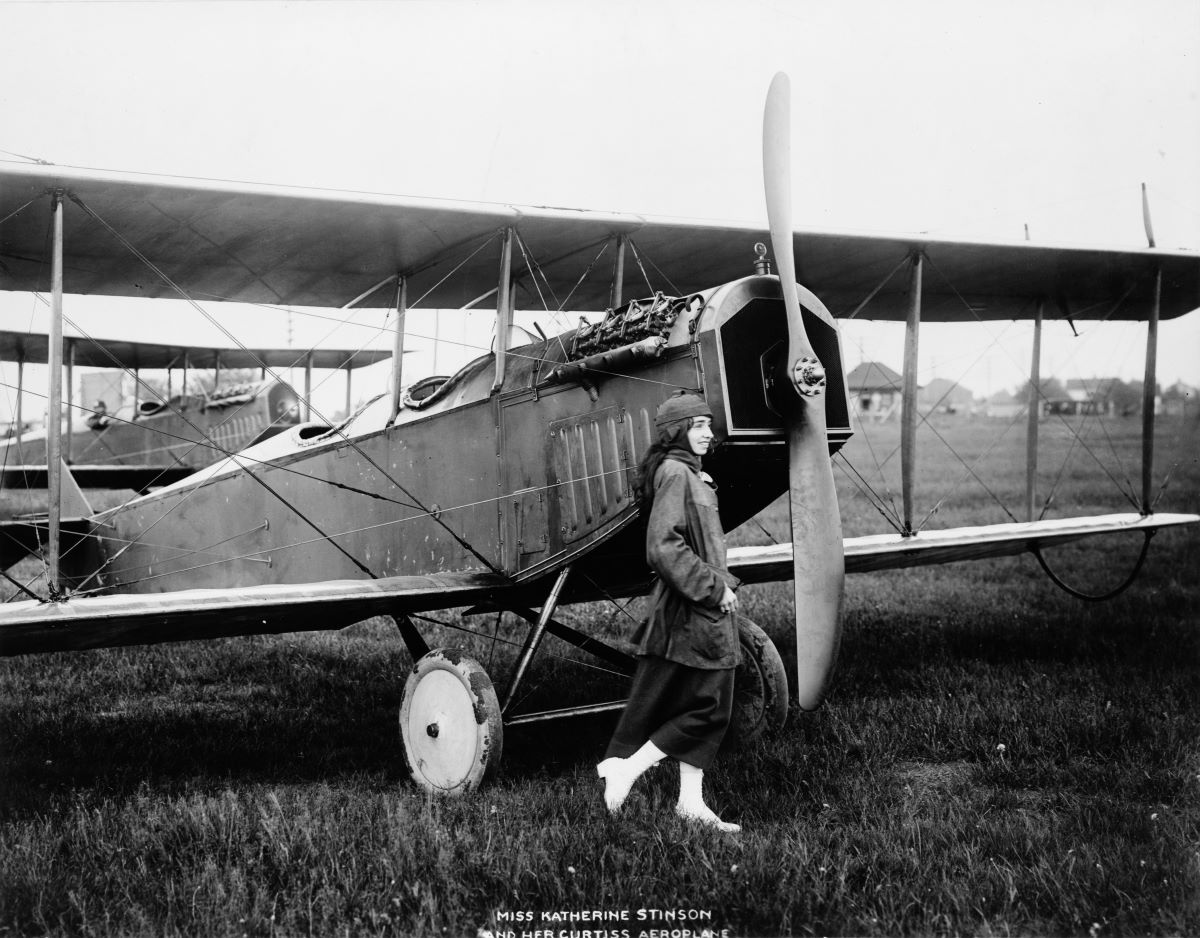
In the formative years of aviation, when aircraft were little more than wood, wire, and fabric held together by ingenuity, Katherine Stinson earned a reputation as one of the most accomplished pilots of the era. Her career was built on exhibition flying, long-distance travel, instruction, and aviation promotion. More than a century later, her achievements remain firmly woven into the history of early flight.
Growing Wings
Born in 1891 in Fort Payne, Alabama, Stinson spent portions of her youth in Mississippi and Arkansas. Music initially occupied much of her attention. She heard that stunt pilots earned large sums of money and planned to finance her music education through aviation.
Once introduced to flying, however, she discovered a field that demanded both discipline and imagination. After training with noted aviator Max Lillie, she earned her pilot’s certificate in 1912 and quickly developed a reputation for confident aircraft handling.
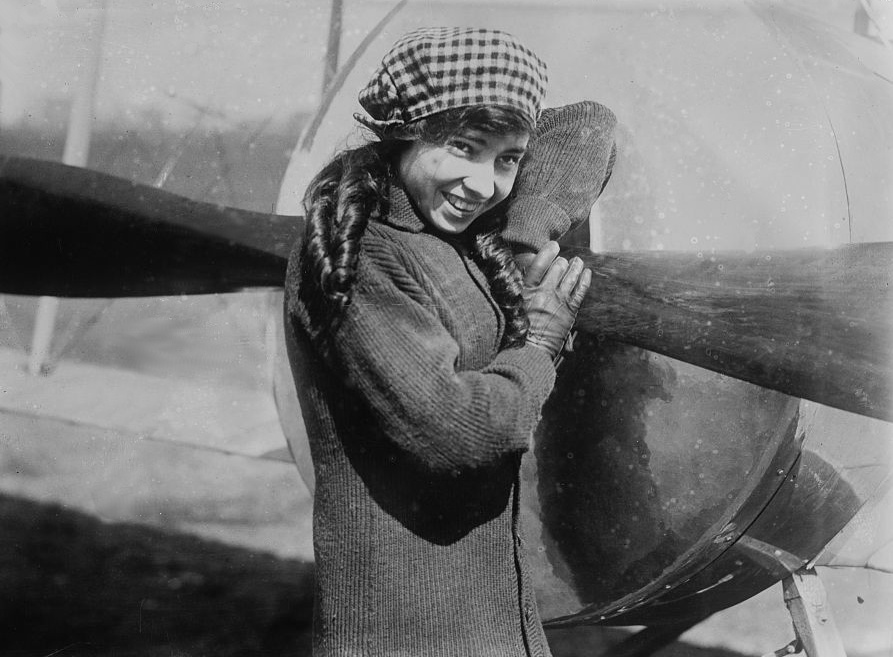
At a time when public exhibitions offered one of the few avenues for earning a living in aviation, Stinson became a sought-after performer. Traveling throughout the United States, she appeared before thousands of spectators who gathered to watch aircraft climb, bank, and maneuver in ways that seemed extraordinary. Her exhibitions were noted less for showmanship alone than for precision and consistency. Indeed, fellow aviators and newspaper accounts frequently praised the control she displayed in the air.
Going the Distance
As her experience grew, Stinson turned increasingly toward ambitious cross-country and endurance flights. In December 1917, she completed a widely celebrated nonstop flight from San Diego to San Francisco, covering a distance that attracted national attention and demonstrated the growing capabilities of aircraft and pilot alike. Flying such distances demanded careful judgment, particularly in an era when navigation aids were limited and mechanical troubles could quickly become serious. Perhaps more than any single exhibition, these flights revealed the practical possibilities of aviation.
Stinson’s reputation soon extended beyond the United States. During tours of Japan and China in 1916 and 1917, she conducted aerial demonstrations before enthusiastic crowds and helped introduce many spectators to powered flight. Newspapers followed her travels closely, and her appearances drew considerable attention. For many observers, seeing an airplane rise into the air was an uncommon experience, lending her exhibitions an atmosphere of curiosity and excitement.
Expanding Horizons
Education also became an important part of her career. In San Antonio, Texas, the Stinson family established a flying school that became one of the more respected aviation training centers in the country. Stinson supported the family’s aviation school and contributed to training efforts while maintaining an active exhibition schedule. The school helped develop a growing corps of pilots at a time when aviation instruction remained relatively new in the United States.
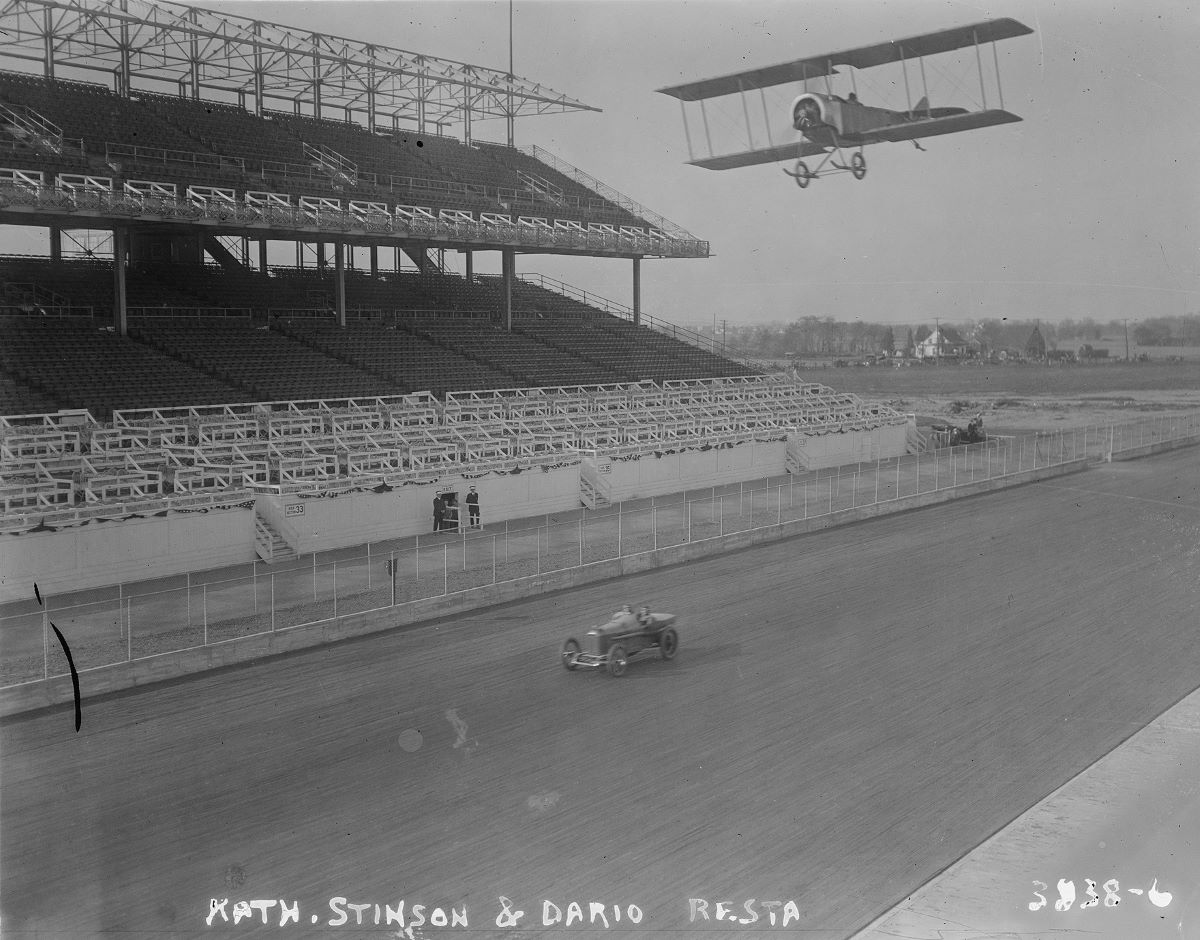
Another notable chapter involved carrying mail by air. In 1918, Stinson undertook a highly publicized long-distance mail flight associated with a planned journey between Chicago and New York. Strong winds and damage to her aircraft prevented the effort from unfolding exactly as intended, yet the attempt demonstrated both endurance and determination. Indeed, dependable airmail service would become one of the foundations that forged commercial aviation.
World War I altered the course of many aviation careers, and Stinson’s was no exception. She supported wartime fundraising efforts through exhibition flights and later worked overseas with the Red Cross as an ambulance driver. While serving in Europe, she contracted influenza and subsequently developed tuberculosis. The illness effectively ended her flying career at a comparatively young age and brought to a close one of the most active chapters in early aviation.
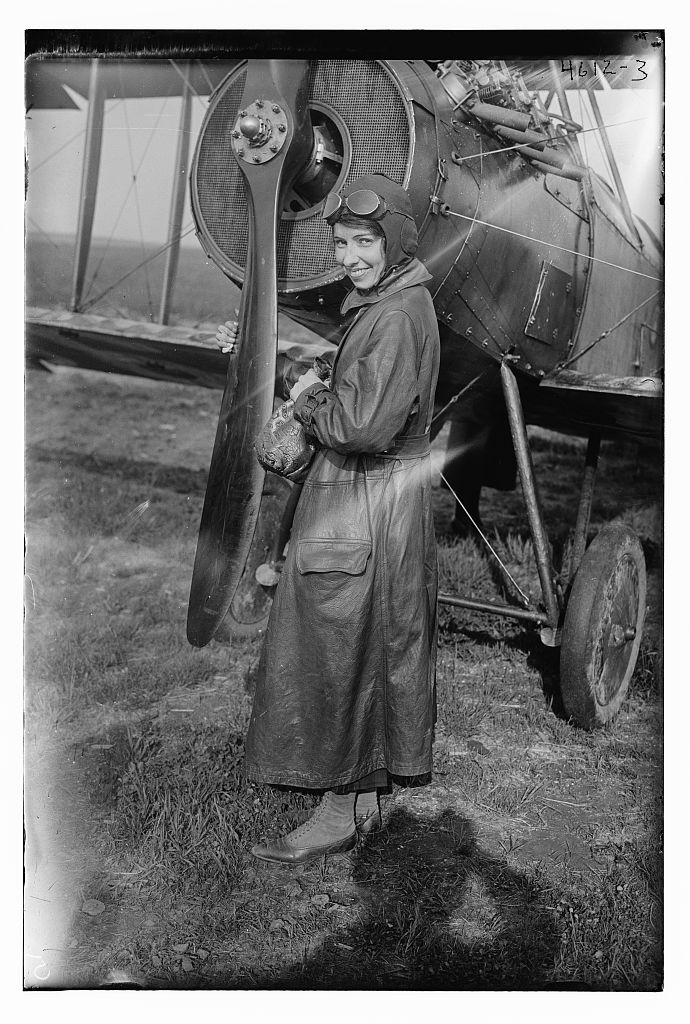
Recovery eventually led her to New Mexico, where she began an entirely new profession. Settling in Santa Fe, Stinson became involved in architecture and residential design, producing homes influenced by the Pueblo Revival style that was gaining prominence throughout the region. Her architectural work reflected the same care and practical problem-solving that had characterized her years in the cockpit.
When Stinson died in 1977, aviation had been transformed beyond recognition. The open-cockpit aircraft she once flew had given way to jet travel and space exploration. Yet her reputation endured. It rested on years of disciplined flying, ambitious distance records, international exhibitions, and a willingness to treat aviation not merely as spectacle but as a practical tool. Long after the era of exhibition fields and fragile biplanes had passed, Katherine Stinson remained a vivid example of what skill and determination could accomplish in the uncertain early years of flight.
What arts and culture topics would you like us to cover? Please email ideas or feedback to features@epochtimes.nyc.