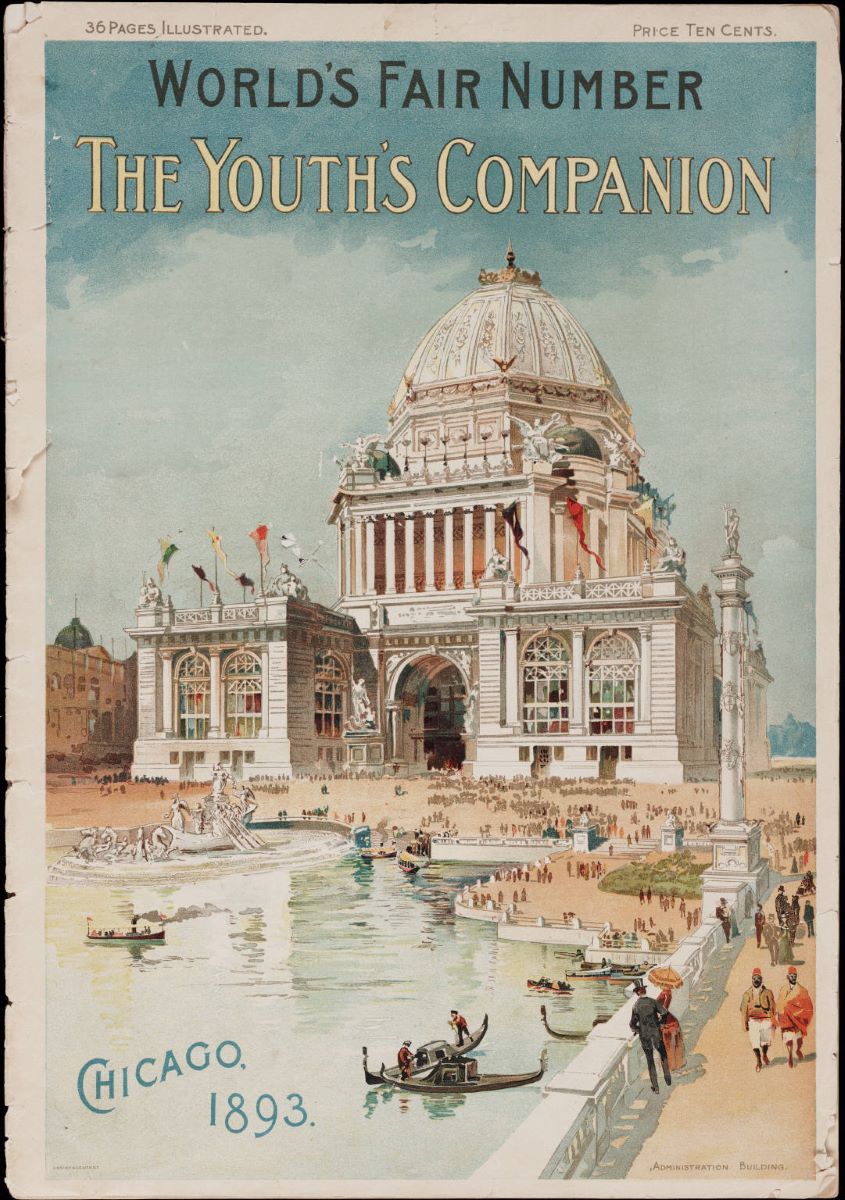
When the publishing firm Upham, Ford & Olmstead purchased The Youth’s Companion in 1857, the small children’s publication of about 7,000 subscribers had been around for 30 years. It had been launched as an adjoiner to the Boston-based Congregationalist newspaper The Recorder. Upham, Ford & Olmstead also owned the recently merged Christian Watchman & Reflector. For business reasons, The Youth’s Companion was published under the fictitious entity of Perry Mason & Co.
Shortly after the firm purchased the youth paper, the partners amicably went their separate ways, citing managerial differences. They split up the publications, with Daniel S. Ford receiving The Youth’s Companion.
It was not an ideal publication, but Ford was a visionary, and his marketing gimmicks quickly grew the subscribership. He offered prizes for those who could procure subscriptions, and a prize was also awarded based on how many one could obtain. Among the prizes were brushes, watches, sewing machines, and even a piano. By 1887, Ford had boosted his subscribership to 400,000. It would reach nearly 500,000 a decade later.
Of course, subscribers to a publication wanted a paper worth reading, and Ford was fully committed to printing “entertaining, wholesome and inspiring literature.” During his tenure as owner, which extended until his death in 1899, some of the most prominent writers, including Harriet Beecher Stowe, William Dean Howells, Henry Wadsworth Longfellow, and Alfred Lord Tennyson, as well as political figures such as Booker T. Washington, Grover Cleveland, and Theodore Roosevelt, contributed to the paper.
A Patriotic Opportunity
Ford was deeply patriotic and believed that the classroom was the perfect place to cultivate patriotism. Through his paper, he helped place patriotic items inside public schools, such as portraits of President George Washington. In 1888, James B. Upham, editor of The Youth’s Companion and Ford’s nephew, broached the idea of placing an American flag at every public school. Ford believed that the idea was perfect for “advancing patriotism,” and the paper began promoting the idea. Over the next couple of years, the initiative to fly the flag “over every schoolhouse” proved immensely popular.
As The Youth’s Companion readership grew and the flag initiative increased in popularity, Ford looked for ways to commemorate the upcoming 400th anniversary of Christopher Columbus’s landing. With the World’s Columbian Exposition scheduled to begin in October 1892 in Chicago, Ford planned to coordinate a National Public School Celebration to coincide with it.
The Minister-Editor
Francis Bellamy had been a Baptist pastor for more than a decade. He had begun his pastorship in Little Falls, New York, but in 1885, he and his family moved to Boston to lead the Dearborn Baptist Church. After five years, he became pastor of another Boston church, Bethany Baptist. Incidentally, Ford was already a member of Bethany.
Bellamy had made a name for himself as both a minister and a writer. In 1891, Bellamy resigned from the ministry. Ford was quick to hire him as a writer and associate editor, and encouraged him and Upham to coordinate ways to promote the National Public School Celebration.
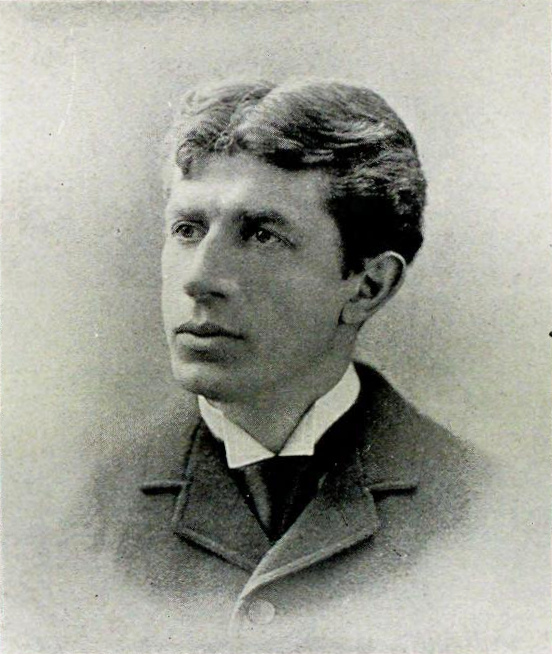
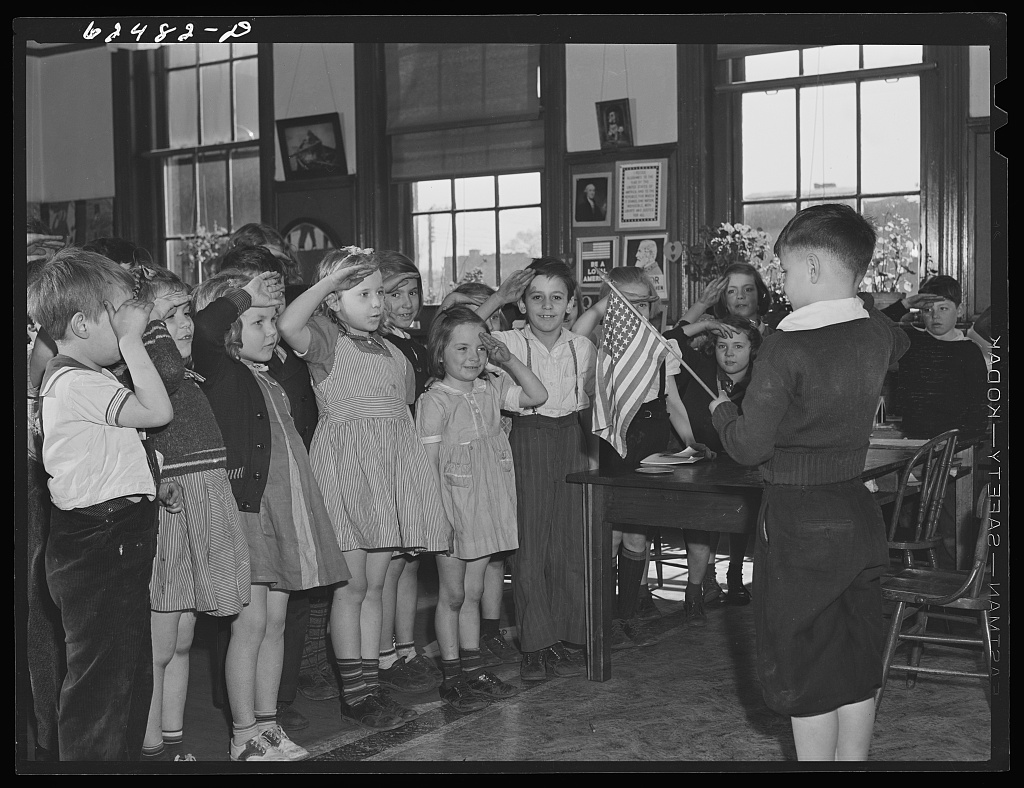
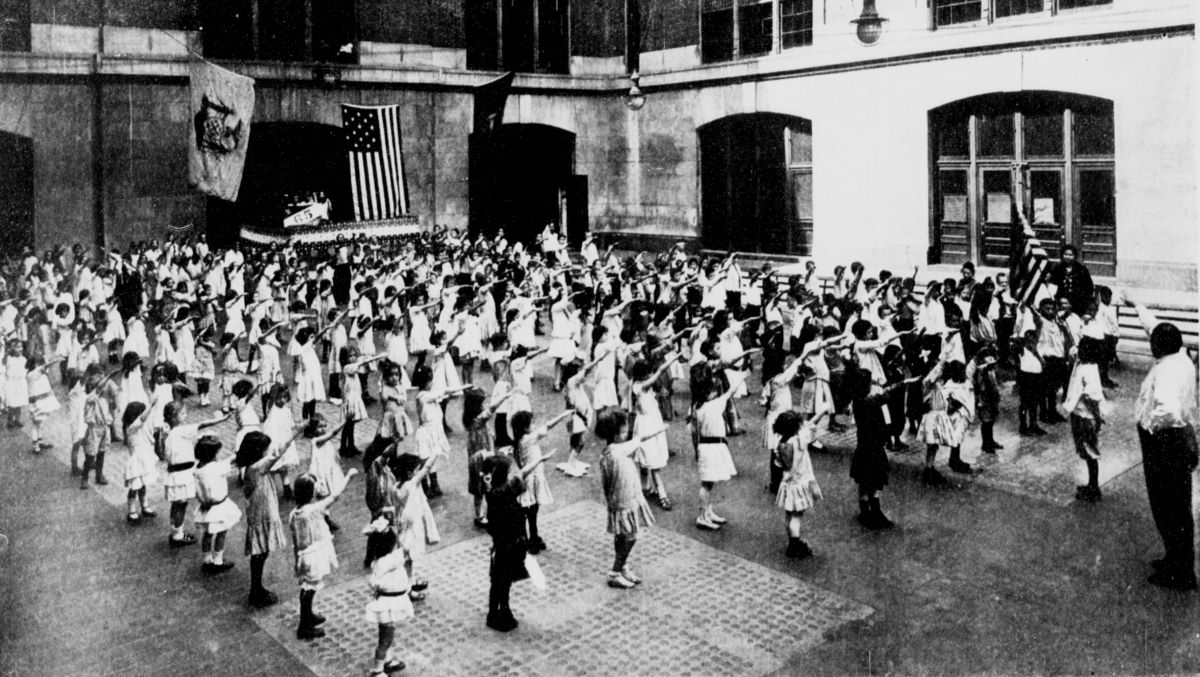
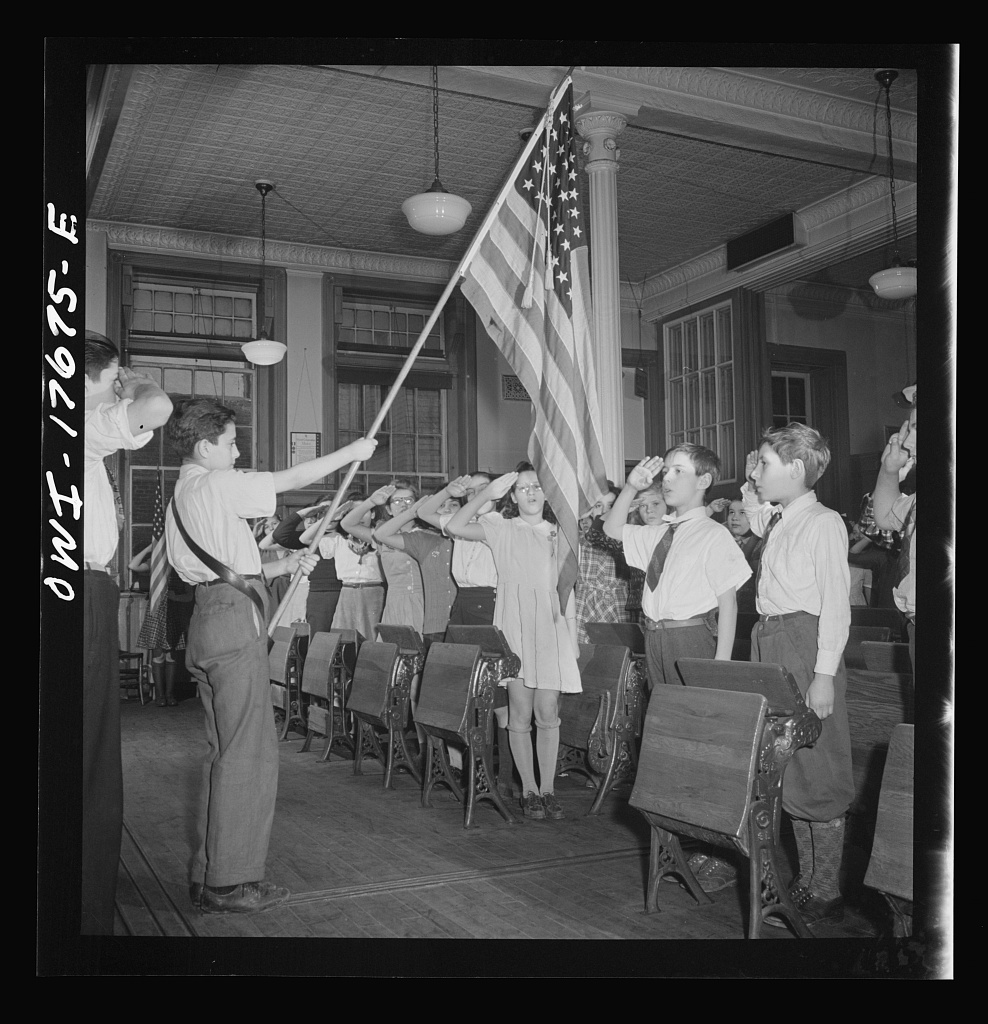
Since over the past few years, The Youth’s Companion had been focused on placing a flag at every school, Upham and Bellamy collaborated on an idea to create a pledge to that flag. While Bellamy formulated the wording of the pledge, Upham created a salute, which he called the Bellamy salute, that would be given while citing the pledge.
The Pledge and Salute
As the opening ceremony of the Columbian Exposition inched nearer, President Benjamin Harrison, on June 29, proclaimed “October 21, 1892, the four hundredth anniversary of the discovery of America by Columbus, as a general holiday for the people of the United States.”
“On that day let the people, so far as possible, cease from toil and devote themselves to such exercises as may best express honor to the discoverer and their appreciation of the great achievements of the four completed centuries of American life,” he said.
Although the Columbian Exposition in Chicago was postponed until May 1, 1893, Bellamy and Upham had their pledge and salute organized and ready. Upham created a salute that required the right arm to be outstretched at an angle, palm down, with the fingers pointed toward the flag. In the Sept. 8, 1892, issue of The Youth’s Companion, the pledge, which did not cite a specific author, was published.
It read: “I pledge allegiance to my Flag and the Republic for which it stands: one nation, indivisible, with liberty and justice for all.”
Considering the fact that the Civil War had ended less than three decades before, the last Confederate state to be readmitted to the Union—Georgia—was readmitted in 1870, and Union troops had left the South only 15 years before as part of the Compromise of 1877, it was prudent to identify one flag, one republic, and “one Nation, indivisible.”
Adjusting the Pledge
Although the exposition had been postponed, millions of school children had recited that pledge during the week of Oct. 21. As the years progressed, more and more schools adopted the pledge as a morning ritual for their students.
As more and more immigrants poured into America during the decades around the turn of the 20th century, there was an increasing concern about the loyalty of newcomers. With strong anti-German sentiment during World War I and the Red Scare from Russia’s Bolshevik Revolution and the spread of communism, the Americanization Movement began, which pushed for patriotism among citizens wherever they were: schools, churches, and places of employment.
After World War I, the newly formed American Legion, along with the Daughters of the American Revolution, pushed for a slight change in the famous Pledge of Allegiance. Since the pledge stated “my flag,” there was concern that immigrants would view that as meaning the flag of their choosing, specifically that of their country of origin.
On June 14, 1923, in Washington, the two groups convened the first National Flag Conference, which established “a set of rules for civilian flag use” known as the U.S. Flag Code. These two patriotic organizations officially had the pledge’s wording revised from “my flag” to “the flag of the United States.” The following year, the National Flag Conference added “of America.”
Adopting the Pledge
Although the Pledge of Allegiance was resoundingly accepted and used throughout schools and organizations, neither it nor the U.S. Flag Code had been officially adopted by Congress. That didn’t happen until another threat loomed over the country. World War II presented multiple ideologies to combat: fascism, Nazism, Soviet communism, and Japanese militarism. When America entered the war in December 1941, Congress moved toward adopting the pledge.
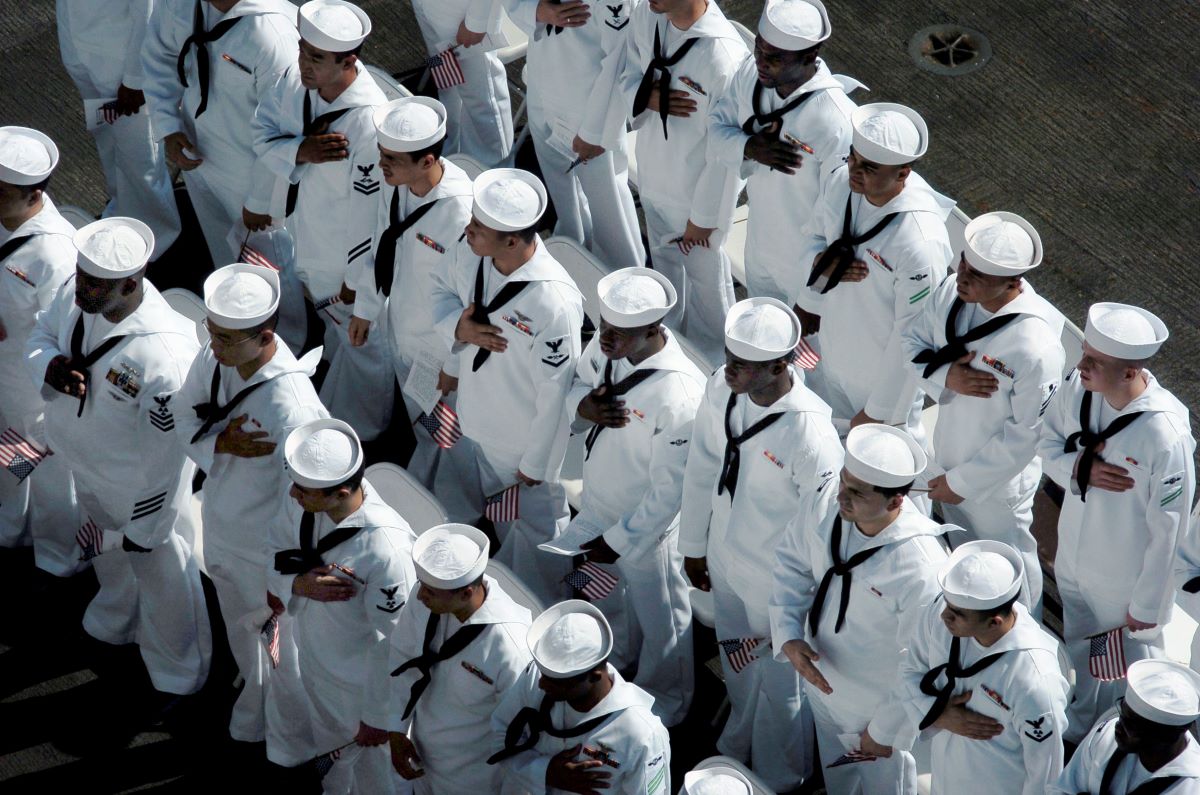
It was during this week in history, on June 22, 1942, that Congress adopted the U.S. Flag Code and, with it, the Pledge of Allegiance—50 years after it was published. Six months later, on Dec. 22, 1942, Congress passed a resolution changing the way people made the pledge. There was understandable concern that the long-used Bellamy salute resembled the Nazi salute. Thus, Congress revised the salute to have the right hand placed over the heart while standing at attention and facing the flag.
There would be one more change to the pledge in the coming decade. After World War II and the defeat of the Axis powers, which included Nazi Germany and Imperial Japan, the Soviet Union and the United States were left as the world’s two great powers. Communism, with its godless ideology, continued to expand. The godlessness of the ideology led a number of organizations, including the Knights of Columbus, as well as the country’s new president, Dwight D. Eisenhower, to lobby Congress to add “under God” to the pledge.
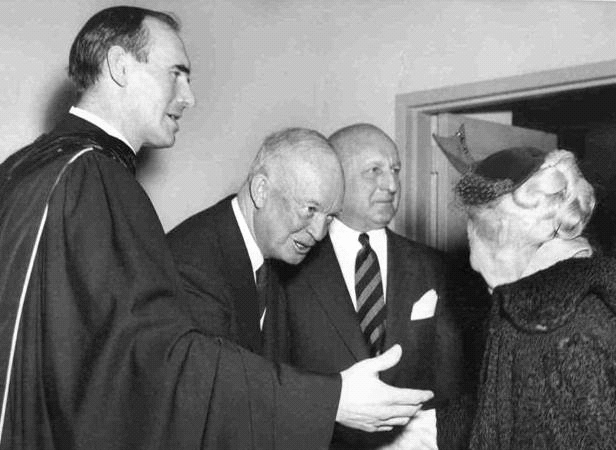
On June 14, 1954, Congress added the two words to the Pledge of Allegiance, resulting in the following pledge that has been used throughout the country for more than 70 years: “I pledge allegiance to the Flag of the United States of America, and to the Republic for which it stands, one Nation under God, indivisible, with liberty and justice for all.”
A Question of Authorship
There was a controversy about who authored the pledge. After the death of Upham in 1905, the Upham Family Association claimed that it was their namesake who was the true author. In 1930, Col. James Moss, of the U.S. Flag Association, approved the claim. In 1931, Bellamy died, and his son, David Bellamy, soon took up the cause in his father’s name.
When a large monument was scheduled to be erected for Upham at the nation’s capital, Moss requested that several history scholars confirm his assessment. After the scholars looked further into the matter, specifically into David Bellamy’s claims, Moss reversed course in favor of Francis Bellamy in 1939.
The Bellamy-Upham controversy erupted again in 1956. The Library of Congress finally brought the controversy to a decisive conclusion the following year, citing Francis Bellamy as the true author of the Pledge of Allegiance.
Never miss a This Week in History story! Sign up for the American History newsletter here.
What arts and culture topics would you like us to cover? Please email ideas or feedback to features@epochtimes.nyc.