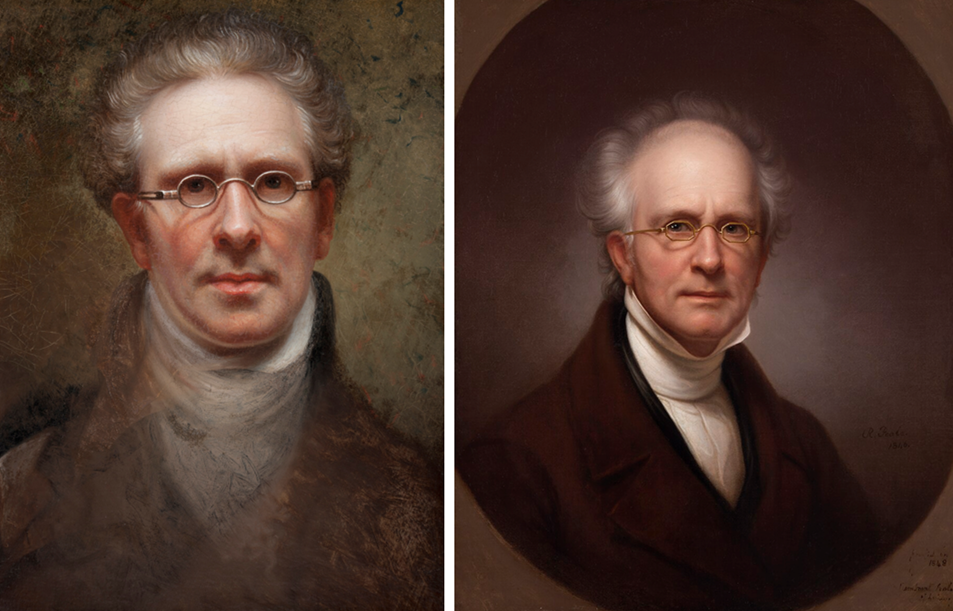
For artists, having a parent who’s a regarded expert in that field can be a decided advantage. The patriarch of the Peale family, renowned portraitist Charles Willson Peale (1741–1827), laid the foundation for later generations to contribute their talent to the arts in America.

Rembrandt Peale (1778–1860) continued his father’s legacy of creating portraits that would become landmarks of American history.
Peale was the third child of Charles Peale and his first wife, Rachel. He was born on Feb. 22, 1778, in Bucks County, Pennsylvania. Like many of his brothers and sisters, Rembrandt was named after a famous painter of old, 17th-century Dutch master Rembrandt Harmenszoon van Rijn. How could the boy not become an artist with such a name?

A self-portrait by Rembrandt van Rijn, 1659. (Public Domain)
Rembrandt began his artistic studies with his father. He began drawing at age 8 and studied painting soon after. At 13, he produced his first self-portrait. His father also instructed him in the natural sciences and the development of moral character.
Young Rembrandt is described as an ambitious, eager child, yet the enthusiasm that drove him to early mastery of the arts would make him restless throughout his life and career.
Charles Peale promoted his children’s abilities and their artwork, and provided opportunities whenever possible. When Rembrandt was 17, his father arranged for him to paint a portrait of President George Washington.
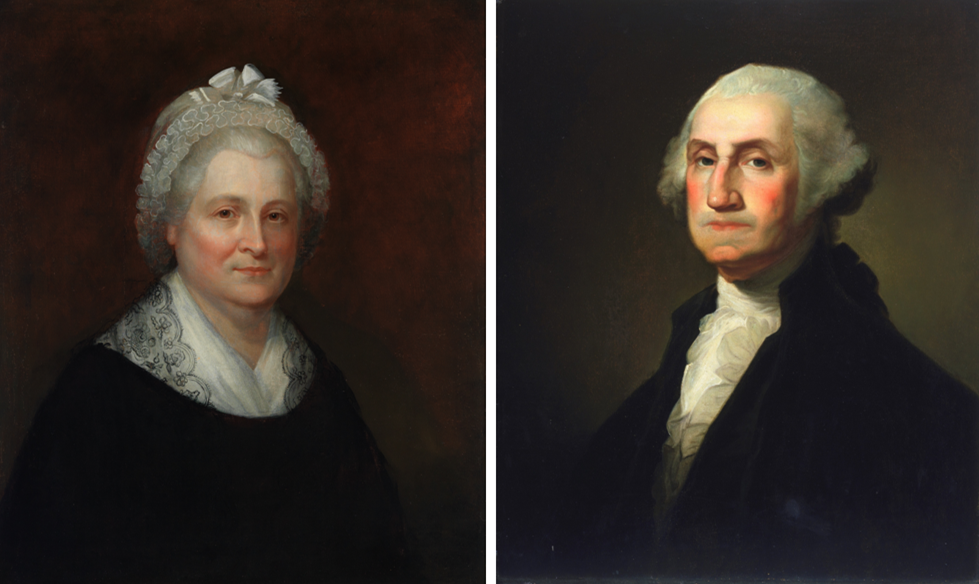
Although the young artist was never fully satisfied with this portrait, it was well-received and officially established him as a portraitist. Throughout his long career, Rembrandt would paint over 80 portraits of Washington, including multiple copies of his own works.
Since there was little artistic training available in the United States beyond what he’d received directly from his father, Peale spent several years abroad. He traveled throughout Europe to study the works of the masters and learn from teachers there.
Notably, he studied with American-born portraitist Benjamin West, who’d taught his father years earlier, in London from 1801 to 1803.
During his eight decades of life, Rembrandt painted over 600 portraits of significant figures in early American history. However, he wasn’t content with just being a portraitist. He also wasn’t content with achieving a local reputation in Philadelphia. He was determined to make the most of himself as an artist.
Wide Interests
Like his father, Rembrandt was a man of many interests and talents. In 1814, he established his first art museum and portrait gallery in Baltimore. Inspired by his father’s establishment of the new nation’s first museum in Philadelphia in 1786, he called it the Peale Museum.
It was illuminated by gas lighting, a technology pioneered by his brother Rubens. Like many of Rembrandt’s impressive endeavors, this project was short-lived, as he was forced to close it due to the War of 1812, which started a few years before.
Peale also pursued an interest in chemistry and archaeology, which overlapped with his focus on art. He studied the chemistry of paint at the University of Pennsylvania’s Medical College, using scientific methods to develop a precise coloring system that amazed his father. When funds were tight, he studied the mastodon skeleton in England and produced sketches of it.

Educating future artists was an important part of Rembrandt’s life. He founded art institutions in America and wrote instructional manuals. With his father, he was one of the founders of the Pennsylvania Academy of the Fine Arts and the National Academy of Fine Arts in Boston. He eventually became president of the American Academy of Fine Arts in New York.
In 1830, Rembrandt settled in Philadelphia and spent the last three decades of his life teaching, lecturing, and writing, although he resumed painting in 1840.
His writings include “Notes on Italy, Written during a Tour in the Years 1829 and 1830” (1831); “Lecture on the Fine Arts” (1838); and “Notes of the Painting Room: The Experience of More than Half a Century” (1840s).
His best-known writing was an 1835 textbook entitled “Graphics: A Manual of Drawing and Writing for the Use of Schools and Families,” and he contributed several articles to the art periodical “The Crayon” in his last five years.
Famous Paintings
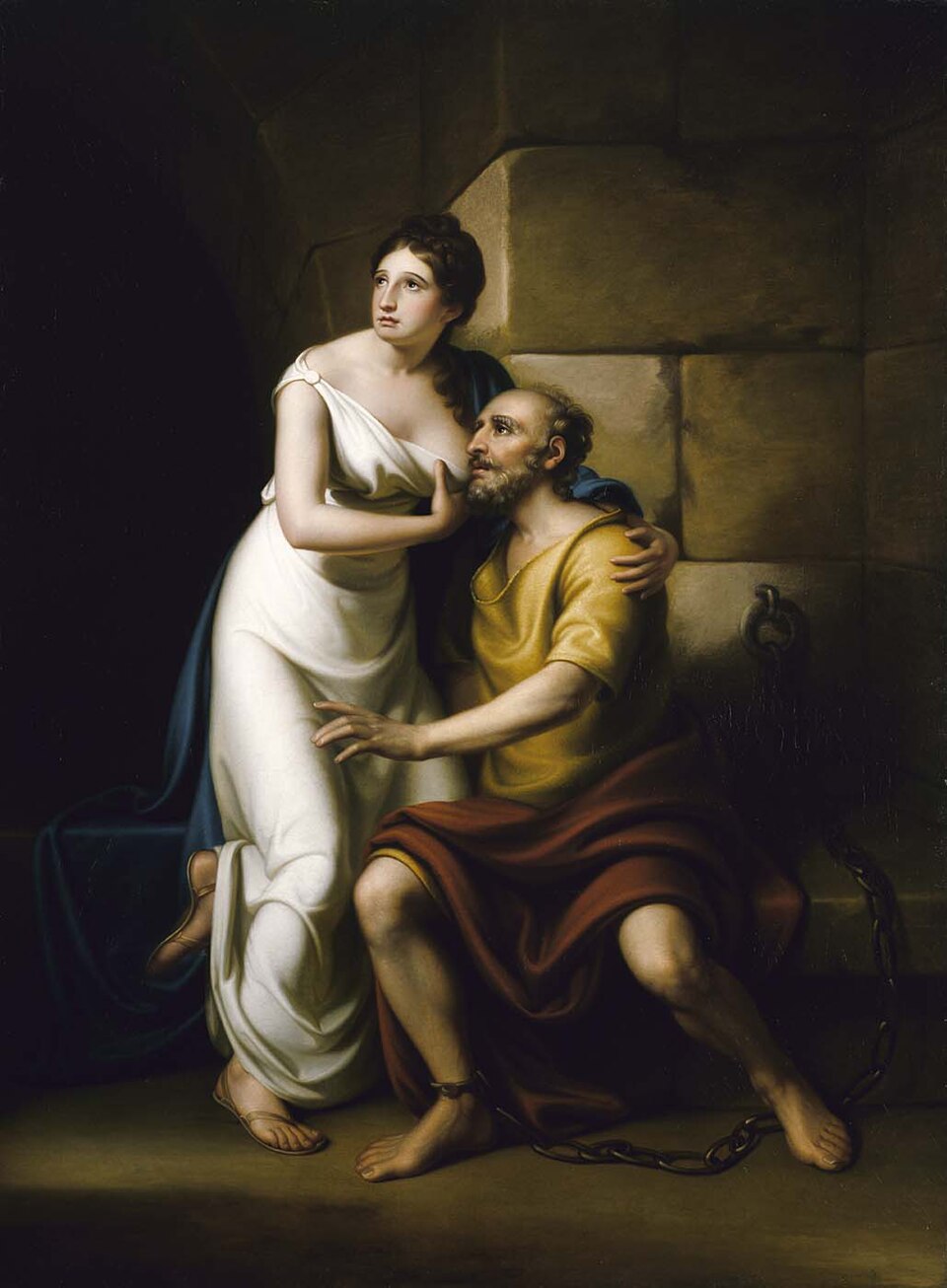
Rembrandt’s style was primarily neoclassical, with highly realistic portraiture inspired by his father’s work. As he traveled through Europe, he saw works of French neoclassicism, which also inspired him to create paintings in that style. These include “The Roman Daughter” (1811), “The Ascent of Elijah” (1815), and “The Court of Death” (1820). America wasn’t quite ready for this style of art yet, so the paintings weren’t well received.
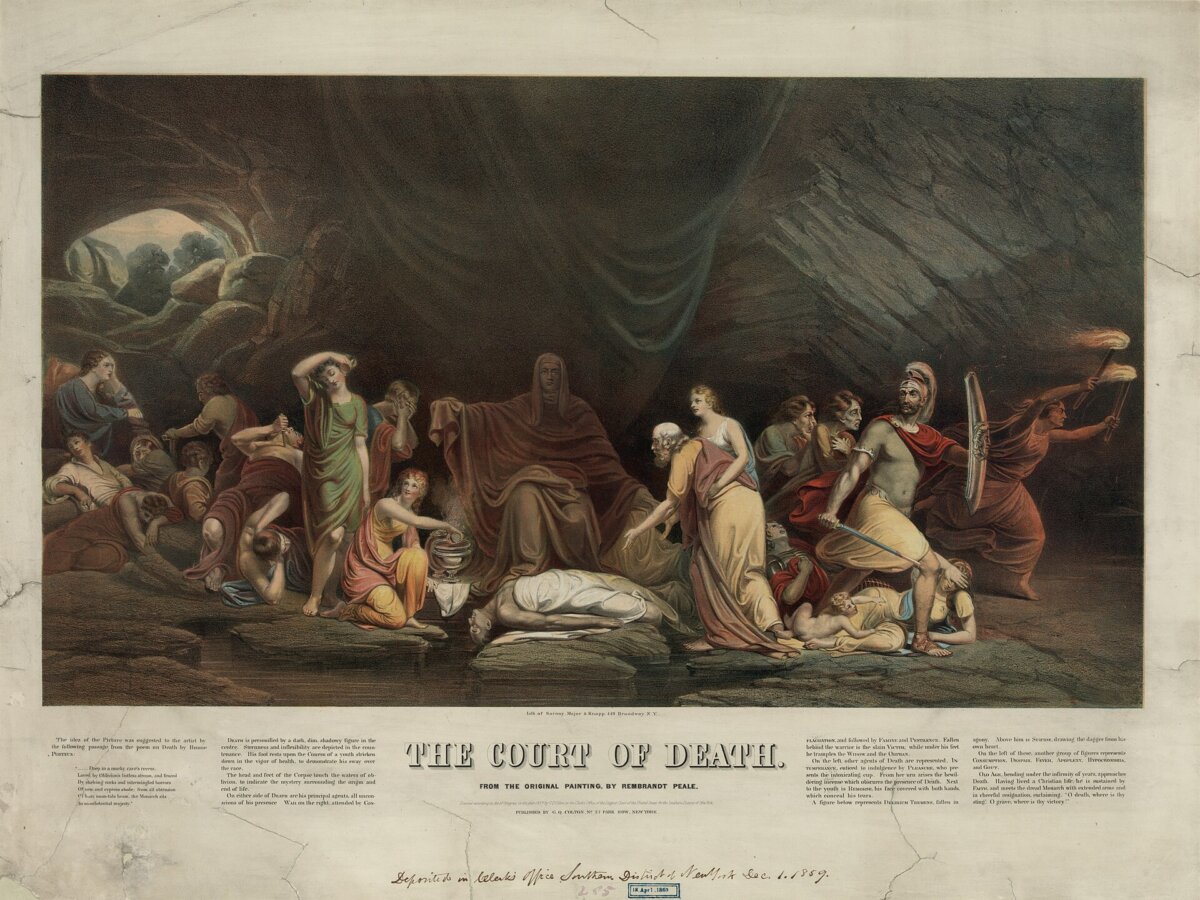
“The Roman Daughter” was particularly scandalous for its frank depiction of the ancient legend “Roman Charity,” including a somewhat exposed female form. Critics wanted him to stick to portraiture.
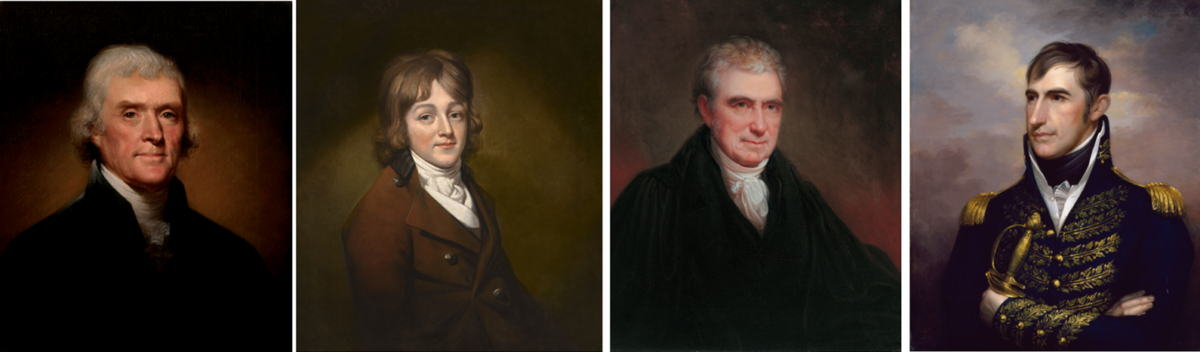
Peale produced the most famous portraits of many American legends, including Thomas Jefferson during his presidency, Martha Washington, Francis Scott Key, President William Henry Harrison, and Chief Justice John Marshall.
His most successful and recognizable work is his “Patriae Pater” (Father of Our Country), commonly known as the “Porthole” portrait of Washington for its unique oval perspective. He painted this work in New York in 1822 to 24 out of a resolve to produce the “standard likeness” of Washington.
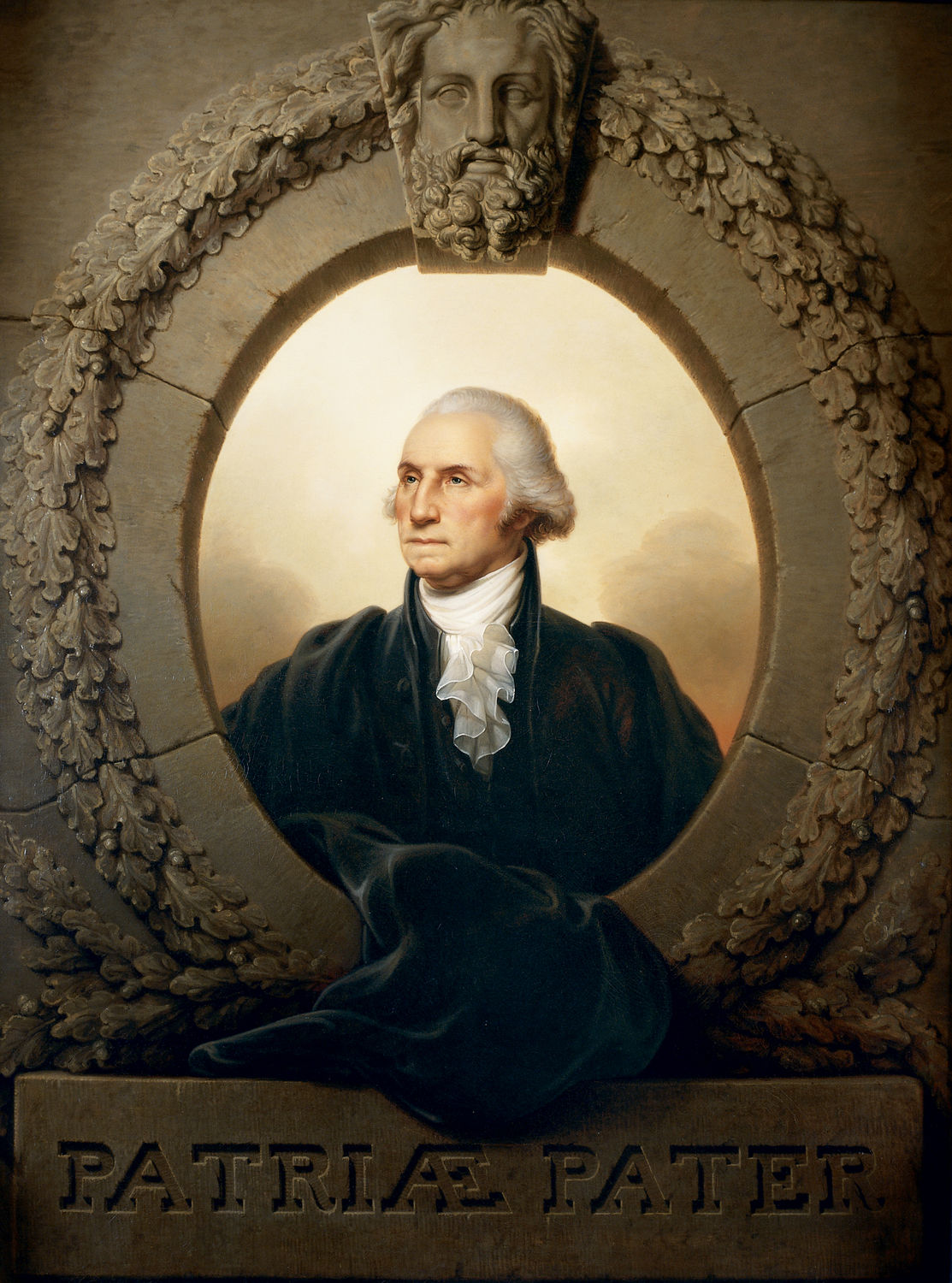
Although the first president had died by this point, Peale studied his earlier portrait, as well as the numerous portraits by Gilbert Stuart, John Trumbull, and his own father, to create an accurate likeness.
Some critics have questioned the authenticity of this portrait because the subject was no longer living at the time of its creation. However, Washington was by no means a stranger to Peale. In addition to having sat for him years earlier, the late president was a friend of the family. Clearly, Rembrandt knew what he looked like. In addition, many of Washington’s living relatives applauded the painting’s accuracy.
The resulting portrait was Rembrandt Peale’s greatest claim to fame. Congress purchased it in 1832, and it currently hangs in the Old Senate Chamber in the U.S. Capitol. Throughout his life, he frequently sustained himself and his family by producing authentic copies of this masterpiece.
Through his paintings of great Americans and his dedication to the furthering of art in the United States, Rembrandt proved himself as more than the son of a famous man. He was a true artistic genius and a great patriot in his own right.
What arts and culture topics would you like us to cover? Please email ideas or feedback to features@epochtimes.nyc