



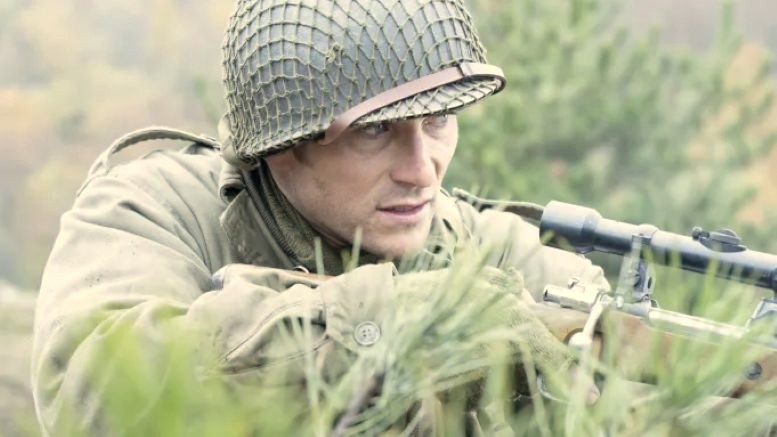
Since his screen debut in 2006, Scott Eastwood has been compared in every imaginable way to his father, Clint. Eastwood deserves credit for at least trying to avoid being perceived as a nepo baby.
For two years, he used his birth name (Scott Reeves), and during this stretch, he had bit roles in five features, two of which were directed by his father. Eventually, he succumbed to the inevitable.
In the time since changing his name, Eastwood has appeared in one forgettable, sub-par movie after another, and that’s almost the case with “Lucky Strike.” Co-written and co-produced by director Rod Lurie, this World War II action thriller gets slightly more right than wrong.
“Not failing” certainly isn’t something filmmakers strive for, but that’s pretty much been the case for every movie Lurie has ever made.
Claiming at the start to be “inspired by true events,” the movie opens in December 1944 at the Ardennes Forest, located in Belgium, Luxembourg, Germany, and France. This was the location of the approximately five-week-long Battle of the Bulge.
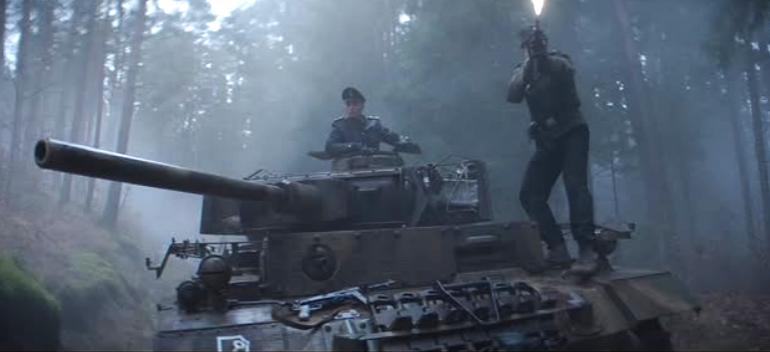
Lurie was wise to choose this event as the backdrop for his movie, as there has been only one other live-action feature (“Battle of the Bulge,” 1965) to do so.
Desaturated Color
Another interesting idea was Lurie’s decision to open the story at what turns out to be the three-quarter point in the narrative. Footage of the battle begins in black and white and slowly transitions to desaturated color.
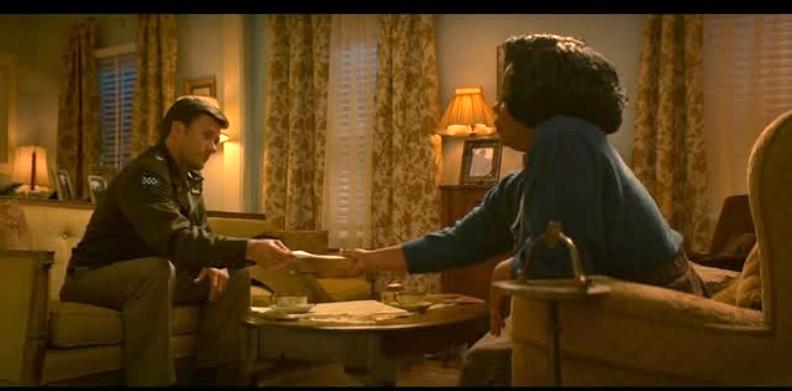
This is made all the more effective by the addition of two full-color scenes set after the end of the war, near the start and at the end of the film. However, the first of these two scenes features Eastwood’s character (Capt. Castle), which thoroughly robs the movie of its own mystery elements.
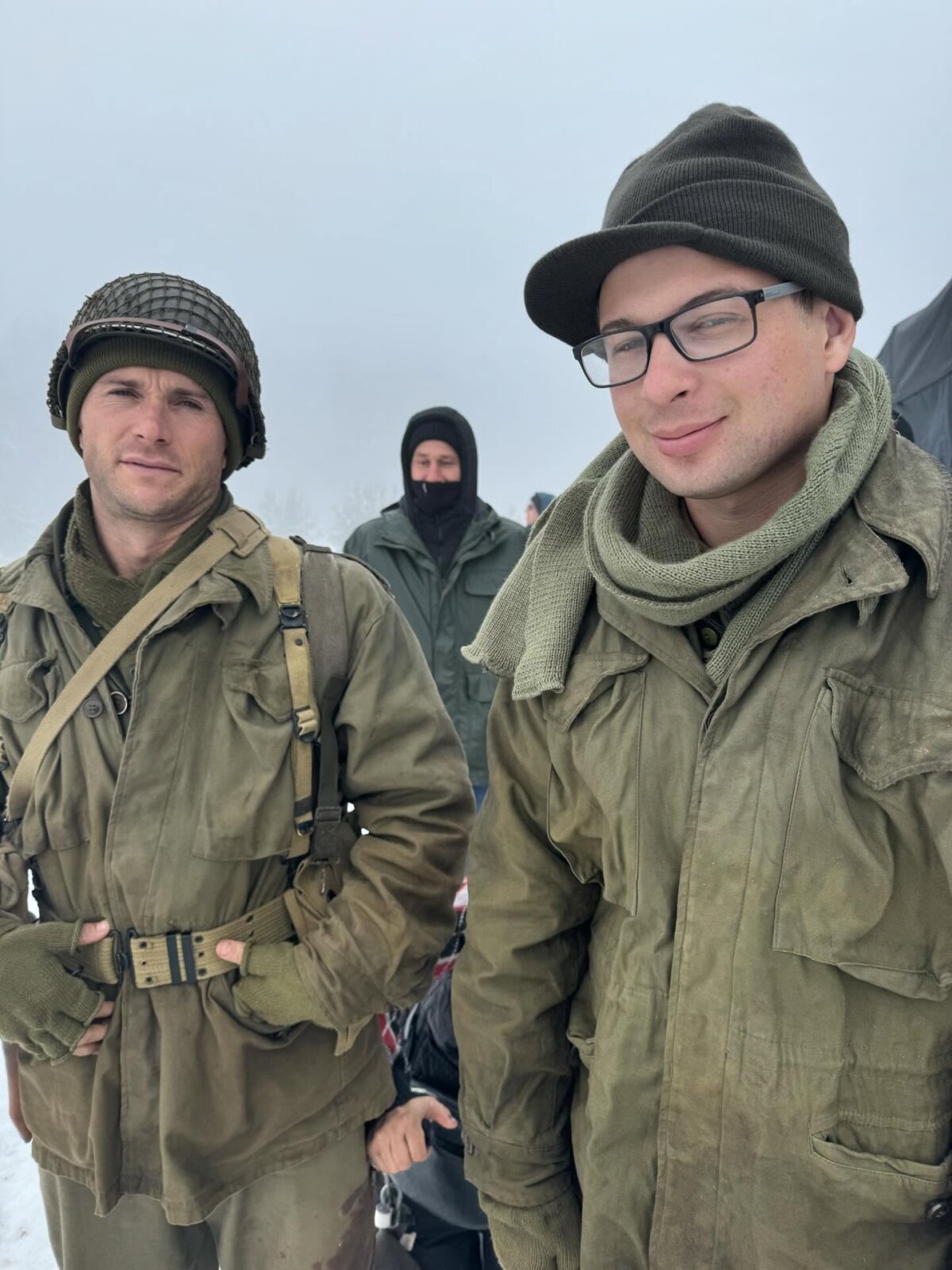
The problem is, Castle is trapped behind enemy lines after all the soldiers in his command are killed in an ambush. On his own for 70 or so minutes of the movie, Castle is escaping death at every turn. Knowing he survives after less than 10 minutes into the film crushes any future suspense or suspension of disbelief.
Knowing his rallying point is about 18 miles away in Elsenborn, Castle begins his steady trek to safety. Along the way, he encounters both friend and foe. This is good, as it saves Eastwood from having to carry the movie alone and also gives the audience a series of temporary diversions.
On the other hand, introducing new characters and giving them extremely limited screen time prohibits viewers from developing much of a chance to connect with them emotionally, pro or con.
A few times, this isn’t an issue. When Castle arrives at a farmhouse occupied by a widow and her teen daughter, we’re reasonably sure they’re friendlies. Any time Castle crosses paths with the Germans, it’s bad, but no need to worry because we already know he will survive everything they throw at him.
This is double the case if Castle encounters Germans with cliche-heavy facial scars and severe haircuts. These let us know they are especially evil.
The most unique and engaging of these brief encounters is with Bellingham (Taylor John Smith, “Where the Crawdads Sing”). He’s another soldier separated from his unit and headed to the same rallying point. This is where the movie’s title is explained, as it was only mentioned briefly at the start.
One is lighting the logo end of a Lucky Strike non-filtered cigarette, which signals to those present that you are not the enemy in disguise. It’s considered to be a sort of subtle and barely noticeable nod and a wink, a password, a secret handshake.
The second interpretation is more closely associated with the Vietnam War: opening a new pack of smokes, removing one, and placing it back logo side down. The lore is that if one saves it for last, it will bring them good luck. For me, this was the second most interesting thing about the movie.
The Radio Star
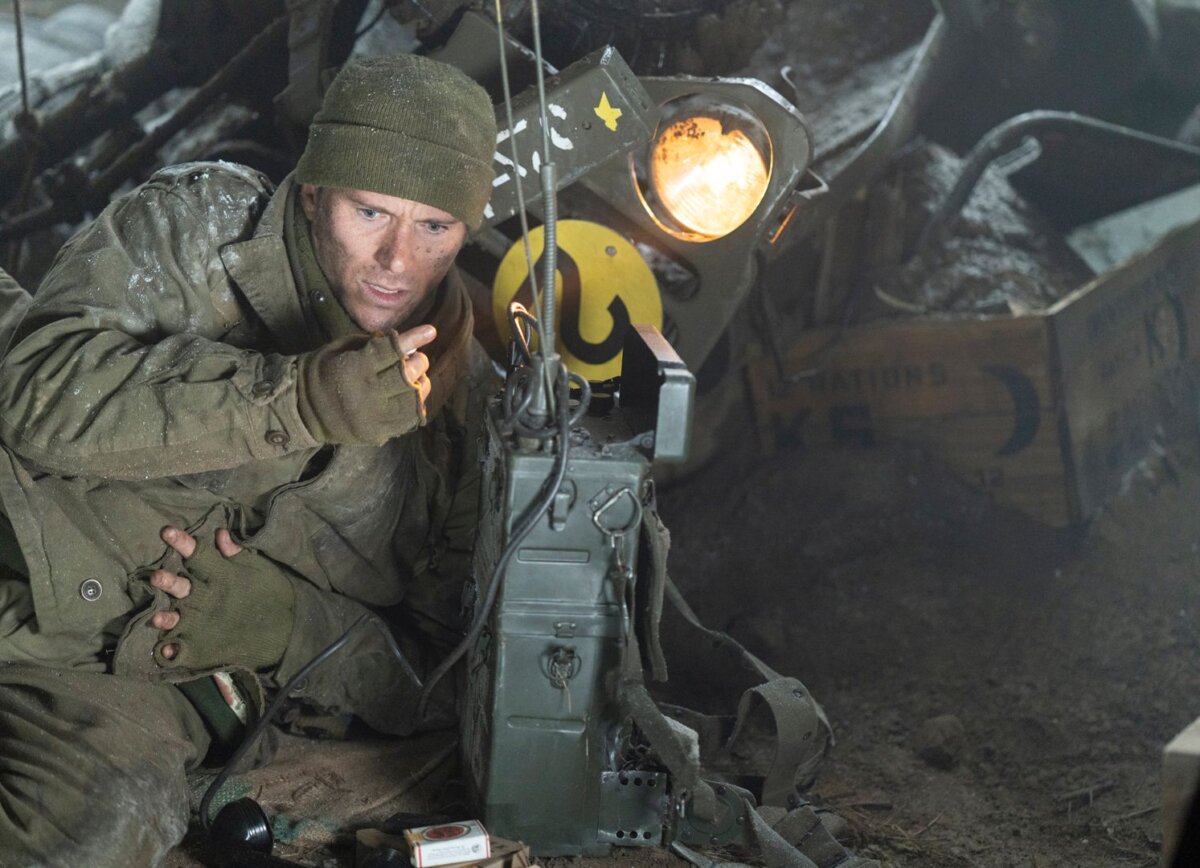
What ultimately pushed the movie into semi-recommendable territory was the constant presence of Castle’s trusty SCR-300 radio. Manufactured by the Galvin Manufacturing Corporation (later Motorola), it was a backpack-sized two-way communication device considered the first-ever walkie-talkie.
I’m only halfway kidding when stating that this inanimate object rivals Castle as the most interesting “character” in the movie. I support this proclamation because of the (non-spoiler ahead) appearance of one in the final scene.
Finding fault with such a well-intended movie and would-be history lesson is not fun or something I relish. I’m guessing Lurie, a former movie critic, sometimes graded films unfavorably because of poor structure, and that’s what I’m doing here.
Had Lurie waited until the end to include the first post-war color scene, “Lucky Strike” would have increased the thriller factor of the movie tenfold.
”Lucky Strike” opens in theaters on June 26.
‘Lucky Strike’
Director: Rod Lurie
Starring: Scott Eastwood, Taylor John Smith, Colin Hanks, Aunjanue Ellis-Taylor
Running Time: 1 hour, 43 minutes
MPAA Rating: R
Release Date: June 26, 2026
Rating: 3 stars out of 5
What arts and culture topics would you like us to cover? Please email ideas or feedback to features@epochtimes.nyc.
