



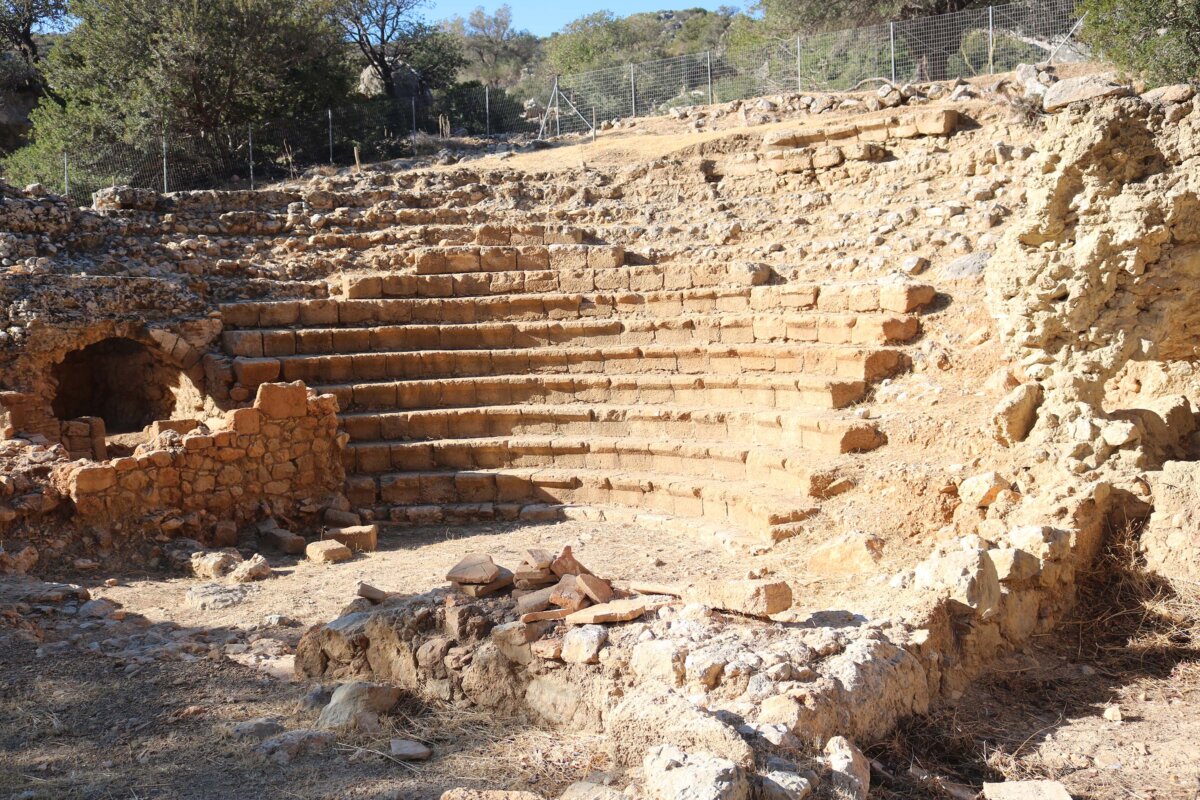
Ancient ruins lie tucked away in a valley surrounded by mountains on the island of Crete, Greece. The remote area is home to a temple honoring the ancient Greek god of medicine, Asclepius. Here are also remnants of Christian churches and early residential communities. Historical finds like these were uncovered during archaeological digs throughout the uninhabited town in the late 1950s. Then, the ruins were left untouched for 62 years.
The first dig at Lissos in 2022 after a long hiatus revealed a surprising discovery. An odeon—a 2,000-year-old live music venue from the days of Roman rule—was found. The Colosseum presented duels between gladiators. Amphitheaters hosted large productions of plays. But odeons were reserved for intimate performances meant to emotionally move listeners rather than merely entertain. Their lasting remains illuminate the past and reveal to us how the West’s formative civilizations sought comfort and connection through live music.
A Cathartic Environment
The odeon, sometimes referred to by its Latinate name “odeum,” served a multifunctional purpose in ancient Mediterranean cultures. It offered a central place to hold civic functions and political meetups. The compact outdoor venues were also cultural hubs for the arts. Odeons throughout Ancient Greece were meeting grounds for poetry readings and scaled-back musical performances. Citizens visited their community’s odeon to experience art with a focus on lyrics and storytelling. The pluck of a single lyre could be heard alongside a vocalist. The lone voice of a poet could be heard reciting verses.
“An odeon emphasized performances whose impact depended upon hearing individual words, melodic lines, and subtle changes in tone,” explained educational site UNRV Roman History. “It was therefore well suited to the human voice, stringed instruments, pipes, solo recitations, and carefully judged musical competitions.”
Odeons were often constructed with marble or limestone and could hold anywhere from a few hundred people to a few thousand. Its hallmark trait was its semicircle shape where the audience would sit, overlooking the stage. Tiered rows helped audience members see the performer better, and a simple roof helped contain sound for a better listening experience. These venues offered a closeness between the performer and crowd that created a cathartic environment. Visitors could take in music and poetry while remembering loved ones, connecting with townspeople, or simply appreciating the beauty of art among everyday existence.
Some of the most famous odeons were constructed by the Romans in the 2nd century. But the first official odeon can be traced all the way back to the 5th century B.C., to a Greek man once described as “The first citizen of Athens.”
History’s Oldest Odeon
Sometime around the year A.D. 140, Pausanias, who many scholars consider the world’s first travel writer, arrived in Athens after a long trip. He visited the bustling city-state to explore the cradle of live Western production, the Theatre of Dionysus. The large venue could seat about 17,000 attendees and was known for hosting the historic works of playwrights like Sophocles and Aristophanes. After making his way down the notable Athenian Street of Tripods lined with monuments commemorating award-winning theatrical productions, he reached the revered Dionysus sanctuary located in the Acropolis of Athens. But he wasn’t met by the towering walls of the Theatre of Dionysus.
Instead, Pausanias stumbled upon a different theater entirely, a small odeon standing at the southeast entrance. In his book from the 2nd century, “Description of Greece,” he included a brief background of the venue.
“Near the sanctuary and the Theatre of Dionysos is a structure, which is said to be a copy of [the Persian emperor] Xerxes’ tent. … It has been rebuilt, for the original building was burnt by the Roman general Sulla when he took Athens [in 86 B.C.],” Pausanias wrote.
The structure he stumbled upon would eventually be known as the world’s first documented odeon.
The influential Greek statesman and military general Pericles oversaw its construction around 435 B.C. Pericles ruled during a prosperous era in Athens known as the Golden Age. His name carried so much weight among the aristocracy that ancient Greek historian Thucydides nicknamed him Athens’s “first citizen.” He is credited with overseeing the building of one of the area’s most historically sacred landmarks, the Parthenon. He also tended to projects involving the arts. This included the construction of the Odeon of Pericles.

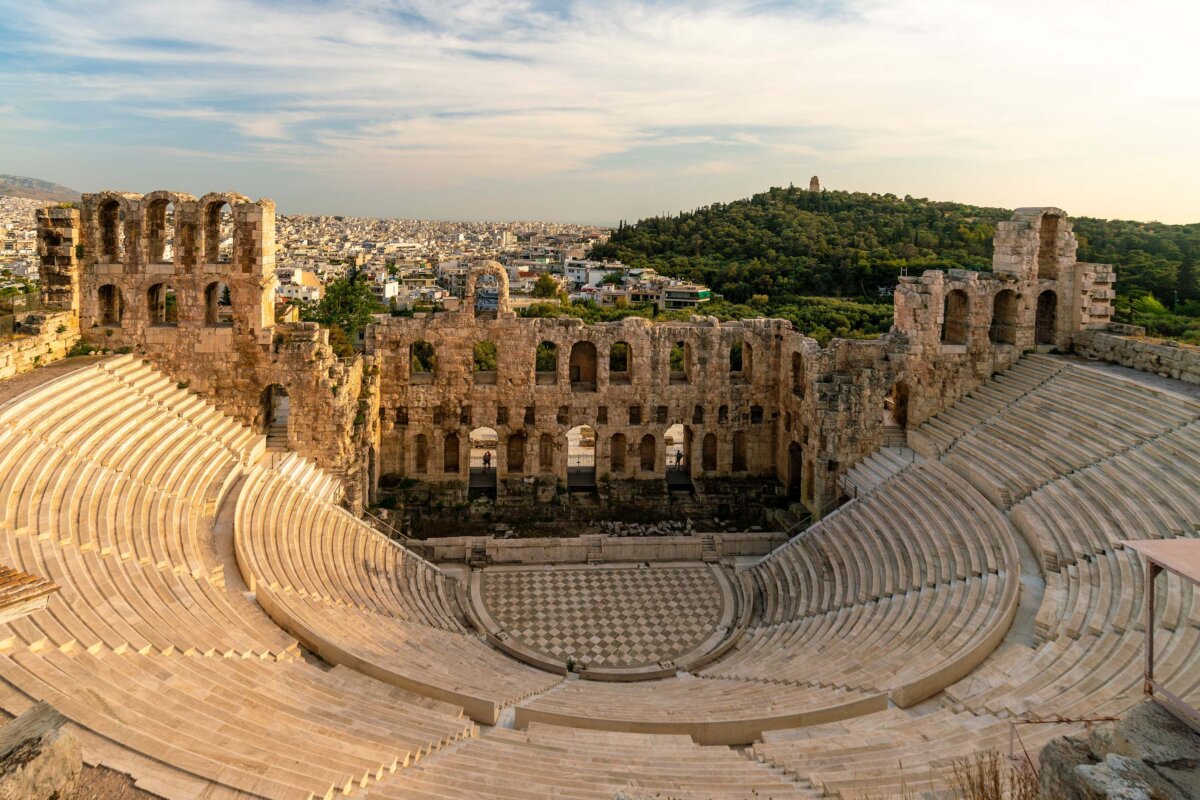
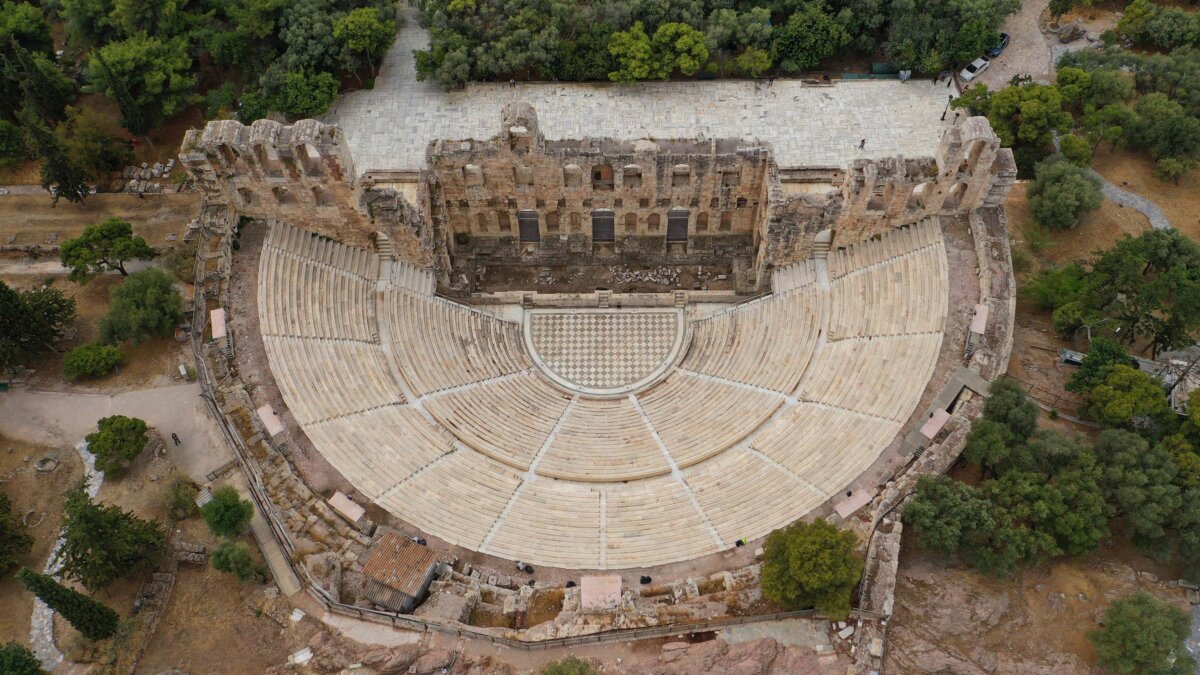
Rather than a semicircle shape like later odeons, his was originally built in a large square shape with a triangular, tent-like wooden roof that offered audiences protection from weather. Traces of the odeon can be found at the Acropolis of Athens today. Close by on the southwestern side of the Acropolis is a functioning odeon from ancient times—the Odeon of Herodes Atticus. The powerful Roman senator built it around A.D. 161 in honor of his late wife, Appia Annia Regilla.
Continued Discoveries
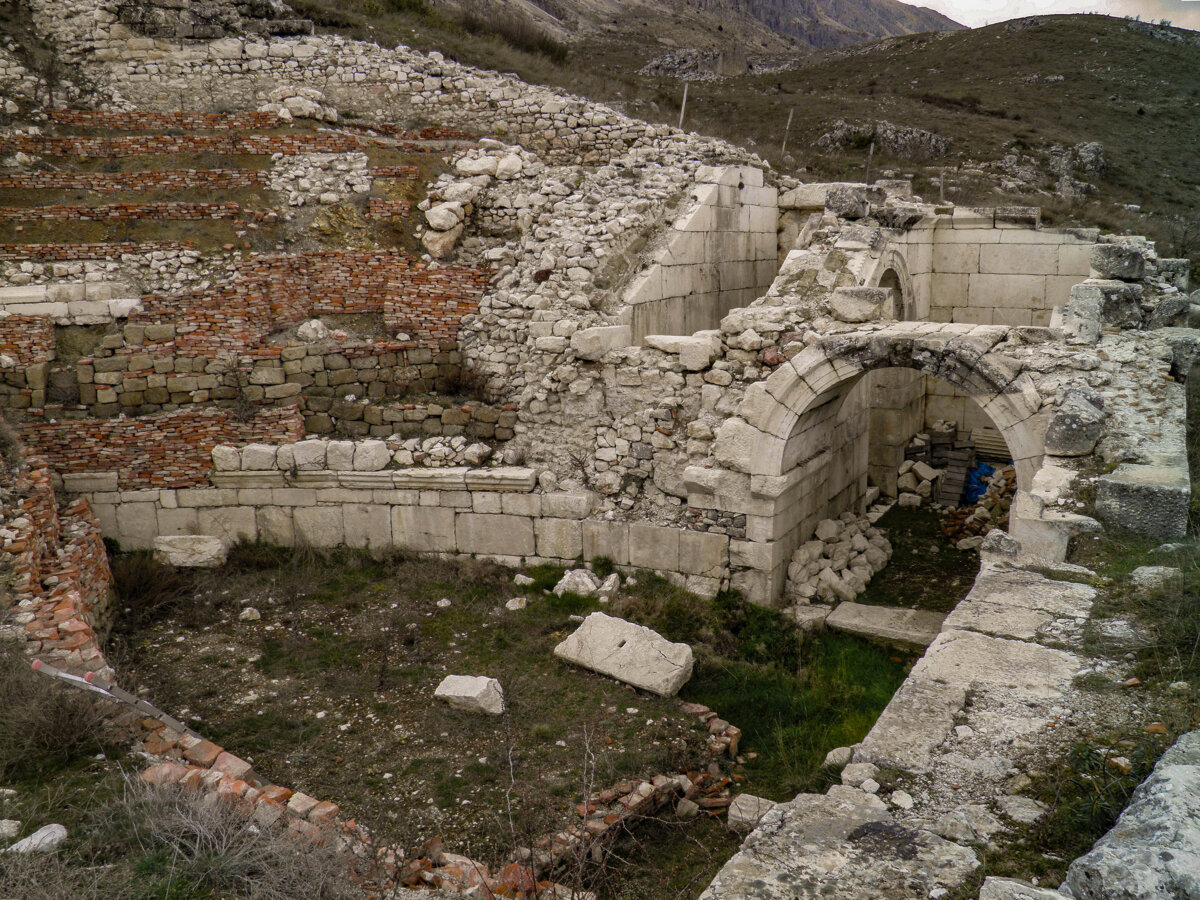
Odeon remnants continue to be discovered in archaeological digs throughout Europe and the Mediterranean. During a 2025 excavation of the ancient Roman city of Sagalassos, archaeologists discovered a sizable odeon capable of seating around 2,500 people. The structure is considered the third largest odeon in what is now modern-day Turkey.
Though less common than amphitheaters, the smaller odeon is an important structure among a vast network of venues whose sun-bleached stones and timeworn columns offer a reminder to visitors today. Even in the ancient Mediterranean, as the West’s foundational civilizations took shape and prospered, music and the arts played an integral role in human flourishing. In odeons, audiences could enjoy music and get as close as possible to it. In a moment of contemplation and reflection, they could become one with the transcendent tones.
What arts and culture topics would you like us to cover? Please email ideas or feedback to features@epochtimes.nyc


