
Is American culture facing a catastrophe already in the making: the inability of young people, including many college students, to read their way through a book?
In “The Demise of Reading?” philosophy professor Justin Weinberg cites Rose Horowitch’s recent article on “the end of reading,” which told of a conversation between a Harvard professor and a student. Assigned to read Anthony Burgess’s novel “A Clockwork Orange,” the student couldn’t decipher what he thought was “Old English” and asked ChatGPT to translate the book for him.
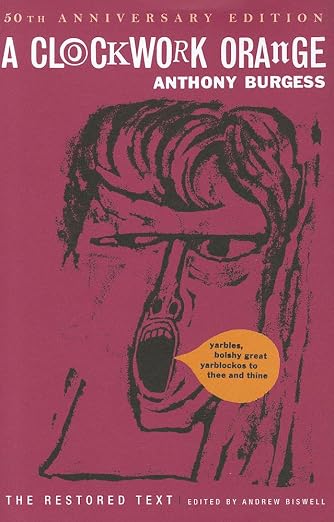
Before passing too harsh a judgment on the student, let’s take a look at Clockwork’s first three sentences:
“‘What’s it going to be then, eh?’
“There was me, that is Alex, and my three droogs, that is Pete, Georgie, and Dim, Dim being really dim, and we sat in the Korova Milkbar making up our rassoodocks what to do with the evening, a flip dark chill winter bastard though dry. The Korova Milkbar was a milk-plus mesto, and you may, O my brothers, have forgotten what those mestos were like, things changing so skorry these days and everybody very quick to forget, newspapers not being read much either.”
Two hundred pages of that tangle of English, Russian, and invented slang, all making up an argot Burgess called Nadsat, and the kid might be forgiven for running to AI.
Yet the fact remains that a growing number of college students are challenged by books and sustained reading, that overall literacy rates continue to tumble, and that these red flags portend an uncertain future for our culture and our country.
Interestingly, in the fall of 2025 another Harvard student put together an excellent and succinct summary of this decline of reading at universities. Writing for the Harvard Independent, undergraduate Ellie Guo titled her article “We Can’t Read, and It’s Not Because of That Phone.” Guo gave a nod to the part screens have played in the demise of print culture, bringing “shorter attention spans and lowered interest in reading,” but, she added, “it isn’t the only culprit.”
Other factors are older than today’s screens and as insidious: the whole language approach for teaching reading, now modified or discarded, as opposed to phonics; the Common Core emphasis on reading more nonfiction and fewer stories, novels, and poetry; a Cliff Notes consumer culture in secondary schools and colleges that helped students avoid the actual text; and an education system which itself began avoiding reading books in favor of shorter material.
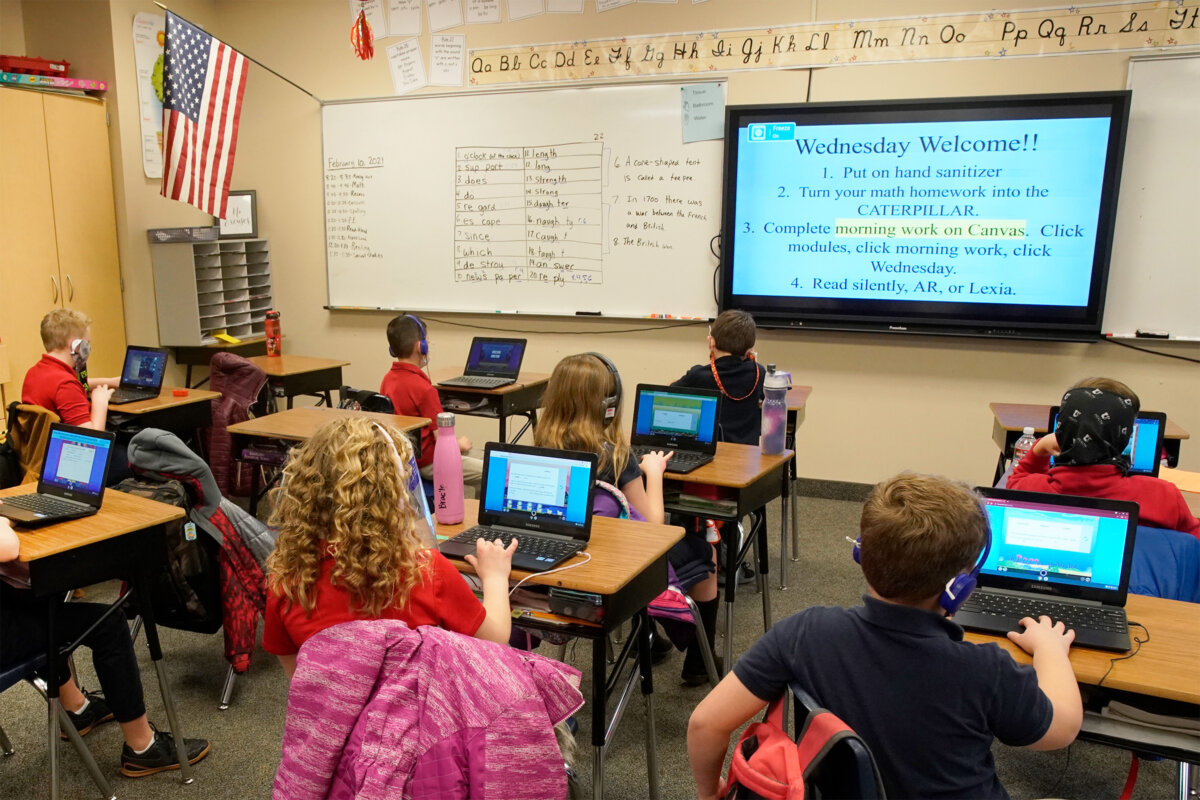
Summing up these points, Guo concludes “Reading education has failed students nationwide, even within the ivy-covered walls of elite institutions.” She then offers the only antidote to this epidemic of print phobia: the hard but rewarding task of reestablishing a reading culture, a movement which can only succeed through the efforts of schools, teachers, and parents.
Across the country in California, another Gen Z woman, Julia James Davis, is also sounding the alarm about the decline in our language. Well-educated at “a top-of-the-line prep school” and an honors graduate of University of Southern California with a degree in art history, Davis is the creator of “The War on Beauty” cultural platform.
Originally a devotee of modern and postmodern art, Davis underwent some radical changes and epiphanies during the COVID-19 pandemic and is now an outspoken defender of art and beauty in their traditional sense. In her podcasts, she focuses on the devastation done to our culture and personal lives by the abandonment of beauty in everything from fashion to architecture.
In “The Past Is a Foreign Language,” Davis briefly reviews her excellent schooling, but then says, “I still feel that I have large gaps in my own education because of the way we’re educated today.” She then turns to her present struggles with older books, citing, among others, the work of Thomas Carlyle. “I have a very hard time reading them, especially in the beginning. It was almost unintelligible to me. It was like reading a foreign language.”
In another video, she speaks of Carlyle’s 1843 book “Past and Present,” and how she took around seven weeks getting through it. Here are the first two sentences of that nearly thick book:
“The condition of England, on which many pamphlets are now in the course of publication, and many thoughts unpublished are going on in every reflective head, is justly regarded as one of the most ominous, and withal one of the strangest, ever seen in this world. England is full of wealth, of multifarious produce, supply for human want in every kind; yet England is dying of inanition.”
Not quite as demanding as “Clockwork,” but still difficult.
Yet, here in Davis, we see the difference between a committed veteran reader and today’s non-reader of books. Regarding Carlyle, for instance, Davis describes reading some sentences five times for meaning. She kept a list of vocabulary words unfamiliar to her and worked on learning them. Most importantly of all, she remained undaunted by a style and sentence length so different from the messages and articles we read on our screens. While she may lament the failure of education to introduce her to such works or at least to prepare her for them, somewhere along the way she acquired the wherewithal—understanding nuance, for example, or literary allusions—to tackle such a project.
To become aggressive readers like Guo or Davis, unafraid to grapple with difficult or older books, students today need the reading background possessed by these two women. The ability to enter into a difficult text, or simply to read an older novel from cover to cover, is gained by stacking up years of reading books.
At the end of her article, Guo urges her fellow students to “do the readings” and concludes: “Read not only to succeed in your next midterm, but to take part in a centuries-old intellectual tradition.”

Davis echoes and expands on this idea at the end of “The Past Is a Foreign Language: “The past contains a vast amount of the beauty that we have on planet Earth and it’s all contained in the written word and it is our tether to an incredibly deep well of knowledge. If we ourselves stop reading, then not only do we lose that connection, but also our own ability to think, read, and write for ourselves.”
In short, follow the advice of these two young women, and the past will be neither a foreign country nor a foreign language.
And from that foundation of culture a future can be built.
What arts and culture topics would you like us to cover? Please email ideas or feedback to features@epochtimes.nyc.