“Dear Geoff, Going forward, our in-house team will be using AI tools to compile future editions, but we thank you for your many contributions to the magazine over the years. Kind regards, Rebecca.”
Geoff Bagwell was a freelance fiction writer. Emphasis on the word “was.” That email marked the end of his time in that field when one of his main clients switched to publishing AI-written materials.
Bagwell wrote a brief eulogy for his career in an article for “The Spectator” entitled, with rueful abruptness, “AI Took My Job.” In it, he asserted, “AI doesn’t just mean short story writers and wannabe popstars are losing their careers. The unavoidable consequence of ever-improving AI is nothing less than the end of all human creativity.”
While I don’t agree with Geoff’s despairing conclusion that human creativity is over, his article—and the many others like it—raises important questions that we must grapple with. At what point does AI transform from a helpful technology to a damaging one? Are there any areas of use that ought to be “off-limits” for AI? And are the arts one of them?
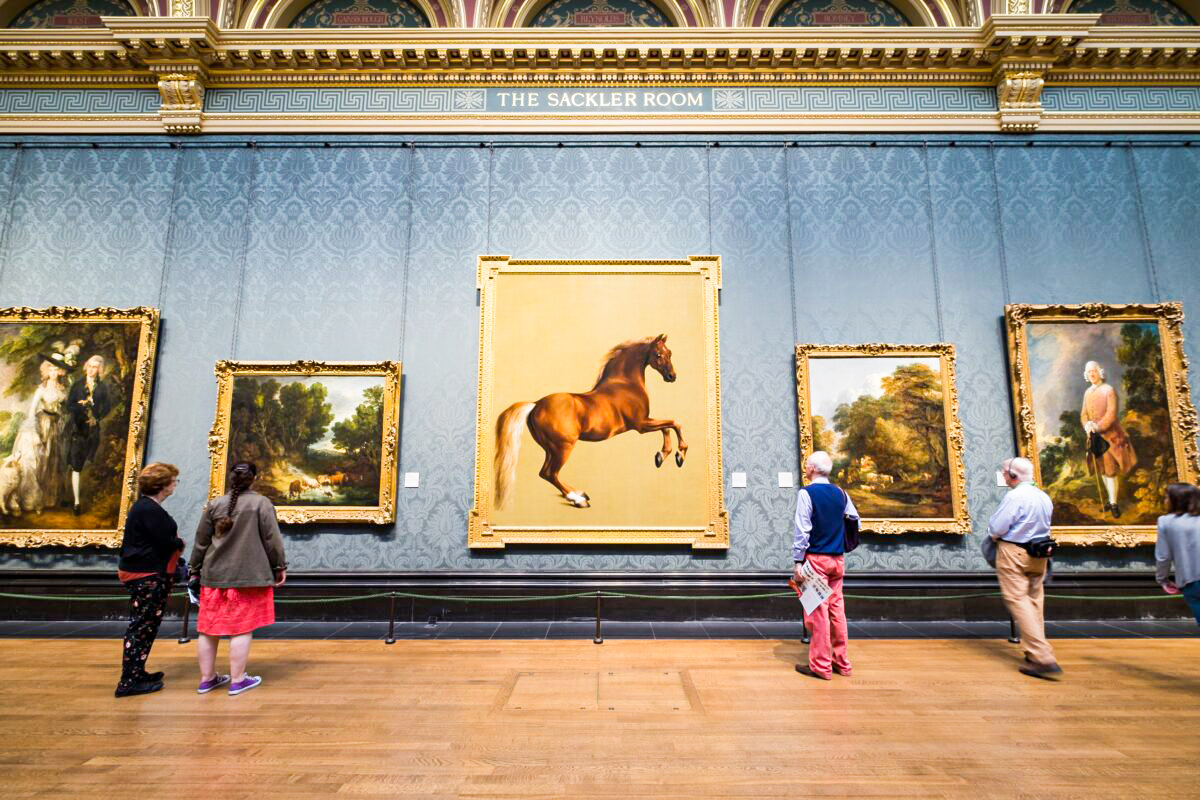 Visitors admire the Arabian thoroughbred “Whistlejacket” in George Stubbs’s near-life-size painting of the same name, at The National Gallery, London, in 2017. (Chakrit Yenti/Shutterstock)
As a writer myself, these are questions I frequently wrestle with, not only because my career could go the way of Bagwell’s, but also because how I use or don’t use AI is a question of principles and values. With new AI tools sprouting up, many of which are being embraced by others in my field, I can no longer avoid taking a stance—irrespective of the economic consequences.
Even more important than the economic questions surrounding AI are the anthropological ones. We can’t evaluate the rightful role of AI in relation to humanity without first establishing an understanding of humanity itself. One view holds that human beings are biological machines whose value depends on their accomplishments. If that’s true, then we can replace them with machines who can do the work faster, better, and cheaper. The other view holds that human beings are much more than biological machines. It indicates that if something inherent in humanity can’t be replicated by machine, human value isn’t predicated on production. If true, certain human activities ought to be carefully guarded against usurpation by machines. Certain types of human activity ought to be sacrosanct.
Some prominent public figures have pointed this out. In his recent document “Magnifica Humanitas,” Pope Leo XIV emphasized the fact that undiscerning use of AI risks dehumanizing people. “In the era of artificial intelligence, when human dignity is threatened by new forms of dehumanization, ours is the pressing duty to remain profoundly human. We must lovingly safeguard the grandeur of humanity bestowed upon us.”
One way AI potentially undermines human dignity is by disrupting our relationships. Since human beings are naturally inclined to community , this is a threat that shouldn’t be underestimated. If AI diminishes or even replaces our relationships with others, it deprives us of this key, relational aspect of our humanity. Here’s where seemingly innocuous chatbots can become problematic. As the pope explained,
“When words are simulated, they do not build genuine relationships, but only their appearance. The artificial imitation of care or support can become particularly risky when it enters contexts where real relationships and emotional bonds are lacking.”
This observation also applies to the arts and careers in the arts. The reason it’s problematic to hand art over to artificial intelligence isn’t primarily the loss of jobs; it’s the loss of an activity that belongs to our rational human nature, which is able to contemplate reality, love it, reflect on it, imitate it in artistic form, and share that imitation with others.
Appreciating art isn’t merely an emotional experience. The experience of art is a rational and emotional point of contact between consciousnesses. A purely subjective emotional experience can be artificially stimulated by AI, but true art requires a meaningful emotional experience. Meaning only originates in consciousness. We need to preserve art as a space where an “I” encounters a “you” in a shared and loving gaze upon reality. No machine should be allowed to interfere in that sacred exchange.
Of course, aiding is different than interfering. If an AI tool can be used to assist the artistic process, then all is well. But if it replaces or disrupts the essence of art, then it has gone too far.
Striking a Balance
This isn’t a new question. Humanity has always had to wrestle with the quandary of what to do with new technologies, facing up to the tradeoffs they offered (or demanded). From irrigation to the steam engine to the early days of the internet, humanity’s journey through history periodically requires these kinds of reckonings.
What’s different now is the speed at which transformation happens, and the extent of its disruption. The industrial revolution utterly transformed the globe in half a century. The digital revolution—its latest and most groundbreaking phase being AI—is doing it again. We must make decisions “in real time” that may have drastic implications for human flourishing in coming centuries.
We need criteria by which to judge technologies and discern when they cross the line from helpful to harmful. Many intelligent people have already tried to articulate some of these criteria.
One criteria the pope offers is to ask whether a technology (like AI) is oriented toward the flourishing of all, including the most vulnerable, according to Kim Daniels, director of the Initiative on Catholic Social Thought and Public Life. When technologies are designed or used in such a way as to subjugate or replace human beings, then a line has likely already been crossed. C.S. Lewis made a similar point almost a century ago in his book “The Abolition of Man:”
“What we call Man’s power [over nature] is, in reality, a power possessed by some men which they may, or may not, allow other men to profit by. Again, as regards the powers manifested in the aeroplane or the wireless, Man is as much the patient or subject as the possessor, since he is the target both for bombs and for propaganda.”
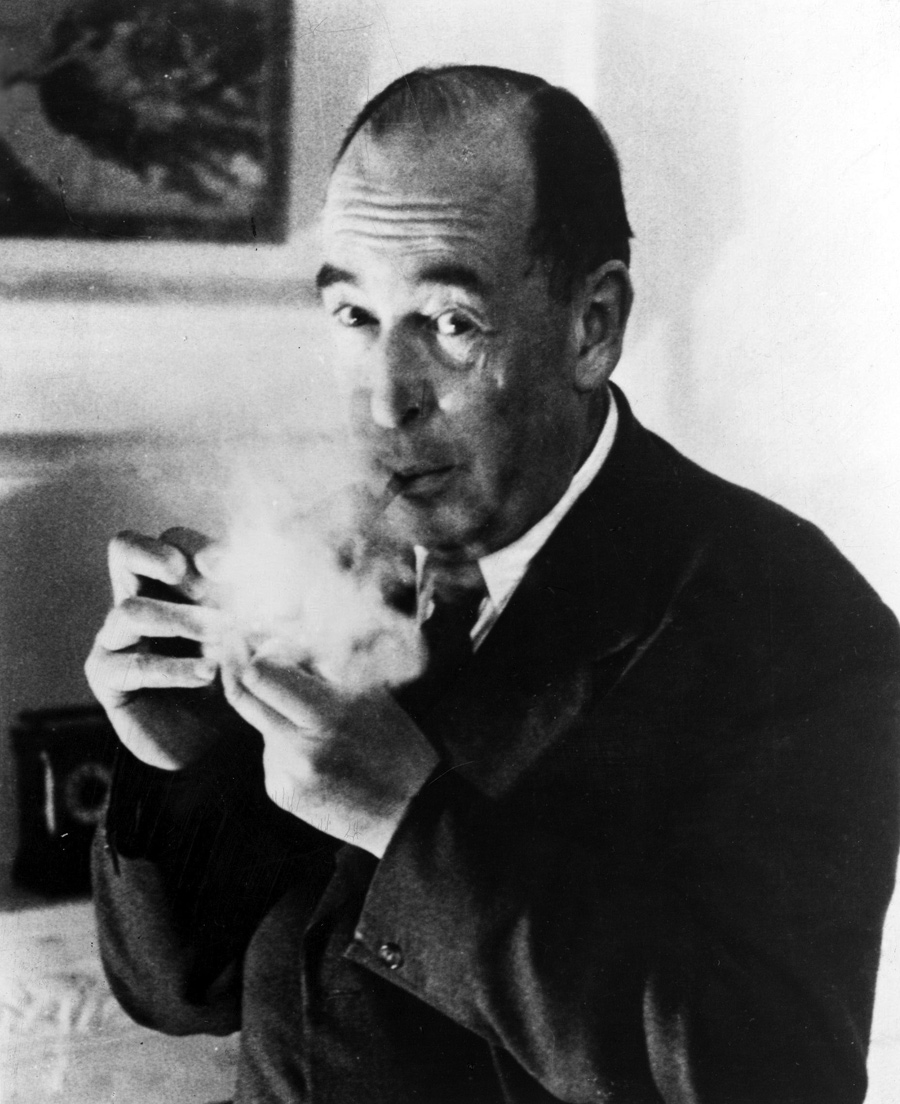 C.S. Lewis, Christian theologian and author, in 1957. (Public Domain)
The first criteria for weighing AI’s uses might be something like, Is this use primarily oriented toward concentrating tyrannical power in the hands of a few? If so, it’s likely something we won’t want to engage with.
Cultural and agricultural writer Wendell Berry had a slightly different criteria for judging and using technology. To be specific, he laid out nine criteria in his essay “Why I Am Not Going to Buy a Computer.” I fear AI fails almost all nine tests:
- The new tool should be cheaper than the one it replaces.
- It should be at least as small in scale as the one it replaces.
- It should do work that is clearly and demonstrably better than the one it replaces.
- It should use less energy than the one it replaces.
- If possible, it should use some form of solar energy, such as that of the body.
- It should be repairable by a person of ordinary intelligence, provided that he or she has the necessary tools.
- It should be purchasable and repairable as near to home as possible.
- It should come from a small, privately owned shop or store that will take it back for maintenance and repair.
- It should not replace or disrupt anything good that already exists, and this includes family and community relationships.
I sympathize heartily with Berry’s list of requirements. I think we’d be better off as a society if we paid more attention to them. But they aren’t all realistic—particularly today, when computer use is already much more necessary than it was when Berry wrote his list.
For example, when it comes to No. 9, virtually every technology ever invented has disrupted what existed before. Every new technology is a tradeoff. The use of the threshing machine in the mid-1800s disrupted preexisting goods: the peacefulness of working by hand with animals, the camaraderie among a large group of workers (because fewer were now needed), and the inexpensive tools needed to thresh by hand.
However, it also brought immense benefits that meant the difference between life and death for pioneers struggling to harvest enough food, including relief from back-breaking labor. The question isn’t whether the technology costs us anything in terms of a preexisting good (it almost certainly will), but whether the cost is worth it.
Writer Paul Kingsnorth has taken a similarly extreme approach to Berry’s, drawing his line at any use of AI. “I have decided, as a writer, not to consciously engage with AI in any way in the course of my work,” he wrote. Can this be a long-term solution?
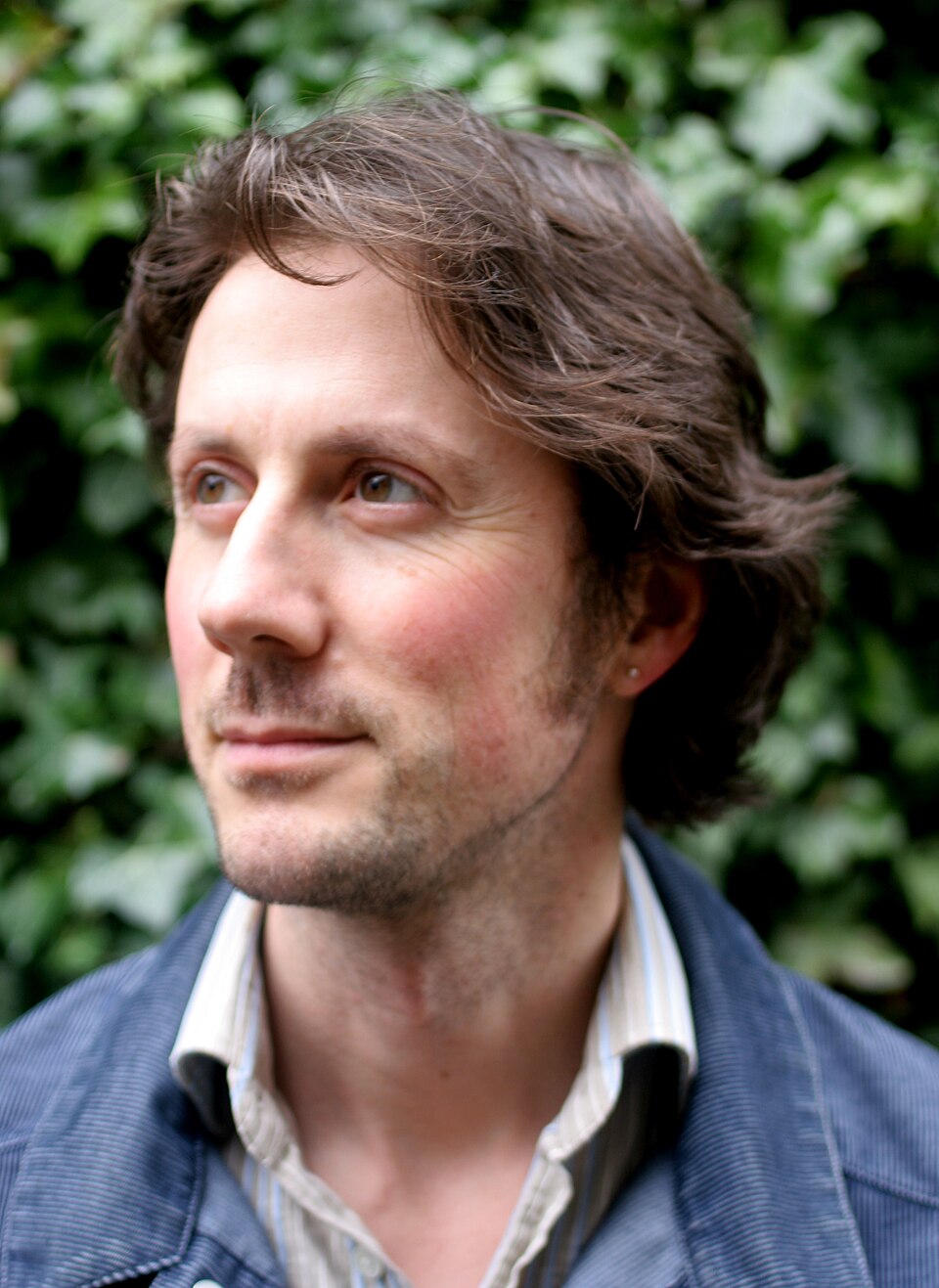 Paul Kingsnorth, English writer and environmental essayist, considers artificial intelligence’s influence on human thought. (Navjoat Kingsnorth/CC BY-SA 3.0)
There must be a middle ground between a reactionary rejection of new technologies like AI and the blind assumption that every new technology and every new application of technology is worth the tradeoff. It must be possible to integrate technologies—even AI—into human life in a way that supports, rather than subverts, that which is most fundamental to being human.
In summary, I propose that we ask this question about AI’s different applications: Does this application of AI assist in the accomplishment of truly humanizing activities—such as the building of relationships, the care of others, the exercise of rationality and judgement, the promotion of dignified work, the love and contemplation of reality—or does it replace them?