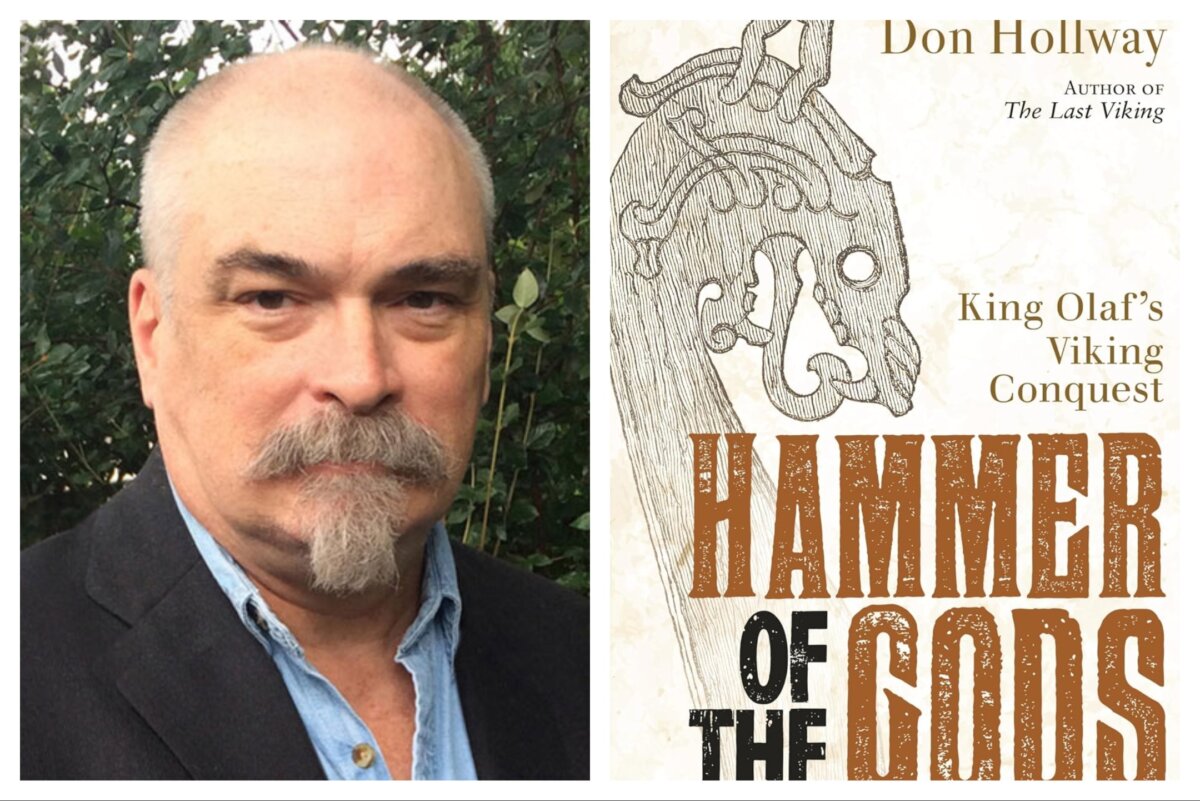
War, murder, revenge, honor, romance, lust, betrayal, justice, sorcerers, gods, pirates: Don Hollway’s new book “Hammer of the Gods: King Olaf’s Viking Conquest” has it all.
Hollway has again chosen an epic topic—his previous was the life of King Harald Hardrada, known as the last Viking; the sack of Rome in A.D. 410; and the conquest of England in 1066. And he, again, has spirited away his readers into another world full of all the aforementioned glory and gore.
This biography begins as one might expect in a classic hero’s journey. While Olaf is still in his mother’s womb, his father, Tryggvi, king of Viken in southern Norway, is betrayed and murdered by his cousins Greycloak and Gudrod, the sons of Eirik of Norway (infamously known as Brother-Slayer and Bloodaxe) and Gunnhild, a powerful sorceress. Pregnant Astrid escapes with her family across frigid landscapes and gives birth to Olaf along the way. The son of a dead king survives being pursued by murderous Vikings, being held as a slave by pirates, and living as a man without a country, eventually rising to greatness as a raider and warrior, and finally becoming king of Norway.
A Fantastical Era
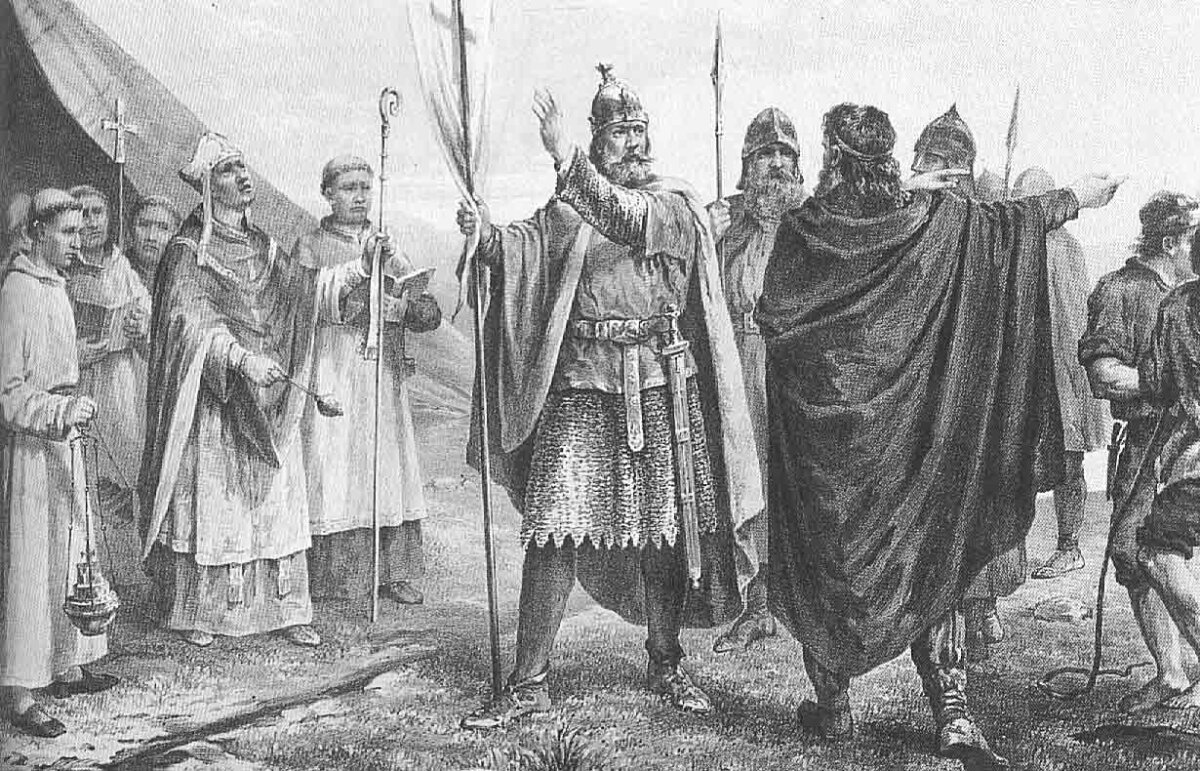
Hollway’s Viking biography is based on the old sagas written by skalds (court poets) and monks. Of course, sagas are known for stretching the truth. Hollway makes many corrections to those sagas, regarding times, places, or people. He references archaeological finds and historical analyses to help correct timelines, address why certain towns no longer exist (if they ever did), or simply separate fact from fiction. Many of the sagas’ fictions are maintained but are addressed by footnotes or explanatory sentences in the text itself. “Hammer of the Gods” doesn’t attempt to demystify Olaf or the era in which he lived but rather keeps the spirit of the tale alive while ensuring the story doesn’t slip into fantasy.
The fact is that the era of the Vikings was a fantastical period. The axe-wielding, long-bearded, brutally violent raiders in their longships are the stuff of legends, and those legends, for the most part, are true. The Vikings worshipped the Norse gods, like Thor and Odin, which have made a comeback in the West through movies and video games. They sacrificed animals, and, at times, children, on the altar of these stone or wooden images. According to the sagas, the sacrifices often resulted in positive outcomes (not very positive for the child or their parents, of course). The gods intervened and spoke through sorcerers and seers, if the sagas are to be believed. Perhaps time and chance was all it was, but it didn’t change the fact that the Scandinavian pagans believed as fervently as the Christians who attempted to convert them. And it is Christian conversion which plays a significant role in the life of Olaf.
The eventual king of Norway is credited with converting the Norwegians. It had been attempted before but to little avail. Olaf brought the proverbial hammer down on the Norwegians to either convert or fight. This method of conversion was less Christian than Viking. It was a brutal tactic for religious reform, but none can argue that it didn’t work. As Hollway asserts, Olaf’s proselytizing was by way of fighting fire with fire.
A Fitting End
As is expected, fighting proves the crux of not just the book, but the existence of Olaf and his surrounding Scandinavians, as well as those of the British Isles. It was an era of betrayal, alliances, and more betrayal. “Hammer of the Gods” demonstrates how betrayals were the bookends to Olaf’s life. Those betrayals were motivated by the basest of human desires: power.
Hollway certainly selected a topic worth covering, but interesting topics aren’t always enough to make a book worth reading. Having read all of Holloway’s books, he has quickly become one of my favorite history authors. It is not simply the topics, but his writing style that keeps me glued to the pages. His eye for detail, his deft humor, his honest and fair historical assessments, his knowledge of ancient and medieval weaponry, and his knack for maintaining a good pace throughout the narratives are all key components to his works.
The narrative ends as with any good hero’s journey—a fight to the death. Hollway’s detailed description of the sea battle at Svolder proves memorable by tying in the bloody action as well as the late geopolitical exchanges and agreements by the kings and noblemen who betrayed and defeated him. These agreements set the course of the Scandinavian kingdoms following his death. Or did he die? Hollway references the sagas, as well as numerous eyewitness accounts, that claimed the king miraculously escaped. It is an end fitting for a brave Viking king and for a narrative that, by necessity, must blend fact with legend.
“Hammer of the Gods” is an exciting and engaging read that will introduce readers to a world that seems utterly fantastical, but was surely part of our own. For fans of Viking lore and history, I can hardly recommend Hollway’s new work enough.
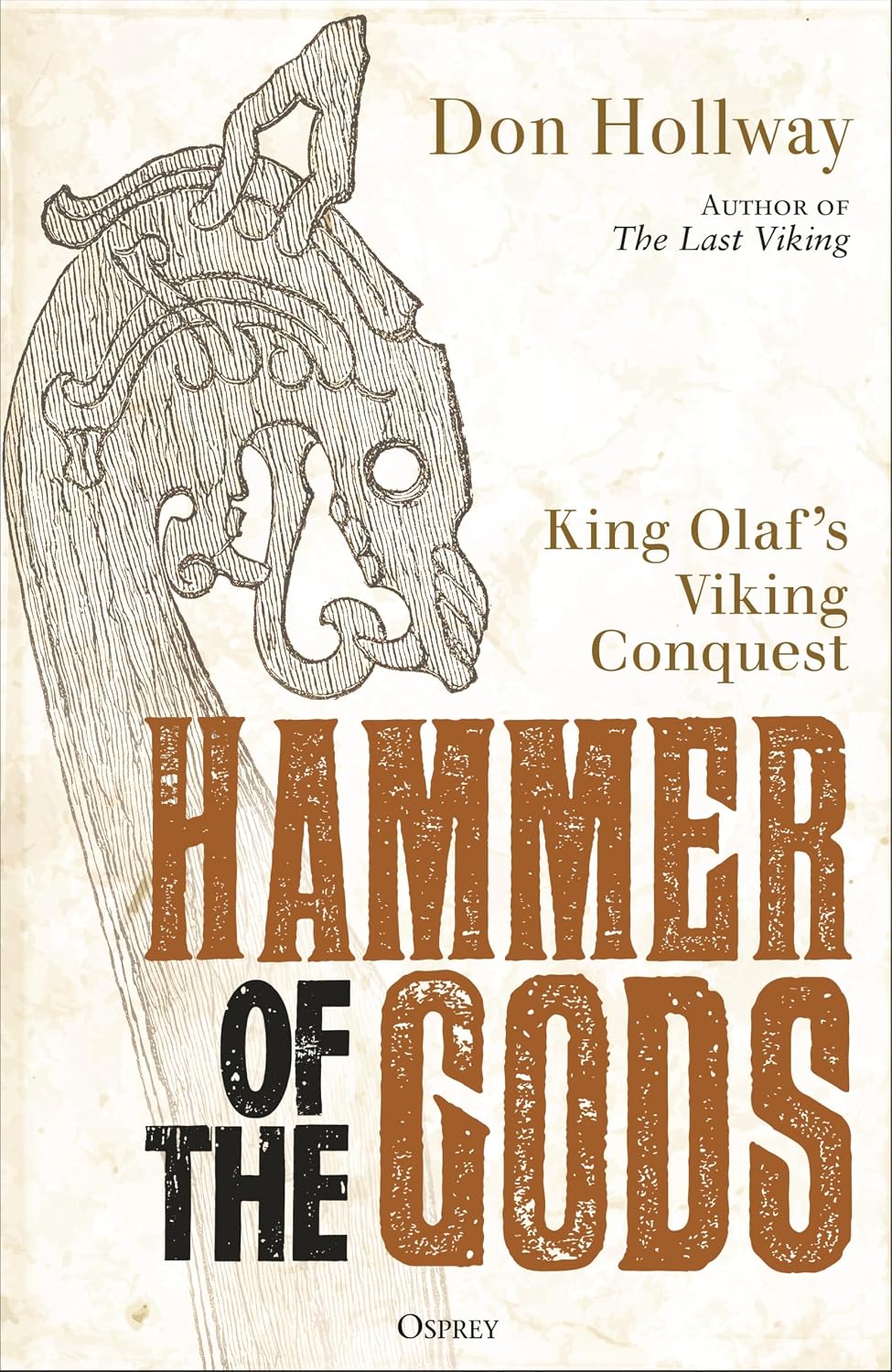
‘Hammer of the Gods: King Olaf’s Viking Conquest’
By Don Hollway
Osprey Publishing: May 5, 2026
Hardcover, 400 pages
What arts and culture topics would you like us to cover? Please email ideas or feedback to features@epochtimes.nyc.