



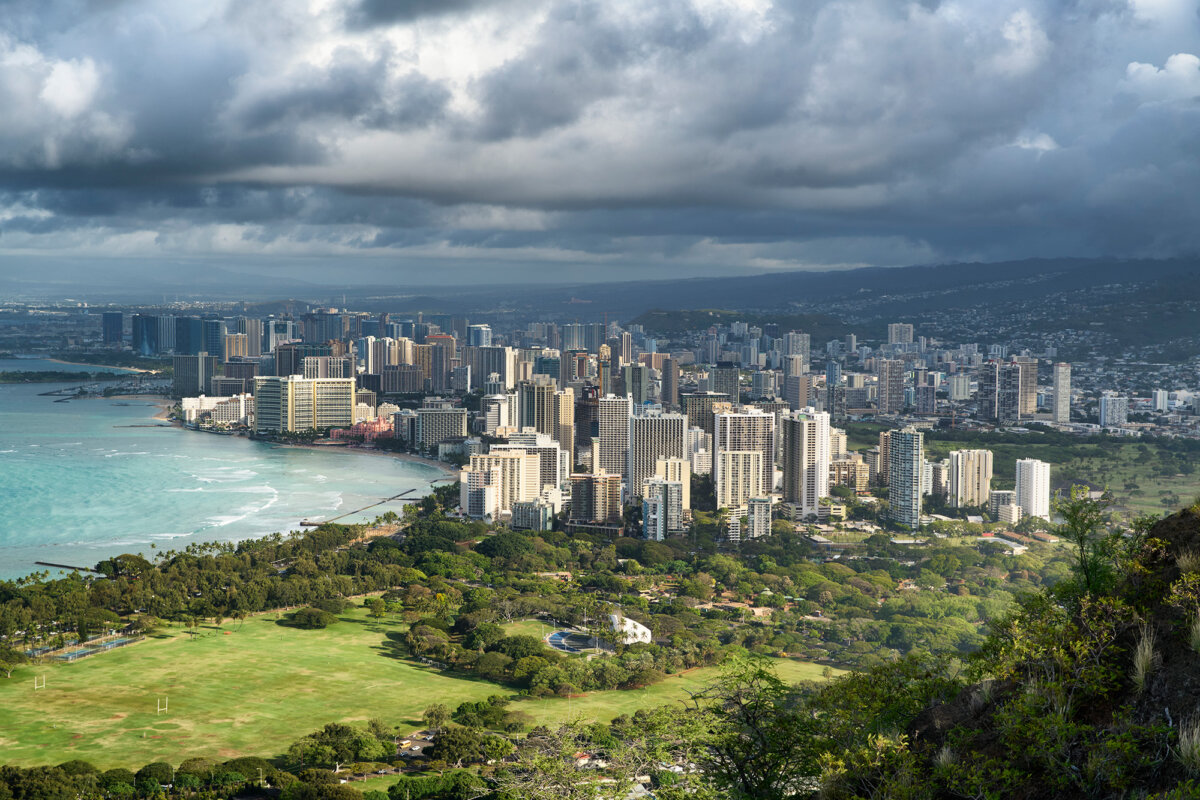
You never know when the weather can disrupt all your careful travel planning. That is exactly what happened on my first trip to Honolulu recently. Working around hotel and flight availability during spring break times in March, we ended up booking two different hotels in Waikiki Beach. When we landed, however, a Kona low settled in: a slow-moving, subtropical cyclone that forms to the west or northwest of Hawaii, bringing seemingly endless gray skies and heavy rainfall. Would all plans be ruined? Hardly.
Thirty years ago, a childhood friend of mine, Gerry, lived right in the heart of Waikiki, Honolulu’s central area of tourism and resorts, when a few simple, affordable rentals were still available. He and his wife have raised their kids in Honolulu, and he advised me not to get too hung up on the weather forecast.
“We don’t stop plans over it,” he said. “It may say it’s going to rain, but on an island, that could just mean the windward side. It’s like a box of chocolates. You never know what you’re going to get.”
The Lay of the (Is)land
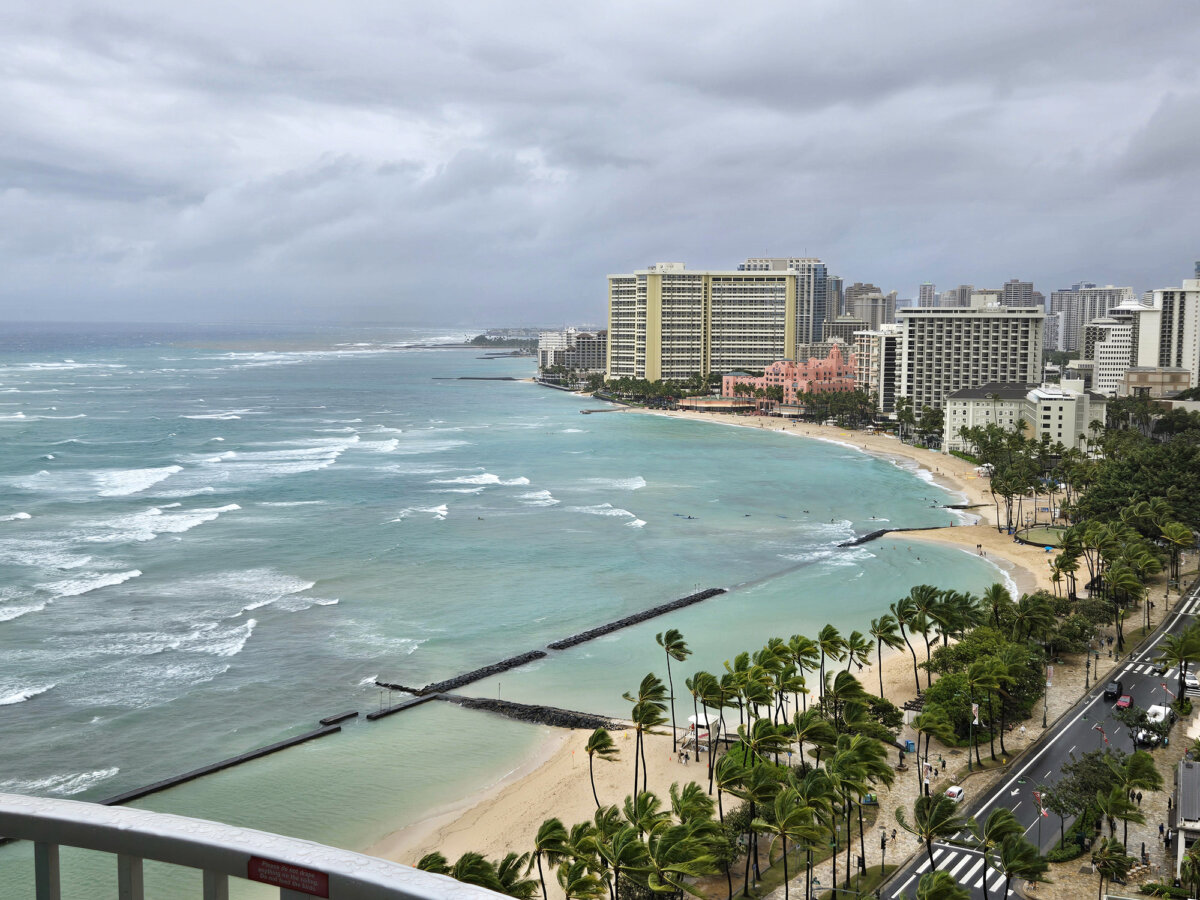
Waikiki Beach is where the first luxury hotel in the Hawaiian Islands opened in 1901—the Moana Hotel (now Moana Surfrider), the “First Lady of Waikiki.” But Waikiki is a neighborhood and district in Honolulu as much as a two-mile stretch of sand. And as far as the “beach” part goes, the locals refer to various sections of it by particular names, such as Kahanamoku, Fort DeRussy, and Royal Hawaiian Beaches at the western end, all the way east to Kaimana Beach, where a massive extinct volcanic crater, Diamond Head, overlooks it all. To combat beach erosion problems already in the early 20th century, sand was brought in from other places, including California. Building breakwaters and groins (walls in the water built perpendicular to the shore) proved insufficient to reverse erosion, but they have created areas sheltered from the whims of ocean waves. This includes Kūhiō Beach and its calm, shallow swimming area. We checked in right across from that beach at the Twin Fin Hotel.
Dodging Rain Drops
From our balcony on day one, we looked down on a sea turned to slate, whitecaps rolling in, and palm trees bending in the wind. My surf lesson with the renowned Jamie O’Brien School of Surf, situated in the same building as my hotel, was canceled. But I could reschedule. The next day, it rained a bit, then it stopped, and almost immediately, life returned to the beach, with folks out wading inside the breakwater, watching surfers out beyond it, and surf instructors leading students in board-mounting skills on the sand.
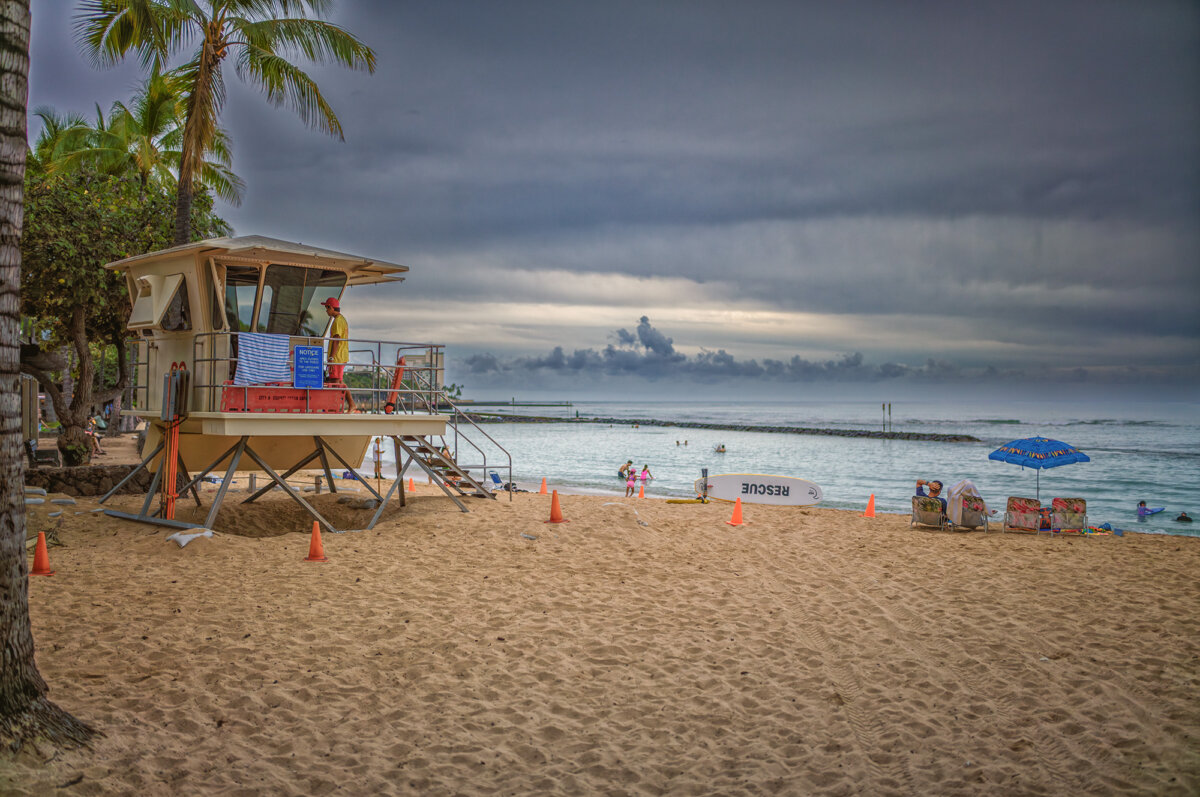
Surfing was old news to the Polynesians who first populated the islands, but the first written references to surfing in Hawaii came in early 1779 in the journals of crew members who arrived with Captain James Cook on his second expedition to the Hawaiian islands. As tourism blossomed in Waikiki, “beachboys” would guide visitors in surfing and other activities, and this is where Duke Kahanamoku, father of modern surfing and eventual Olympic swimming champ, got his start. (Find a bronze statue of him where Royal Hawaiian and Kūhiō Beaches meet.) While there is no specific surfing museum, a few properties have small, free surfing exhibits, including the second floor of the historic Banyan Wing at the Moana Surfrider. At a minimum, one should stop at this beachside hotel’s bar for a drink and a look out to the surf that made this place famous.
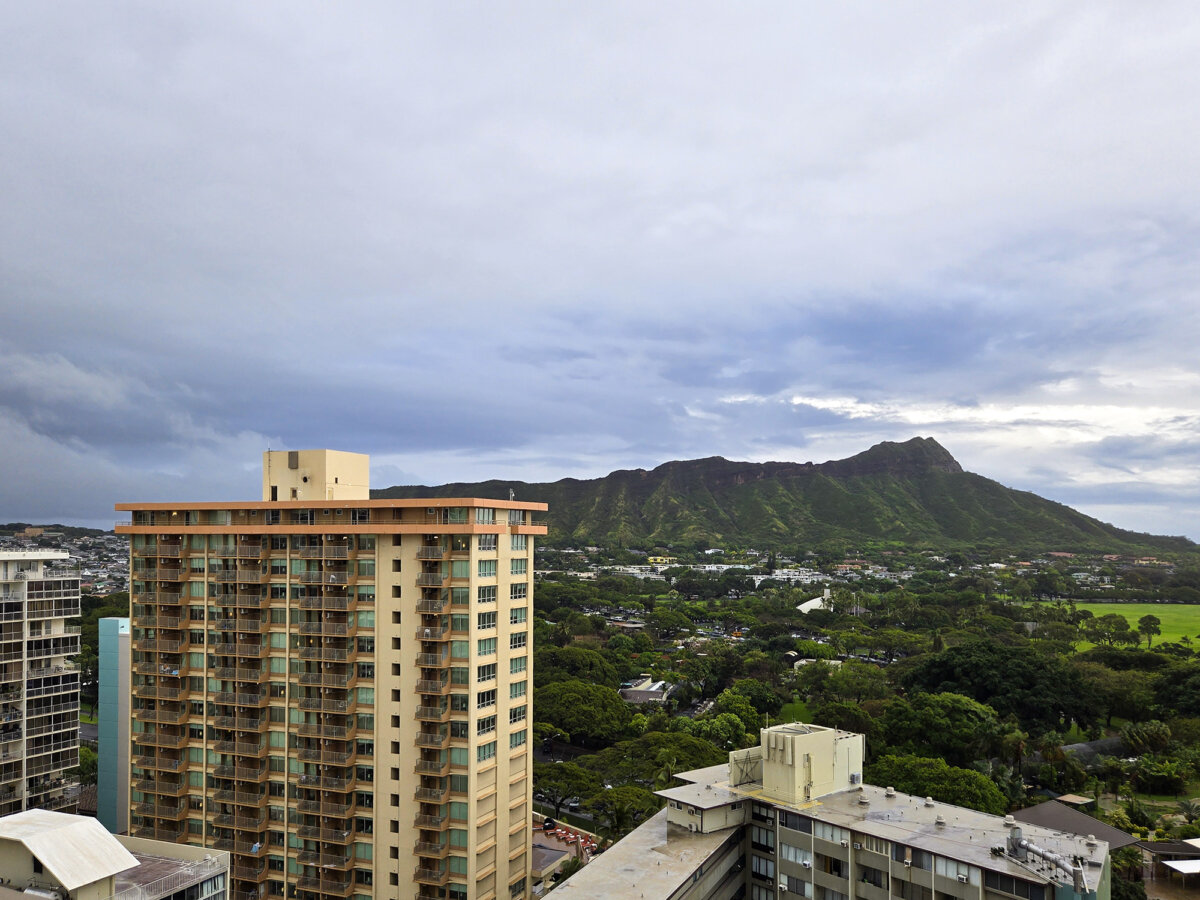
The green-covered tuff crater that is Diamond Head State Monument—visible from the upper floors of the outdoor-facing wing of the Twin Fin—is actually just within the city limits. A tunnel road allows visitors to drive in, and a trail of pavement, steps, and some puddle-gathering areas—all with a handrail—lead visitors up to a 500-foot-high overlook of Waikiki and the sea. Take the circling stairs route back down, and you can visit some defensive batteries, built in the early 1900s and reinforced during WWII, to protect the island from potential invasion.
Spanning 300 acres at the foot of Diamond Head is Kapiʻolani Regional Park, dedicated by King David Kalākaua in 1877 and named for Queen Kapiʻolani. Within its grounds are the Honolulu Zoo, a five-minute stroll from the hotel, and Waikiki Aquarium, another half mile beyond that. A three-mile paved park path encircles the entire park, good for a stroll or run through lush green space.
Out of Town
I remember as a child honoring Dec. 7, “a date that will live in infamy,” as President Franklin D. Roosevelt said of the Imperial Japanese attack on Pearl Harbor. A visit here is a must. You can see the basics—park grounds, visitor center, and the memorial for the USS Arizona, sunk during the attack—for free, but history buffs will be inclined to pay for broader and more in-depth tours and entry to the Pacific Fleet Submarine Museum, Battleship Missouri Memorial, and Pearl Harbor Aviation Museum. A visit can last six to eight hours. At a minimum, you should reserve advance boat tickets to the Arizona Memorial at Recreation.gov for a $1 non-refundable service fee. Storms closed the park for the day we planned to visit, so we rescheduled and drove a rental car to the western shore of Oahu instead.
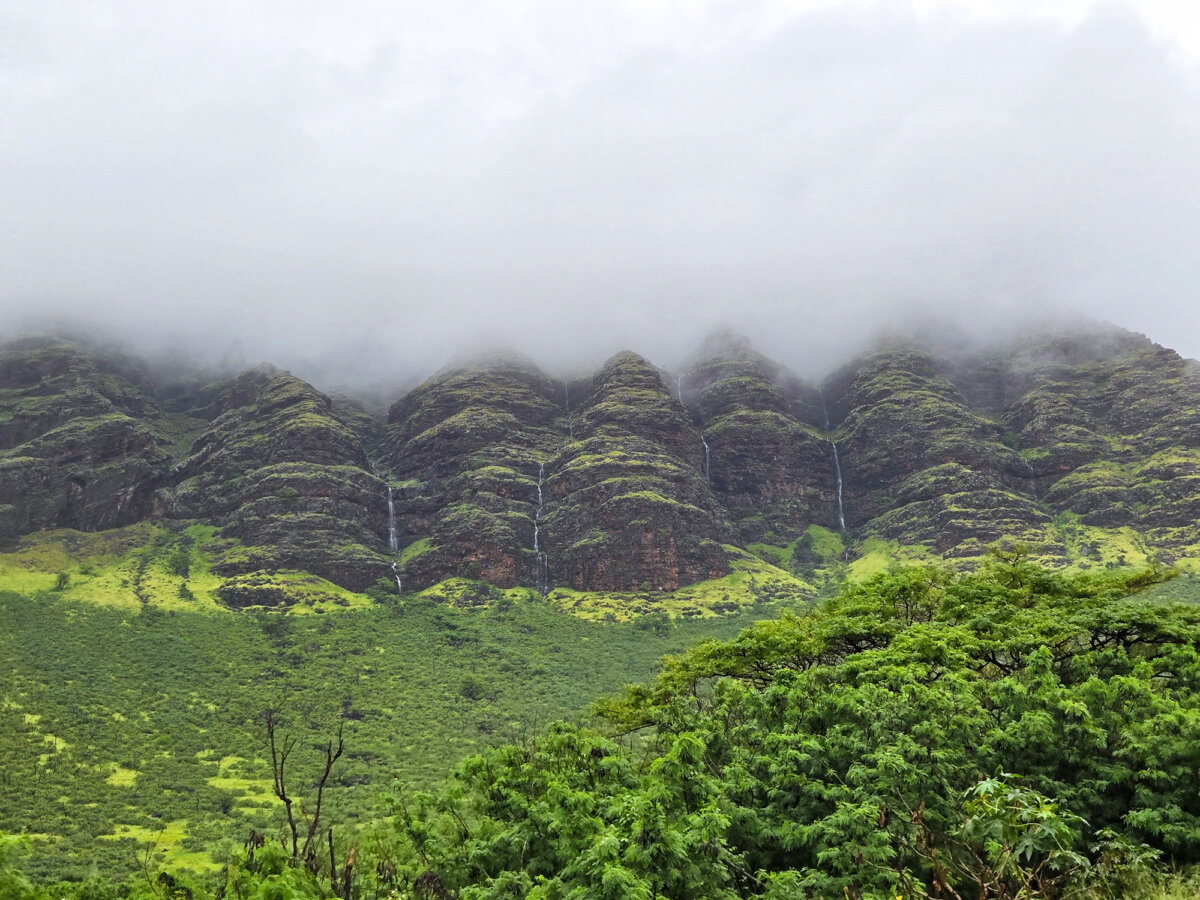
Low-lying verdant mountain ridges rose in the mist, and the rainfall gathered in dozens of waterfalls, dropping as threads along the cliff faces. Hawaii Route 93, the Farrington Highway, runs along the leeward Waiʻanae Coast past Keawa’ula Bay to the western terminus of a scenic hiking trail along the wilder, undeveloped volcanic shore inside Kaʻena Point State Park. This is a good excursion on a cloudy day, as there is otherwise no shade along it. The photogenic Ka’ena Point Arch is about a 2.5-mile round-trip trek from the lot. (Do not leave valuables in your car.)
We stopped at Pokai Beach and took a seafood lunch on a sheltered seaside deck at The Beach House by 604, which advertised the world’s best Bloody Mary. (The original Restaurant 604 is right next to Pearl Harbor, which we saved for the next day.) Protected by a jetty, the cove, frequented by green sea turtles and reef fish, is good for beginner snorkelers.
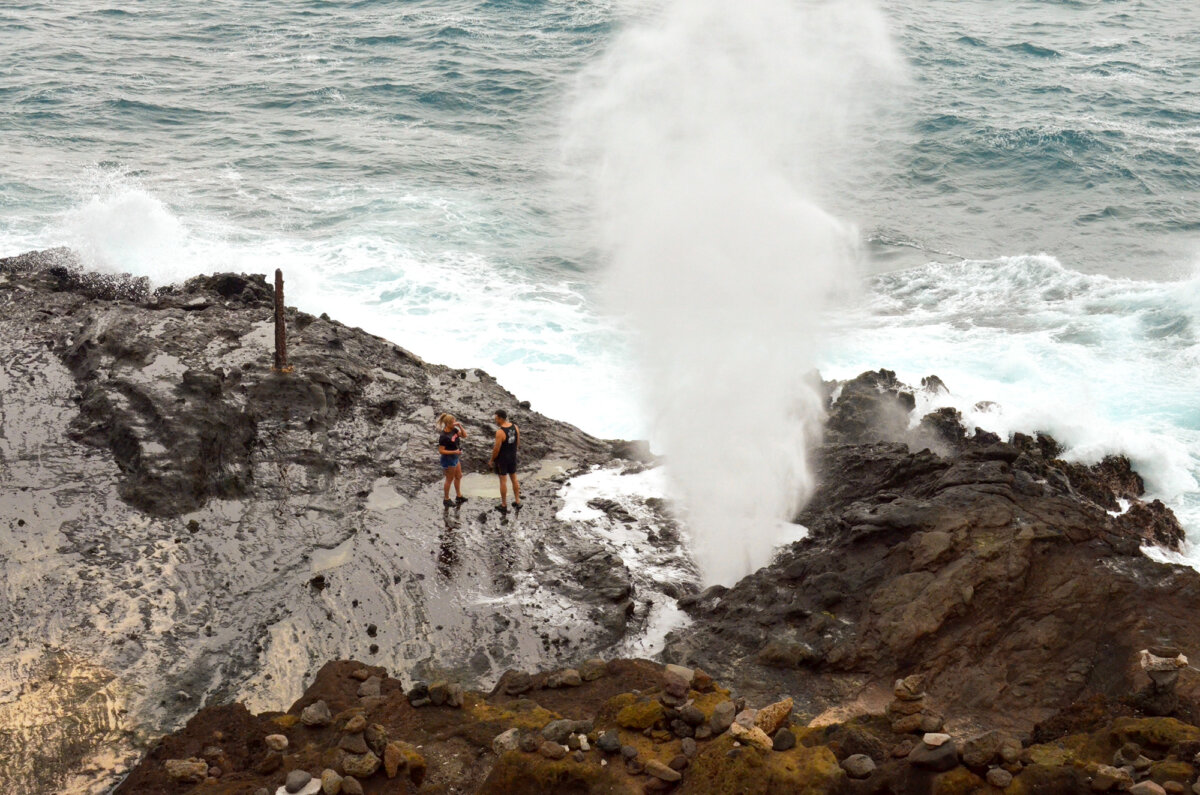
On another day, we drove east, past Diamond Head, along the winding road that follows a black and jagged shoreline, the lava flows of yesteryear frozen in time. The sullen gray of the sky had no ill effects on the glowing blue sea, and large waves burst into white along the rocks and powered through a couple of dramatic blowholes.
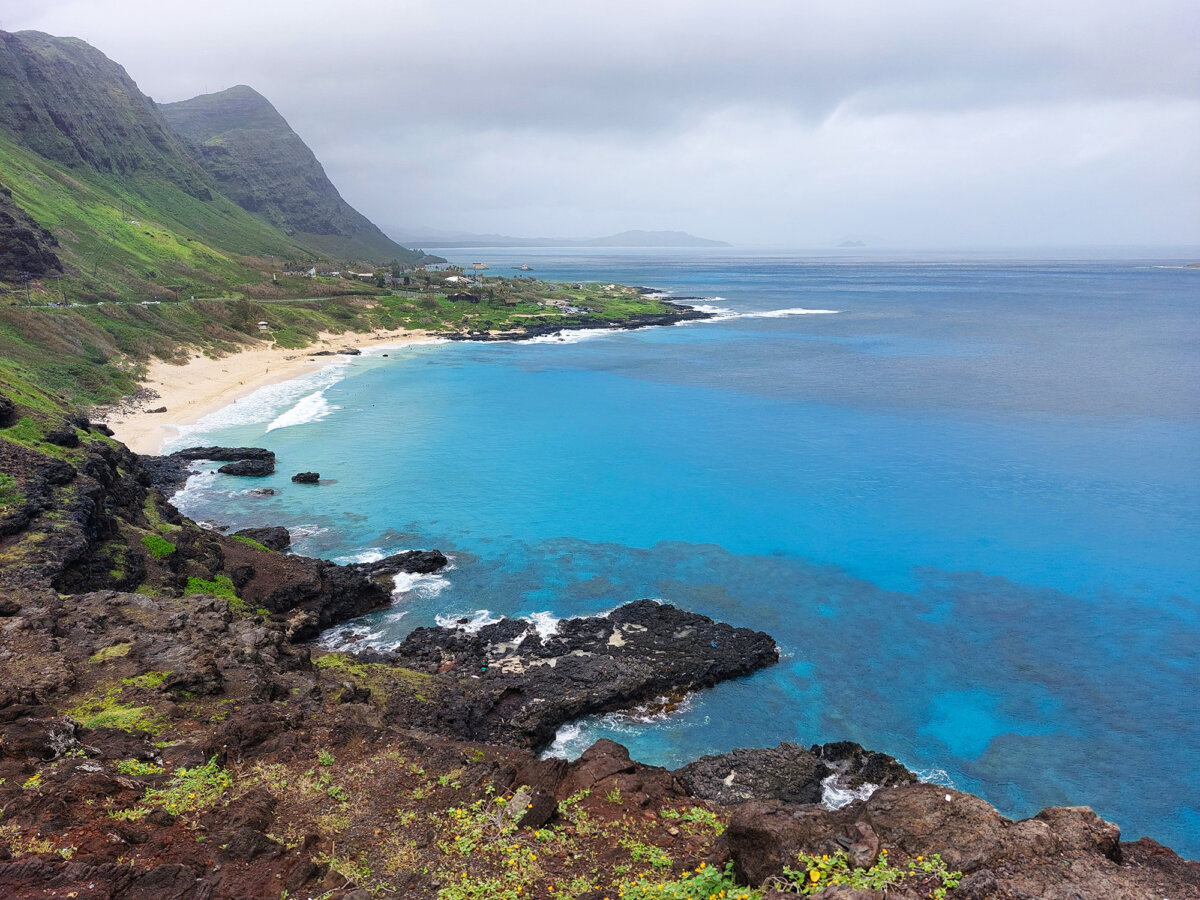
On the southeast tip of the island, we stopped at Kaiwi State Scenic Shoreline. We walked along the paved Makapu‘u Point Lighthouse Trail, uphill around the headland (two miles, round-trip) to an overlook that included the 1909 red-roofed Makapu‘u Lighthouse and a sweeping view of the sea 647 feet below. Footpaths lead to a few pillboxes. From November through May, if you are lucky, you might spot migrating humpback whales in these waters, but we were content being at eye level with soaring white-tailed tropicbirds and frigate birds with wingspans topping seven feet.
Eating in Any Weather
Gerry took us on a walking tour of Honolulu’s Chinatown. Chinese laborers came to Oahu in the 19th century to work the sugar plantations, and many eventually settled in this community in the 1850s to become merchants after their contracts had run out. Many of the buildings date back only to the early 1900s; however, controlled fires, set intentionally by the local government in fear of a deadly outbreak of bubonic plague, became uncontrollable and swept through the district, burning for 17 days. Today it’s a bustling neighborhood of shops, restaurants, galleries, and markets filled with fresh seafood, meats, and fruit and vegetable stands. We donned disposable rain ponchos and sandals and hit the pavement, dodging puddles and passing under awnings, before finally ducking into a place to order dim sum. While Gerry is not available for tours, check out the Honolulu Heritage Center for a nice collection of exhibits, and book one of their Chinatown walking tours.
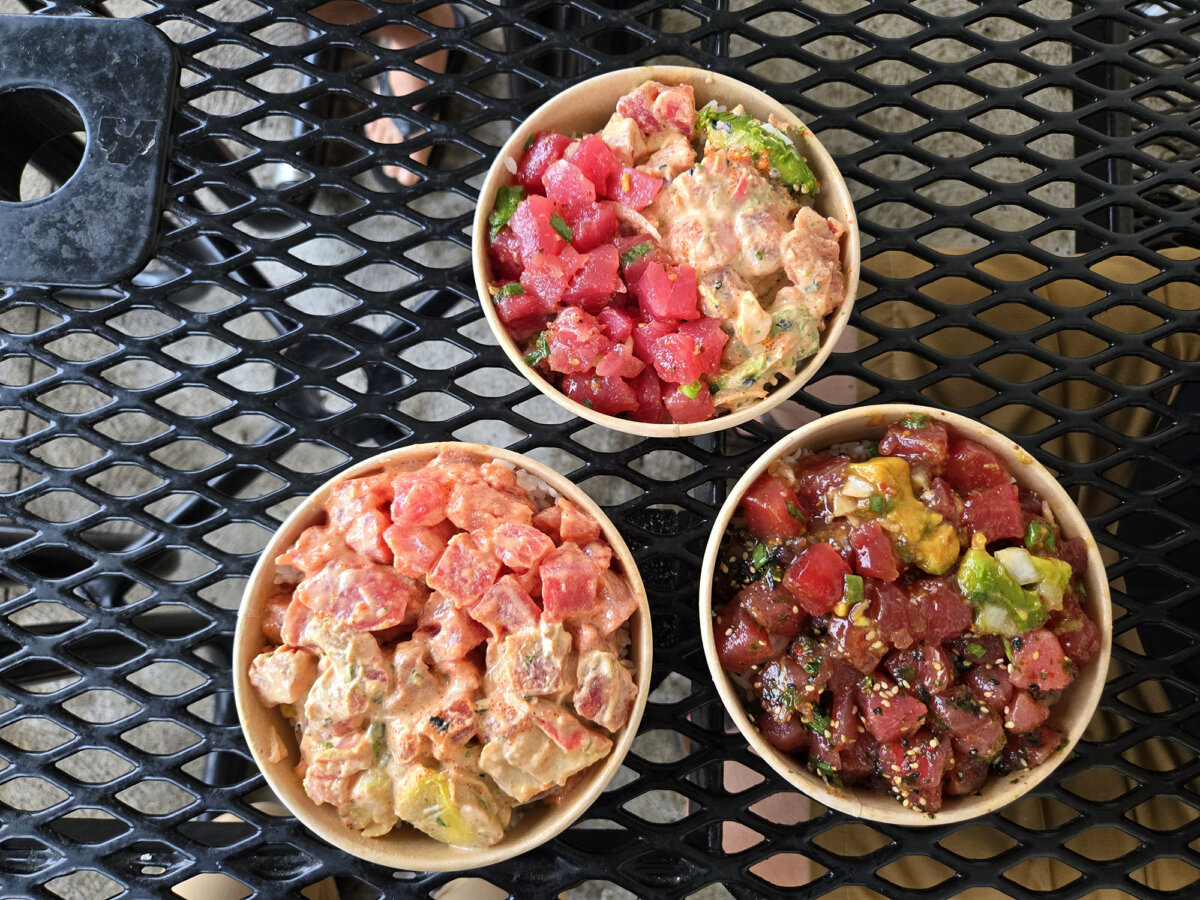
We stopped at the supermarket for a local favorite: deli-counter poke bowls, featuring a couple dozen styles at great prices. We wanted to try malasadas, Portuguese donuts, at Leonard’s Bakery, founded in 1952, but the line was long. So we got them at the bakery’s food truck in a parking lot east of the city at 7190 Kalanianaʻole Highway.
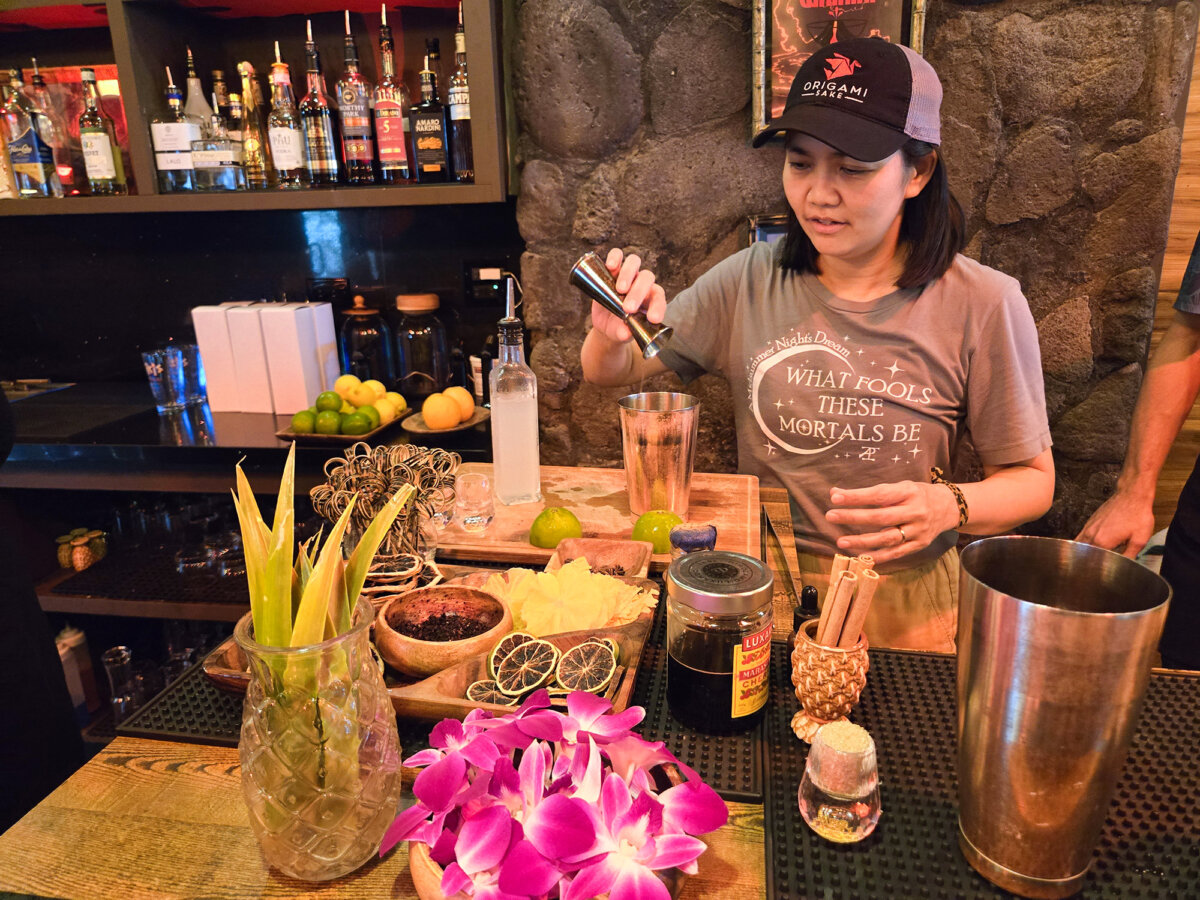
Back at the hotel, I scheduled a cocktail class at Tiki’s Lava Lounge, where we would learn how to make the house version of a mai tai. We each took turns behind the bar mixing one up, finishing them with ube (purple sweet potato) foam on top, a very Hawaiian obsession. As the stormy weather peaked, the power went out. Hotels have backup generators for basic needs in rare times like these, but at the restaurant, it altered the menu a bit. Waitstaff distributed rechargeable lights, and everyone continued to enjoy themselves. While the grilled items were not available, I could still order a slice of ube cheesecake.
Waikiki at its “worst” still beats a lot of places at their best.
If You Go:
Surf and beach rentals were available at Beach Candy Waikiki, inside the Twin Fin Hotel property, and hotel guests had coupons for some complimentary rentals. This outfitter also provides services to several other Waikiki hotels, including the popular Ambassador Hotel. Due to limited spring break availability, we spent our last two nights there at the western end of Waikiki, a one-minute walk from Fort DeRussy Beach and its accompanying park.
