“Who left the lights on?”
The question, usually a minor irritation about household electricity bills, flashed through the mind of astrophotographer Evgeni Tcherkasski as he stood before Germany’s medieval Eltz Castle.
The 47-year-old had driven more than 200 kilometers (120 miles) from his home in the heavily industrialized Ruhr area, then hiked through pitch-black forests, to capture the castle’s old stone bridge and towers beneath a spectacular wheel of stars—only to find the fortress illuminated by an unexpected rogue glow.
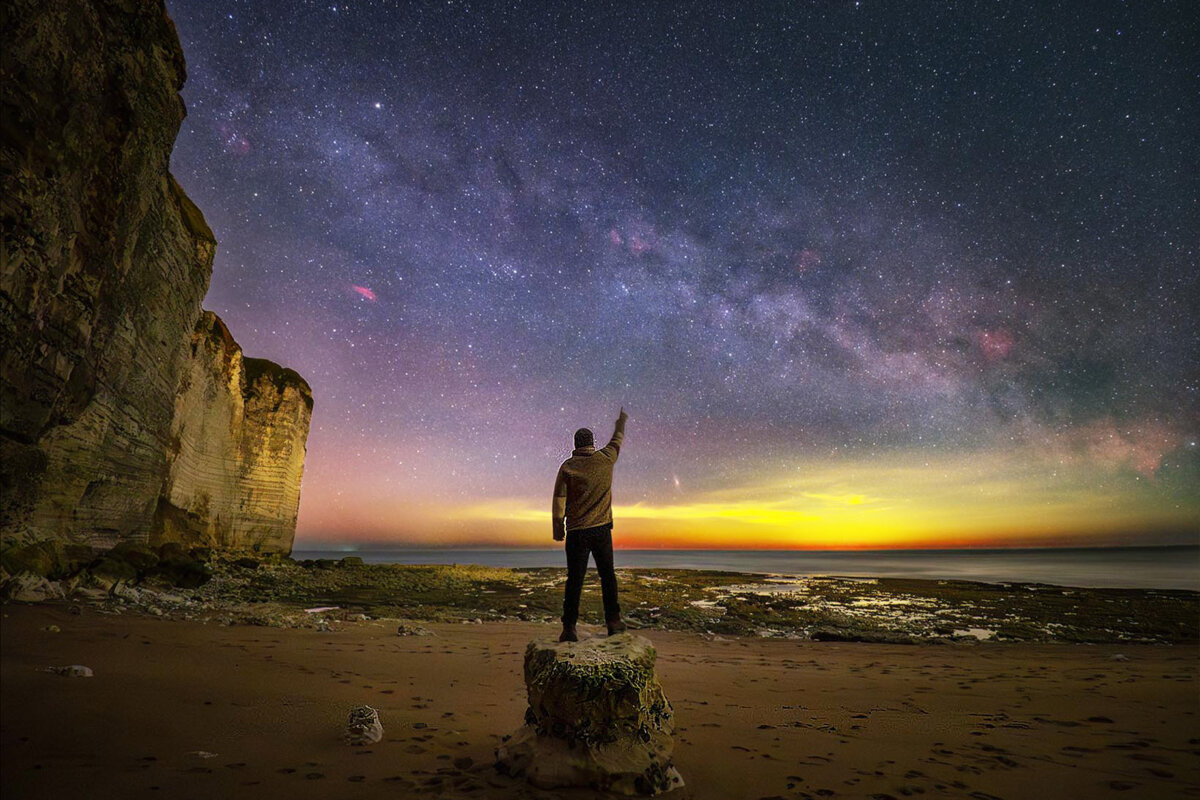
Making the best of the uninvited radiance, Tcherkasski stepped into the frame himself, holding a flickering lantern aloft to cast himself as a lonely traveler approaching the castle gates. He calls meticulously planned photographs like this one “astroscapes”—a fusion of stars, structures, human silhouettes, and even classic muscle cars that tell stories through dark-sky compositions.
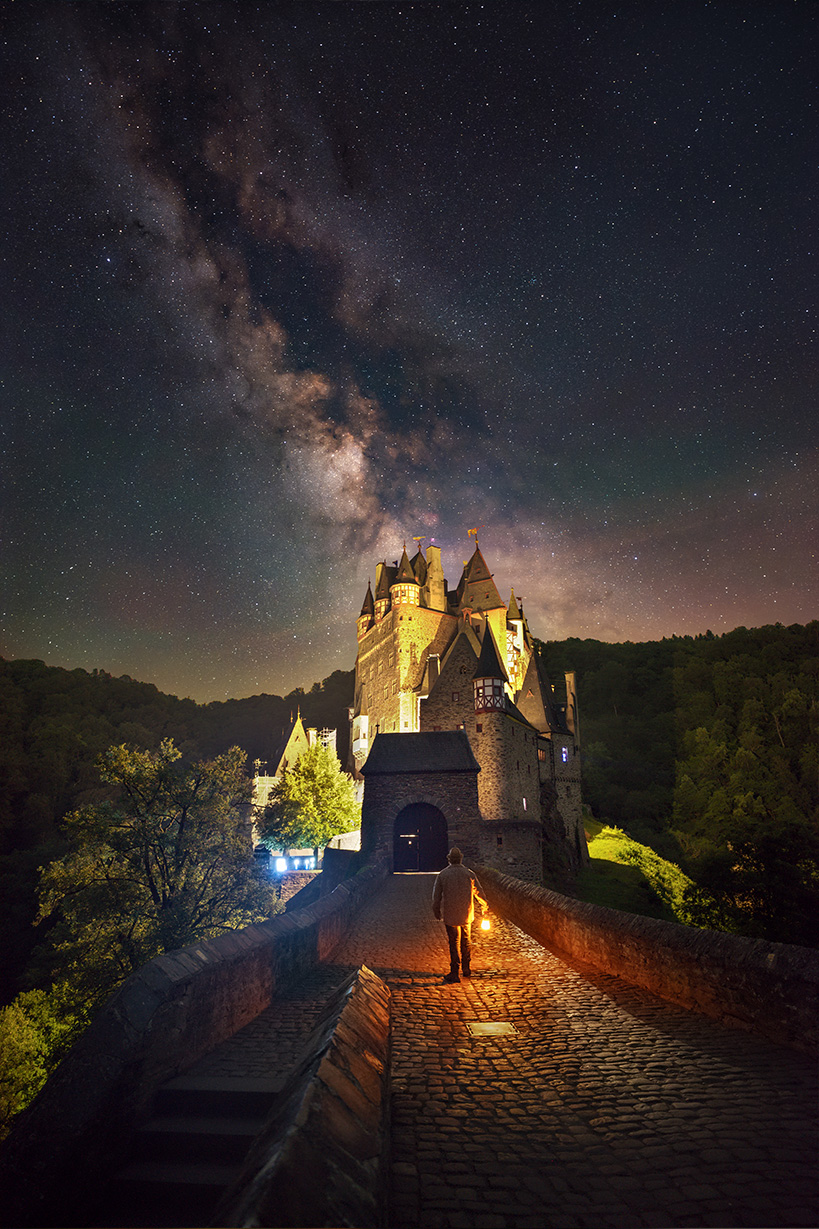 Eltz Castle photographed in front of a Milky Way backdrop. (Courtesy of Evgeni Tcherkasski)
“What began as experimentation gradually became a very deliberate photographic discipline,” Tcherkasski told The Epoch Times, reflecting on how his process evolved over nearly two decades behind the lens. “Looking back, I think the biggest evolution has been moving from simply taking photographs to deliberately creating them.”
He executes his productions from a director’s chair, though some of his special effects magic takes a strict technical mindset. To bypass digital noise at night, Tcherkasski locks his camera onto a stationary tripod, then stacks dozens of rapid-fire, identical exposures of the sky over a long-exposure landscape, helping pull invisible details out of the dark. While technically a composite, the method constructs a single, real location rather than a collage.
Tcherkasski, who manages a Geographic Information Systems department in his day job, working with hyper-accurate satellite maps, thrives on solving spatial puzzles. To photograph our galaxy behind earthly structures takes precise calculations, sometimes weeks in advance, using tracking apps such as PlanIt Pro or simply studying terrain on Google Street View.
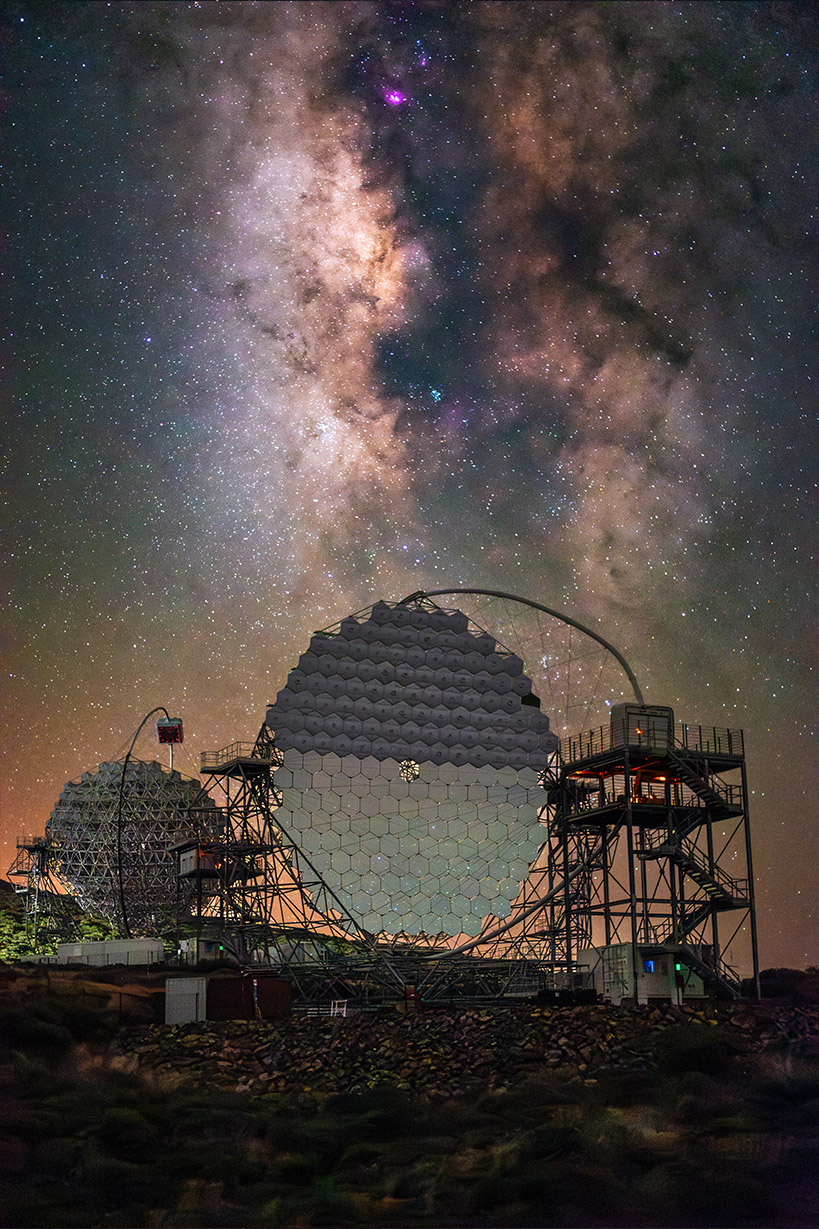 Roque de los Muchachos Observatory on La Palma, the Canary Islands, offers a science fiction foreground for Tcherkasski’s galactic photography. (Courtesy of Evgeni Tcherkasski)
“You cannot simply arrive at a beautiful location and hope that the sky happens to be in the right place,” he said. “The alignment has to match the foreground.”
Light pollution, though, isn’t always easy to control. In his hunt for dark skies, Tcherkasski has traveled as far as the Roque de los Muchachos Observatory on La Palma, Canary Islands, where the legendary research complex offered more than pristine ink-black skies; its massive optical telescopes provided a striking science-fiction silhouette for his foreground.
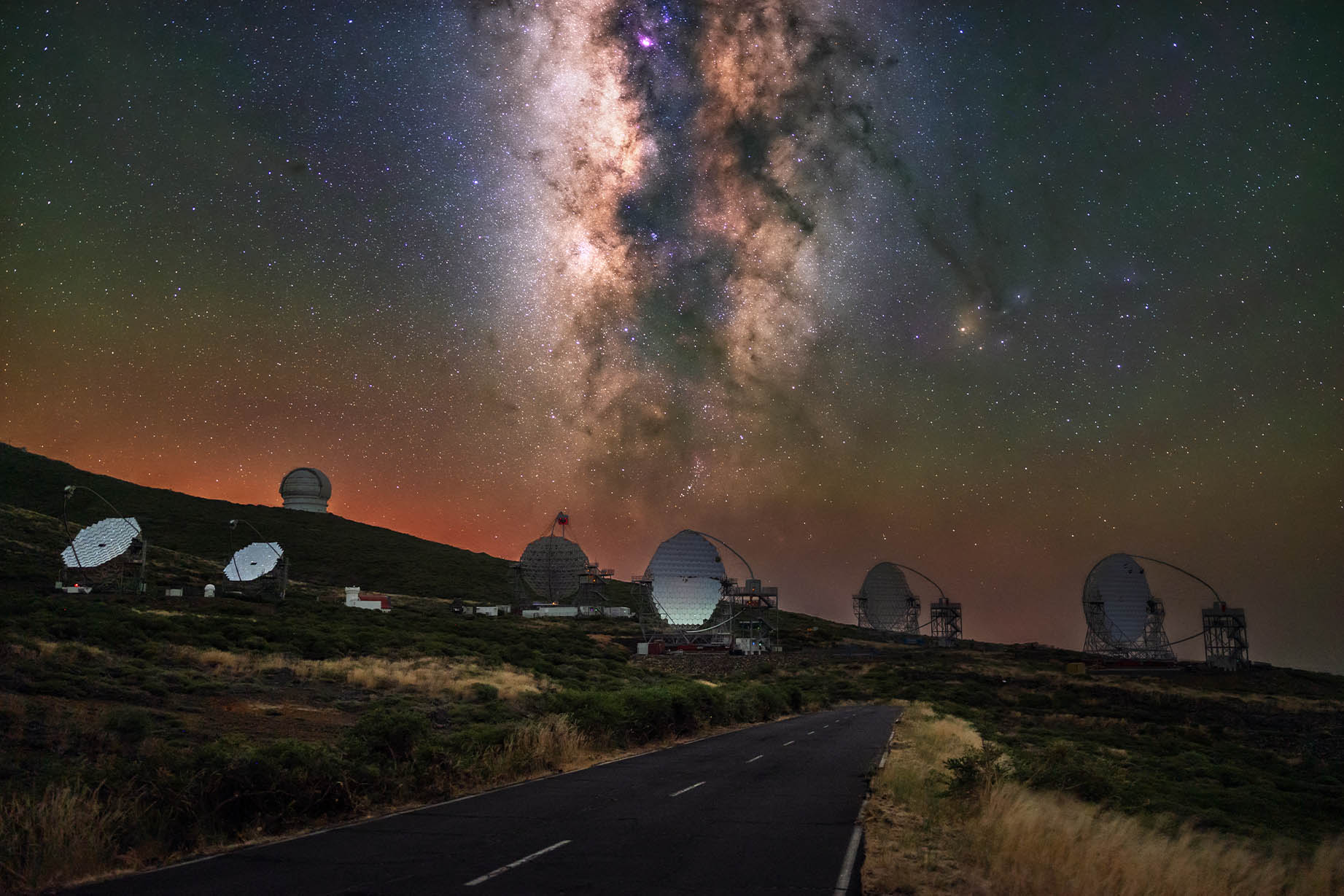 (Courtesy of Evgeni Tcherkasski)
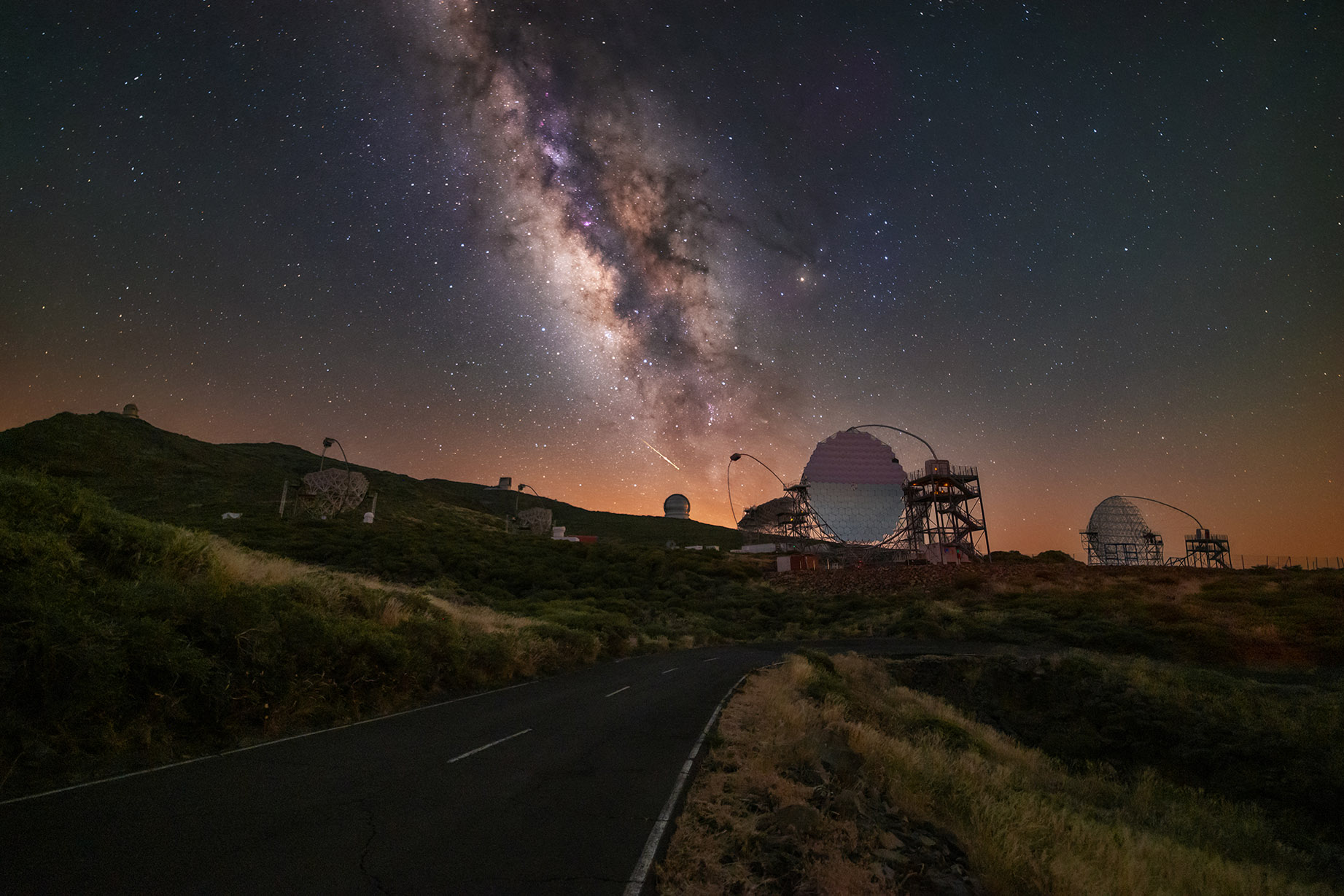 Tcherkasski captured Roque de los Muchachos Observatory on La Palma, Canary Islands, with the Milky Way in the background. (Courtesy of Evgeni Tcherkasski)
After aligning the observatory with the stars, the photographer set out for the telescope atop a mountain summit—a peak towering 2,400 meters above sea level, jutting with curious rock formations everywhere. It all lined up—the weather forecast, the moon phase, and the wind speed—promising a momentous picture.
But there was one variable Tcherkasski failed to calculate.
“Mosquitoes,” he said. “There were thousands of them. They attacked me constantly.”
By every photographic metric, his composition succeeded. He had mapped out the picture beforehand and found the Milky Way exactly where he expected it to be. In the end, he created the scene “almost exactly like the picture I had imagined.” But he also spent the next several days scratching, eventually heading to a local pharmacy for allergy cream.
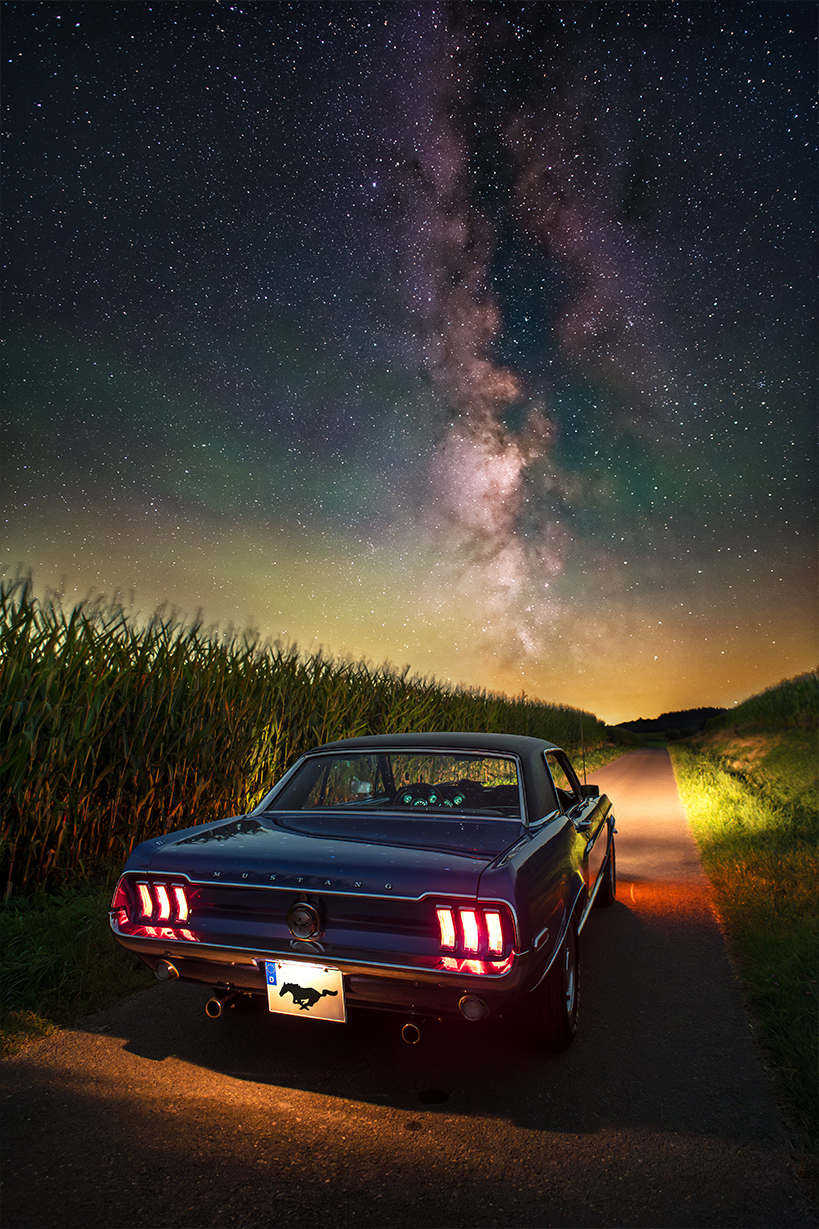 A 1968 Ford Mustang photographed under a sea of stars. (Courtesy of Evgeni Tcherkasski)
Not all of Tcherkasski’s astroscapes are averse to artificial illumination. On the contrary, the red glow of brake lights and the forward glare of a 1968 Ford Mustang were instrumental in casting the muscle car under a vast column of stars near Germany’s Lake Diemelsee. The catch was, the headlights were too bright; capturing the glint of vintage chrome during the pitch-black night required a more subtle lighting solution.
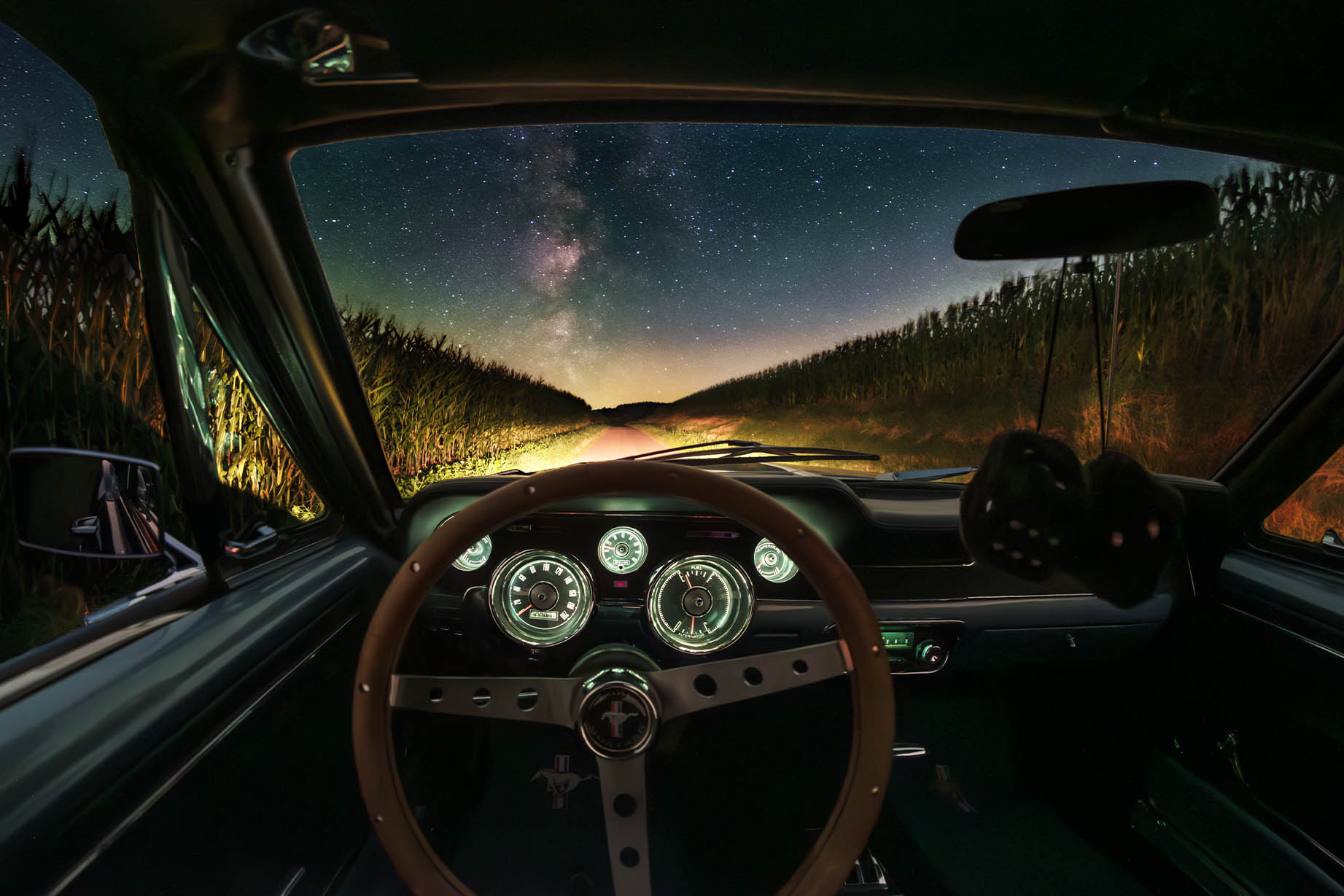
So Tcherkasski and the colleague who had hand-restored the vehicle opted for a slightly frantic, low-tech hack. Tcherkasski ran the camera while his friend lay flat across the front seats, manually flicking on the headlights for just a few tenths of a second during the long-exposure shot.
 (Courtesy of Evgeni Tcherkasski)
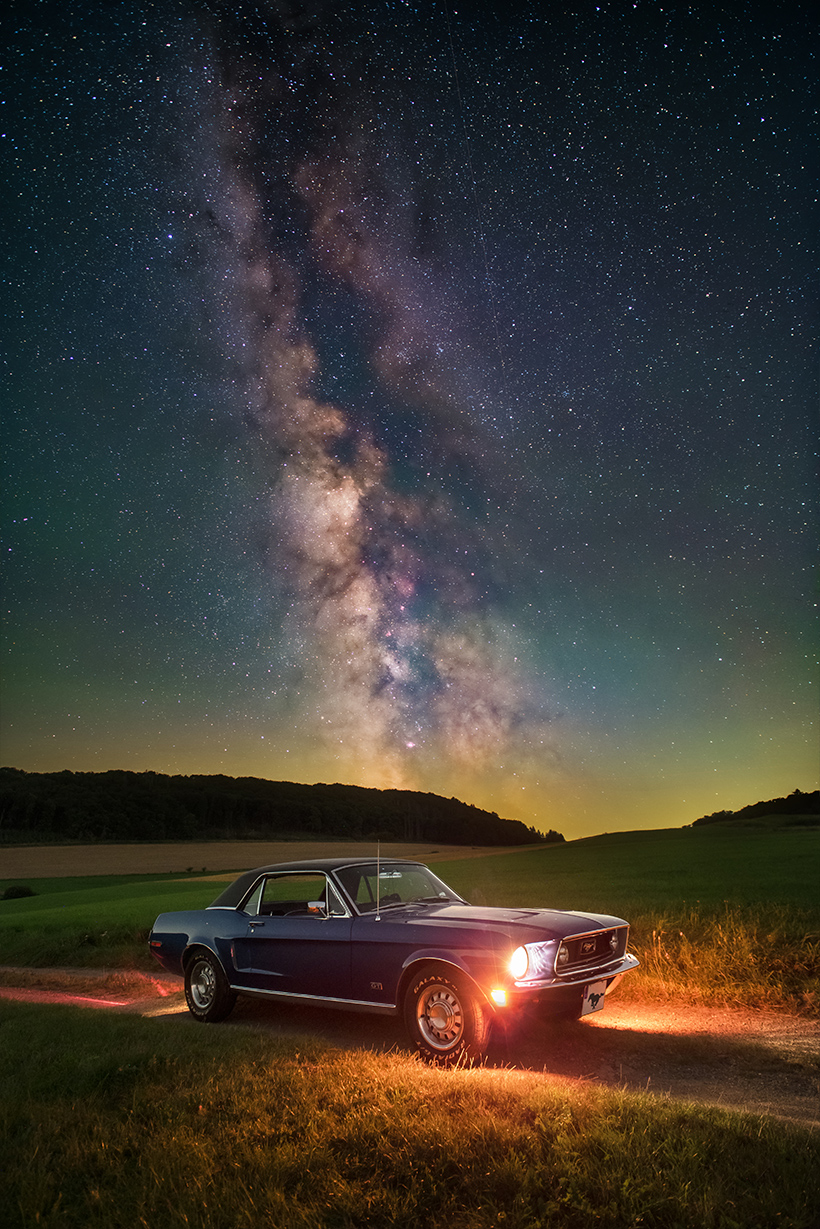 Tcherkasski employed tactical use of the car’s headlights for a subtle lighting solution during the astrophotography shoot. (Courtesy of Evgeni Tcherkasski)
“We wanted to use the car’s own headlights to illuminate the scene, but they were far too bright to simply leave them on during a long exposure,” he said. “It sounds a little crazy, but it worked. We were able to light the car and the road without completely blowing out the foreground.”
For Tcherkasski, his late-night photo-puzzles offer the perfect balance to his highly digitized day job. “When I go out at night with my camera, it is a completely different experience,” he said. “I am outside, I have to slow down.”
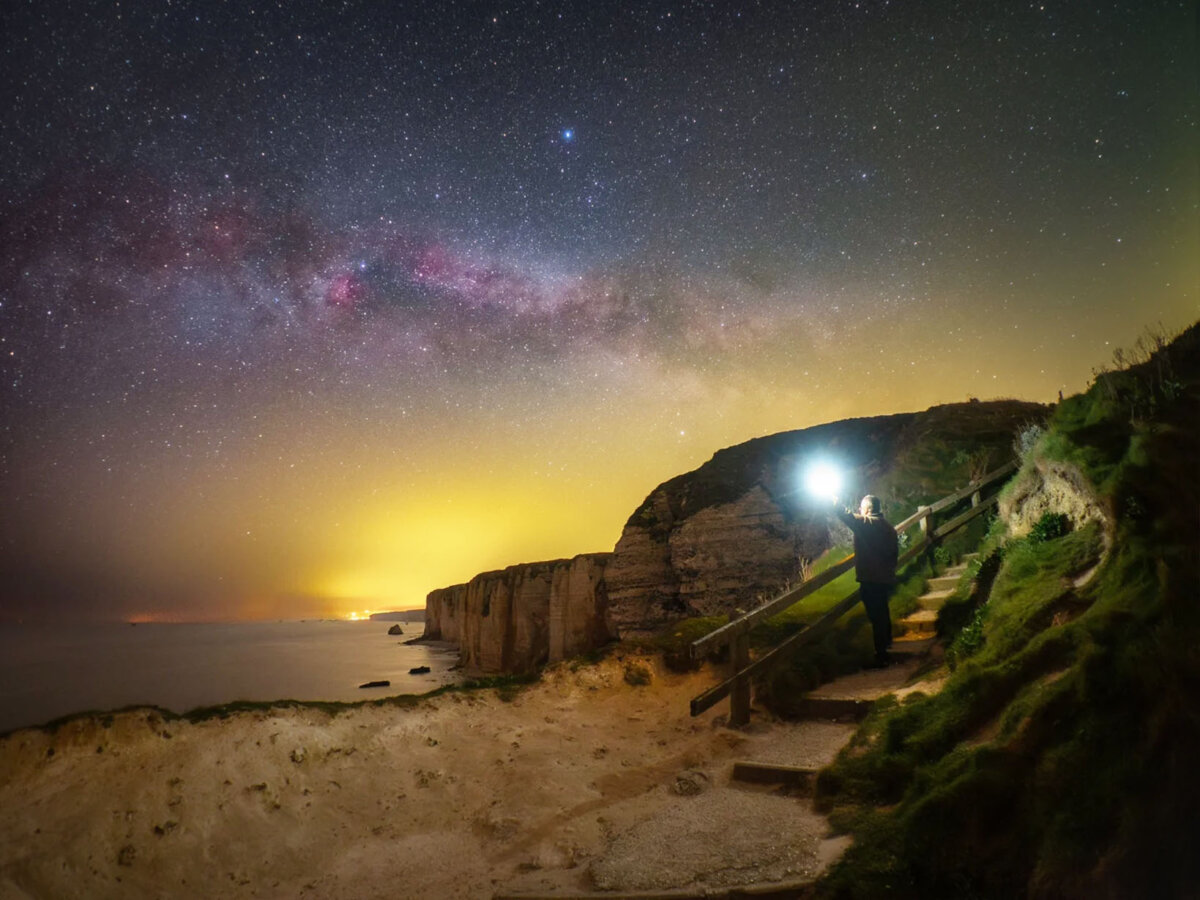
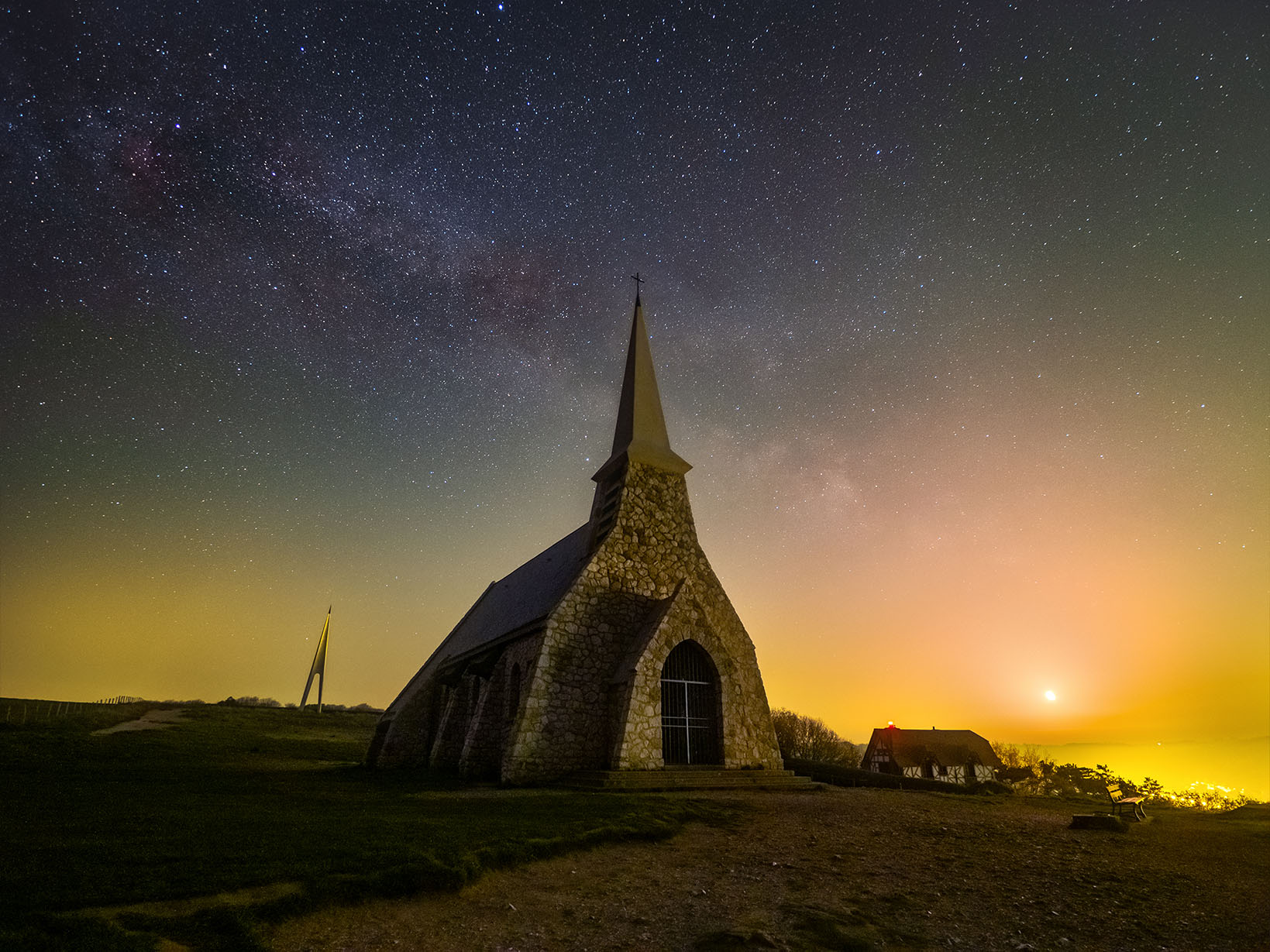 (Courtesy of Evgeni Tcherkasski)
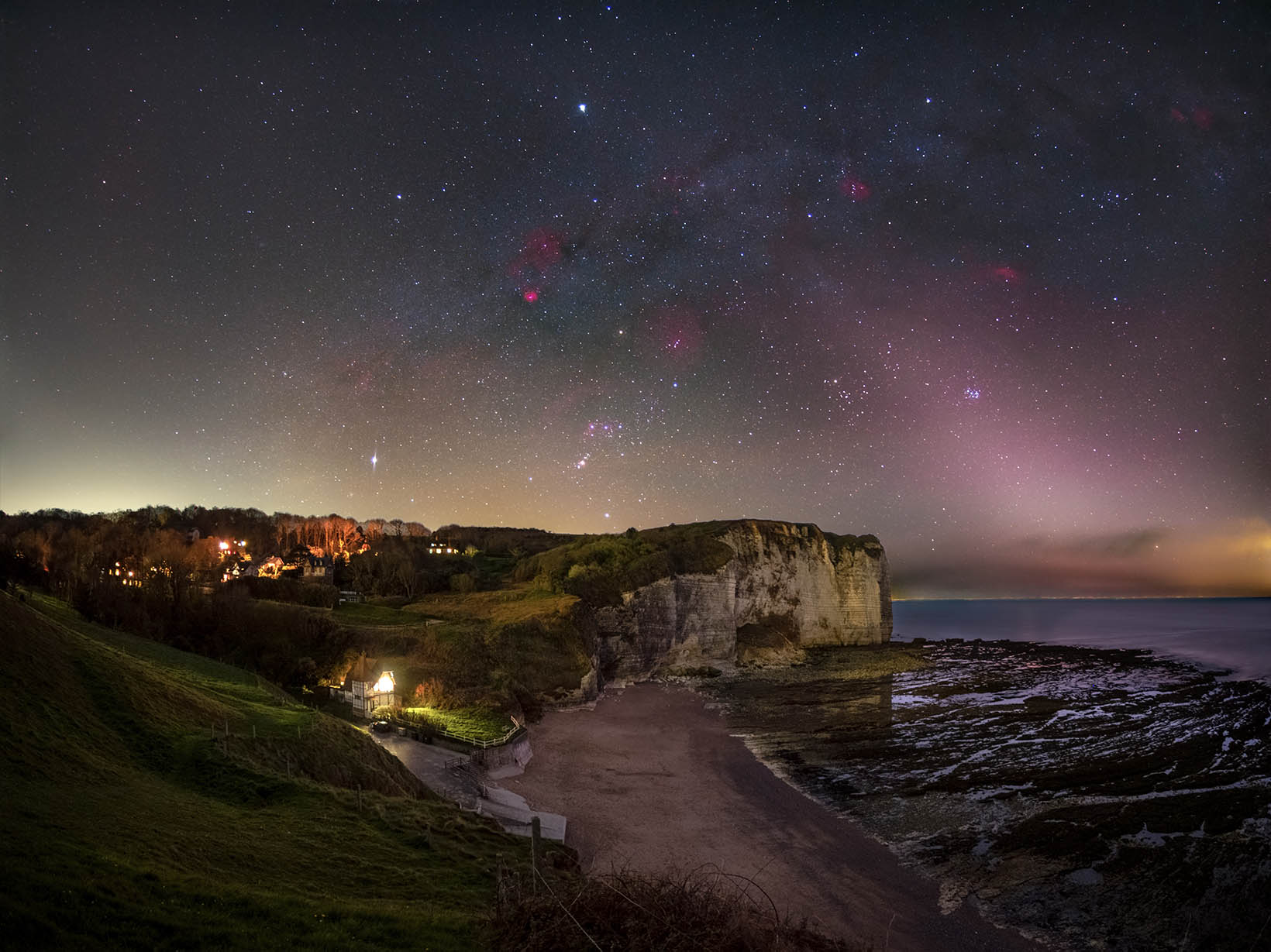 More Milky Way photographs by Evgeni Tcherkasski. (Courtesy of Evgeni Tcherkasski)
Now, as the photographer wraps up his summer vacation back in La Palma with his family, the hunt for dark skies continues. Looking toward his next trip, Tcherkasski is eyeing France and its new legislative curfews to curb light pollution. An undisputed global leader in cutting light pollution, France isn’t aiming to preserve views of its historic buildings, but rather to slash energy costs. The unmatched canvas it provides for Milky Way photography is merely a happy accident.
Until then, however, adapting to whatever castles, cars, or artificial light sources throw at him is what Tcherkasski does best.
“I don’t really have a fixed formula,” he says. “Sometimes I start with the landscape, sometimes with the sky, sometimes with a person, and sometimes with an object like a classic car. The important thing is having an idea, and then finding a way to make that idea work under the night sky.”