



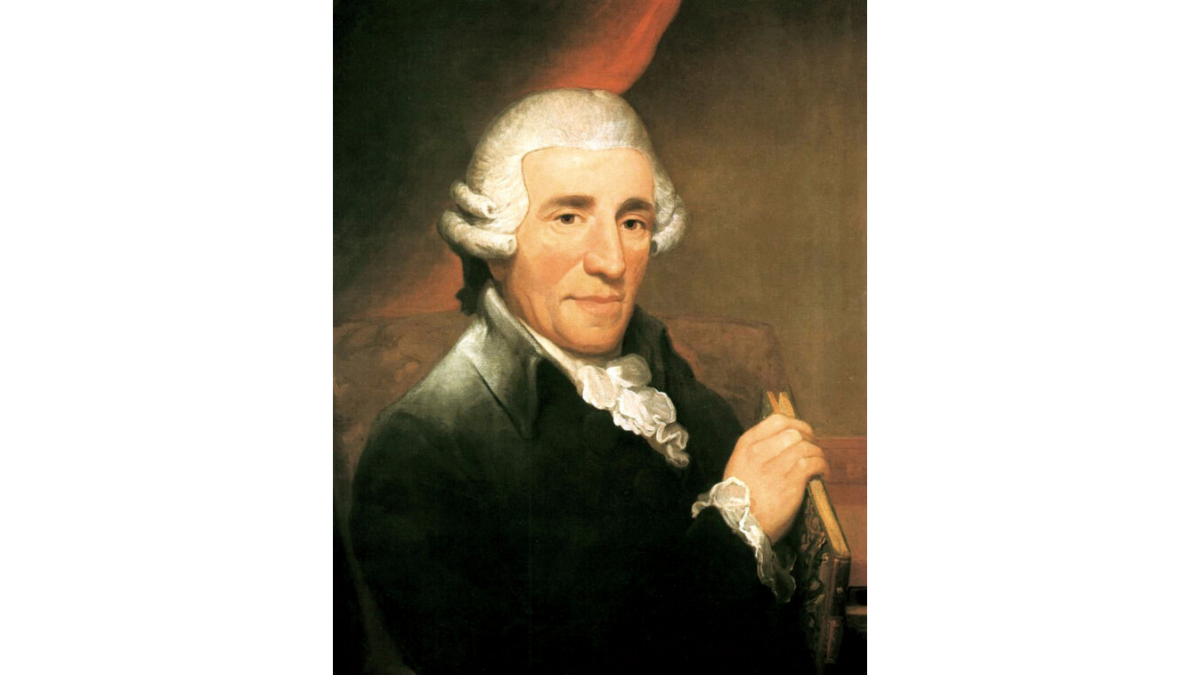
For a composer who began his manuscripts with “In nomine Domini” (in the name of the Lord) and ended with “Laus Deo” (praise be to God), Haydn had quite the mischievous streak. Yes, he was modest and cordial in public, displaying even a cunning sense of business acumen in his later years. Yet one doesn’t earn the nickname of “Papa Haydn” without a healthy dose of practical jokes, both socially and in his music. That’s why the court musicians loved Joseph Haydn and treated him more as a co-worker than a manager. So when the musicians finally wanted to go on the 18th-century equivalent of a worker’s protest, they asked Haydn for advice.
As the Kapellmeister of the noble family of Esterhazy, Haydn enjoyed a position of power and responsibility. Besides his compositional duties as court composer, he was in charge of the family’s musicians. His job was comfortable and secure, yet even Haydn admitted in correspondence that it was grating that he could never “obtain leave, even to go to Vienna for twenty-four hours.” So when an extended vacation to a castle at Esterhaza dragged on too long, even the good-natured Haydn was probably peeved, let alone the musicians of the orchestra.
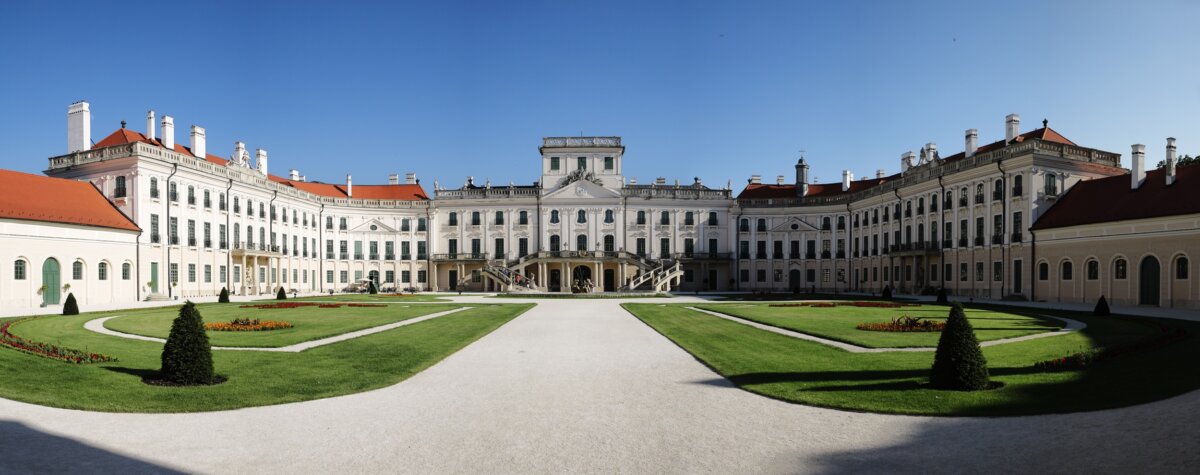
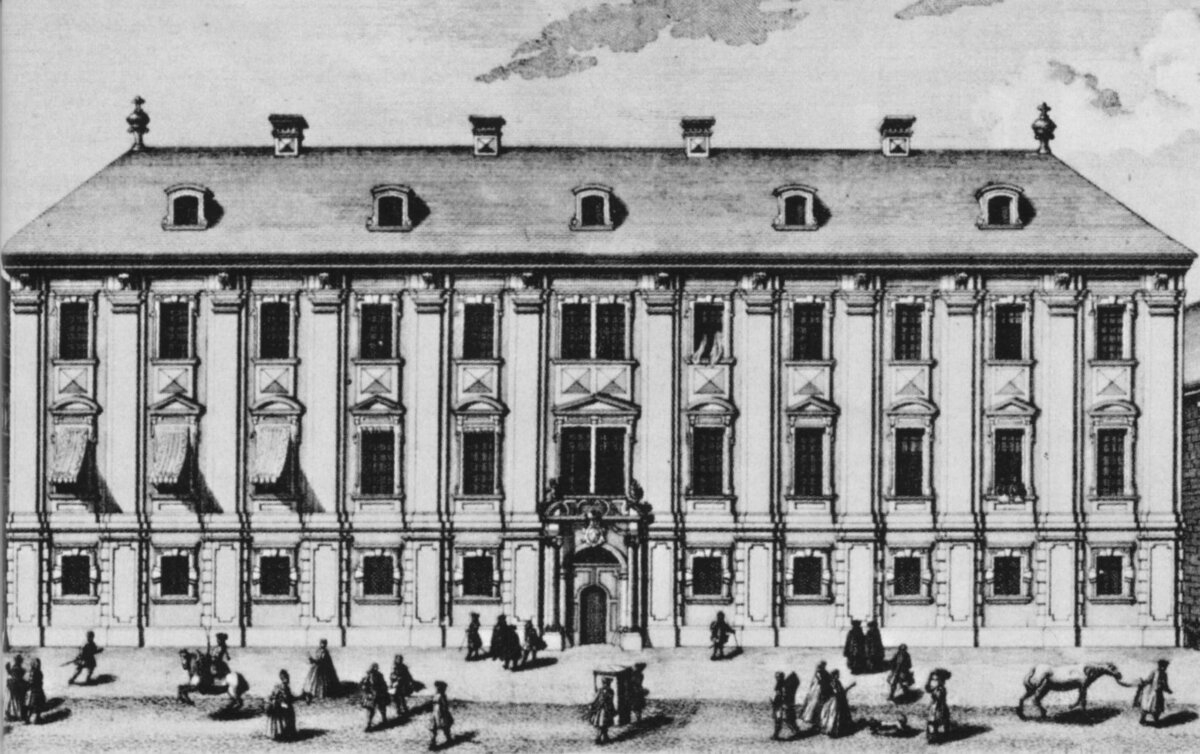
Now, the castle was luxurious. An elaborate cultural center complete with theaters, gardens, and even an opera house, this “second Versailles” was so nice that Prince Nikolaus I wanted to extend his summer stay by several weeks. The musicians, however, separated from their families and faced with an extended stay in the remote marshes of rural Hungary, asked Haydn for help.
Haydn, being the prankster he was, conceived a musical message at the end of one of his symphonies that made the orchestra’s feelings clear. This was none other than Symphony No. 45 in F-sharp minor, “Farewell,” written in 1772, which features a unique finale. As the music nears its climax, it suddenly pivots into a slow coda section where the musicians perform a novel bit of musical theater.
The story goes that at the performance for the prince, each musician, upon reaching the end of their part, snuffed out the candle illuminating their music and walked off the stage. As the players left one by one, only two violins remained by the end. Violinist Luigi Tomasini and Haydn himself finished the symphony and then walked off the stage. The anecdote goes, the prince then said, “Well, if they all leave, I suppose we had better leave too.” The authenticity of the quote is debatable, but indeed, the next day, the court packed up and returned home.
Symphony No. 45 ‘Farewell’
Today’s recording of Joseph Haydn’s Symphony No. 45 in F-sharp minor “Farewell” is by the Österreichisch-Ungarische Haydn-Philharmonie, conducted by Adam Fischer. (Listen)
The first movement, “Allegro assai,” begins with a downward minor violin arpeggio. The music follows the characteristics of Haydn’s “Sturm und Drang,” or “Storm and Stress.” The music is dramatic and unstable, with a persistent bass figure driving the music.
F-sharp minor was an extraordinarily unusual key for an 18th-century symphony. In fact, the Symphony No. 45 is the only known symphony from that century in this key, primarily due to the physical constraints of instruments of the time. Case in point: the natural horns of Haydn’s orchestra. These valveless instruments were adapted to different keys with removable crooks, and Haydn had ordered two special semitone crooks specifically in connection with the unusual requirements of the “Farewell.”
The second movement, “Adagio,” begins at 5:18 in A major. According to musicologist James Webster, who specializes in the music of Haydn and other classical composers of that era, the music here expresses the yearning for home. Notice how, at 6:27, the oboe’s major motif is repeated in minor, creating a sudden sense of sadness in the mood. The strings do so similarly at 7:07, lending this beautiful slow movement a sense of duality.
The third movement, “Menuet: Allegretto,” begins at 15:50. Here, Haydn’s wonderful sense of musical humor is showcased. Much like another “funny” piece by the composer, his Quartet Op. 33 No. 2 “The Joke,” the music is light-hearted and a bit lopsided.
The final movement of the “Farewell,” “Presto, Adagio,” begins at 19:43. Many orchestras now follow the tradition of “farewell” in the finale of the work. Listen to how at 22:10, as the “Presto” builds, the music suddenly veers into a new slow section. One by one, the musicians begin to leave, a musical tradition that endures to this day.
What arts and culture topics would you like us to cover? Please email ideas or feedback to features@epochtimes.nyc.
