While working as a military surgeon in modern-day Sudan, the Italian-born Giuseppe Ferlini heard tales of gold hidden among the ancient ruins surrounding Meroe. He had taken up the post of surgeon major with the Egyptian Army during its 1829 conquest of Sudan. Intrigued and determined to learn whether the legends held any truth, Ferlini secured permission in 1833 from Sudan’s governor-general, Ali Kurshid Pasha, to excavate at the Island of Meroe.
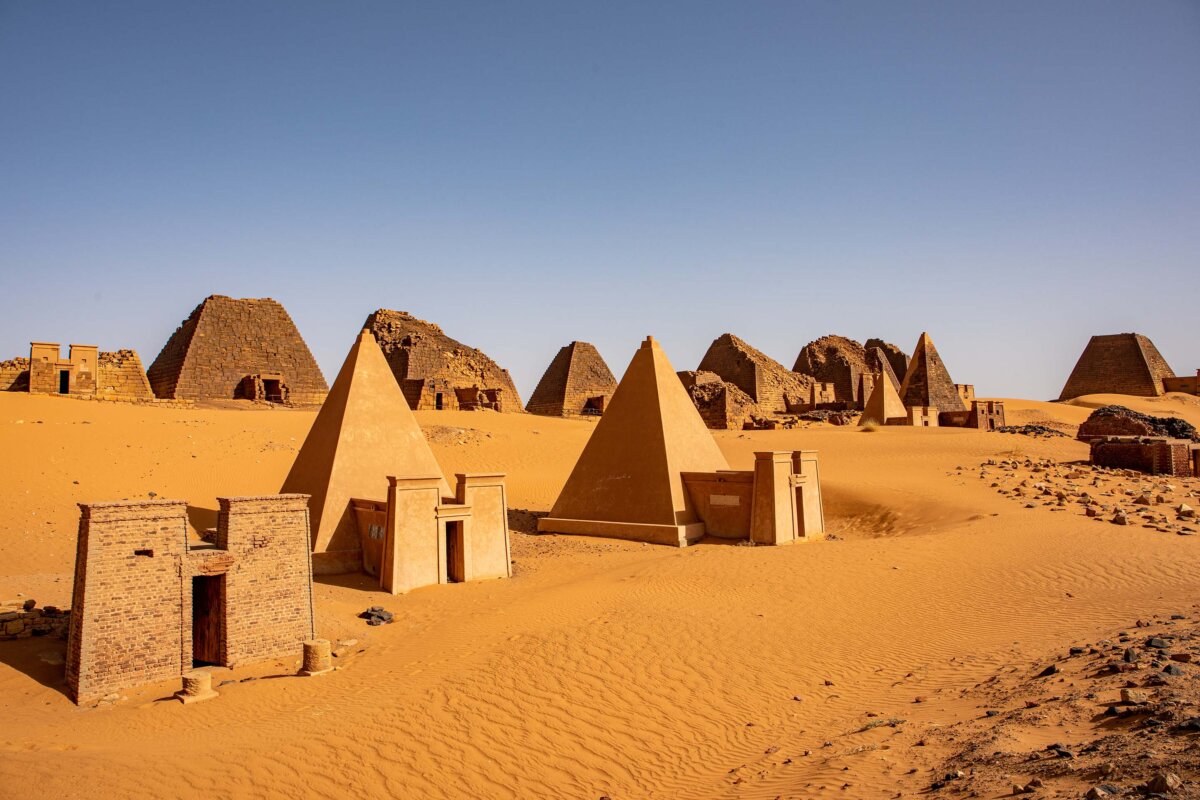
Located in eastern Sudan, the so-called Island of Meroe is not a true island but a semi-desert region bounded on all sides by three rivers, the Nile, the Blue Nile, and the Atbara, which together form its name. It is home to nearly 200 ancient pyramids, built between roughly 2,700 and 2,300 years ago, collectively known as the Meroe pyramids. Their decoration reflects influences from Pharaonic Egypt, Greece, and Rome, and many of the structures served as tombs for the kings and queens of the Meroitic Kingdom, which ruled the region for more than 900 years.
Ferlini was the first European to excavate at Meroe, though his goal was never scientific research but the recovery of valuable antiquities. Still, despite methods that bear little resemblance to modern archaeological practice, his expeditions documented structures and artifacts that have since been lost or destroyed, making his records a valuable source of evidence.
A Treasure Hunter’s Expedition
In August 1834, he and his longtime friend, Antonio Stefani, a Greco-Albanian merchant who knew the geography of Sudan well, set out on the expedition. Stefani was tasked with obtaining the camels, tools, and provisions needed for the journey. In exchange for his help, Ferlini promised Stefani half of any profits from their discoveries. Ferlini and Stefani left Khartoum for the ancient Kushite city of Naga.
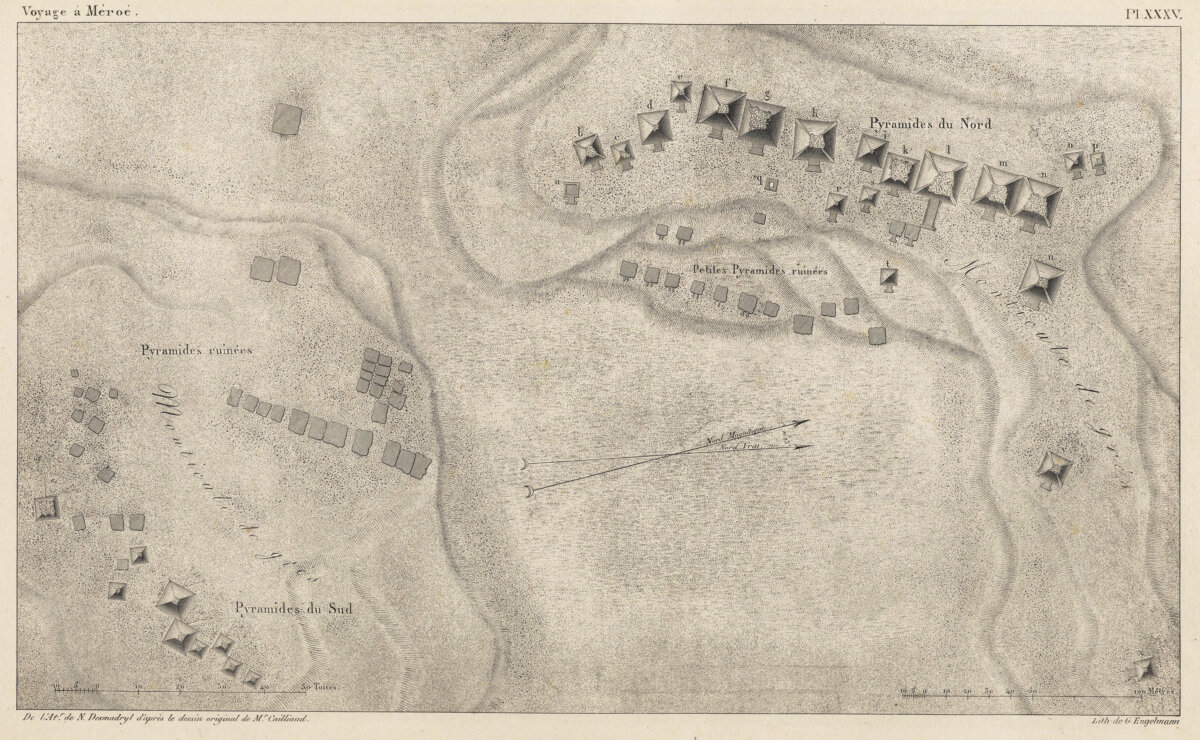
Ferlini used a catalog of pyramids that documented their condition and state of preservation to narrow his search. He believed that the more intact the pyramids, the more likely they were to contain valuable treasures. At first, the expedition had no luck. In his chronicle of the experience, Ferlini wrote:
“I left Mr Stefani and went with a hundred men to visit the great pyramids. A few days later, my friend discovered another habitation as big as the first but there was no luck, just a small terracotta idol. With this in mind I had demolished the remains of a small pyramid at the foot of the hill. Coming to the foot of the mountain, I found black stones which seemed to have been carved by man. I sought, with the aid of the pick, to penetrate below the foundations, and found the first step of a stair … I continued to uncover the stair, and reached the ninth and last step. This led into a small cave, where I only found some bones of camels, horses and some other small skeletons which I took for dogs.”
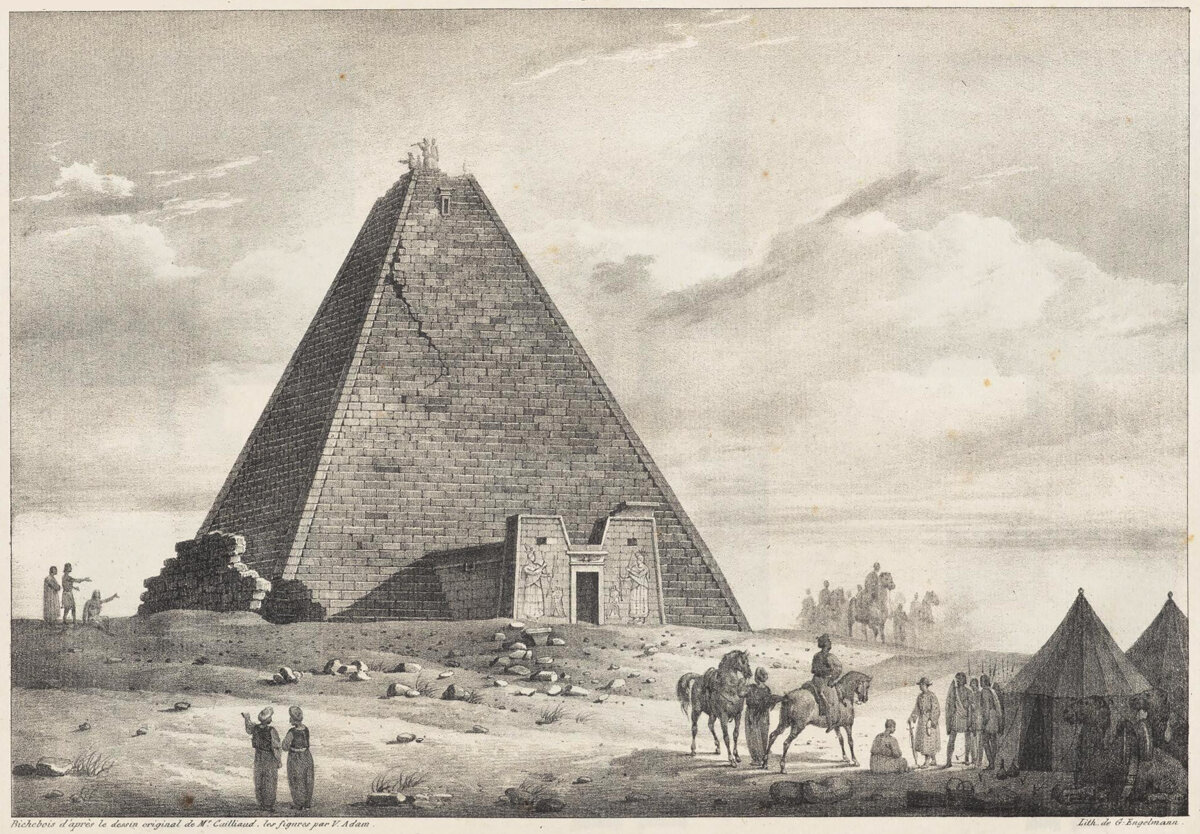
Ferlini’s excavation methods caused extensive damage to more than 40 pyramids, several of which he dismantled and blasted with explosives in his search for valuables. When excavations of smaller pyramids failed to produce the treasures he expected, he dismantled the nearly 100-foot tall Pyramid N6, starting from the top. There, his most significant discovery was made.
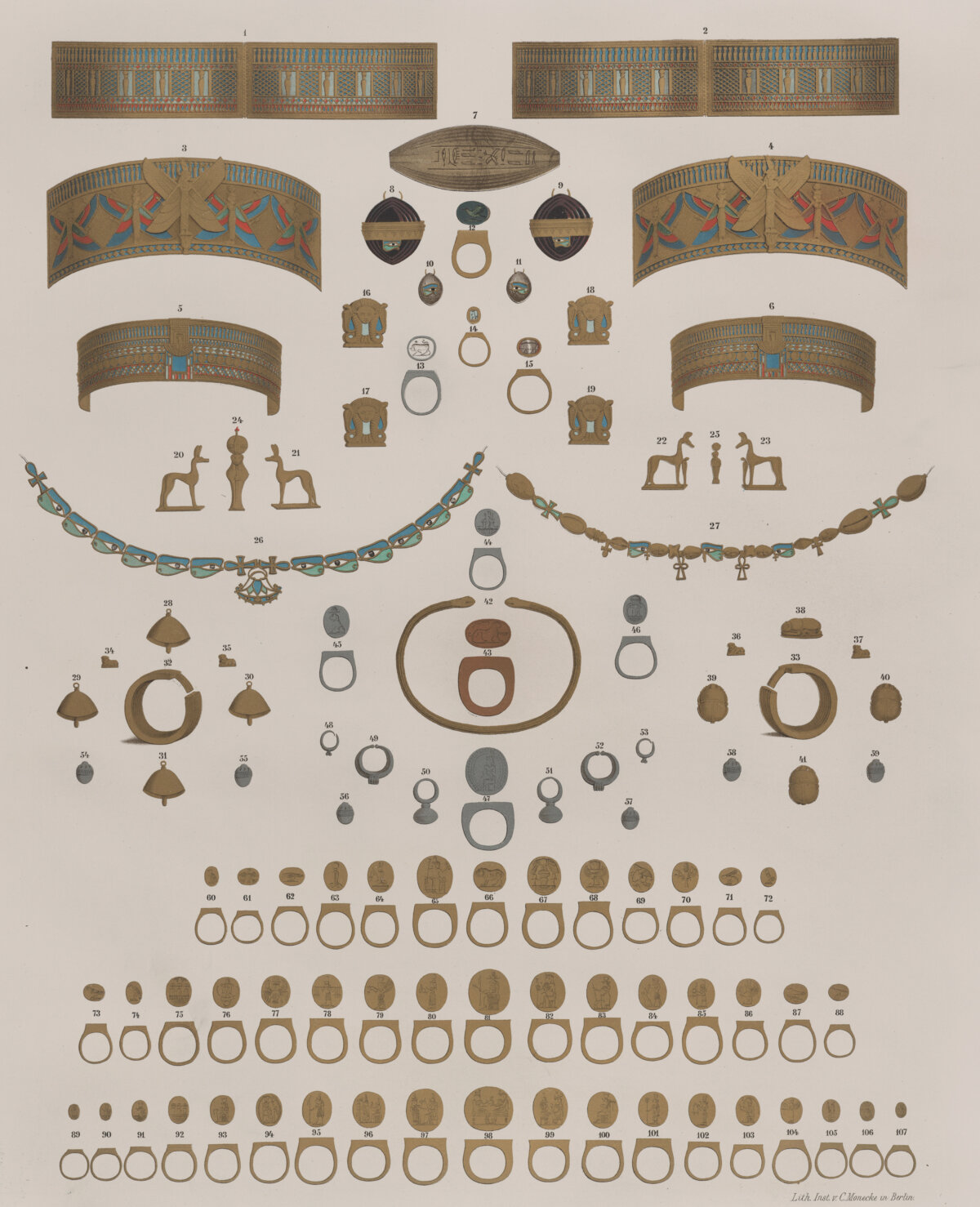
Inside Pyramid N6, which belonged to Queen Amanishakheto, Ferlini found an empty sarcophagus alongside an extraordinary collection of gold, enamel, and semi-precious stone objects. With the help of four hired workers, it took approximately 35 days to dismantle the pyramid.
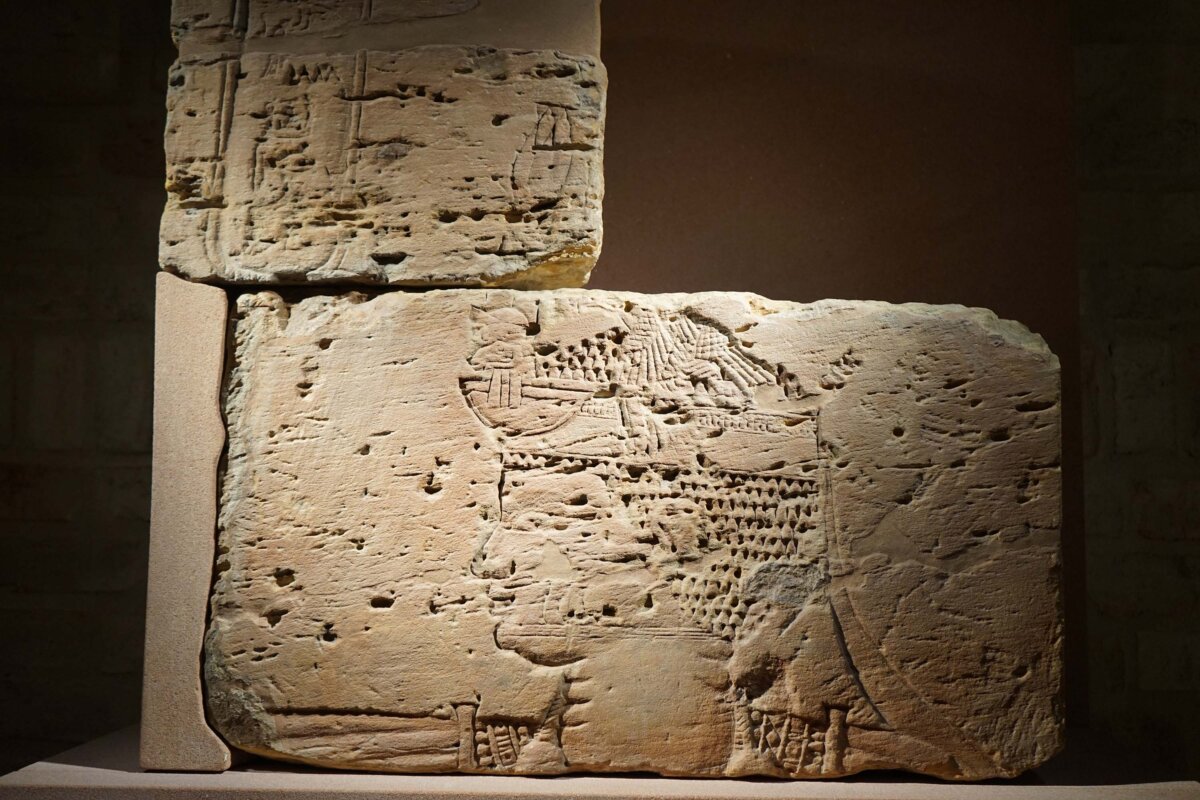
Cemeteries, Pyramids, and Cultural Exchange
Ferlini’s discovery, though remarkable, was not an isolated case. The importance of burial practices is especially clear in the cemeteries of royals and elites, where valuable ornaments were placed alongside the deceased. The scale and organization of Meroe’s cemeteries offer further insight into the society that produced and prized these objects.
Three major cemeteries at Meroe, known as the North, South, and West cemeteries, contain at least 147 pyramids and more than a thousand graves. The actual burial chambers lay underground rather than within the pyramid itself, and were reached through an entrance in front of the mortuary temple. Royal tombs typically had three underground chambers, the first two sometimes featuring decorated pillars and the last holding the burial.
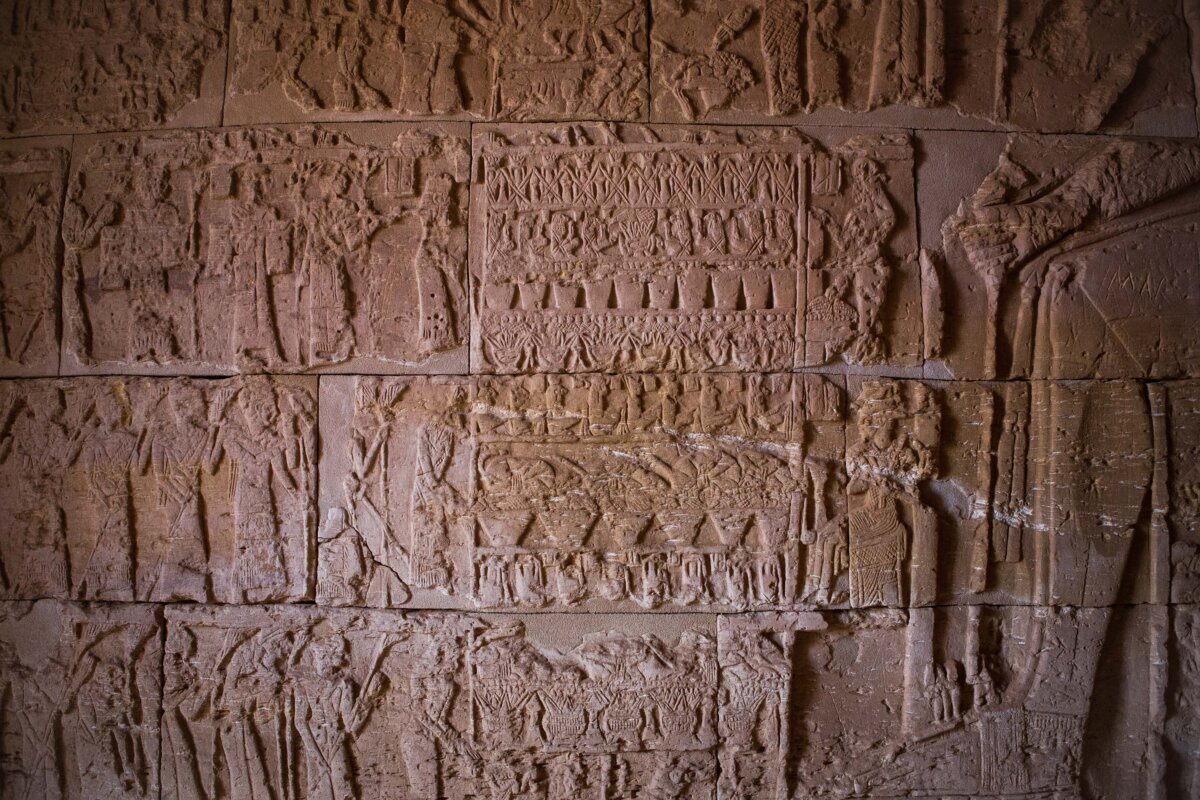
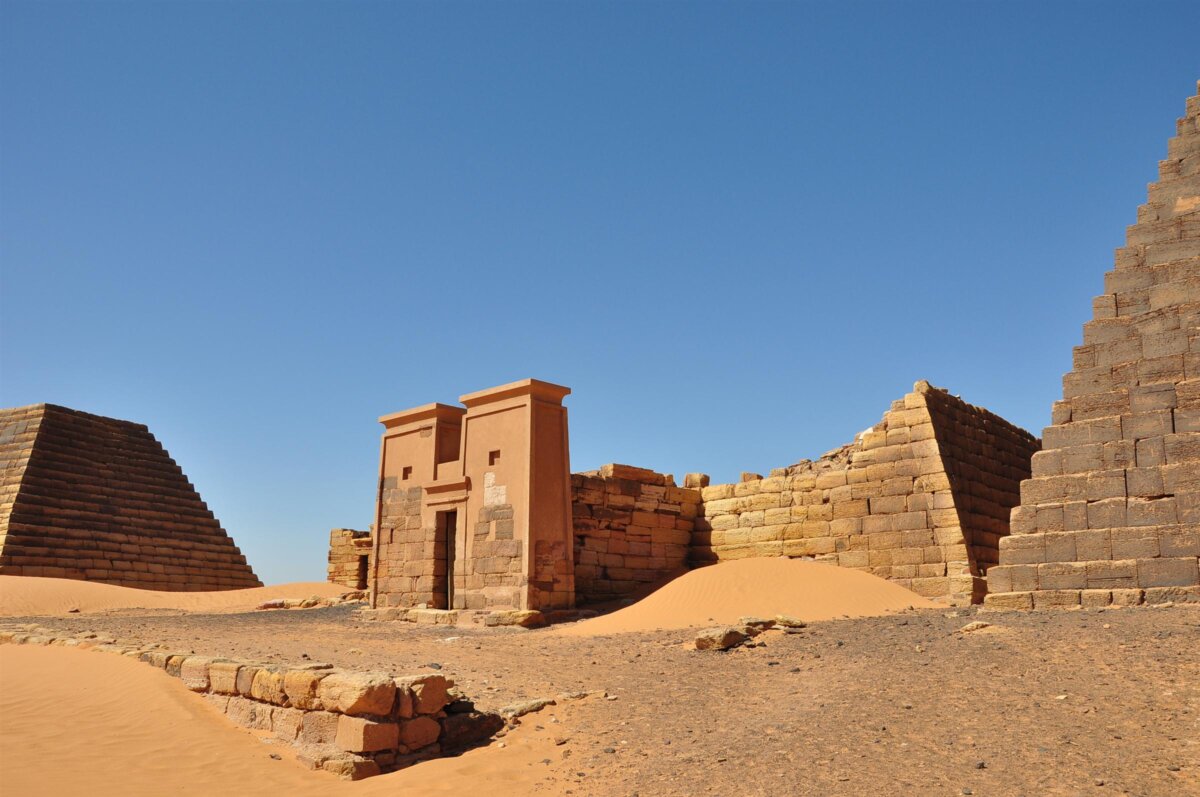
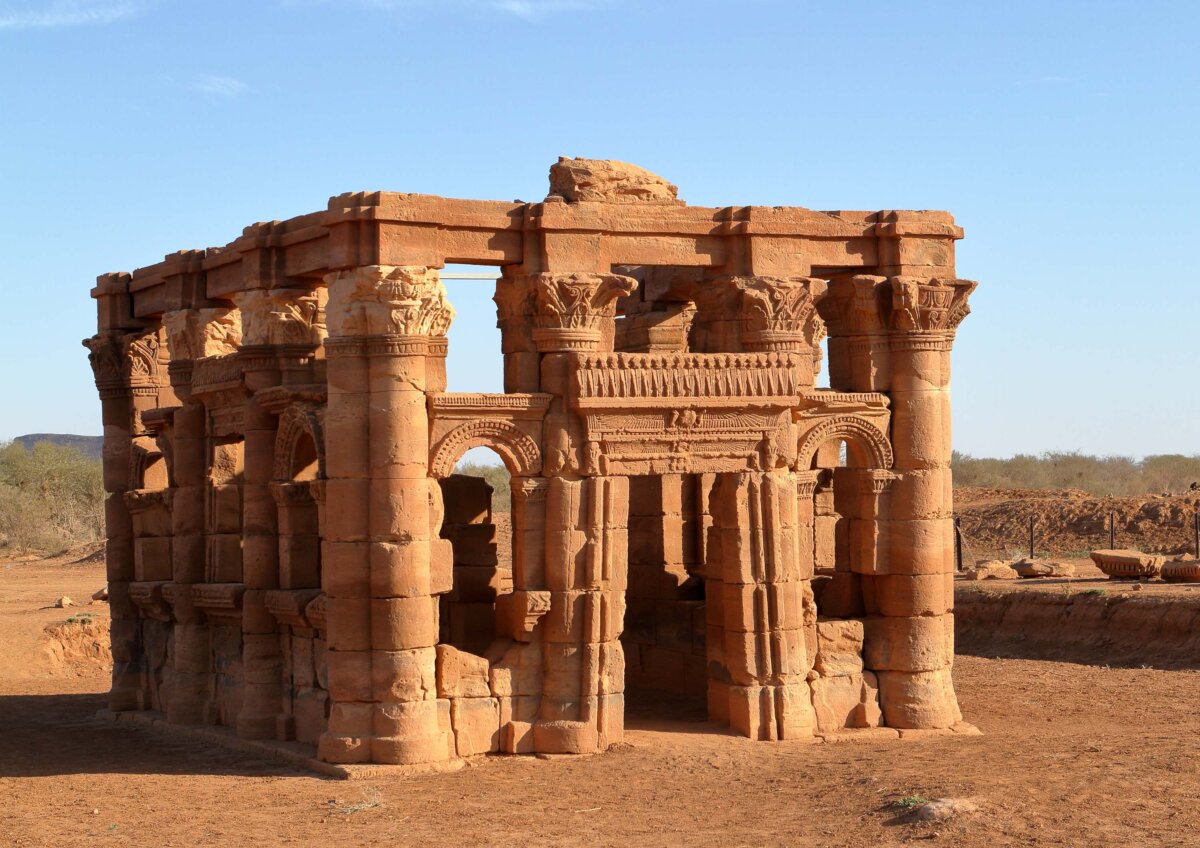
The architectural and material culture of Meroe shows clear Egyptian influence, as the use of pyramids grew out of Egyptian ideas about royal burial and the afterlife. At Meroe, though, these traditions were reworked using local customs, materials, and architectural preferences, often with influences from distant cultures. This is especially visible in the decoration of the pyramid temples, which blends Egyptian elements with Hellenistic Greek and Roman styles. The Roman Kiosk at the Naqa stands out as the clearest example of this architectural crossover: While it retains the form of a small Egyptian shrine, it is richly decorated with Corinthian columns and Roman-style arches.
Jewelry offers equally telling evidence of this cross-cultural exchange, with many pieces showing Hellenistic influence through the use of precious stones and colorful enamel inlays, set within intricate gold settings for dramatic contrast.
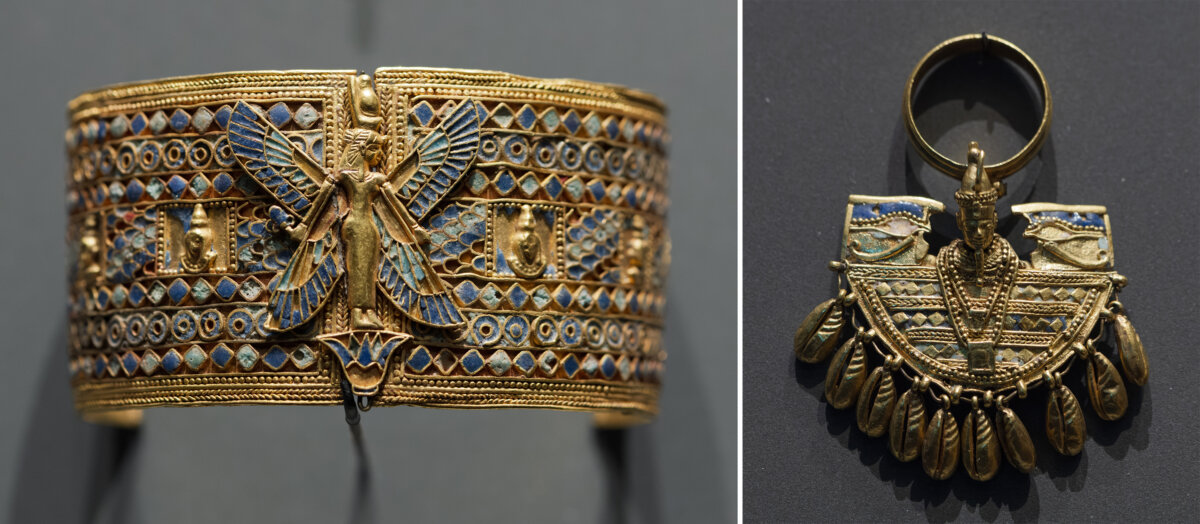
After ransacking Amanishakheto’s pyramid, Ferlini and Stefani returned to Italy. In 1838, Ferlini published an account of the expedition. He and Stefani traveled to present the objects to scholars and try to sell some pieces. They were met with skepticism. The British Museum, for one, declined to purchase part of the collection after experts judged the objects fraudulent. Part of the collection was later acquired by King Ludwig I of Bavaria and is now held by the State Museum of Egyptian Art in Munich.
Protecting What Remains
Archaeology as it’s practiced today is a relatively young discipline, having taken shape mostly over the past two centuries. Over that time, the field moved away from hunting for valuable objects to documenting artifacts for deeper cultural and historical understanding.
That evolution has shaped how Meroe itself has been studied and safeguarded. In 2011, the Archaeological Sites of the Island of Meroe were designated a UNESCO World Heritage Site in recognition of their historical and archaeological significance. Even so, the pyramids remain vulnerable to environmental damage, limited conservation resources, and political instability. Sudan’s tourism industry, which once drew an estimated 150,000 visitors a year, has declined sharply amid political unrest, economic sanctions, and ongoing conflict, all of which have restricted access to archaeological sites and made regular maintenance and conservation difficult. Recent estimates place annual visitor numbers below 15,000, and some sources say that tourism has come to a standstill.
Nearly two centuries after Ferlini’s pickaxe first broke ground at Amanishakheto’s tomb, the pyramids of Meroe still stand as a record of a civilization shaped by both its own traditions and the wider world around it. Protecting what remains, amid instability and shrinking resources, is now as much a part of the site’s story as its ancient builders.
What arts and culture topics would you like us to cover? Please email ideas or feedback to features@epochtimes.nyc.