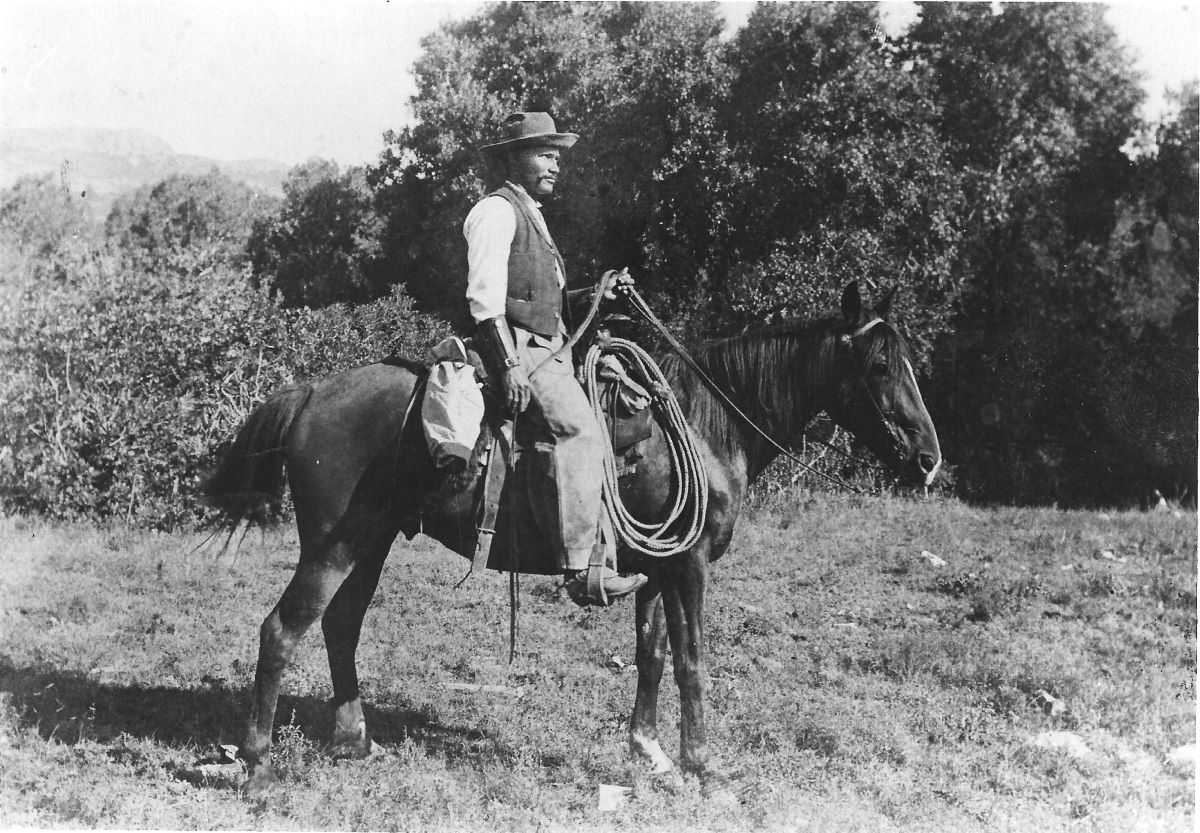
In the mesa and grassland country outside Folsom, New Mexico, a cowboy named George McJunkin rode the open country with the curiosity of a naturalist, studying rocks, weather, fossils, and the changing landscape around him. He had little formal education, but he taught himself relentlessly, collecting books and scientific instruments and developing an appetite for knowledge that carried him well beyond the practical demands of ranch life.
The event that would make him famous began with a violent storm in August 1908. Floodwater scoured Wild Horse Arroyo near Folsom, exposing layers of earth that had been hidden for thousands of years. McJunkin noticed enormous bones protruding from the arroyo bank, roughly 11 feet below the surface. They were recognizably bison, but much larger than the bones of animals he had encountered on the range.
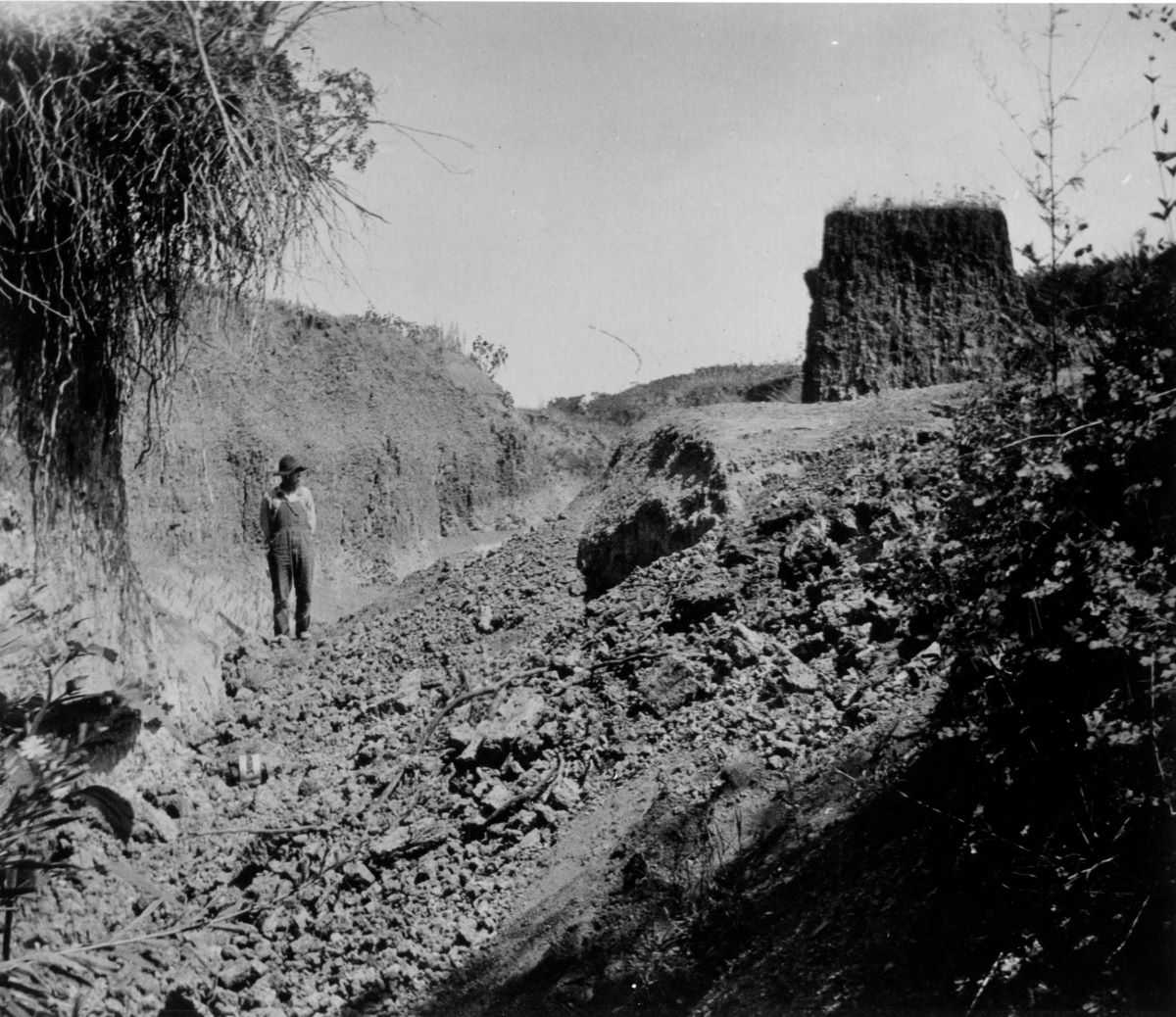
McJunkin understood that the bones were old—very old. He began trying to interest scientists and institutions in the site, sending letters and urging others to investigate what he had found. He managed to interest local amateur fossil collectors, but no thorough professional excavation took place during his lifetime. The discovery waited in the New Mexico earth while McJunkin returned to the work he knew: horses, cattle, weather, and the long horizons of ranching country.
A Cowboy With a Curious Mind
Born in Texas in the 1850s, McJunkin became a skilled cowboy and eventually settled in the Folsom area. He worked at the Crowfoot Ranch, where he became foreman.
His interests ranged far beyond cattle. He taught himself to read, played the violin, studied weather and geology, collected fossils and minerals, and regularly used a telescope to study the night sky.
A landscape was more to McJunkin than a place to work. It was evidence. A fossil, a rock formation, a storm cloud, or a distant star could raise a question, and questions were worth pursuing. There was a certain pulchritude in that combination of practical knowledge and restless curiosity.
And, indeed, the bones at Wild Horse Arroyo proved worth pursuing.
The Discovery at Folsom
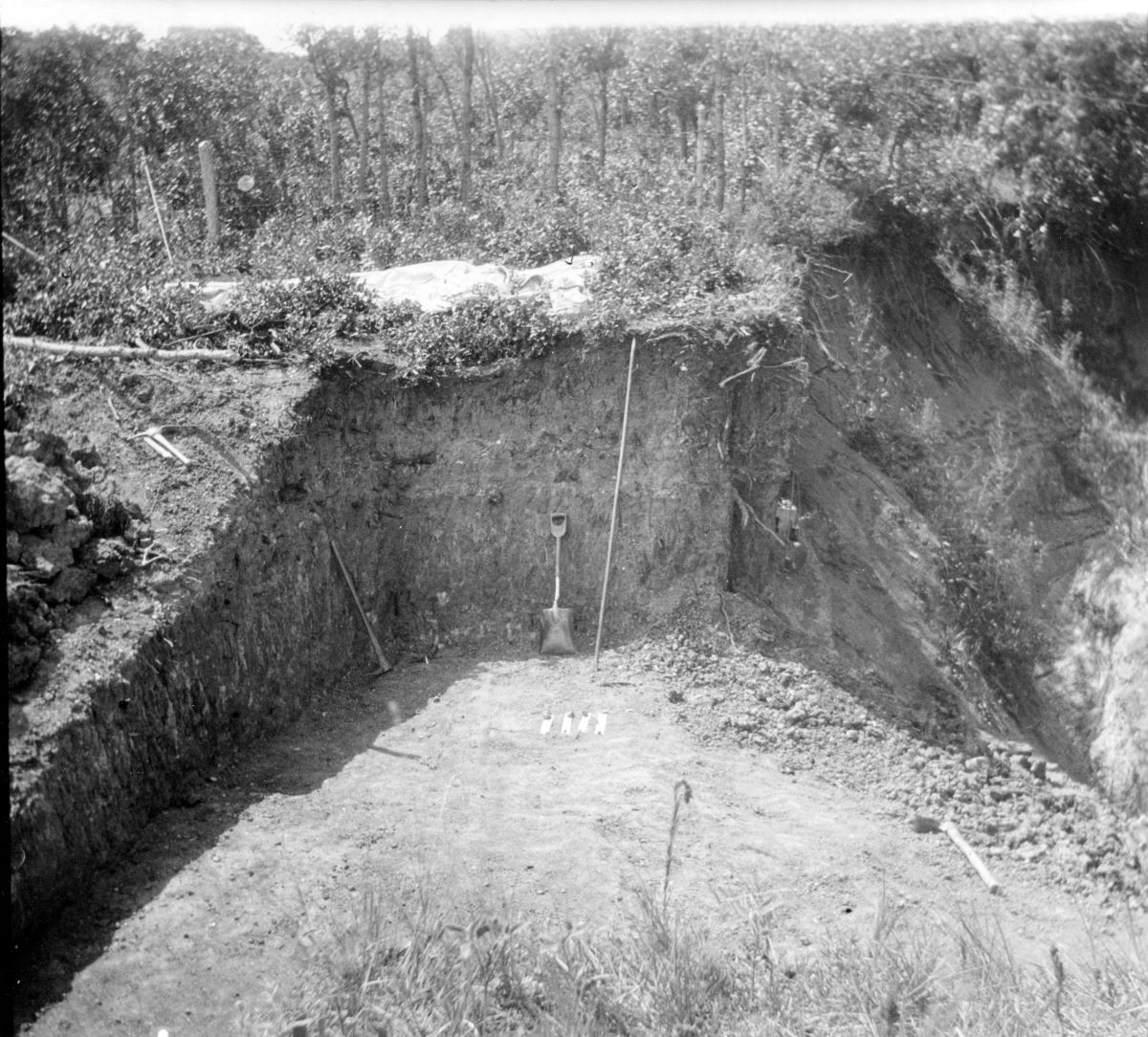
McJunkin died in 1922, without seeing the archaeological discovery that would eventually transform the significance of the site. Four years later, the Colorado Museum of Natural History began excavating the locale, initially seeking specimens of the extinct bison later identified as Bison antiquus.
Excavators recovered fragments of fluted stone projectile points. Some were found in loose soil removed by mule teams, while another was discovered among bison ribs. Because the early finds did not provide the secure archaeological context scientists wanted, an important question remained: Had people actually hunted these extinct animals?
The crucial evidence came the following summer.
On Aug. 29, 1927, another projectile point was found in place among the ribs of the Bison antiquus. The find was left in position for examination by outside experts, including prominent archaeologists and paleontologists. Additional points were observed in their original positions, providing convincing evidence of an association between human-made tools and the extinct Ice Age bison.
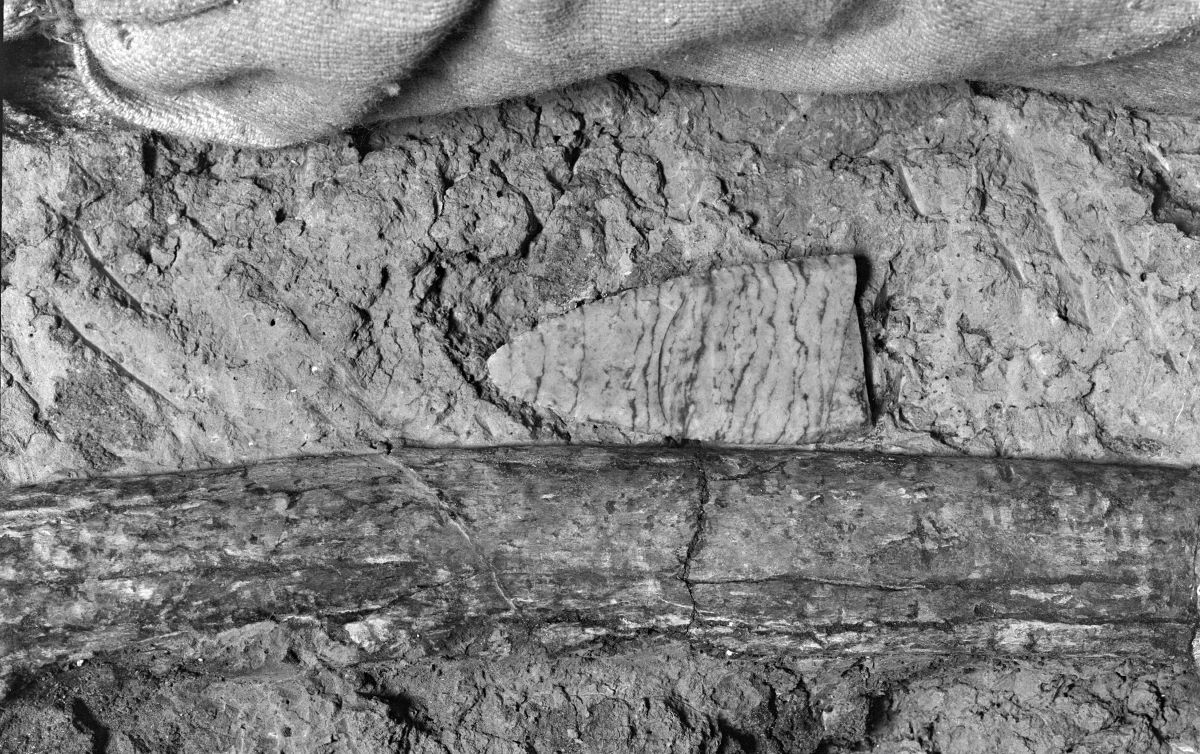
The implications were enormous. The Folsom evidence helped establish that people had been living in North America during the Ice Age, thousands of years earlier than many archaeologists had previously believed. The distinctive fluted projectile points became known as Folsom points, and the Folsom site became a landmark in American archaeology.
There is an important distinction in McJunkin’s story. He did not personally find the projectile point or establish that humans had hunted the ancient bison. His achievement was discovering the fossil and recognizing that the enormous bones deserved scientific attention. The later excavations supplied evidence that connected the prehistoric animals with human hunters.
Perhaps that makes his story more remarkable, not less. It’s a reminder that discovery does not always begin in a laboratory. Sometimes, it begins with somebody riding through an arroyo after a storm and noticing that something is different.
The scientific world McJunkin hoped would pay attention eventually did. The Folsom discoveries changed the discussion over the antiquity of human habitation in North America and helped establish knowledge of the great age of Paleoindian hunting traditions. The evidence came gradually, through excavation, skepticism, argument, and confirmation.
More than a century after the 1908 flood, the Folsom site remains a landmark of Paleoindian archaeology. The bones and tools continue to tell the story of people who lived on the continent during the Ice Age. And behind that story stands McJunkin: cowboy, ranch foreman, naturalist, amateur astronomer, and relentless observer.
What arts and culture topics would you like us to cover? Please email ideas or feedback to features@epochtimes.nyc.