



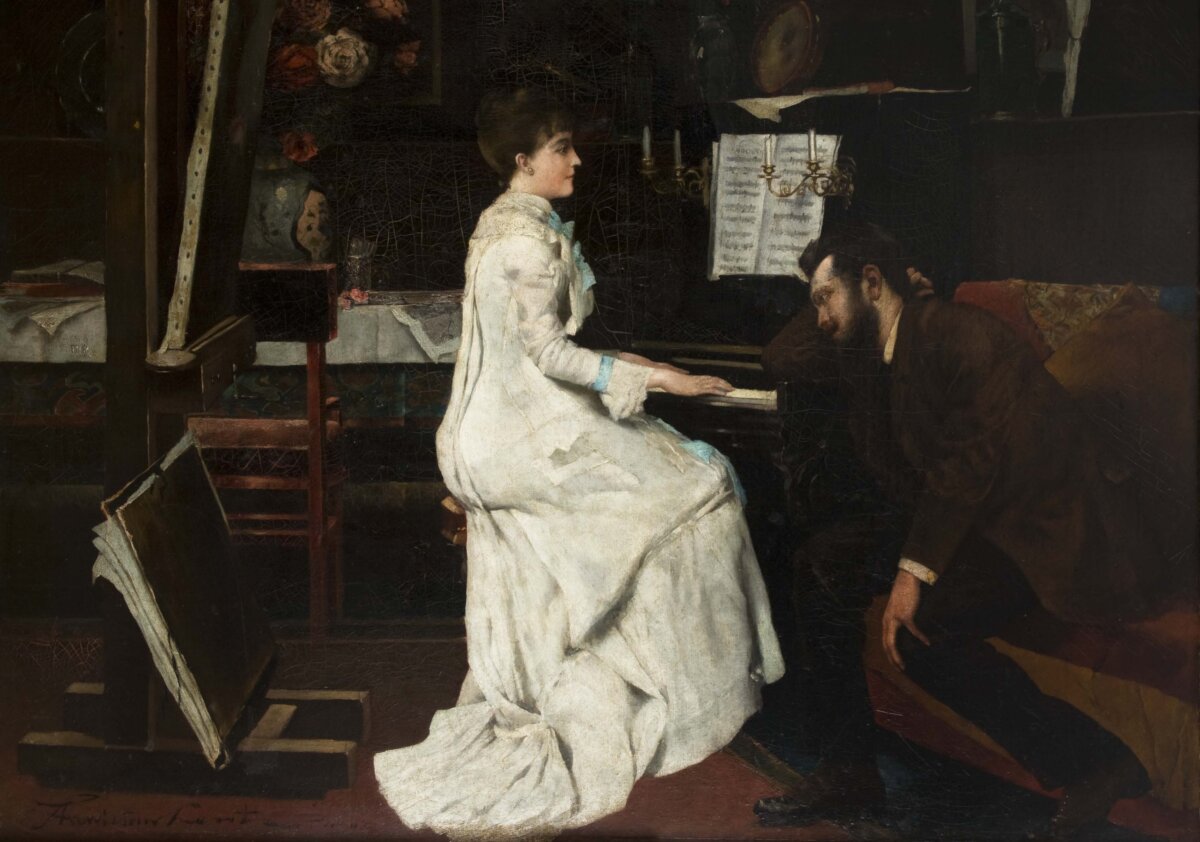
When Robert Schumann met Clara Wieck in the spring of 1828, little did they know their relationship would transform into one of classical music’s greatest love stories.
While visiting Wieck’s house as a teenager, Schumann was mesmerized by her piano playing. He asked about her teacher, and learned it was her father, Friedrich. With a desire to undertake a serious study of music, Schumann became one of his promising students. Schumann and Wieck developed a deep bond as they studied classical music together. Eventually, friendship blossomed into romance, and they talked of marriage.
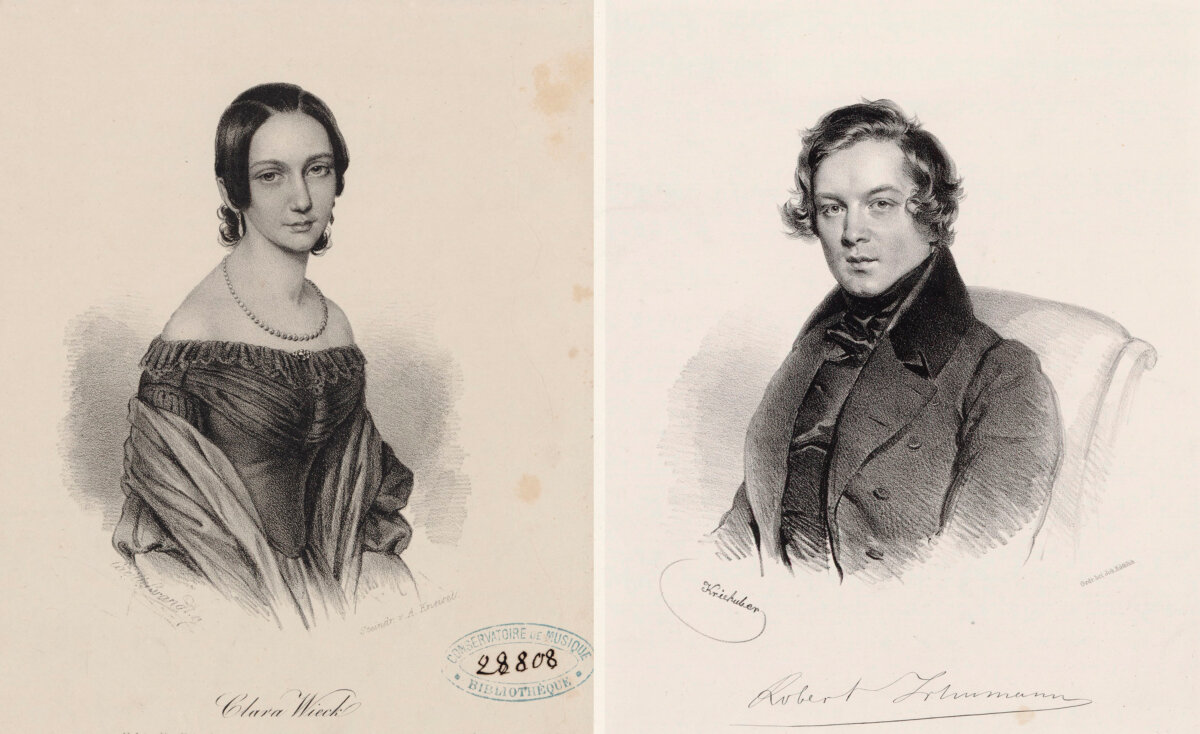
But Wieck’s father didn’t approve. He thought Schumann would not be able to provide his daughter with stability due to his vocation as a musician. Wieck was already a renowned concert pianist at this time. So, in order to prove himself a reliable provider, though Wieck made her own living as a renowned concert pianist, Schumann began the most prolific creative period of his life in 1840, known as his “Year of Song.”
With his love for Wieck and their hope for marriage as his guiding muse, he produced around 140 individual compositions during that time. One of the songs, “Mondnacht,” or “Moonlit Night,” a dreamlike expression of earth and heaven’s partnership, helped establish Schumann as one of the Romantic era’s most dedicated and influential composers.
But would it be enough to win over Wieck’s father, so Schumann could have her hand in marriage?
Elevating the Voice
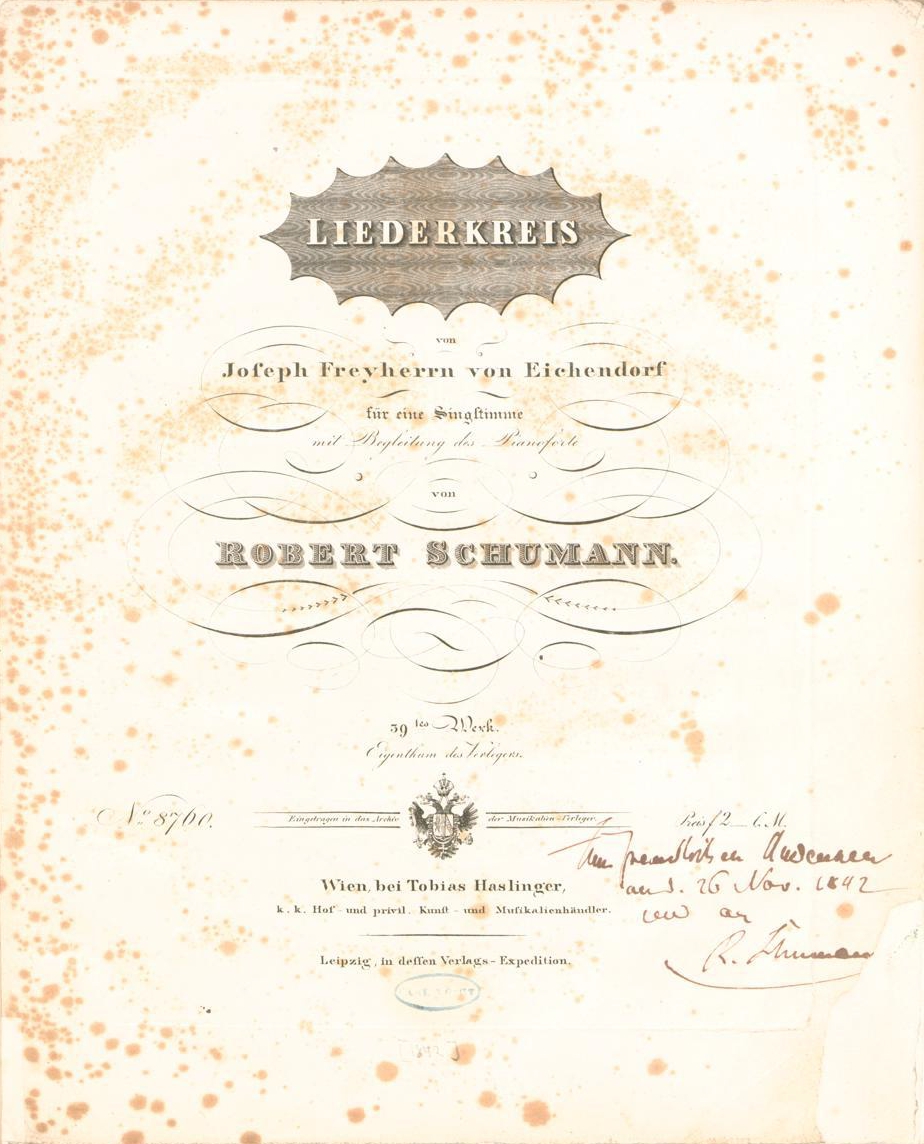
One of his lasting works from his “Year of Song” is the 12-song compilation, “Liederkreis, Op. 39.” “Liederkreis” is German for “song cycle,” and the most famous composition from the series, “Mondnacht,” brings to music the flight of the soul in search of beauty, nature, and divinity. It also embodies the essence of “Liederkreis, Op. 39,” and what Schumann meant when he wrote in a letter that the song cycle was “my most romantic music ever, with much of you in it, dearest Clara.”
In another letter to Wieck, he wrote, “What bliss it is to compose for the voice!”
In mid-19th century Europe, Schumann became one of Germany’s leading composers of art song, a style of Western classical music focusing on a solo vocalist and single instrument for accompaniment. With compositions like “Mondnacht,” he blended vocal melody with the melody and bass work of a lone piano and created sensual appeal and emotional pull within a classical framework, elevating the voice to the same rank as other revered instruments.
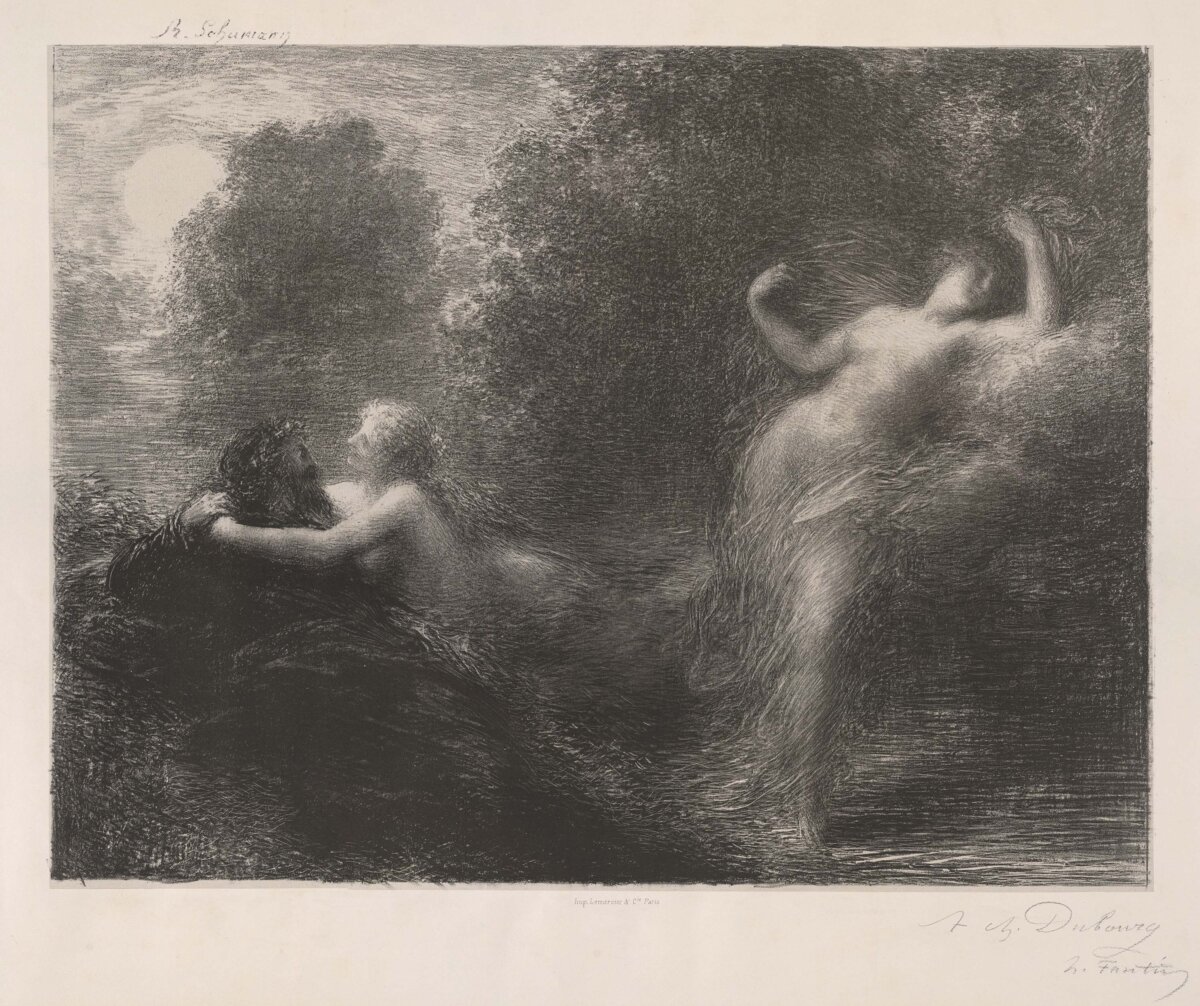
Like the moon itself, Schumann’s “Mondnacht” establishes a gentle yet assertive presence. He originally wrote the composition in the key of E major as a melody set to a poem by German writer Joseph von Eichendorff that shares the song’s title. The stanzas sung in German wrap the listener in a vivid landscape, referencing radiant blooming flowers, fields of grain swaying in a breeze, and a clear, starry sky. By the end of the song, the vocalist sings of the soul having wings:
And my soul spread
Its wings out widely,
Flew through the silent lands
As if it flew toward home.
The central image of the composition focuses on the connection individuals have with a universal presence, and it is made all the more impactful due to the combination of artistic disciplines—music and poetry—and Schumann’s skill as a composer. “Schumann matches the art of the poet in richness, nuance and form, creating a context in which verbal and musical elements embrace and reinforce one another,” wrote classical music magazine Interlude. “The human soul is yearning for a reunion with the universal soul of the divine in a search for a fleeting moment of bliss and fulfilment.”
The Magic of a ‘Nocturne’

In the fall of 1840, Schumann and Wieck were finally and officially married. After an extensive legal battle with Wieck’s father, they tied the knot on the eve of her 21st birthday—the legal age at the time in Leipzig, Germany when a woman no longer needed permission from her father. Though Wieck’s father never gave them his blessing, the couple remained married and dedicated to each other for 16 years before Schumann’s cognitive decline and eventual death in 1856.
It is hard to imagine an upside to the couple’s long-fought road to marriage, but there is a silver lining. Without her father’s refusal, listeners would have never been graced with some of the Romantic era’s most sensitive and inspiring works, including the timeless and captivating “Mondnacht.” Interlude refers to it as “quite possibly the world’s loveliest vocal nocturne.” The nocturne’s purpose to invoke the feelings of nighttime in listeners made it one of Romanticism’s preferred song styles.
In only a few short minutes, this lovely nocturne reveals much. It reminds listeners of the unbreakable link between the natural world and the spiritual one. It gives us a distinctive image of the beauty of a winged soul taking flight. And it is a moving individual example of Schumann’s body of work—a body of work dedicated just as much to artistic excellence as it was to the love he had for his “beloved wife,” which he often called her.
It was a love that began for the German composer as a young man and one that would endure for nearly half his life; a love the composer made everlasting with stirring songs like “Mondnacht.”
What arts and culture topics would you like us to cover? Please email ideas or feedback to features@epochtimes.nyc.
