Americans aren’t particularly known for looking in the rearview mirror. We’re a forward-looking people, far more interested in the future, and this can be a good thing. Beginning in 1607 with the settlers in Virginia, and continuing to the present, people have come to these shores with dreams of bettering their lives and liberties. The Founders who made a republic looked to history for ideas and inspiration, but they envisioned a country where citizens had the right to pursue happiness, that is, to live freely while creating their own future.
Unfortunately, educational trends over the last 50 years have reinforced American tendencies to neglect the past. Young people today know less about their country’s history than their parents did, and parents know less than their grandparents did. The past has become not only a foreign country but also one that fewer bother to visit.
Today’s influx of digital news and social media, with sensational stories and reports, contributes to the erosion of long-term memory by washing away yesterday’s headlines. For Americans, time doesn’t march on anymore. It sprints.
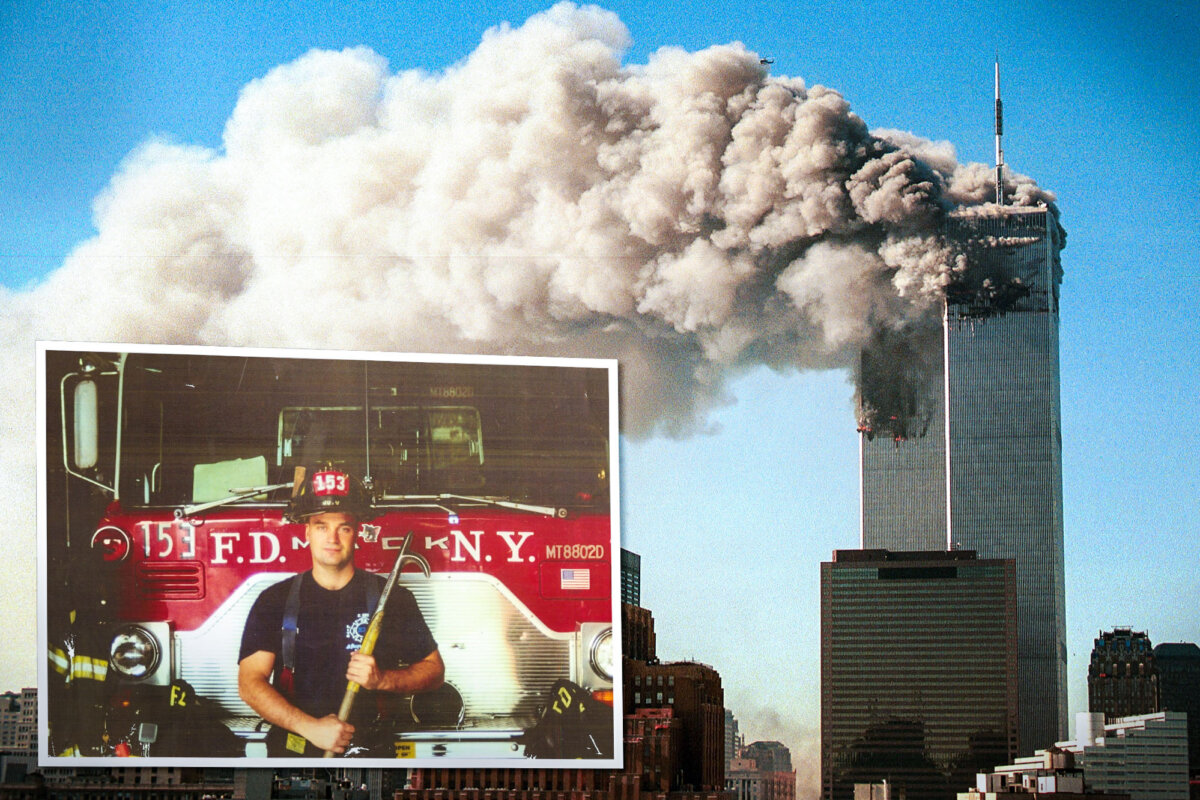
All that aside, now is a time to pause, to push away the day’s headlines and societal obsessions, and to reflect on the events that occurred 25 years ago on Sept. 11, 2001.
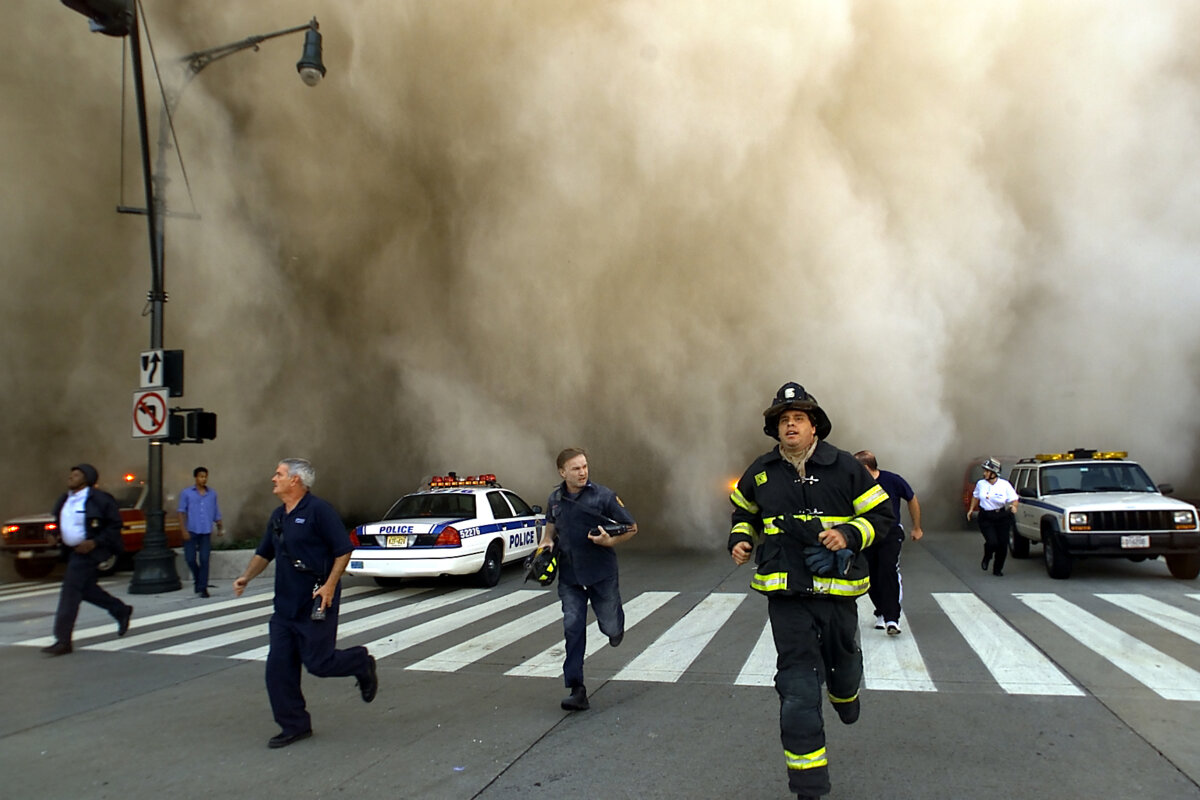
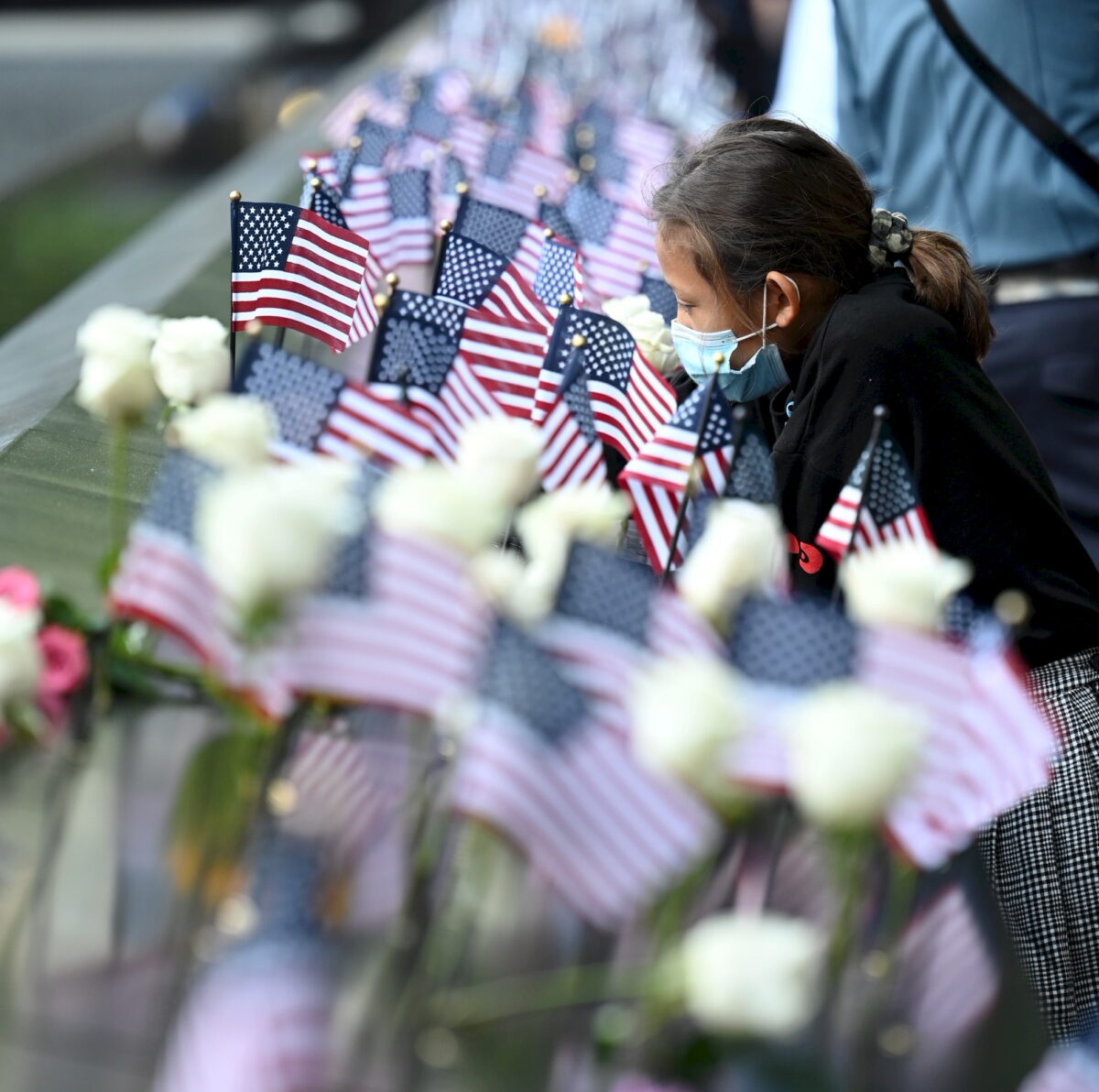
It’s time to remember 9/11 and the hundreds of ordinary Americans who on that day gave their lives for others and died as heroes.
The Numbers
While some lingering uncertainty remains about the exact number of deaths at the World Trade Center, Britannica cites that 2,977 died in the 9/11 attacks, which doesn’t include the 19 terrorists who had hijacked the four planes. A total of 2,753 people died in the twin towers attacks. Another 184 people died either in the Pentagon or aboard American Airlines Flight 77, while 40 people died on Flight 93 when it crashed into a field outside of Shanksville, Pennsylvania.
In New York City, almost 10,000 more were treated for injuries suffered during the attack. In the years afterward, thousands more died or suffered debilitating health problems from the toxic gases, smoke, and chemicals unleashed by the explosions and fires.
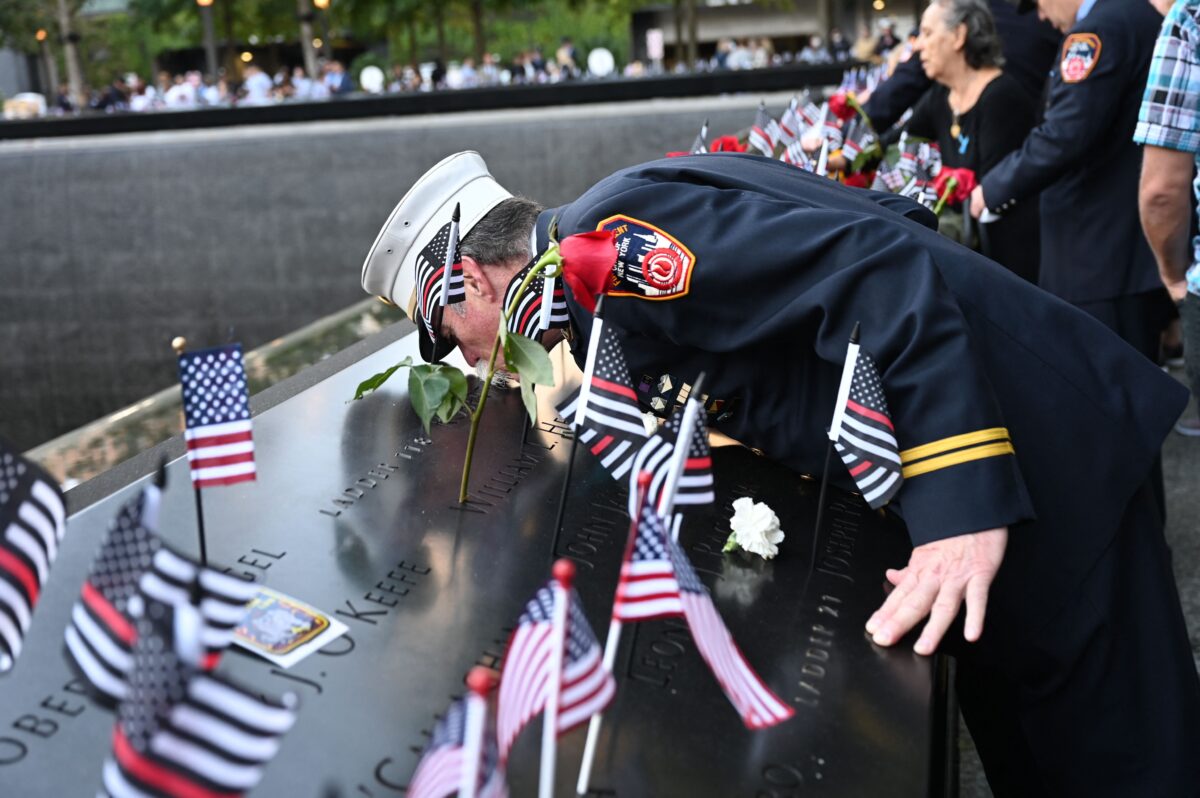
Often overlooked in such tallies of disaster and war are those who were left behind—the grieving spouses and lovers, mothers and fathers, siblings, children, other relatives, friends, and fellow workers. They don’t make the casualty lists, yet 9/11 left uncounted thousands of grieving victims whose lives were forever changed.
But these are just numbers. Lists. Statistics. A quote misattributed to another murderer, Josef Stalin, sums up the often-hollow impact of such body counts: “The death of one man is a tragedy, the death of millions is a statistic.”
Until we listen to their voices and see their faces.
‘Know That I Love You Always’
Within the first 10 minutes of the first plane strike, more than 1,000 telephone calls went out from the towers. Thousands more followed. Some were frantic pleas for help from emergency services. Others were made to loved ones.
A YouTube documentary, “9/11: Phone Calls From the Towers,” offers a compilation of news clips from the burning towers, interviews with some who lost loved ones in this horrendous attack, and actual calls made from the towers by men and women trapped by fire and choking on smoke. Listen to these calls, and those statistics become a living reality.
Melissa Harrington-Hughes, an entrepreneur visiting the city for only the day, telephoned her husband, Sean, from the 101st floor of the north tower. They’d been married just over a year. He was in San Francisco and asleep when her tear-choked message was left on his answering machine. “Sean, it’s me. I just wanted to let you know I love you, and I’m stuck in this building in New York. There’s lots of smoke, and I just wanted you to know that I love you always.”
Stephen Mulderry, a basketball star in college and an equity trader, managed with some friends to climb to the top of the south tower but couldn’t get onto the roof because of a locked door. He phoned his mother, a call which again was received by an answering machine: “Mom, it’s Stephen. My plane … my building got hit by a plane. And right now … I think I’m okay. I’m safe now but it’s smoky. I just wanted to say how much I love you, and I will call you when I’m safe. Okay, Mom, bye.”
Many of those who were about to die offered love and reassurance to those they left behind.
This was one form of heroism on a day when heroism was the rule, not the exception.
To Lay Down Their Lives for Others
Among the dead that day in New York City were 343 firefighters, 23 police officers, 37 Port Authority Police Department officers, and eight paramedics. This amounted to more than a third of the emergency personnel at the scene. Firefighters are credited with rescuing thousands of the more than 17,000 people in the two buildings after the plane first struck the north tower.
Civilians and World Trade Center employees also stepped up to help others escape the burning buildings. Rick Rescorla, the 62-year-old vice president of security for Morgan Stanley Dean Witter, had prepared for such an attack. Born in Britain, an outstanding U.S. Army officer who’d won the Silver Star in Vietnam, and a teacher in law enforcement, he had trained employees in efficient evacuation.
With his planning and quick thinking—he ignored orders from the Port Authority to remain in the building—Rescorla is credited with rescuing 2,687 employees that day. Before reentering the damaged south tower to assist more people, he spoke with his wife: “Stop crying, I have to get these people out safely. If something happens to me, I want you to know I’ve never been happier. You made my life.” At another point, as he was entering the building again, a fellow employee asked him what he was doing and warned him against going inside. Rescorla replied, “As soon as I make sure everyone else is out.”
He died when the south tower collapsed at 9:59 a.m.
We can find the stories of others online who died in rescue attempts that day. Likely, there were more whose efforts to help someone down the stairs or navigate the smoke were buried and lost as the buildings came crashing down.
Flight 93
Aiming to crash either into the White House or, more likely, the Capitol, the terrorists on United Airlines Flight 93 were at a greater disadvantage than their comrades on the other three aircraft. For one, their team was a man short, with two in the cockpit and only two in the cabin with the passengers. For another, though their screaming and threats were intimidating, both hijackers in the cabin were not tall, no taller than 5 feet, 7 inches.
In their article “Remembering Flight 93: ‘Okay. Let’s Roll!'” James Reston Jr. and Richard Whittle compare the hijackers to their captives and note: “Among the passengers, by contrast, Todd Beamer was an athletic star in high school and college, six feet tall, weighing 200 pounds. Passenger Tom Burnett had been a high school quarterback in Bloomington, Minnesota. Mark Bingham had run with the bulls at Pamplona. Don Green was a wrestler in high school and at Brown University and licensed to fly small planes.”
There was a smattering of veterans as well. Once the group had coalesced, they assessed the situation, took a vote, and decided to attack the hijackers and try to take control of the plane. Flight attendants CeeCee Lyles and Sandy Bradshaw boiled water for use as weapons while other passengers seized table utensils and a fire extinguisher. After saying a prayer together, Lyles told her husband: “We’re getting ready to do it now. It’s happening!”
Led by Todd Beamer’s “Let’s Roll!” the passengers and crew overpowered the two guards. They were battering down the door to the cockpit when the terrorists piloting the plane turned the aircraft toward the ground and crashed into a Pennsylvania field. There were no survivors, but the attack by the passengers and crew prevented hundreds more deaths and foiled a plot of massive destruction aimed at the very heart of American history and government. It is one of the most extraordinary stories of courage in the history of our country.
Here we have barely touched on those Americans who gave their all on that September day 25 years ago. Explore online, find a book, or watch one of the movies and documentaries made about that day, and you’ll find many more stories of the sacrifices and generosity that accompanied that calamity. Share those stories with your children and grandchildren.
It’s time to remember.
What arts and culture topics would you like us to cover? Please email ideas or feedback to features@epochtimes.nyc.