Photography is more than a complex scientific process, but an art itself. One member of the highly artistic Moran family mastered this art when photography was in its first stages of development.
That man, John Moran (1831–1902), used his creative eye to pioneer the art of photography in 19th-century America.
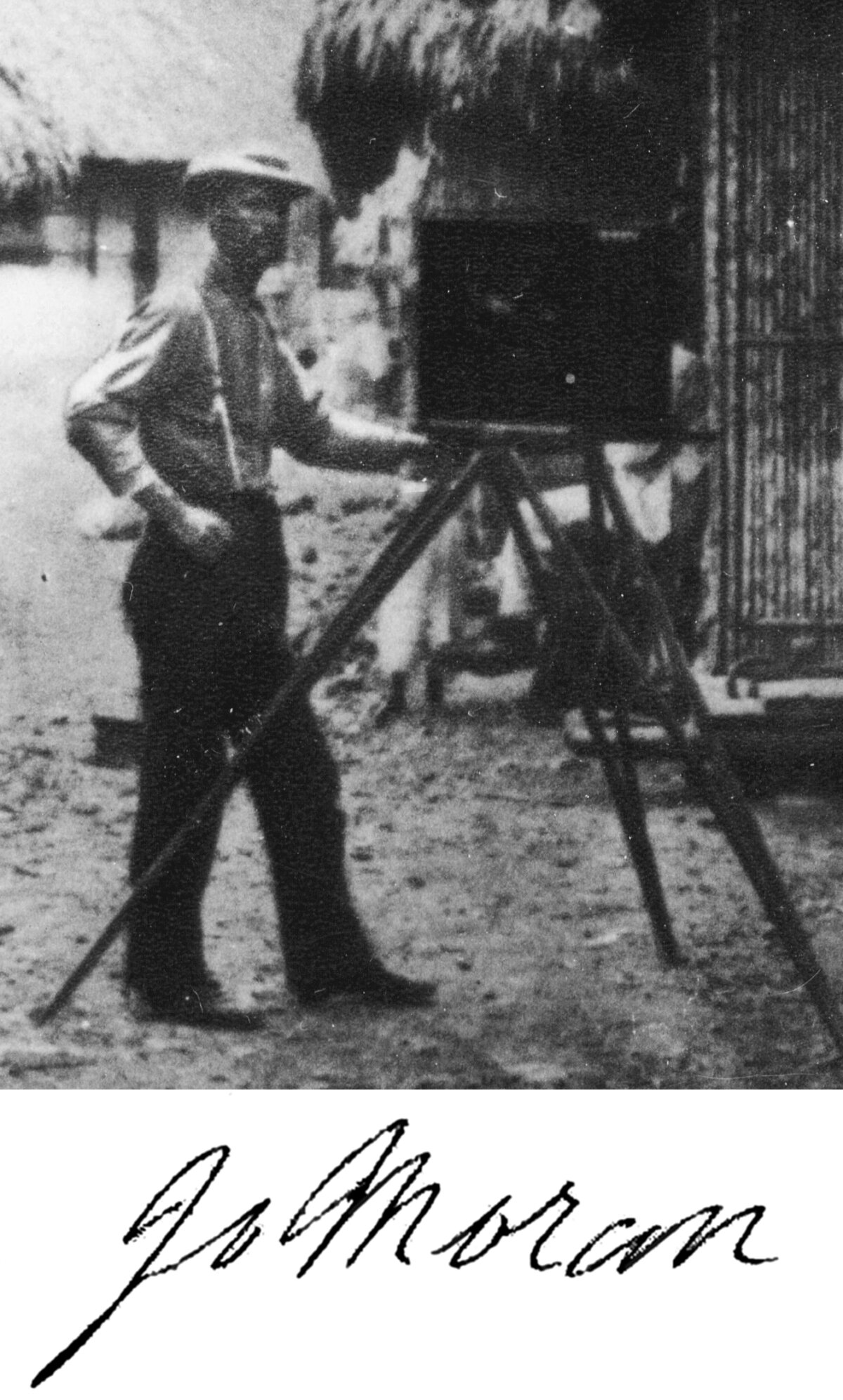
The Morans, handloom weavers in Lancashire, England, emigrated to the United States in 1844 when John was 13. They family of 8 children settled in Philadelphia in the mid-1840s. John was the second of four sons.
All four sons mastered an artistic endeavor, most famously the older brother Edward (1829–1901) and younger brother Thomas (1837–1926), both of whom were successful painters. The Moran clan also included wives, nephews, and children who engaged in the arts.
John pioneered the technique of photography and advocated for its consideration as an art form.
Photography as an Art
“Although the claims of photography to membership in the family of fine arts have been often pleaded with warmth and skill, they are still denied, the present occupants of the temple of beauty still refusing her admission, though the capacities of the edifice are ample, and contain room and verge enough for all.”
So Moran began his 1865 article “The Relation of Photography to the Fine Arts,” an entry in the weekly journal “The Photographic News.” In this short piece, he showed his ability to paint pictures with words as well as with a camera, as he eloquently pleaded the case he pioneered with his work.
Moran believed that photography is an art because it “speaks the same language, and addresses itself to the same sentiments.”
Since photography can be tried by the three dogmas of art (namely imitation, truth, and beauty), it can rightly be classified as a fine art rather than a science or mechanical work. Of course, he differentiates it from more creative arts, like painting or drawing, by acknowledging that the actual act of capturing an image is one done by the machine rather than the human hand.
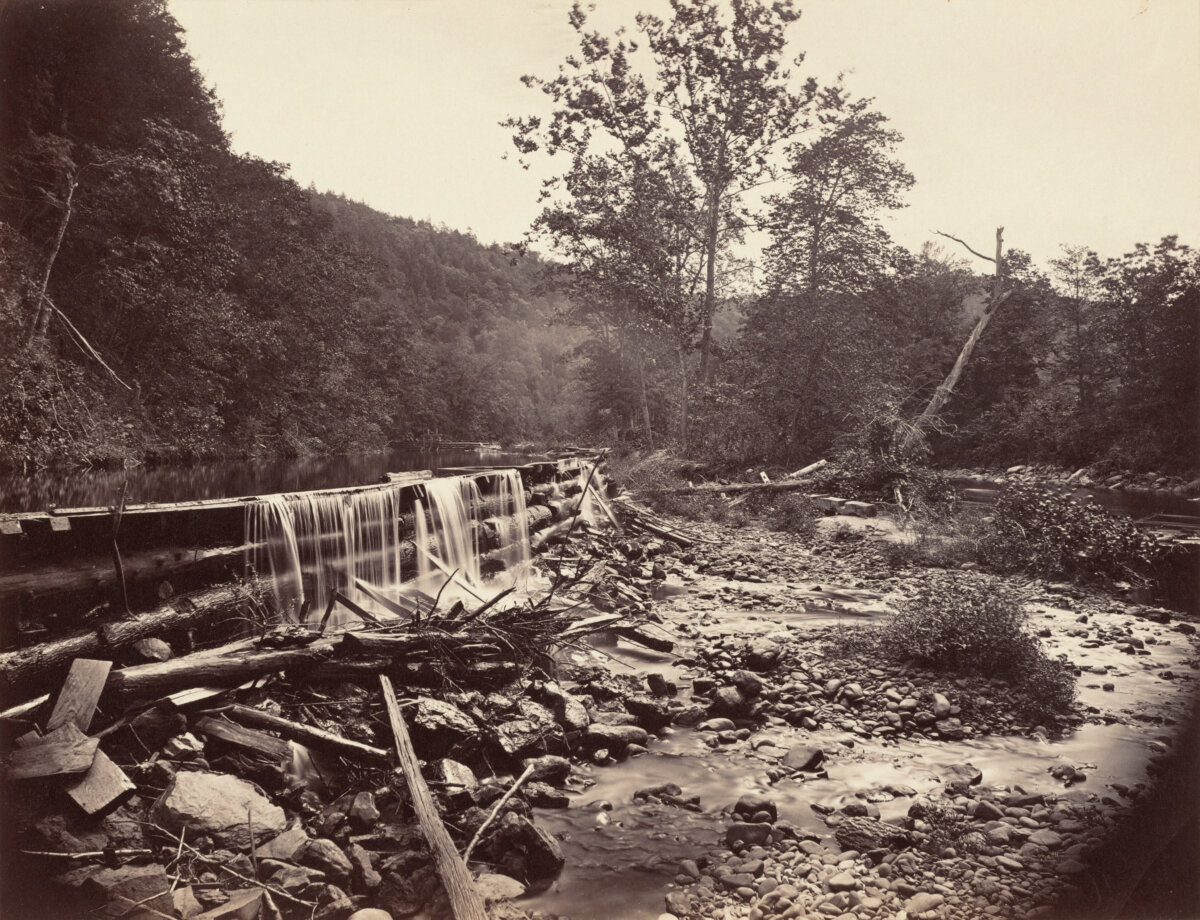
However, it takes an artist’s eye to choose the right subject, angle, and composition for a photograph, and “it is the power of seeing and deciding what shall be done, on which will depend the value and importance of any work, whether canvas or negative.”
Like most of the Moran clan, John’s home base was Philadelphia. During the 1860s, he established his reputation as an area photographer. He focused on landscapes, often photographing interesting buildings in the city as well as beautiful scenes of nature.
In the mid-1860s, Moran focused on two forms of photography which might be unfamiliar to modern shutterbugs—stereography and albumen prints. A stereoscope was a machine which allowed viewers to look at two similar images at the same time, producing a 3-D effect.
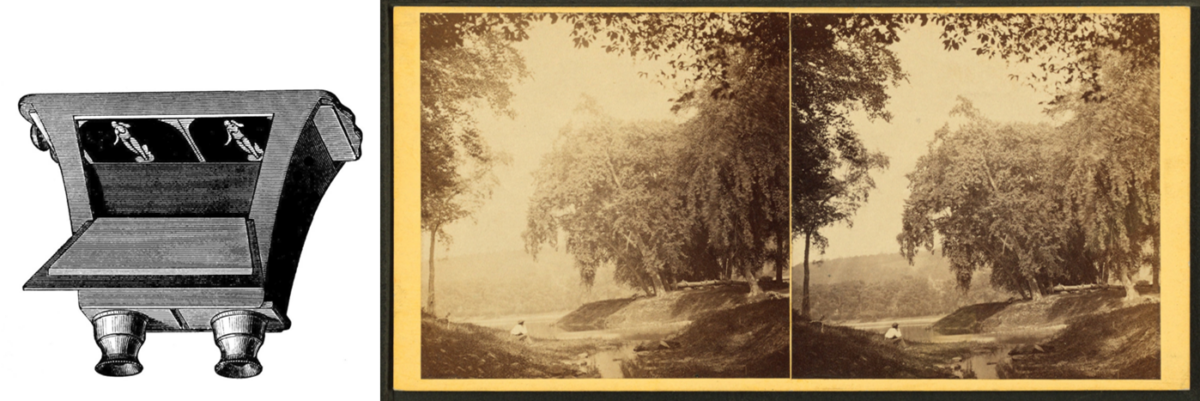
An albumen print is a positive photograph. It’s printed from a negative onto paper that is coated with egg whites. The negative is then dipped into a solution of silver nitrate to sensitize it. Because such photographs couldn’t be as easily reproduced as those made by later techniques, few original prints of his photos exist today.
Capturing Science
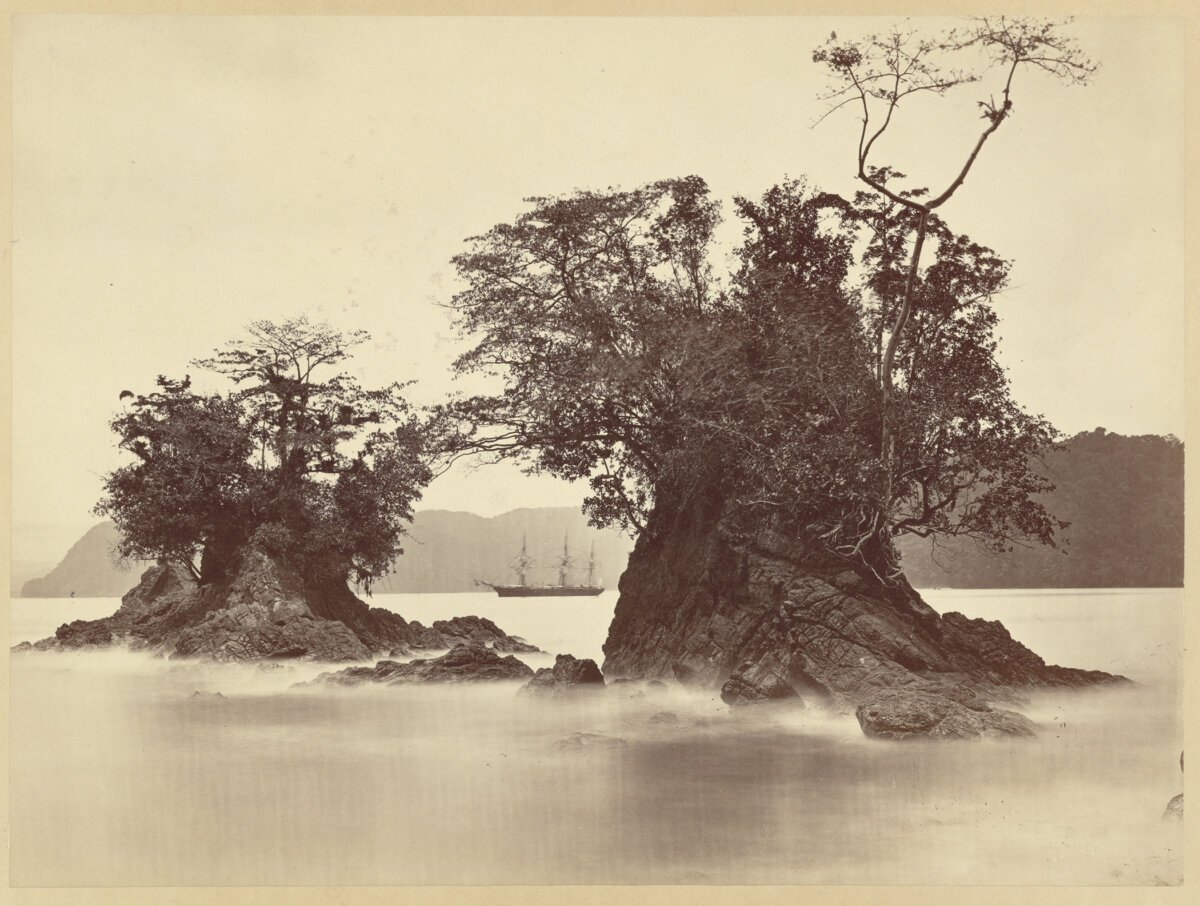
In the 1870s, John’s photographic skills were put to use for scientific purposes. In 1871, he accompanied the second U.S. government expedition to scope out the possibility of building the Panama Canal. This expedition was led by Cmdr. Thomas O. Selfridge and went by boat to the Isthmus of Darien in Panama.
Moran replaced Timothy O’Sullivan as the expedition’s official photographer. The expedition ended up proving that this site wasn’t a suitable location for the canal, but Moran’s photographs became popular purchases as stereographs because of their beauty.
In 1874, Moran traveled to Tasmania as a staff photographer on one of eight American teams. The expedition headed to the Southern Hemisphere to document the Transit of Venus across the sun.
He sent his reports back to the Philadelphia Photographer publication. Despite the clouds in the area, he contributed to the American teams’ collective capturing of 300 photographs of the rare astronomical event.
A True Artist
Although photography developed a great deal during Moran’s lifetime, he chose not to continue in this field as photography was using new methods. According to his obituary, Moran lost interest in photography as the dry-plate process replaced the wet-plate or collodion process he’d used. In subsequent years, he turned to painting.
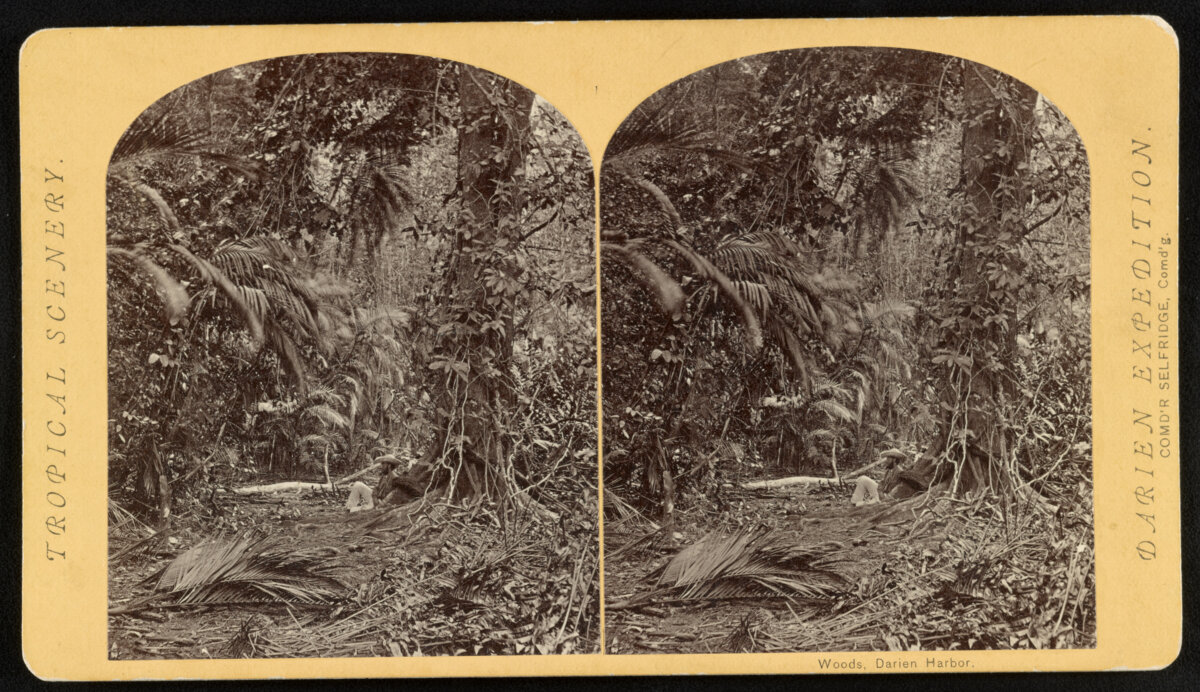
His brothers, Edward, Thomas, and Peter, are subjects in many of his photographs. John used them to provide a sense of scope and perspective in landscape shots. He enjoyed working alongside his brothers to set up the ideal angle for a photograph while they sketched the same subject.
John worked closely with Thomas, the third brother, since both specialized in landscapes. It’s interesting to compare John’s photographs with Thomas’s paintings of the same subjects.
While Thomas accentuated colors in his oil paintings, John highlighted shadows and lines, since his photographs were black-and-white. John’s paintings also focused on landscapes.
Though he’s been eclipsed by his brothers as artists and by his Western colleagues as a landscape photographer, John deserves credit as a pioneer of the art of photography, particularly on the East Coast.
His existing photographs, are available for viewing online from the Smithsonian American Art Museum, the National Gallery of Art, and the Graeme Park Archives, the latter of which features his architectural photographs.
In all his photographs, Moran did more than use a combination of paper and chemicals to reproduce a subject. He used that artistic eye inherent to his family.
He created vivid, beautiful images that remain captivating over 150 years later. As he himself said: “There are hundreds who make chemically faultless photographs, but few make pictures.”
What arts and culture topics would you like us to cover? Please email ideas or feedback to features@epochtimes.nyc.