Visit Washington’s Bartholdi Fountain and Garden at sundown for a water and light display, courtesy of the man who sculpted the Statue of Liberty.
French artist Frédéric Auguste Bartholdi (1834–1904) designed the “Fountain of Light and Water,” commonly known as the “Bartholdi Fountain,” for the first official world’s exposition held in America. Held in Philadelphia, the “Centennial Exposition 1876” commemorated the 100th anniversary of America.
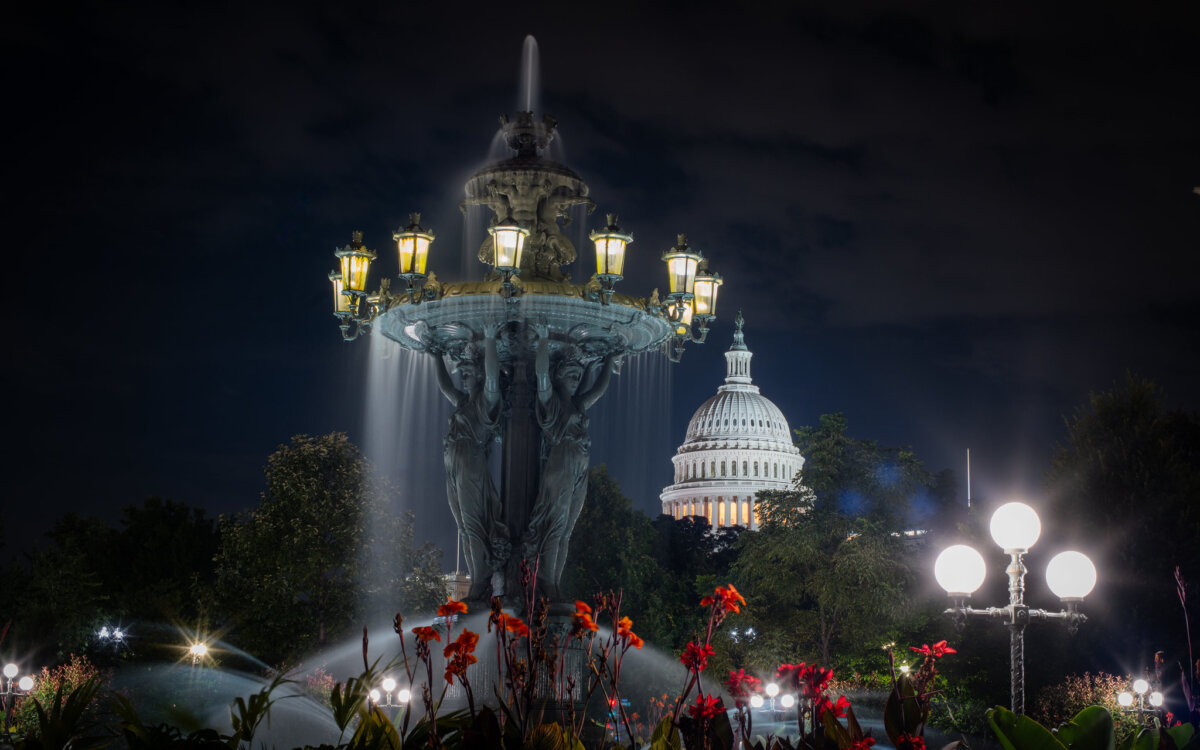
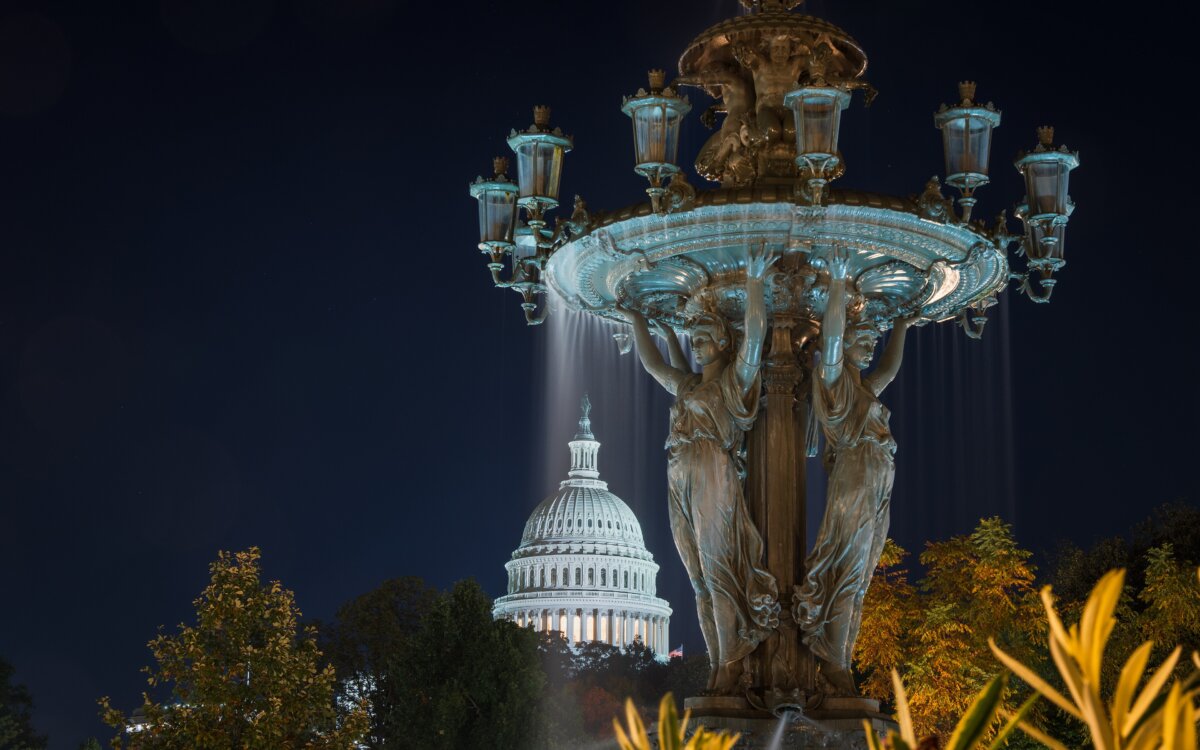
According to the United States Botanic Garden, “Bartholdi saw [the fountain’s] combination of iron, gas light and water as symbolically appropriate for a modern city.”
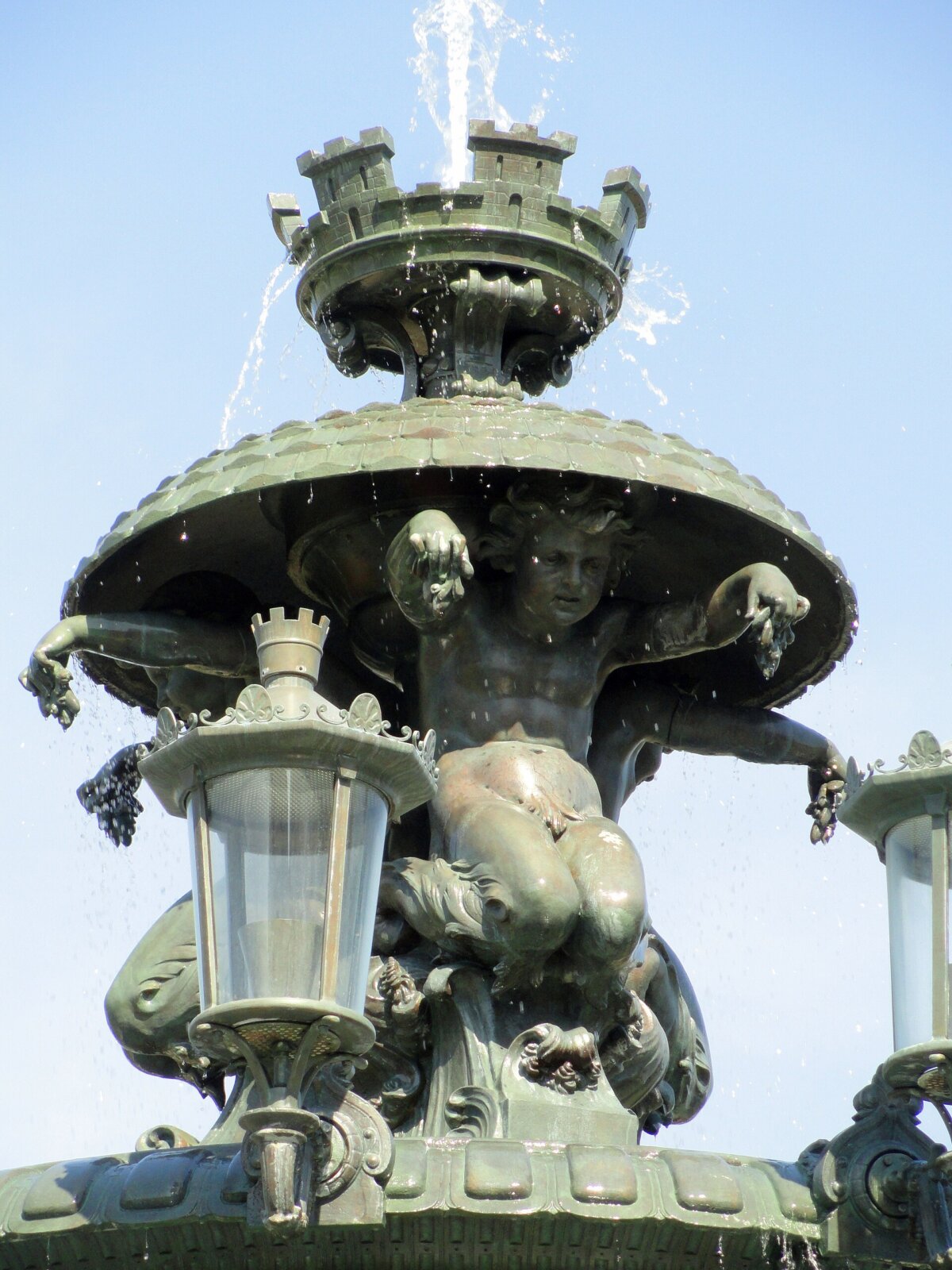
Just like his “Statue of Liberty,” Bartholdi’s 30-foot cast-iron fountain included Renaissance and classical motifs. Three 11-foot nereids (water nymphs) hold the fountain bowl aloft, above their heads. Atop the fountain bowl, three crouching tritons dangle “wet” seaweed from their hands. A mural crown, in a crenelated city wall design, tops the fountain.
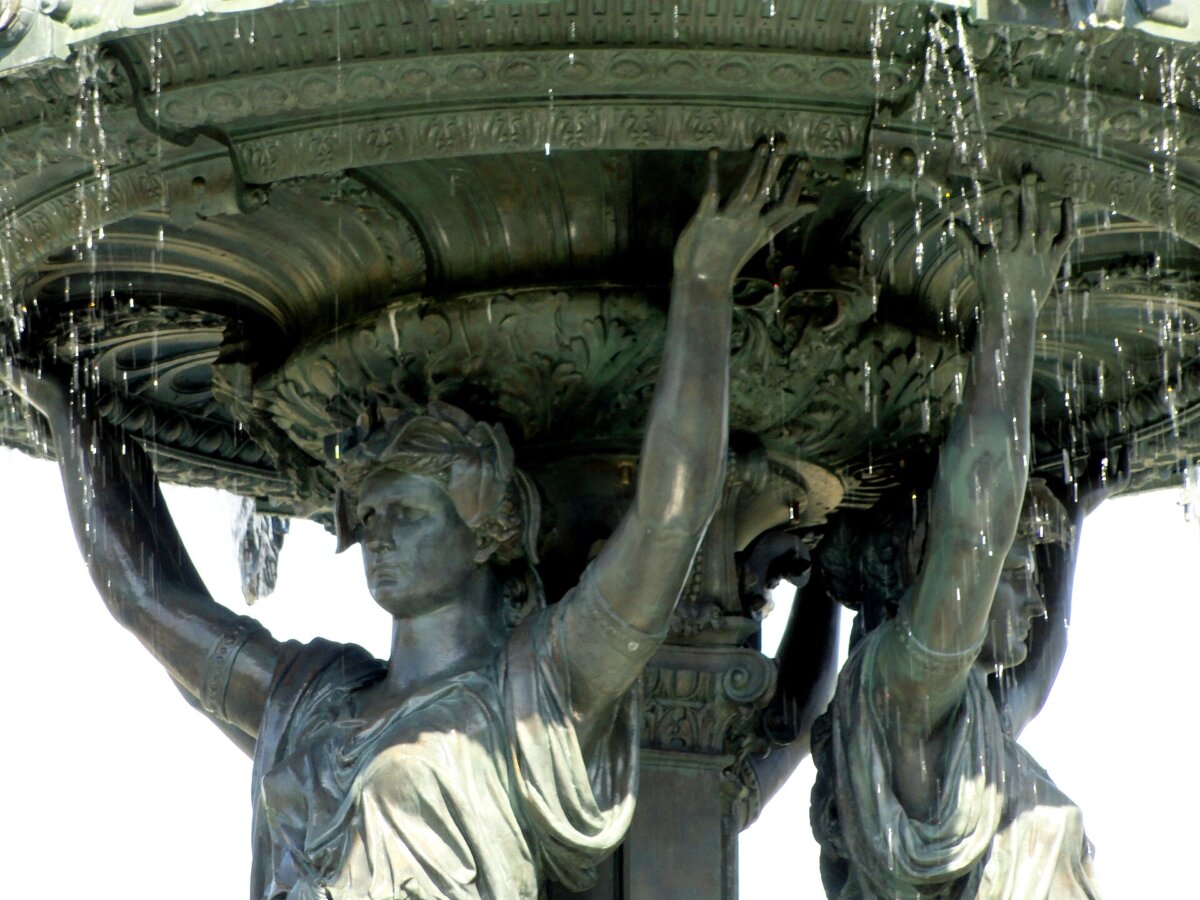
The three nereids resemble the famous ancient Greek caryatids, female figures that support the porch of the Erechtheion in Athens. But unlike their Greek counterparts, Bartholdi’s nereids are purely decorative; it’s the classical-style column behind them that structurally supports the fountain bowl. A closer look also reveals the leafy headdresses that adorn the graceful nereids. They stand on tiptoes among coral, seashells, and spouting fish, all of which indicate these nereids are seawater nymphs. Turtles at the fountain base spout jets of water into the pool below.
In the 1880s, the “Bartholdi Fountain” was one of Washington’s first illuminated visitor attractions. Gas lamps surrounding the fountain bowl are long gone, and now electricity powers the light-fantastic 150-year-old fountain, shining ever brightly after its full restoration in 2011.
What arts and culture topics would you like us to cover? Please email ideas or feedback to features@epochtimes.nyc.