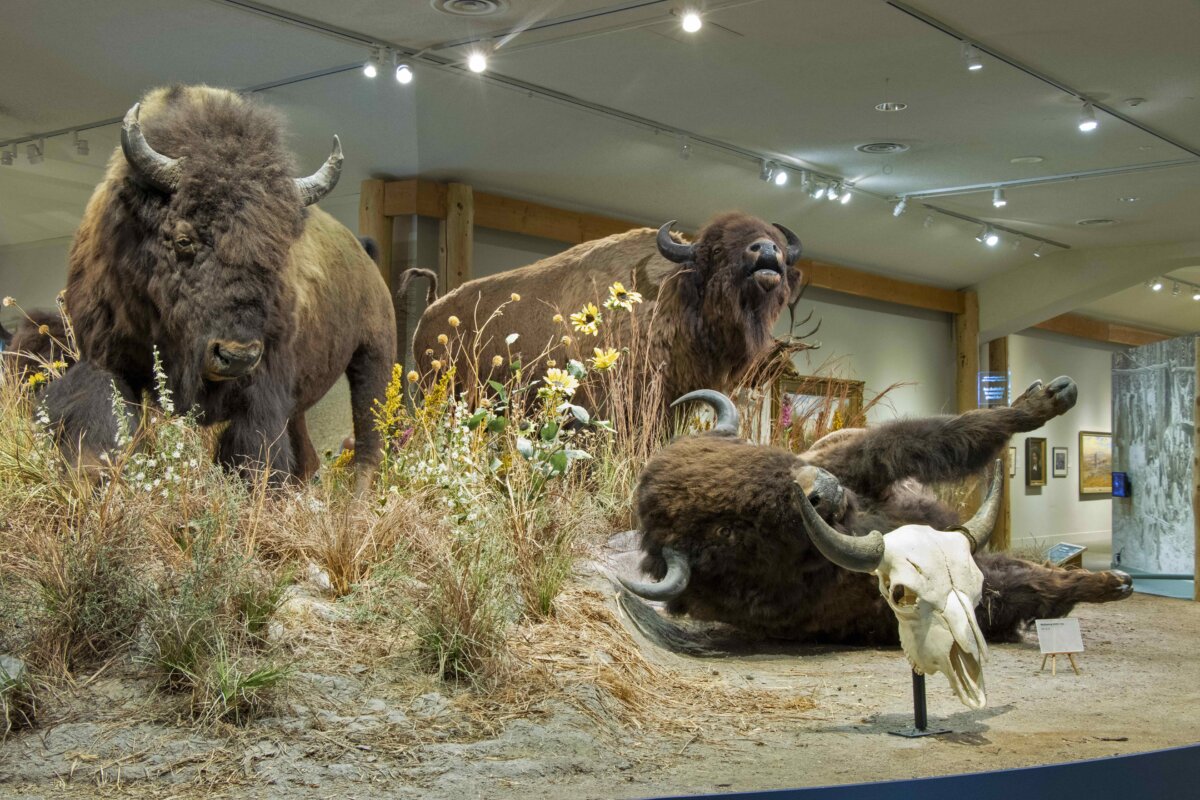
In 1859, Horace Greeley, the founder and editor of the New York Tribune, and one of the country’s most influential voices, set off on an “overland journey” from New York to San Francisco. On it, he promoted the Republican Party and the idea of a transcontinental railroad and also took note of the mass of roaming buffalo.
“What strikes the stranger with most amazement is their immense numbers,” he wrote.
“I know a million is a great many, but I am confident we saw that number yesterday. Certainly, all we saw could not have stood on ten square miles of ground. Often the country for miles on either hand seemed quite black with them.”
That sea of black across the western plains, however, would be washed away merely a few decades later. The estimation of just how many buffalo roamed the plains during the early 19th century is vast. Most estimate no less than 30 million and some suggest as high as 125 million. Whatever the accurate total, by 1900, their numbers had dwindled to less than 1,000—a slaughter that had once seemed impossible.
Through legislative action and conservation efforts, those numbers have risen to approximately 500,000. To celebrate the resilience and survival of the bison and to coincide with the country’s 250th celebration, the Buffalo Bill Center of the West, located in Cody, Wyoming, launched its extensive multi-stage exhibit across its various complexes in January called “Buffalo Nation,” with its primary exhibit opening on Aug. 22.
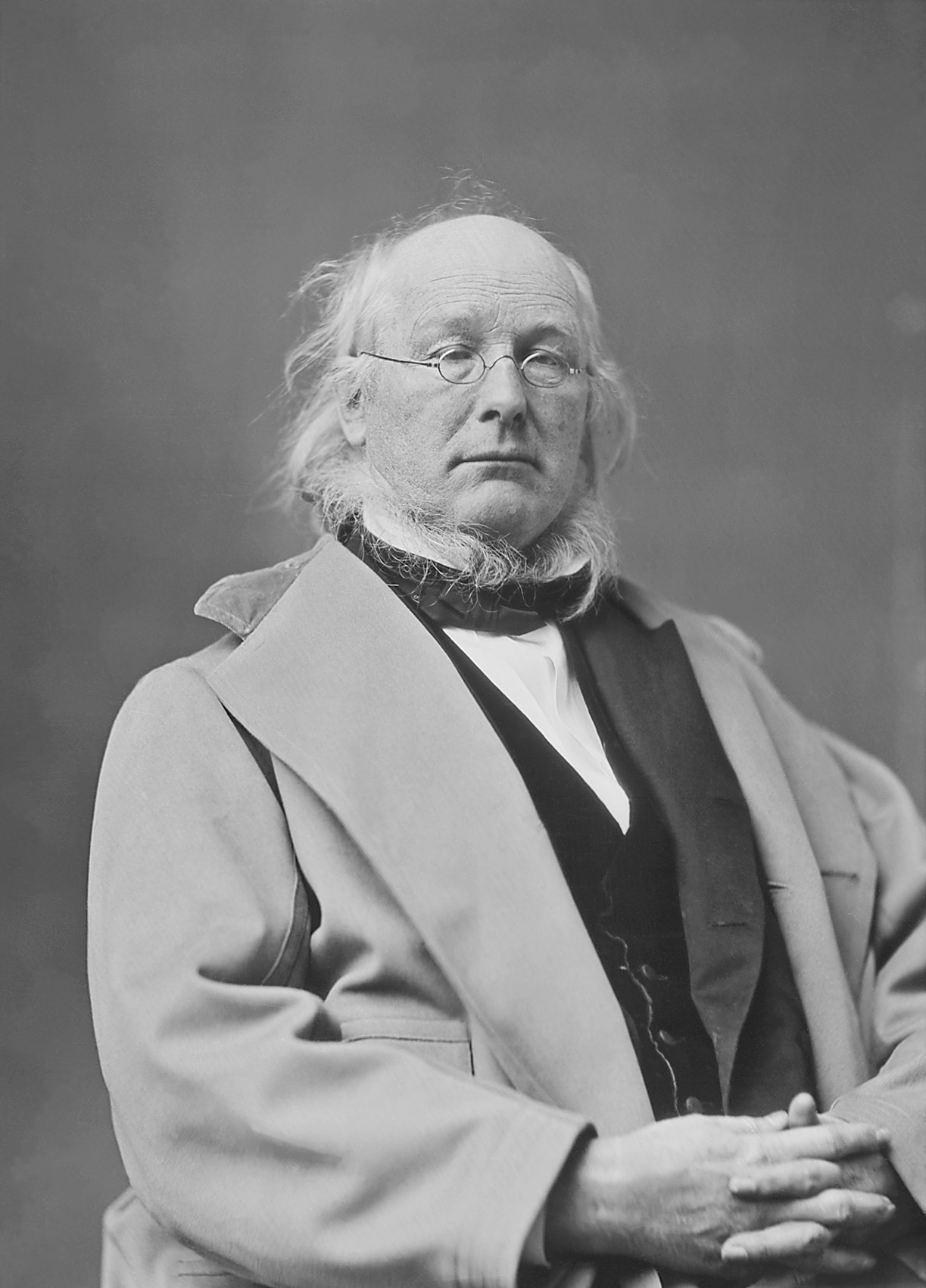 Horace Greeley founded the New York Tribune and supported a wide variety of social reforms. (Public Domain)
Experiencing the National Mammal
“The buffalo represents a larger story about American history, one that precedes 1776 by thousands of years,” said the Center’s executive director and CEO, Rebecca West, in an interview with The Epoch Times. “The buffalo represents a story tied deeply to America. This is an icon of strength and resilience as the national mammal and Wyoming’s state animal, and it provides a message of hope for the future.”
The exhibition began inside the McCracken Research Library, the Plains Indian Museum, the Whitney Western Art Museum, the Draper Natural History Museum, the Buffalo Bill Museum, and the Cody Firearms Museum, with the latest addition opening inside the Duncan Special Exhibition Gallery. The objective behind “Buffalo Nation” is to immerse visitors into that message. West noted that the exhibition tells the bison’s story through cultural perspectives, history, science, art, and popular culture.
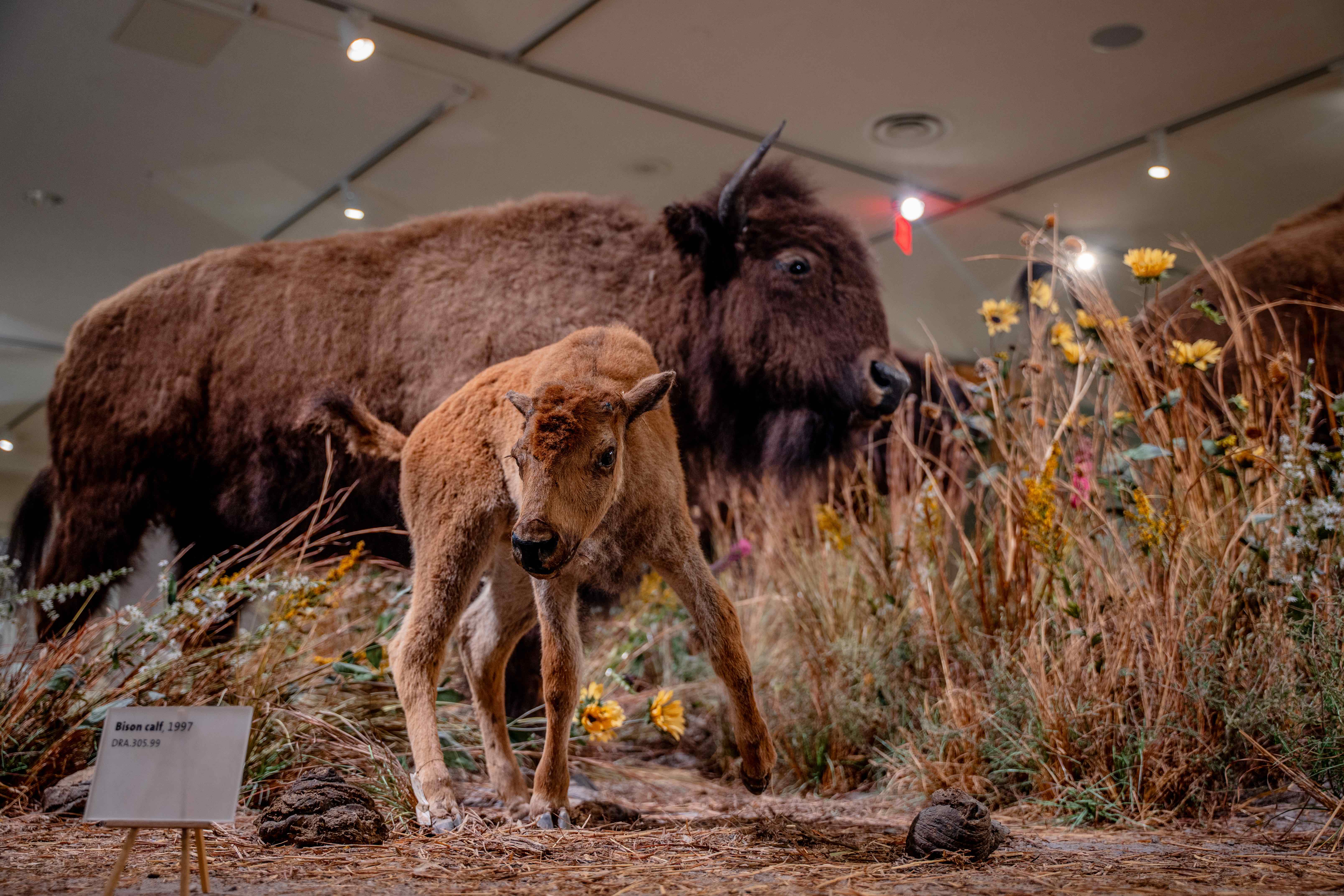 The buffalo exhibit at the Buffalo Bill Center of the West focuses on the ruminant’s cultural and historical role. (Courtesy of the Buffalo Bill Center of the West)
According to West, the Aug. 22 opening was a success. Guests were greeted by a specially recorded welcome by Ken Burns, the famous American documentarian who released a documentary film called “The American Buffalo” in 2023. Guests also watched musical presentations by drummers of the Northern Arapaho and songs by students of Wind River Wyoming Middle School. Visitors perused art and artifacts of the West, as well as photo- and video-centric exhibits that discuss the buffalo. The exhibit will continue until Jan. 30, 2028, ample time for those interested in learning about the national mammal.
‘Superstars of the American West’
“We want visitors to take a deep dive into the history and the future of the American Buffalo, and we hope the exhibition makes them think about the power humans have, positive and negative, for change,” West said.
“Buffalo are the superstars of the American West right now, they are on postage stamps, in social media, on film and in popular culture, in wildlife studies and the subject of controversy. We want to explore all of these aspects of the buffalo to allow visitors to come away with their own conclusions, and perhaps a call to action in their own lives.”
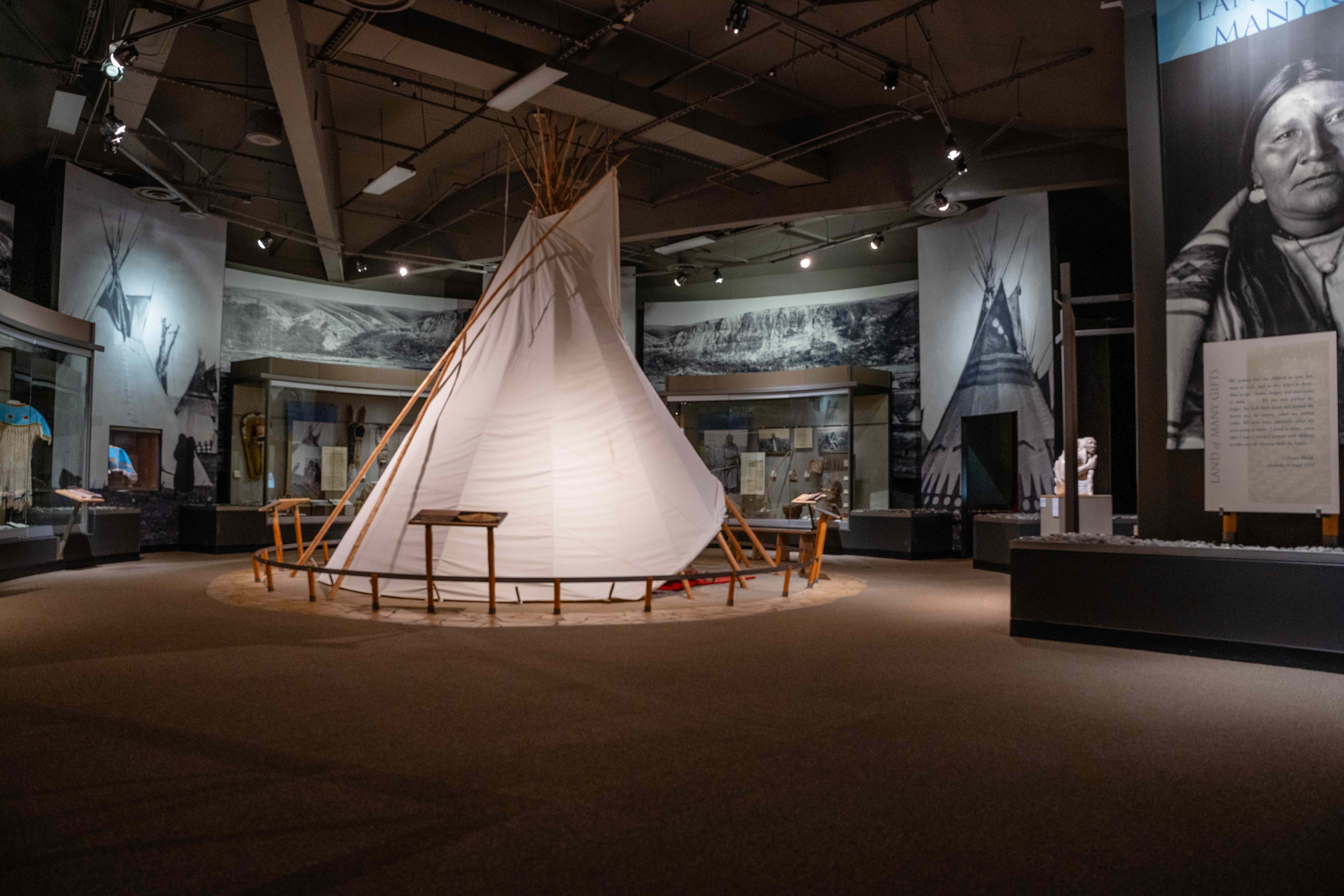 A full-size teepee stands at the center of the exhibit. (Courtesy of the Buffalo Bill Center of the West)
West added that “we cannot expect wildlife to survive without our active protection.” That protection almost arrived too late. According to West, had the buffalo gone extinct, it would have been more than the loss of an American icon. “The absence of bison in the cultural traditions, particularly for Indigenous people of the American West, would have meant cessation of traditions, beliefs and reverence for a force that is core of many cultures.”
The Buffalo Nation exhibits include archival images, including those from Buffalo Bill’s Wild West shows, and famous pieces of art from the late-19th century, like that of William Jacob Hays, Albert Bierstadt, and Louis Maurer. There are also famous artifacts, like Amelia Earhart’s buffalo coat, “Buffalo Bill” Cody’s saddle, and his rifle, which he named “Lucretia Borgia.” Along with that famous firearm is one of Theodore Roosevelt’s rifles, which was loaned to the museum from Sagamore Hill National Historic Site.
The Buffalo Bill Center of the West is located approximately 50 miles from Yellowstone National Park’s East Gate.
What arts and culture topics would you like us to cover? Please email ideas or feedback to features@epochtimes.nyc.