In a sense, Hiram Bingham III took after his grandfather. Hiram Bingham I was born in 1789 to Vermont farmers who hoped their son would take over the family farm. Instead of reaping harvests on the family farm, Bingham felt called to harvest a different crop. In the ninth chapter of the Bible’s Book of Matthew, Jesus looks out at the mass of people, is moved with compassion, and tells his disciples, “The harvest truly is plenteous, but the laborers are few.” Bingham chose to become a laborer for a spiritual harvest.
After finishing his ministerial education at Andover Theological Seminary in the spring of 1819, he was ordained in September, married in October, and, 12 days after his wedding, was sent as a missionary to the small island kingdom of Hawaii.
Before leaving, the American Board of Commissioners for Foreign Missions (ABCFM) told their Hawaii missionaries that they were to “aim at nothing short of covering these islands with fruitful fields, and pleasant dwellings, and schools and churches, of raising the whole people to an elevated state of Christian civilization; of bringing them to the mansions of eternal blessedness.”
The Binghams were part of the first group of missionaries to arrive in Hawaii in 1820, and their impact upon the islands was substantial. Following the ABCFM’s commission, Christianity quickly spread across the recently united islands, and with it, the education of the Hawaiian population. The missionaries’ religious and educational benefits endeared them to the monarchy. When Hiram Bingham III was born in Honolulu in 1875, he was born into a respected family, though far from wealthy.
Taking a Different Path
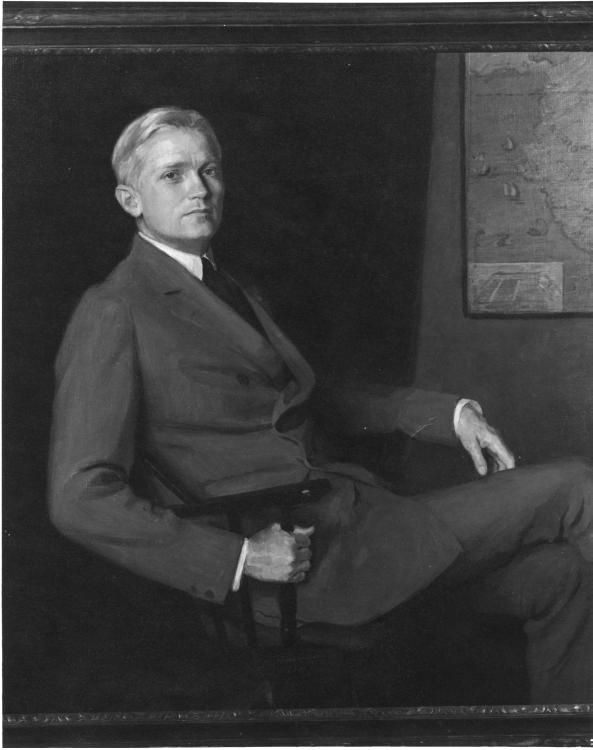
Bingham’s parents followed in the missionary footsteps, where the focus was more on spiritual prosperity than material. They hoped their son would do the same. For young Bingham, though, the life of a missionary was not appealing. He returned to America for his education, studying at the prestigious boarding school, Phillips Academy in Andover, Massachusetts, until 1894. Over the next four years, he attended Yale University. After graduating, he moved to the West Coast, where he pursued his master’s degree in history at the University of California, Berkeley, graduating in 1900.
In November that same year, the tall and handsome Bingham married Alfreda Mitchell, heiress to the Tiffany fortune, in New London, Connecticut. It was a marriage that afforded Bingham opportunities to pursue his adventurous and archaeological aspirations.
Starting in 1901, Bingham turned his attention to learning about South America at Harvard University. From 1901 to 1904, Bingham earned his master’s and doctorate in South American history while also serving as a Harvard instructor. He served as an instructor at Princeton from 1905 to 1907, before returning to his alma mater, Yale, to lecture on South American history and geography from 1907 to 1910. His dedication to the subject elevated him to assistant professor at Yale in 1910 and, finally, to full professor in 1915, a position he held until 1924. During this period, he also served as the university’s curator of the Collections on South American History (1908-1930).
A Palatial Discovery
His interest in South American history and geography was more than intellectual. Bingham was hands-on in studying Latin American countries. In December 1908, he attended the First Pan American Scientific Congress in Santiago, Chile. From Santiago, he went to Buenos Aires to begin an expedition to travel the historic Spanish trade route to Lima. The journey ignited his interest in finding the last capitals of the region’s great ancient civilizations.
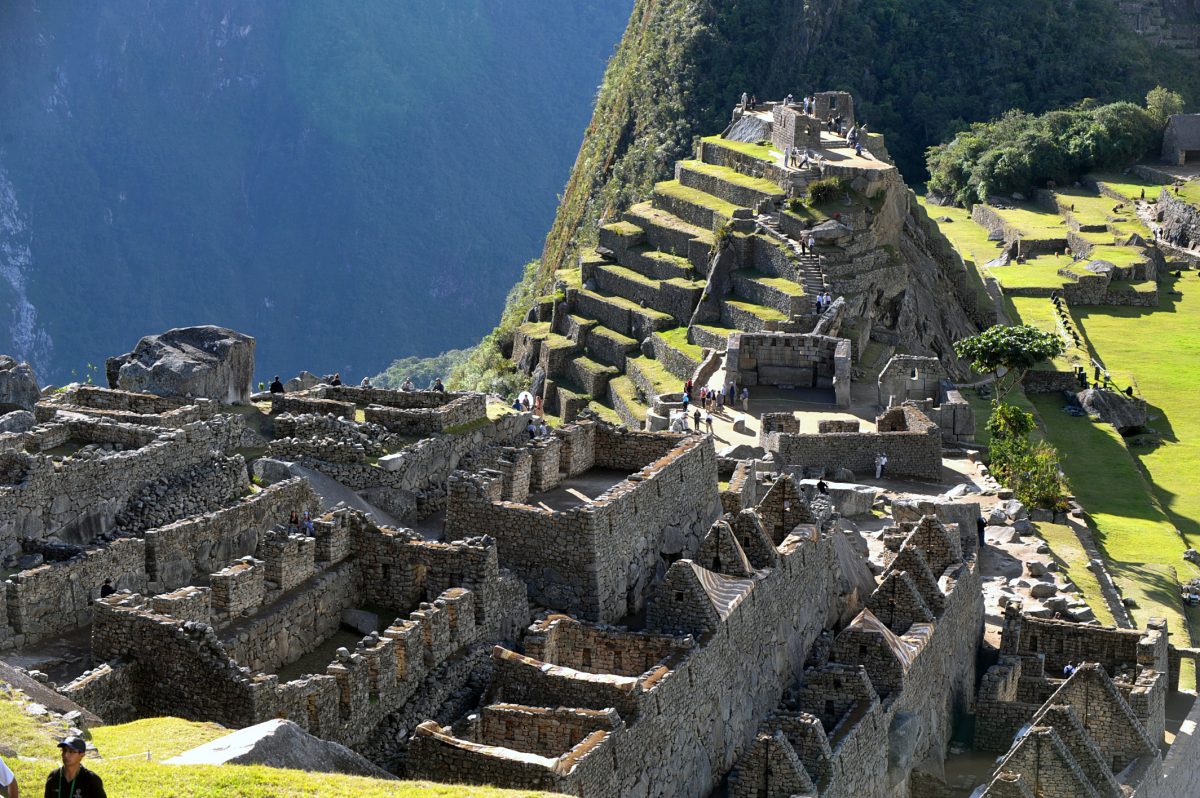
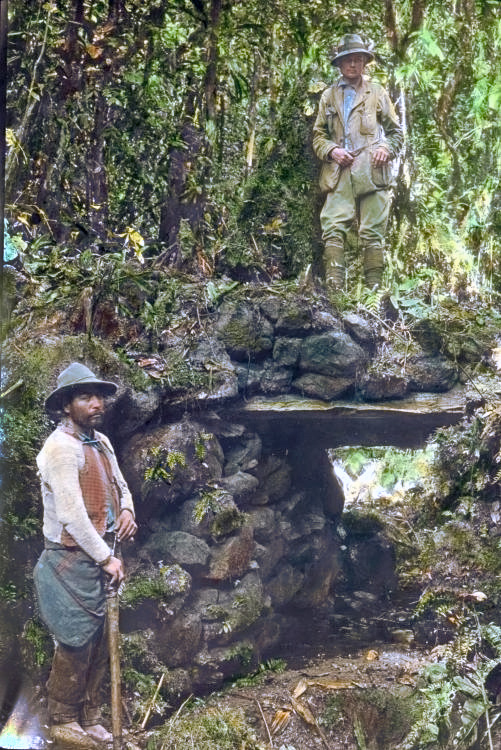
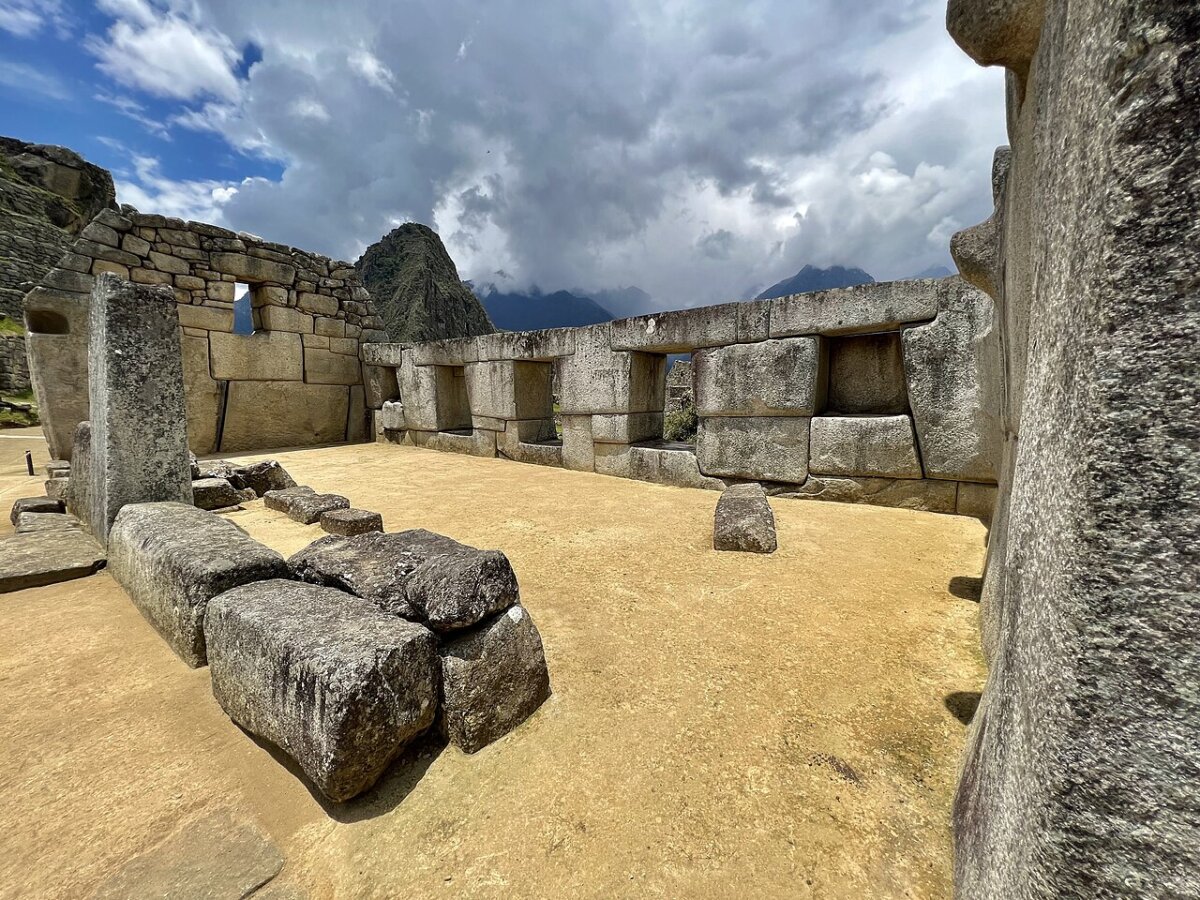
After his return to the university, Bingham began to organize the first of his three Yale Peruvian Expeditions. By the summer of 1911, Bingham was leading a group of scientists up the Andes Mountains in search of Vitcos and Vilcabamba, the last capitals of the Incas. What he discovered instead proved to be one of the world’s greatest archaeological discoveries.
As he and his team of explorers cleared the mountain’s height to reach its plateau, he noticed stonework shrouded in vines, trees, and mystery. “It fairly took my breath away,” Bingham recalled. “What could this place be? Why had no one given us any idea of it?”
Initially, Bingham was under the impression that he had found Vitcos, but what he had discovered was Machu Picchu, the long-lost palace of the Incas. After his team returned to America, Bingham quickly formed a second expedition, this time in collaboration with the National Geographic Society, and returned to Machu Picchu in 1914 and 1915.
During his 1911 expedition, Bingham continued to explore, ultimately finding the last Inca capital, Vilcabamba. But this capital paled in comparison to the mountaintop palace. In fact, Bingham’s expectations were so high regarding the “lost city of the Inca” that he published that Machu Picchu was Vilcabamba. Though purposely erroneous, it did not seem to diminish the allure of the palatial city. That allure grew internationally after the second expedition, in which the National Geographic magazine dedicated its April 1913 edition to the discovery. Along with an article by Bingham, entitled “The Wonderland of Peru,” the magazine published 250 photographs of the expedition.
War and Politics
In the summer of 1914, while conducting his third expedition to Peru, World War I broke out. He joined the Connecticut National Guard in 1916, though it would not be until April of 1917 that America would enter the war. Shortly before officially entering the war, Bingham had begun taking lessons at the Curtiss Flying School in Miami. With the declaration of war against Germany by the U.S. Congress, he entered the Army Air Service as a major. By the following year, and now with the rank of lieutenant colonel, he was head of the Army’s largest flying school—the Third Aviation Instruction Center in Issoudun, France.
Throughout his life, Bingham maintained his love of flying, even serving as president of the National Aeronautic Association from 1928 to 1935.
Bingham eventually went into politics. He was elected lieutenant governor of Connecticut in 1922 and elected as governor in 1924. Humorously, he served as governor for only one day. After winning the election, he won a special election to replace the late Sen. Frank Brandegee. He took the oath of office for governor on Jan. 7, resigned, and then took the oath of office to become senator on Jan. 8. He won his senatorial re-election bid in 1926. He was a member of the Senate Finance Committee, chaired the Senate’s Committee on Territories and Insular Affairs, advocated for the aviation industry, and fought against Prohibition.
The Machu Picchu Legacy
Among all of his accomplishments, Bingham is best remembered for his discovery of Machu Picchu, and he ensured that accomplishment would always be remembered when he published his best-selling book, “Lost City of the Incas: The Story of Machu Picchu and Its Builders,” in 1948. He wrote several books before his death in 1956, including “Across South America” (1911), “An Explorer in the Air Service” (1920), and “Inca Land” (1922). The name of Hiram Bingham III may be difficult for modern Americans to recall but that is hardly the case in Peru, where the main road to Machu Picchu is known as the Hiram Bingham Highway.
What arts and culture topics would you like us to cover? Please email ideas or feedback to features@epochtimes.nyc.