In a sterile laboratory in France, Armelle Charrié-Duhaut pores over black shavings of ancient tar to piece together the final, last-ditch voyages of a 2,200-year-old Roman shipwreck. Through a microscope, Charrié—a specialist in ancient chemistry at the University of Strasbourg—focuses on a telltale sign of nautical repairs in the form of a simple biological clue: pollen.
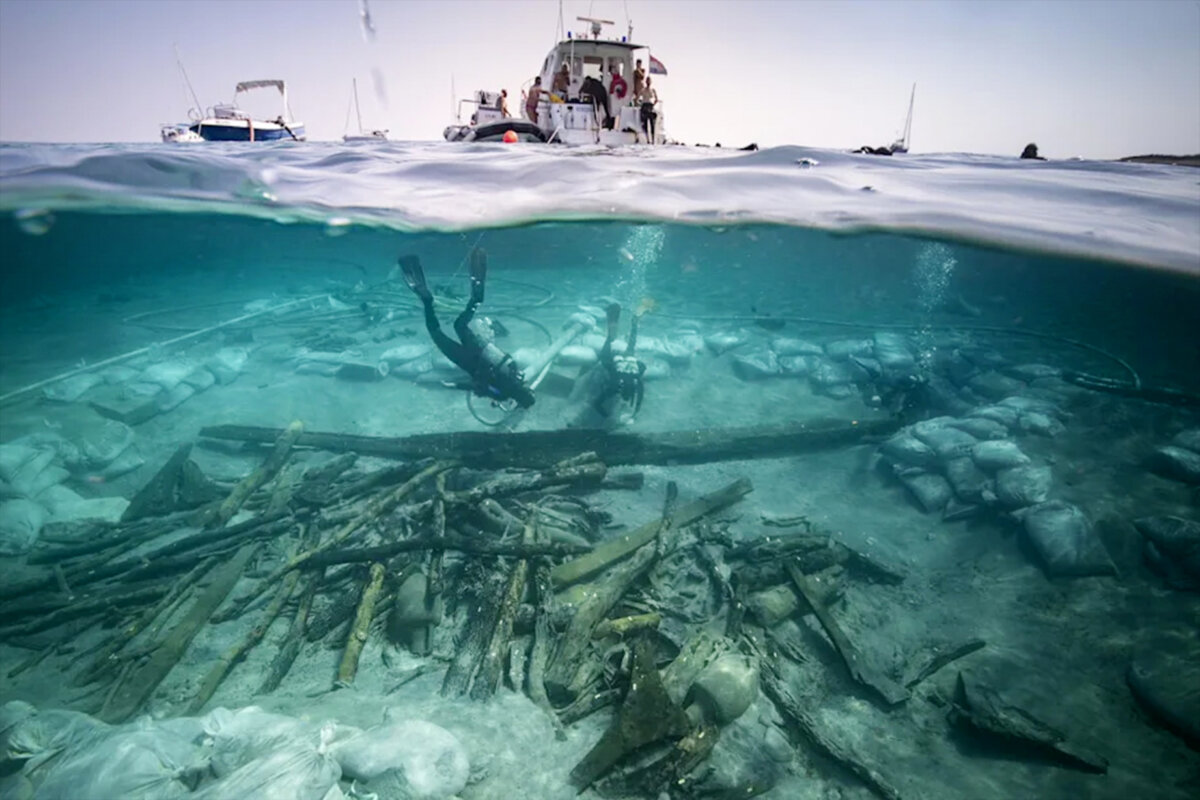
These resinous samples were shipped to Strasbourg all the way from the small, sun-drenched island of Ilovik off the coast of Croatia in the Adriatic Sea. There, divers plunged into the shallows of Paržine Bay where a patchwork of wood and gluey residue revealed the ship’s final resting place. Just 13 feet under the surface, they established an underwater dam to hold back the shifting sands. The wreck became Ilovik-Paržine 1.
Charrié and her team have been working to decode the varieties of pollen trapped in waterproofing substances over two millennia ago. Mapping these microscopic species pointed directly to several geographic regions where the specific flora once flourished. Wooden boats obviously suffer wear and tear, but Charrié and her team’s 2026 study is among the first to provide hard evidence of actual repairs.
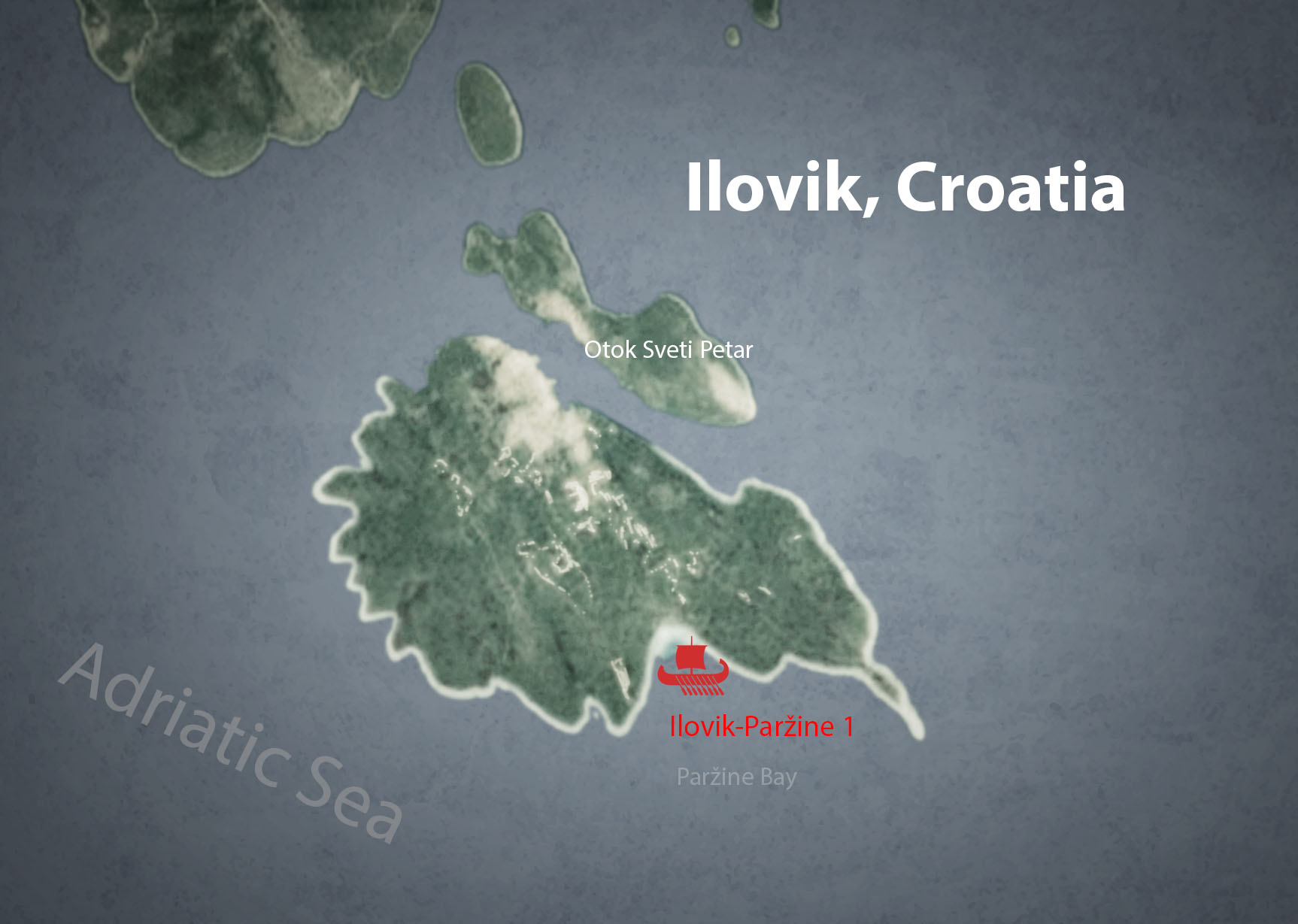 The area of the shipwreck off the coast of Ilovik, Croatia. (The Epoch Times)
“In archaeology little attention is paid to organic waterproofing materials,” Charrié said in the study. “Yet they are essential for navigation at sea or on rivers and are true witnesses of past naval technologies.”
She believes these “witnesses” sank to the seabed between 170 and 130 B.C. The vessel was a 70-foot Roman workhorse packed with lumber and clay wine jars called amphorae. It was old, creaking, and leaking. To stay afloat, its crew routinely pulled into regional ports for emergency patches, slathering the hull with sticky resin and pine tar—the ancient equivalent of roadside duct tape. But the patches eventually failed and the ship slipped beneath the waves in the shallows off Croatia, where it lay buried for more than two millennia.
A conservator found the hull in 2016. It was reported to Croatian shipwreck expert Igor Miholjek, who began examining the bones of the ancient vessel along with a joint French-Croatian diving team. The initial build included planks stitched together with vegetable fibers and wooden pegs. However, they also identified two distinct types of waterproofing: a coniferous tar called pitch and a mixture of beeswax and tar, both of which were applied later to keep the leaking vessel seaworthy.
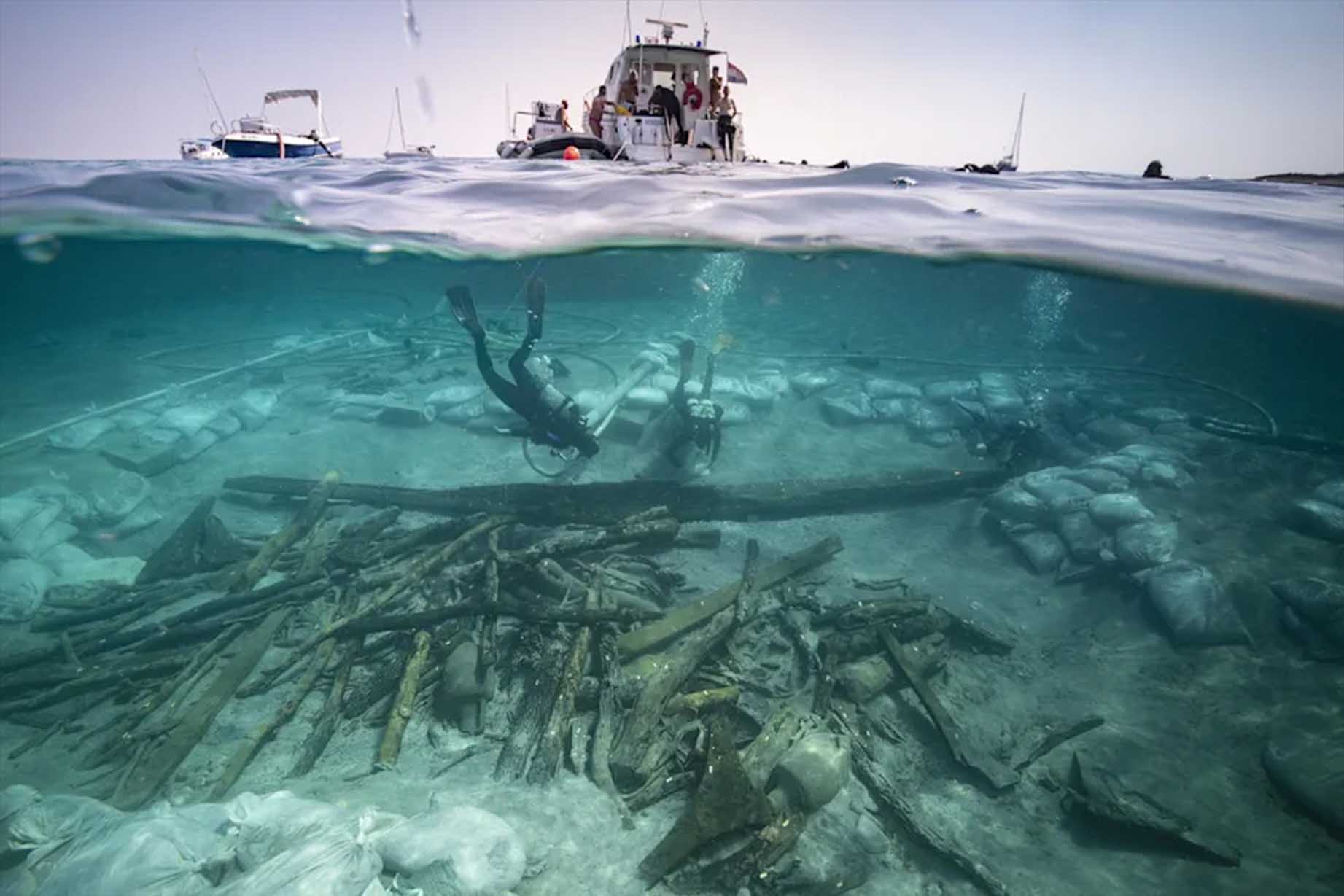 The Ilovik-Paržine 1 shipwreck was discovered in 2016 just 13 feet below the surface in the Paržine Bay, off the coast of Ilovik Island, Croatia. (Adriboats © L. Damelet, CNRS/CCJ)
After scrapings of these materials were bottled and sent to the lab in Strasbourg, Charrié and her team melted away the dense resin using chemical solvents. Acting a bit like forensic detectives, they isolated evidence of ancient pollen grains without destroying them. Airborne pollen from different regions would have settled on the tacky surface of the freshly applied tar, acting like telltale time capsules. They prove the ship was sailing between ports, making pit stops for roadside maintenance along the way.
“While it seems obvious that ships sailing long distances need repairs, it’s simply not easy to demonstrate this,” Charrié said. “Pollen has been very useful in identifying different coatings where the molecular profiles were identical.” Her team drew from 10 core samples to identify four to five distinct batches of coatings.
The samples matched landscapes of the Mediterranean and Adriatic coasts. Some of the pollen came from forests of holly oak and pine or shrublands where olive and hazel trees grow. The vegetation ranged from that of river- and sea-shores to mountainous growth.
The mixtures varied, too. While heated coniferous resin becomes pitch, some coatings combined beeswax and tar to create a compound known to Greek shipbuilders as zopissa—an adhesive that adds flexibility and is easier to apply when heated. This is groundbreaking, because it’s the first modern evidence of zopissa, famously noted by Roman historian Pliny the Elder.
The presence of this ancient Greek compound on a Roman Republican vessel also highlights a broader phenomenon.
“This approach allows us to investigate potential variations related to functional or technical differences, or even to repair phases,” said Quentin Couillebault, an expert in ancient plants at Aix-Marseille University, who coauthored the study alongside Charrié.
By tracing these distinct sticky variations the researchers mapped out a lifelong travel itinerary. The earliest layers of zopissa connect the vessel’s birth to Brundisium, a major Roman port on Italy’s southeastern boot. The successive layers of pure pine pitch track its final, grinding commercial runs up the eastern Adriatic coast toward its eventual grave.
Ultimately, the chemical layers show that maintenance wasn’t just a planned construction event, but an ongoing reality for a Roman-era merchant ship at sea. The Ilovik-Paržine 1 represents an ancient crew slapping quick patches on a leaking workhorse. They weren’t fussy about the fix or where they got it, as long as it got the job done.
“Technology advances,” Couillebault said, reflecting on the ancient shipyard layers. “But the fear of water in the boat remains eternal.”