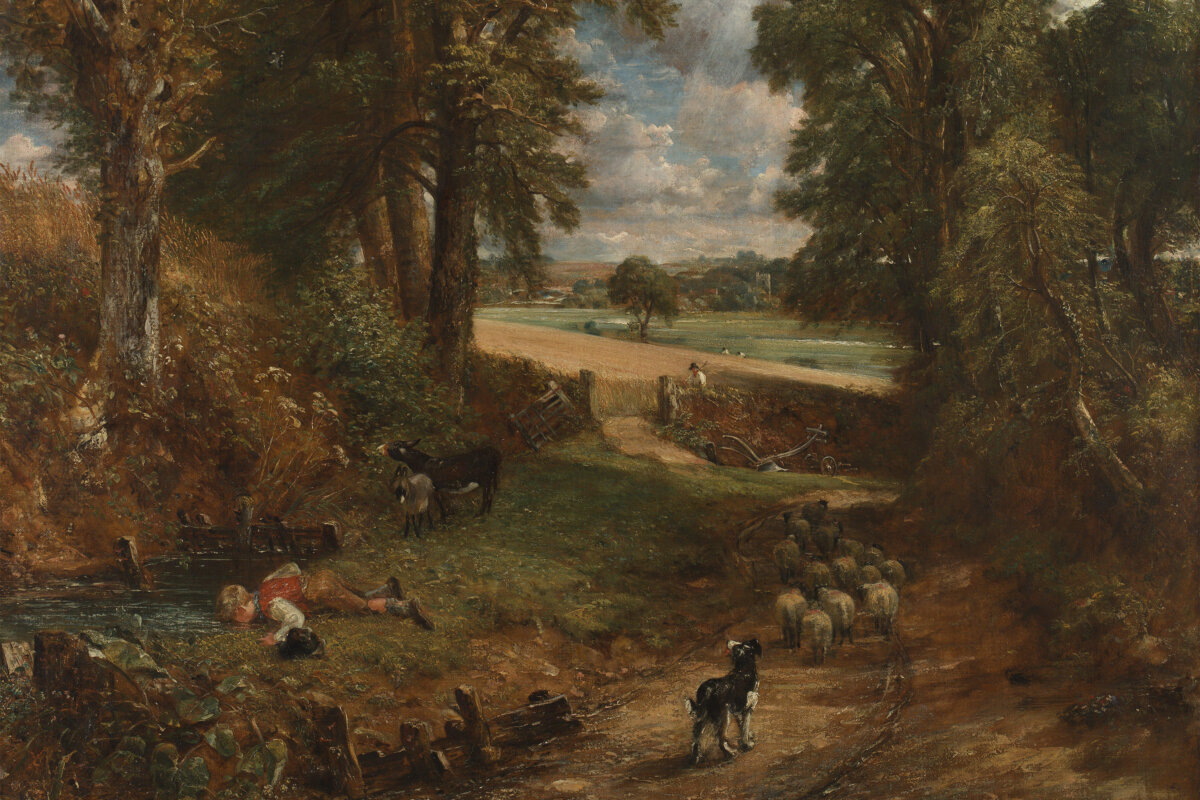
Memory can preserve a place long after we have left it. For John Constable, the Suffolk countryside of his childhood remained vivid in his imagination throughout his life. Its winding lanes, sunlit fields, and aged woodlands became the subjects through which he developed his distinctive approach to landscape painting.
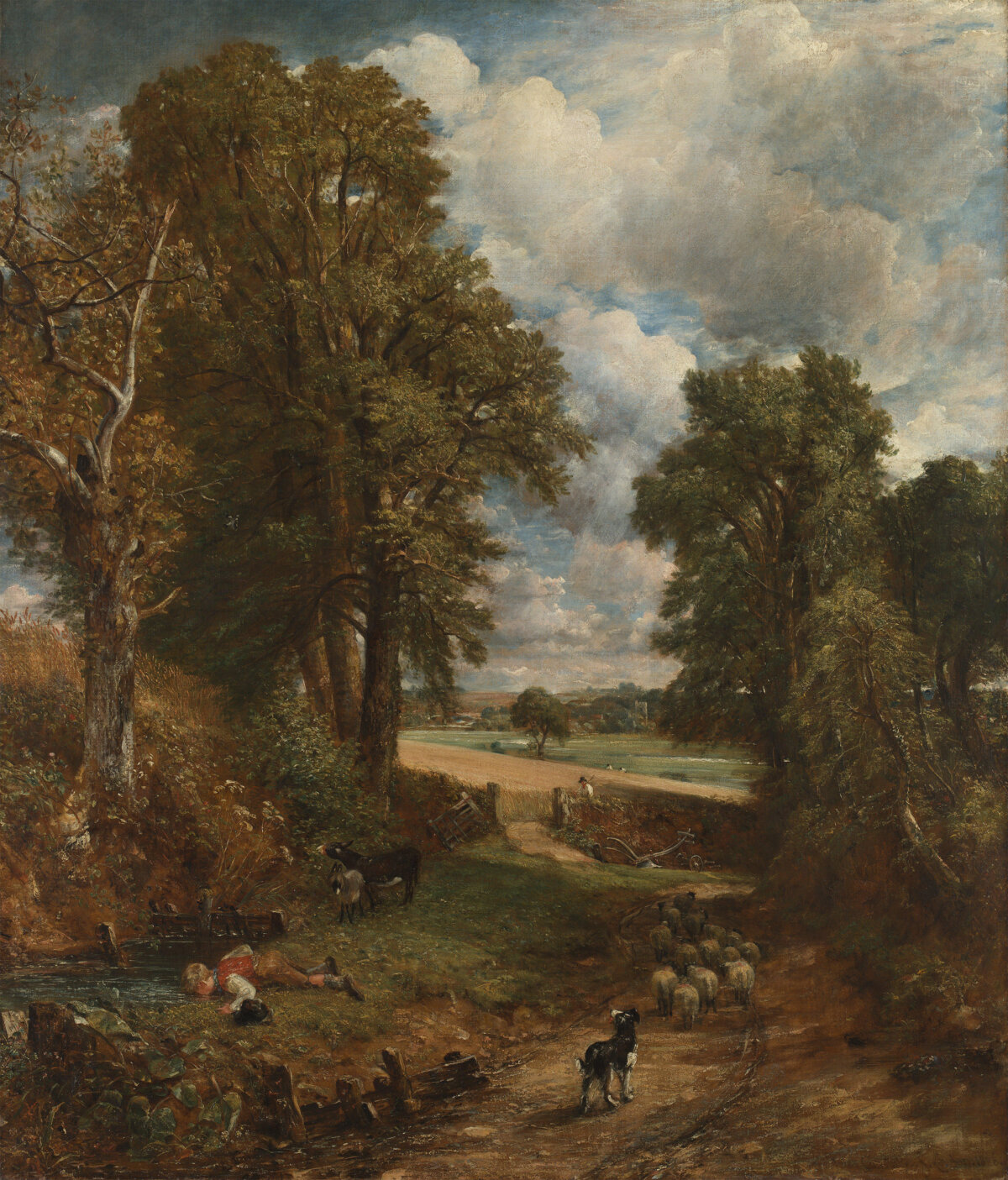
In “The Cornfield,” painted in his London studio in 1826, Constable returned to this memorized landscape, transforming it into a carefully constructed composition rife with bucolic beauty and personal associations—a creative process now brought to light by a surprising discovery in Texas.
Impressionable Observations
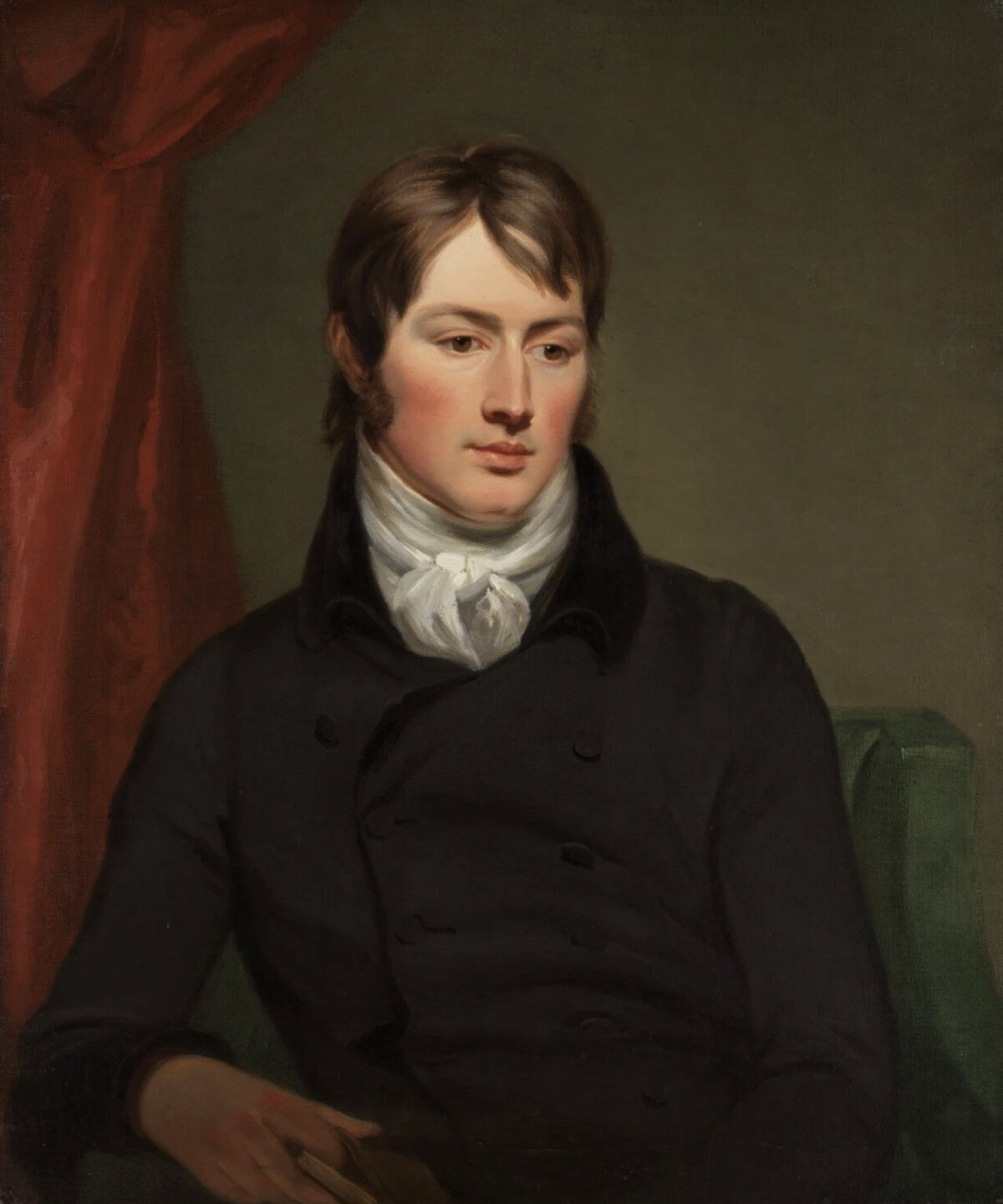
John Constable was born in 1776, the son of an affluent grain merchant who owned mills in eastern England. In 1799, he entered the Royal Academy Schools, where he studied the works of Thomas Gainsborough, Peter Paul Rubens, and Annibale Carracci. There, he absorbed the principles of academic painting, in which artists depicted idealized people and nature instead of realistic ones, and focused on important subjects such as history, the Bible, myths, and allegories.
For nearly a decade thereafter, he divided his time between London, where he exhibited his finished oil paintings, and Suffolk, where he sketched outdoors. Created in spring and summer, Constable’s sketches were rough studies that let him capture variations in landscape, weather, and light with as much realism as possible.
Yet he departed from the Academic tradition in one key respect: He championed the artistic value of ordinary rural scenes. As he once put it, “Painting is with me but another word for feeling,” a statement that captures his sentiment for landscape painting.
“The Cornfield” reflects this deep connection to the English countryside. Measuring more than four and a half feet high and roughly four feet wide, the large canvas depicts a rutted country lane leading toward a wheat field, where a shepherd boy pauses to drink from a pool. The lane has been identified as Fen Lane, near Constable’s childhood home of East Bergholt, a route he walked to and from school. The subject carried extra significance: In Britain, “corn” refers broadly to grain crops like wheat, linking the painting to Constable’s family background in the grain trade.
The Rediscovered Study
Constable drew meaning from his past, and art historians have been piecing together the history of “The Cornfield.” A large-scale version of the painting recently came to light after spending decades unrecognized at the rural Jefferson Historical Society and Museum in Texas. The museum had acquired the work from Newhouse Galleries in 1970, when it was described as “the large sketch for a painting now in the National Gallery in London.” Over time, though, it came to be regarded as a mere copy rather than an original study, until a 2017 appraisal prompted renewed investigation that eventually led to its authentication.
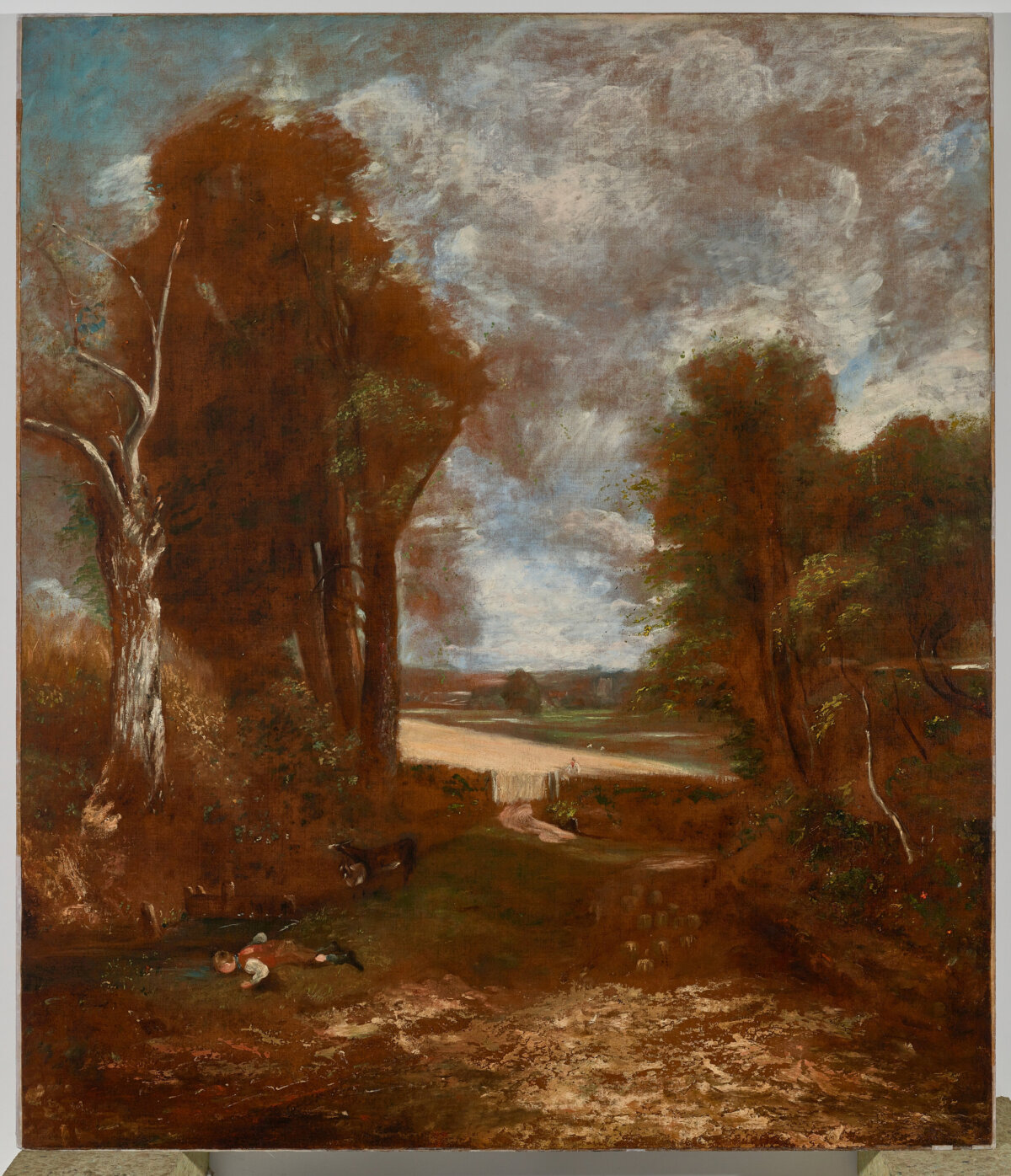
Measuring approximately 55 by 48 inches, it now stands as the largest known preparatory work for “The Cornfield.” The discovery suggests that Constable’s painting process involved more stages than scholars had previously realized.
Much about the rediscovered painting remains unknown. Experts can only date it broadly to between 1820 and 1826, and the route it took from Constable’s studio to Texas remains a mystery. Such gaps are common in art history, and they’re part of what makes it so exciting when a newly found study can reshape our understanding of an artist’s methods.
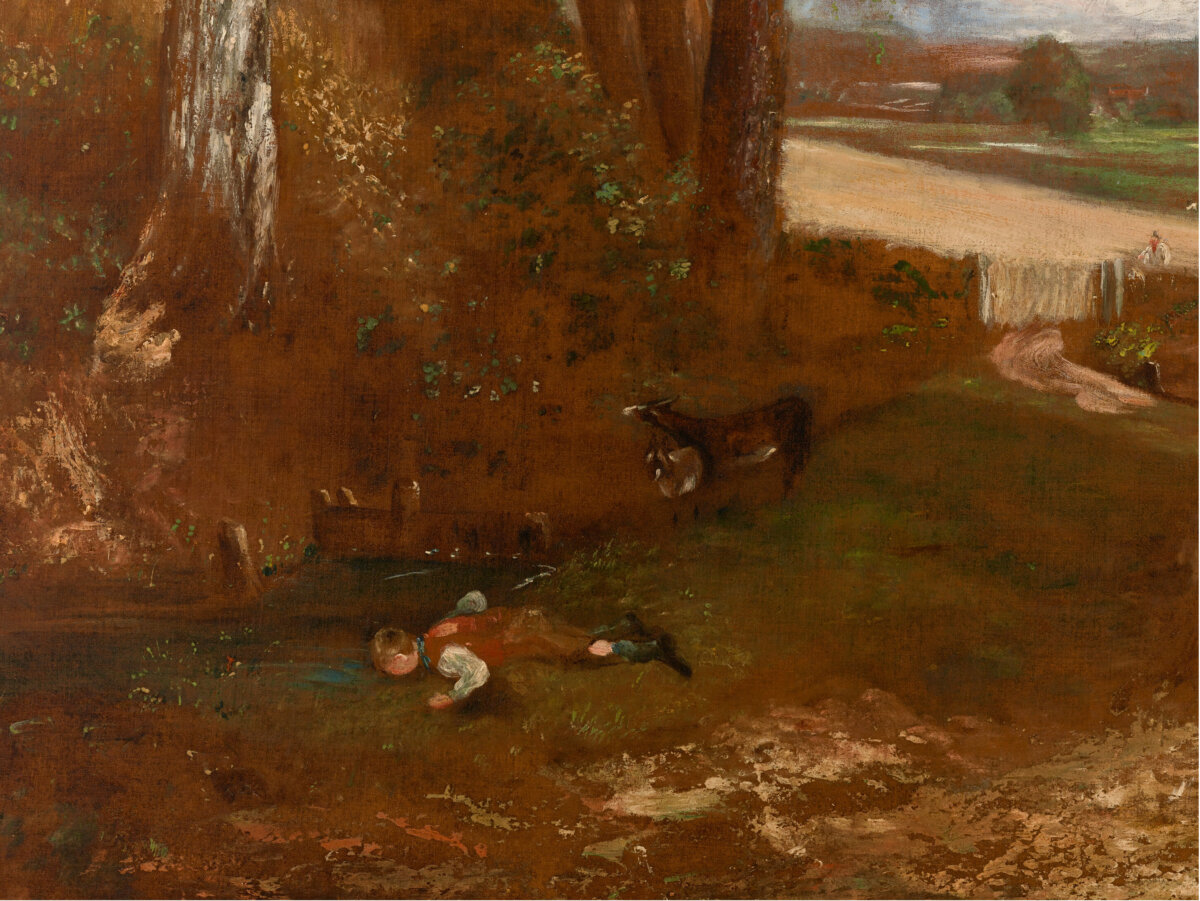
That’s especially true for “The Cornfield.” Rooted in the landscape Constable knew as a child, the painting took its final form in the studio, a process the rediscovered study now brings into sharper focus. Nearly 200 years later, this study offers a closer look at how Constable painted one of the most recognized images in English landscape painting.
What arts and culture topics would you like us to cover? Please email ideas or feedback to features@epochtimes.nyc.