



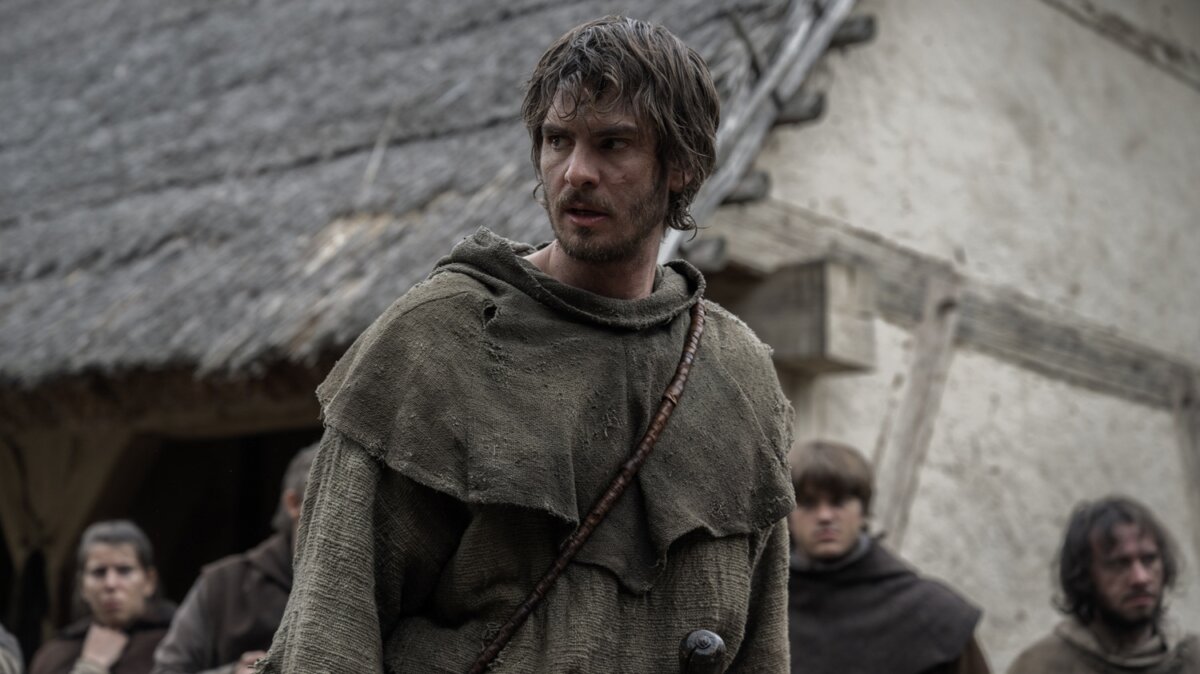
R| 2h 7m | Drama, Action, Revisionist History | 2026
The term “Twin Films” is not something one hears with any kind of frequency. I pay close attention to these types of things, and I’ve only heard it mentioned in passing only once or twice. It is the freak occurrence when two movies with near identical subject matter are produced and released within the same 12 month period.
Some of these connections are stretches, such as two movies about asteroids, or two others about volcanos. But some are eerily similar and so related they likely aren’t by chance or accident.
In the instance of “The Uprising” and “The Death of Robin Hood” (“Death”), this is the second instance of this subject overlap. In 1991, two Robin Hood movies were released.
Not a big deal, really. In the history of movies and TV, there have been well over 200 different interpretations of the fable, but how many dealt with the origin and demise of the character in the same year? Never.
In June, we saw the theatrical release of “Death,” a roughly hued, unadorned, and unyielding tale of the demise of the character, who is deep in the throes of regret regarding his life of wanton thievery. This was a yet unseen take on Robin Hood, and it threw even its biggest detractors for a loop.
No Flynn or Fairbanks
It wasn’t a jovial Errol Flynn or a swashbuckling Douglas Fairbanks, but rather Hugh Jackman’s intense rendering in “Death” that was more biker and “Braveheart” than economic equalizer.
The timelines and central theme of “Braveheart” practically mirrors “The Uprising.” The former was set in the late 13th century, the latter in the late 14th century. The principal antagonists in both were real-life English kings (Edward Longshanks and Richard II).
The lead protagonists could be labeled as rabble-rousers and are considered enemies of the Crown. This was so much so that the monarchy wants them terminated with extreme prejudice.
In “Braveheart,” William Wallace’s (Mel Gibson) mission is to fight for and secure Scotland’s independence. In “The Uprising,” Ploughman (Andrew Garfield) is pushing back against a proposed tax levied against British commoners for the purpose of funding ongoing wars with France and Scotland.
Fear of Power Loss
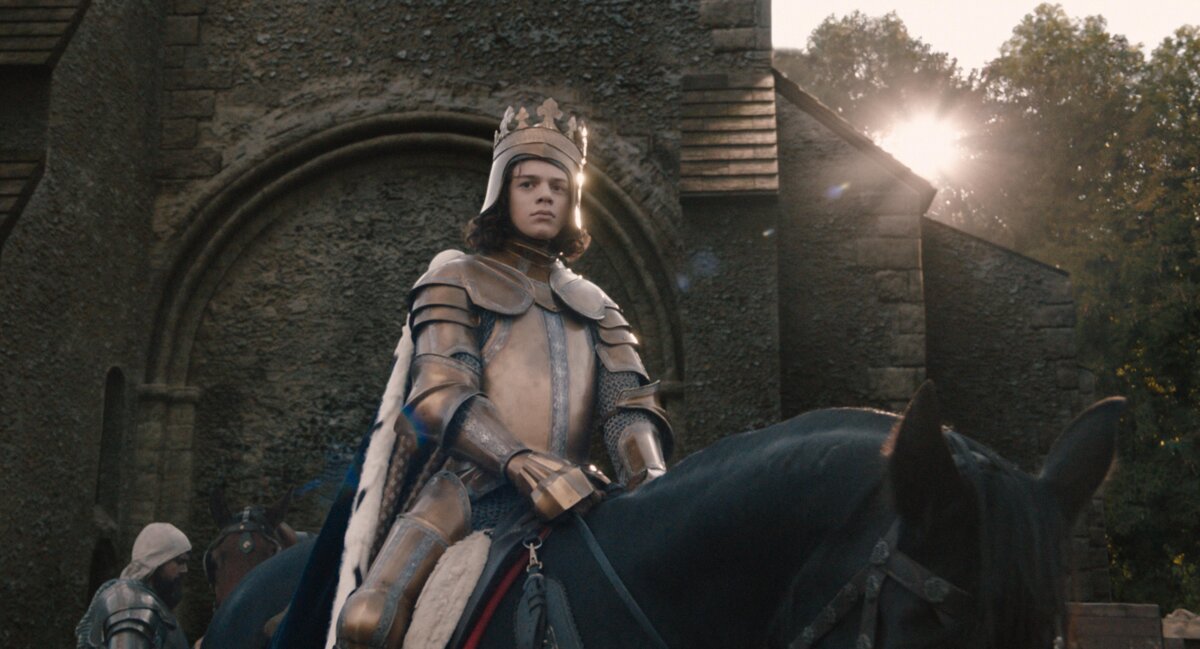
This tax is being levied because the handlers of the teenage Richard II (a quietly menacing Woody Norman) are deathly afraid of taxing wealthy merchants; the handlers fear they’ll need to share their power with merchants to do so.
When turning to the Archbishop of Canterbury of England (Stephen Dillane) for more funding, he sheepishly demurs, stating the Church can’t be directly tied to paying for wars.
All involved conclude that they’ll have to get the money from the commoners because those in power believe, via past precedent, they can simply force commoners into compliance.
This appears to be the case with Ploughman until a collector demands he produce death certificates for his late wife and two children; he’s accused of pretending so he doesn’t have to pay taxes on them. He doesn’t have the papers. They perished during the recent “Black Death,” which wiped out half of Europe’s entire population. Ploughman feels this demand is a bridge too far, and he snaps.
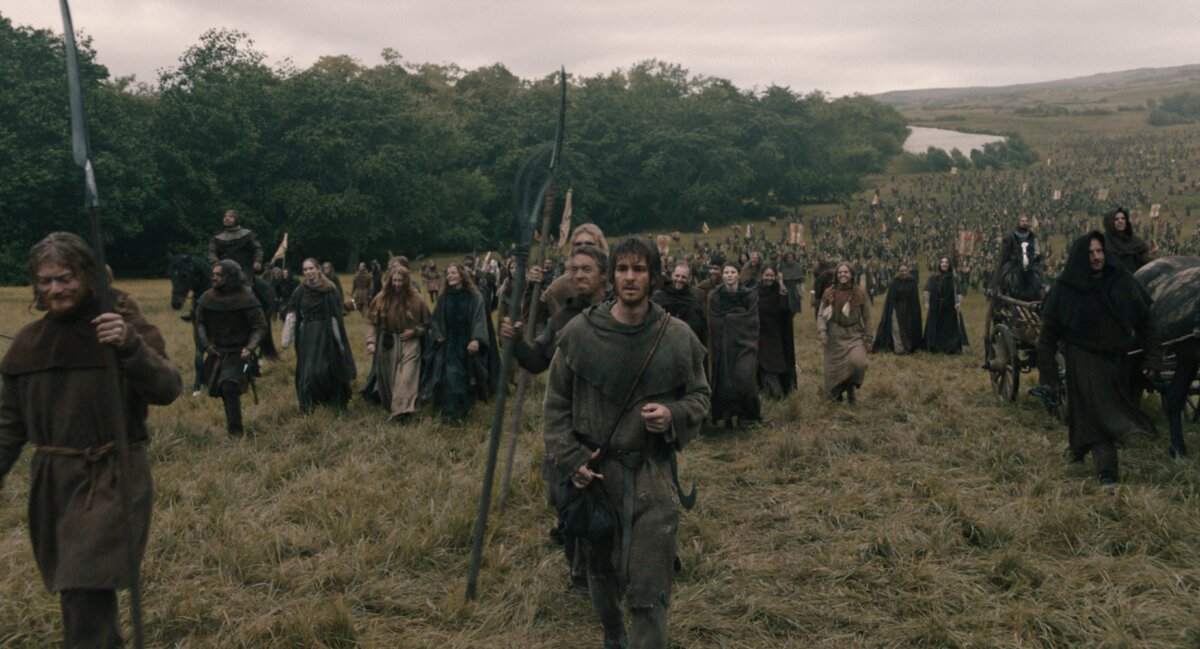
Ploughmam did what others wanted to do but chose not to, and he immediately becomes the spearhead for what was known as the 1381 “Peasant’s Revolt.” In mere minutes of screentime, this movement spreads like wildfire across England with the throngs of revolutionaries running roughshod all over the country; they intend to trek to London and, in the flesh, deliver a list of their quite reasonable demands to Richard II.
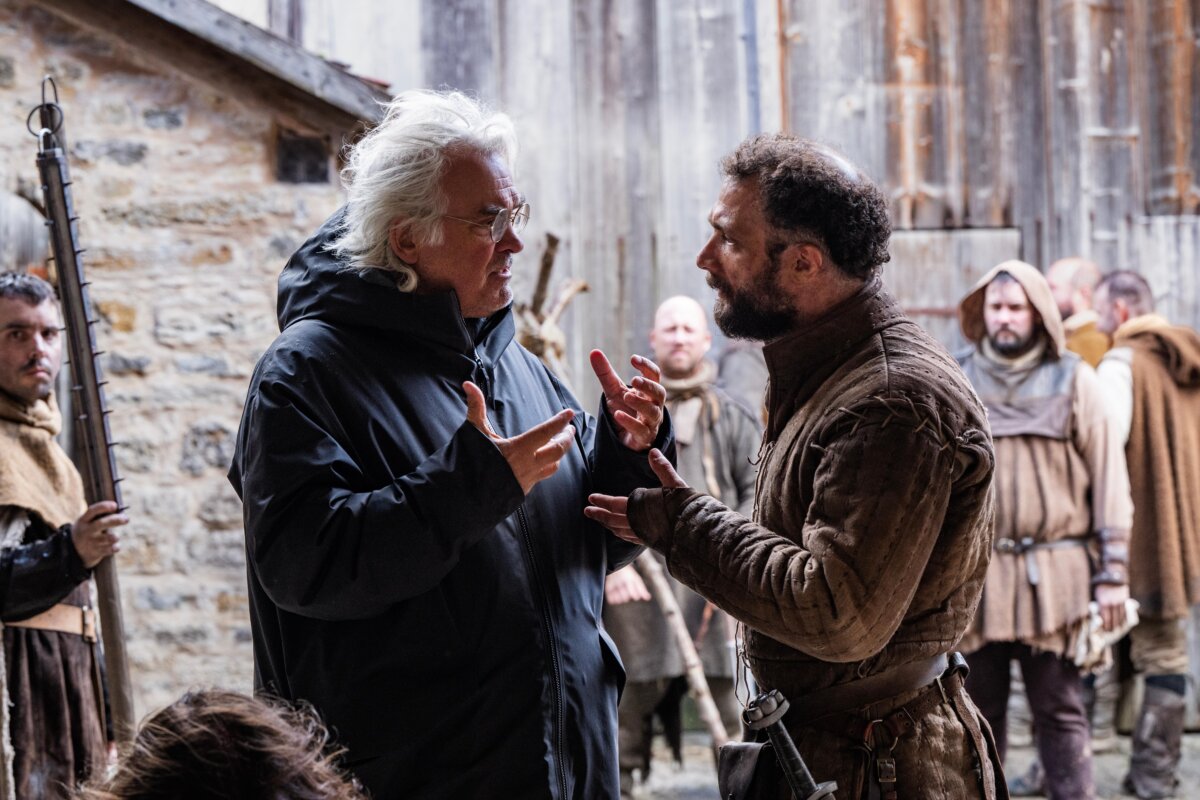
Written and directed by Paul Greengrass, “The Uprising” contains all of his identifying calling cards. All of his movies tend to contain color-drained palettes, quick editing, and incomplete or partially off-center framework photography.
Shaky Cam
The most prominent Greengrass identifier is what is referred to (with equal parts admiration and disdain) as “shaky cam” photography. In the wrong hands, this can, and often does, play out as a threadbare gimmick. But in the case of Greengrass, it is done with thorough, accidentally-on-purpose precision.
In his best films—”Bloody Sunday,” “Captain Phillips,” three installments of the “Jason Bourne” franchise, and especially “United 93″—this only adds to and raises the emotional stakes, with frequent edge-of-your-seat results.
As far as the Robin Hood connection is concerned, this requires some conjecture and hypothesizing. To begin with, the words “Robin Hood” are never spoken. In the final 10 minutes (no spoilers ahead), the Ploughman character appears in greenish-brownish garb with a hood. He is in what is likely Sherwood Forest with a dozen or so underlings who are far from “merry men.”
While some viewers could label them terrorists, nothing they do in this film is any different from what William Wallace’s acolytes or the title characters did in “Inglourious Basterds.”
For some, these measures will feel extreme and unwarranted. For others, they’ll play out justified, righteous, and necessary for the achievement of admirable long-term goals.
It all comes down to what you value and your own perceptions of right and wrong.
The movie is now playing in theaters.
‘The Uprising’
Director: Paul Greengrass
Stars: Andrew Garfield, Stephen Dillane, Jamie Bell, Woody Norman
Running Time: 2 hours, 7 minutes
MPAA Rating: R
Release Date: Sept. 11, 2026
Rating: 4 stars out of 5
What arts and culture topics would you like us to cover? Please email ideas or feedback to features@epochtimes.nyc.
