



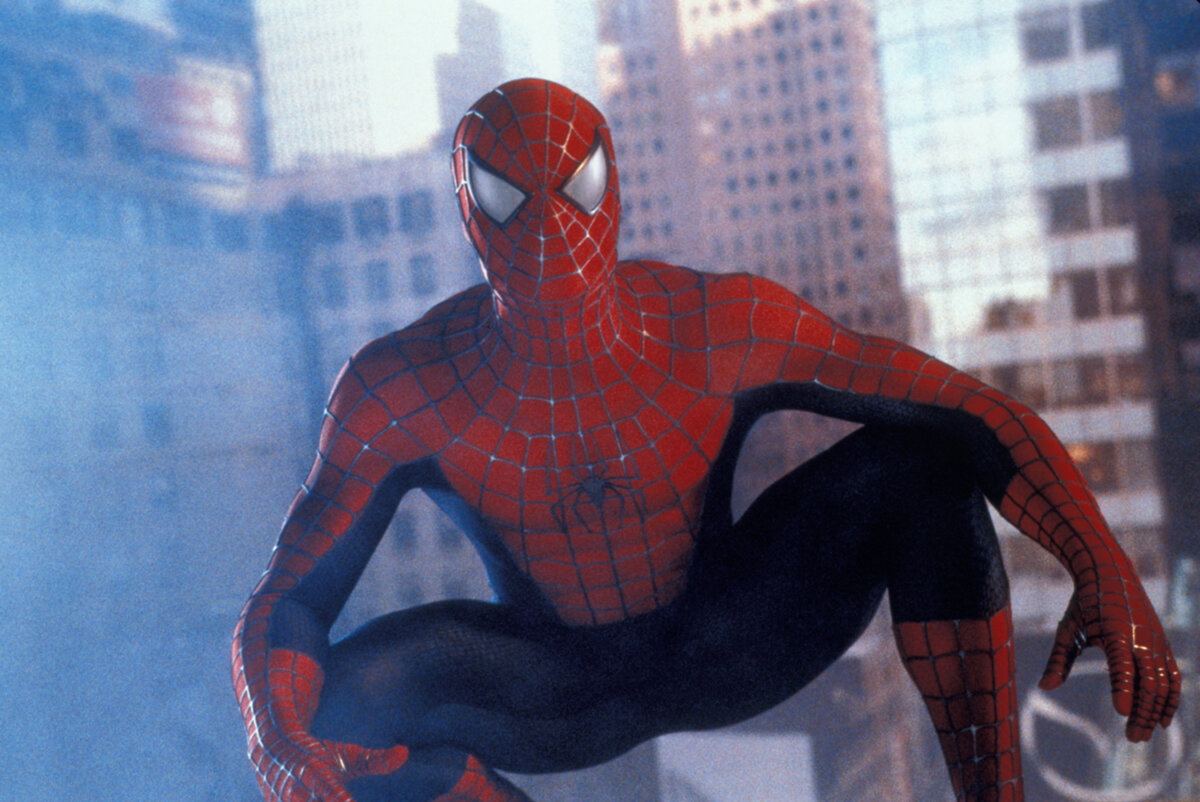
A spider is a spider is a spider. Right? Not quite, according to the comic book-inspired superhero film “Spider-Man” (2002). Riffing on the subject of spiders, director Sam Raimi makes points about people.
Difference doesn’t need to mean superiority any more than superiority needs to imply supremacy. Restraint can make the difference between the mere existence of power and the perverse exercise of it.
Socially awkward Peter Parker (Tobey Maguire) suffers a bite from a genetically engineered spider while on a high–school field trip to a genetics lab. His buddy, Harry Osborn (James Franco), and Peter’s secret crush, Mary Jane “MJ” Watson (Kirsten Dunst), suspect nothing. Soon, mimicking the spider’s enhanced capabilities, Peter acquires spider-like superhuman strengths.
Noble Alter-Ego
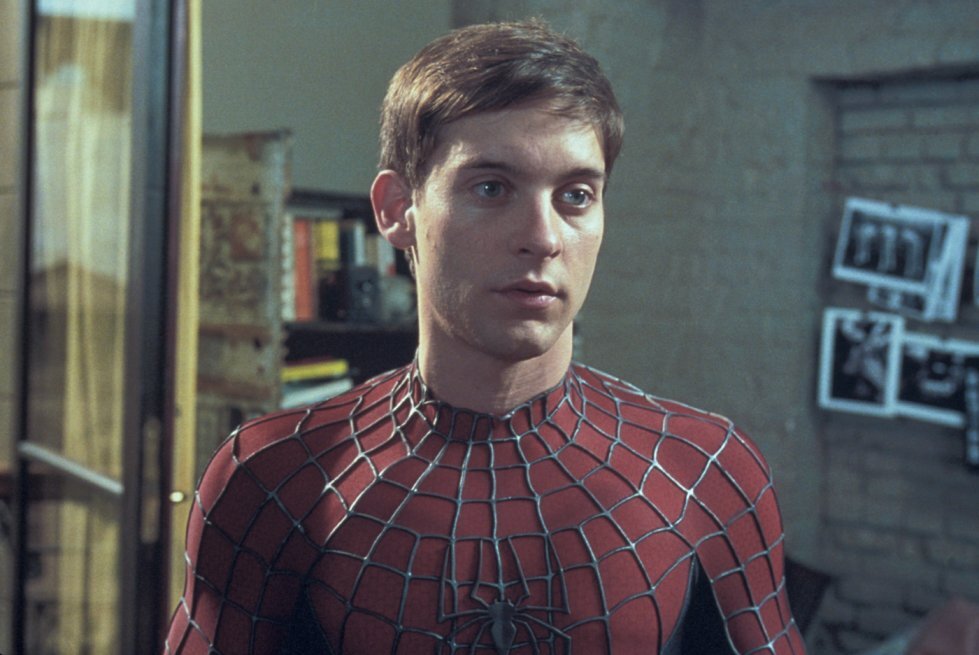
As a masked vigilante, Peter uses his superpowers to protect the powerless, but not before his youthful impulsiveness recklessly endangers those who love him. Eventually, he learns hard life–lessons from the adults around him: Uncle Ben (Cliff Robertson), Aunt May (Rosemary Harris), and Harry’s corporate scientist father, Norman (Willem Dafoe). As Norman dons the nefarious alter-ego of the Green Goblin, Peter dons the noble alter-ego of Spider-Man.
Like all good fantasy films, this movie weaves deeply human ideas into its wildly fantastic web of entertainment.
A lab guide in the film explains that there are over 32,000 known subspecies of spider. However, variable traits affect their relative abilities in preying and feeding, not just in surviving predators. Some can jump greater distances or camouflage themselves better. Others produce silk strands whose tensile strength proportionately rivals that of high-tension wires on bridges. Still others possess reflexes with nerve reaction so quick that it can seem like premonition; hence the term “spider-sense.”
Pure physical power may separate men from boys, but it’s wise use of it that separates misguided men from mature men.
Risk-taking is a typically masculine trait, but there’s a fine line between selfless and selfish risk.
Norman takes risks. He rushes human trials, albeit on himself, because he can’t bear to lose prized military funding to a rival firm. Nevertheless, he always looks inward, helping himself or Harry even at the expense of others.

Helping Others
Peter also takes risks. Initial impetuousness aside, though, he looks outward to help others, even at his own expense. He learns to embrace Ben’s idea: It’s the responsible use of power that informs how powerful a person really is.
Everyone has a spider-sense of sorts. This isn’t the animalistic, seemingly superhuman sensing of danger before it arrives. Rather, it’s the human ability to sense when someone needs understanding, patience, a gentle touch, a hug, or more overt help. That instinct to care, director Raimi illustrates, is an enviable superpower. Norman neutralizes it by cultivating callousness; Peter tries to perfect it through practice.
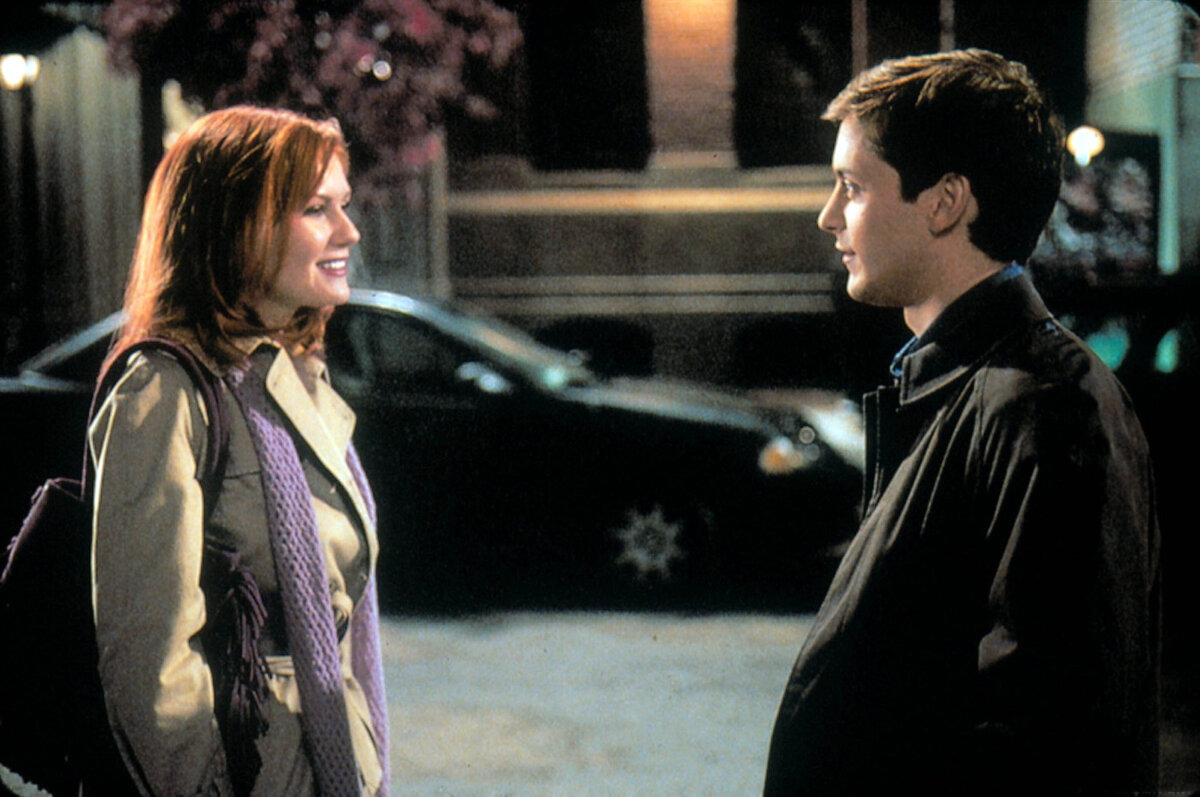
When Ben’s running himself down, his wife, May, points out why he shouldn’t, saying, “You’re the most responsible man I’ve ever known.” MJ tells Peter he’s taller than he looks. He replies, “I hunch.” She says, “Don’t.”
As May reassures Ben, MJ encourages Peter to rise to his potential; Peter does, accepting the price he must pay for being a man, not just Spider-Man.
The Man He Becomes
Ben cautions Peter that as a young adult, he’s changing. The beliefs he hardens in himself, the habits he picks, and the choices he makes will mold the man he becomes. He warns, “Be careful who you change into.” Ben’s implying that just because Peter/Spider-Man can overpower or overrule someone doesn’t give him the right to; that must flow from what’s right, not who’s right.
By becoming Spider-Man and staying humble and respectful, Peter becomes more fully himself. By surrendering to baser instincts, Norman disappears into the Green Goblin’s notoriety, never quite recovering himself.
Ben proxies for the father Peter misses by giving him tough love, encouraging him to rise above willfulness. Norman strives to become a better father to Harry but does the opposite. He indulges Harry, trying to gift him what he feels he’s entitled to, including the girl of his dreams.
Screenwriter David Koepp slips in Bible verses (“Let there be light,” “The Lord’s Prayer”) to take a swipe at genetic enhancement, while nodding to God (not man) as creator. Man, as a legitimate innovator or inventor using already created matter, must use science and technology as a force for good.
Koepp’s wary of the boasts of genetic enhancement; comically, so is his protagonist. Reeling from spider venom, Peter rushes upstairs to the privacy of his room. Anxious, May asks, “You won’t have a bite?” Peter mutters, “No thanks. Had a bite.”
Check the Internet Movie Database website for plot summary, cast, reviews, and ratings. You can watch “Spider-Man” on Fubo, Hulu, and FXNow.
These reflective articles may interest parents, caretakers, or educators of young adults, seeking great movies to watch together or recommend. They’re about films that, when viewed thoughtfully, nudge young people to be better versions of themselves.
What arts and culture topics would you like us to cover? Please email ideas or feedback to features@epochtimes.nyc.
