Robert Ripley made a living by putting the improbable in front of ordinary people and daring them to reject it.
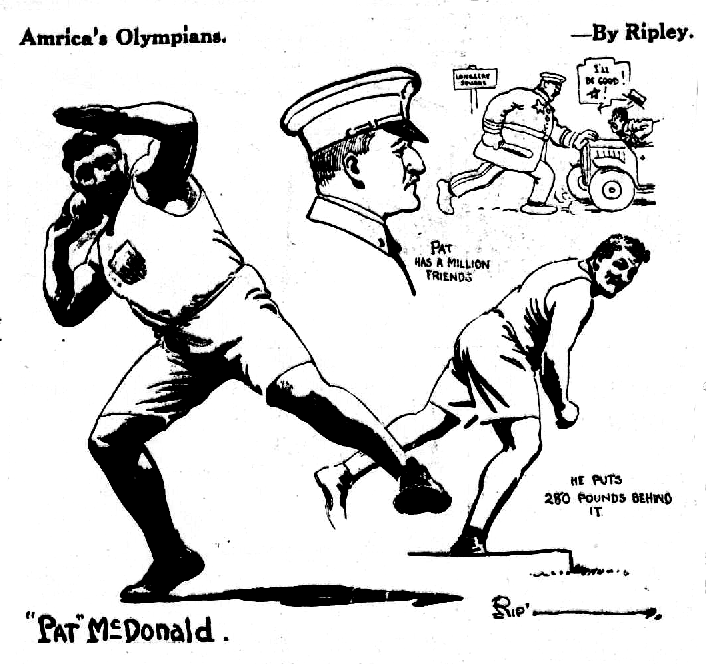
Born LeRoy Robert Ripley in Santa Rosa, California, in 1890, he was drawing cartoons by his teens and began his professional career as a sports cartoonist in San Francisco. He eventually moved to New York and worked for the New York Globe, where athletic feats supplied his early material. But sports records led him toward a larger subject: the human appetite for the unusual.
The Cartoonist and the Curious
On Dec. 19, 1918, the New York Globe published Ripley’s first panel of extraordinary athletic feats. He called it “Champs and Chumps.” It featured nine remarkable accomplishments gathered from his collection of sports lore. The cartoon soon moved beyond athletics, and about 10 months later, a panel appeared with the exact title “Believe It or Not!” The name stuck.
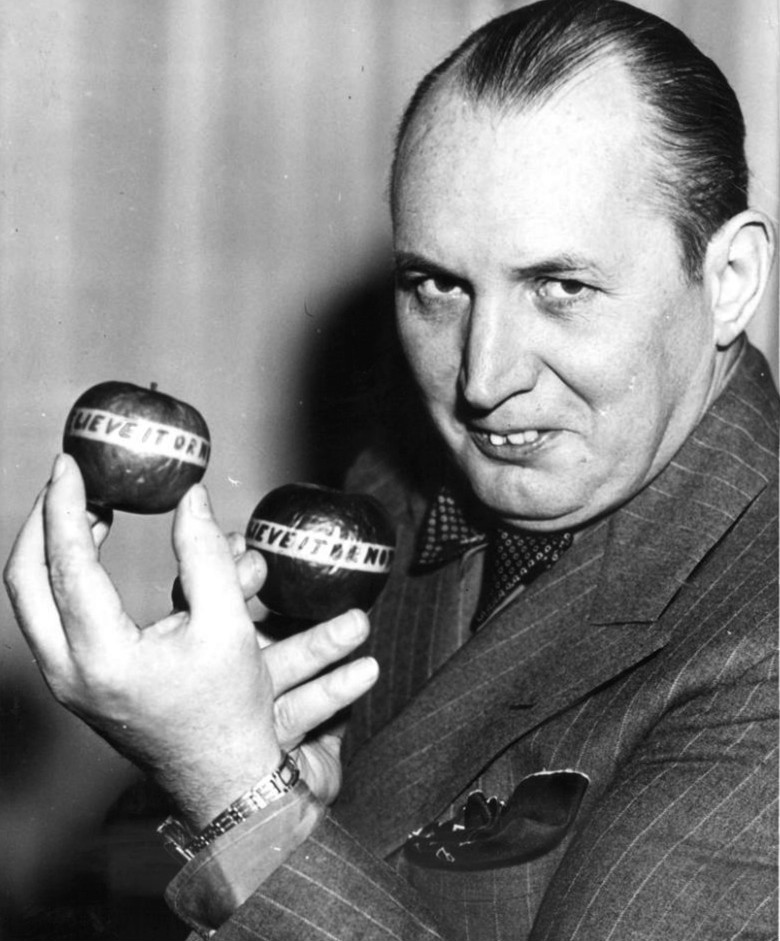
The title itself was the hook: Neither quite a declaration nor a question, “Believe It or Not!” was a challenge.
Ripley understood that disbelief could keep a reader’s attention longer than certainty. His cartoons began to range across history, geography, animals, customs, and human behavior. If something sounded too peculiar to be true, Ripley put it before the reader and let the reader wrestle with it.
That evidence increasingly came from an extraordinary source.
In the 1920s, Ripley began working with Norbert Pearlroth, a multilingual researcher who became one of the most important—and least celebrated—figures behind the feature. Pearlroth spent his days at the New York Public Library, digging through books and obscure publications for facts that could withstand scrutiny. He could read numerous languages and supplied Ripley with a steady stream of material from the printed world.
Ripley searched the world. Pearlroth searched the stacks. Together, they produced a peculiar form of journalism in which the truth had to be stranger than fiction.
Ripley traveled extensively, including a round-the-world journey in 1922, and his experiences abroad widened the cartoon’s territory. Foreign customs, remote places, and unusual practices gave him an almost inexhaustible supply of material. He sought facts that made readers stop, stare, and wonder how such a thing had escaped notice.
The Business of Wonder
Ripley’s most renowned act of journalistic mischief occurred after Charles Lindbergh’s 1927 transatlantic flight.
Lindbergh had become an international hero after completing the first solo, nonstop flight across the Atlantic. Ripley responded with a cartoon declaring that Lindbergh was not the first to fly across the Atlantic. Thousands of readers objected. The point was in the distinction: Lindbergh was the first to make the crossing solo and nonstop, but other aviators had crossed the Atlantic before him. The cartoon turned a technical distinction into a national argument.
And the man behind the fact was not Ripley alone. PBS identifies Pearlroth as the person who conceived the Lindbergh cartoon, another reminder that the Ripley phenomenon depended as much on a hidden research operation as on its famous front man.
Ripley knew controversy was good business. The “Believe It or Not!” feature expanded into books, radio, films, and public exhibitions. In 1929, Ripley published his first “Believe It or Not!” book, extending the newspaper feature into a new medium. His collection of peculiar facts had become a commercial phenomenon.
Then, he built walls around his curiosities.
The Odditorium
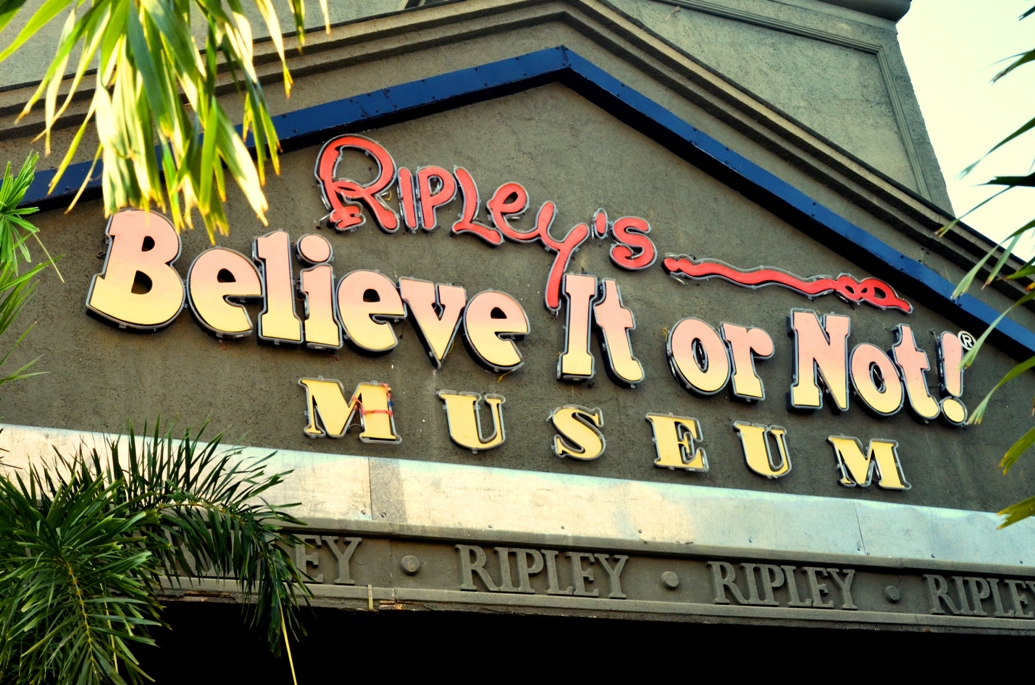
In 1933, Ripley opened the first Odditorium at the Chicago World’s Fair. It transformed the newspaper feature into a physical attraction, bringing artifacts, performers, and human oddities into the same strange universe he had been creating with ink. The exhibition was a huge success and remained open into the following year. In 1939, Ripley opened his first permanent Odditorium in Manhattan.
The awkward California cartoonist had turned his peculiarities into a recognizable public identity. He was a traveler, collector, broadcaster, and impresario, but underneath the various costumes was a newspaperman’s instinct: Find something people do not know and make them care about it.
His success was immense. Yet there was a paradox in his method. Ripley made his fortune from things that sounded like lies while insisting on the importance of facts. The spectacle depended upon credibility. Without the underlying truth, there was no trick. That was his real talent. He knew that wonder is strongest when it survives investigation.
Ripley died in New York on May 27, 1949, after suffering a heart attack while working on his television program. He was 59. By then, “Believe It or Not!” had grown far beyond the newspaper panel that started it.
The cartoon survived because Ripley had discovered something more durable than any particular oddity. People never run out of reasons to doubt what they are told, and they never quite lose their appetite for being surprised.
That was Ripley’s territory. He lived there for 30 years, somewhere between the newspaper and the sideshow, between fact and astonishment. And there was always another strange thing waiting around the corner.
What arts and culture topics would you like us to cover? Please email ideas or feedback to features@epochtimes.nyc.