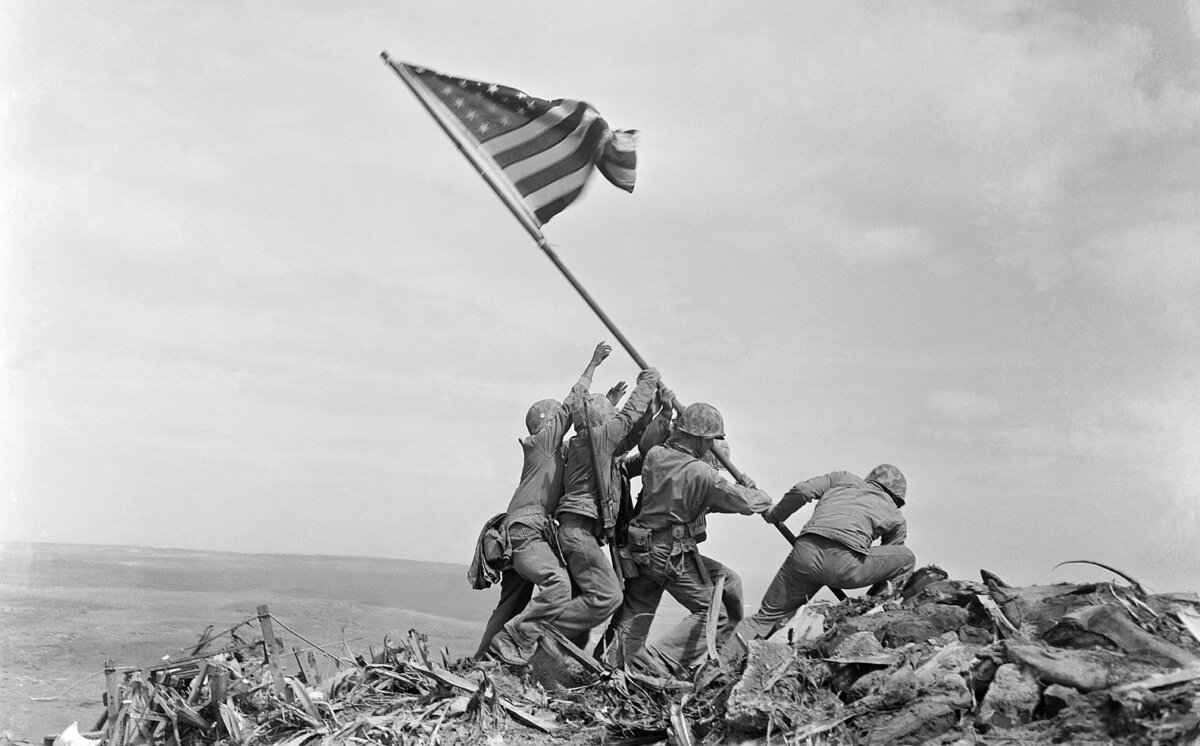
On Feb. 23, 1945, Secretary of the Navy James Forrestal personally witnessed from afar the Marines raising the Stars and Stripes atop Mount Suribachi during the Battle of Iwo Jima. He famously told Marine Corps Gen. Holland “Howling Mad” Smith, “The raising of the flag on Suribachi means a Marine Corps for the next 500 years.”
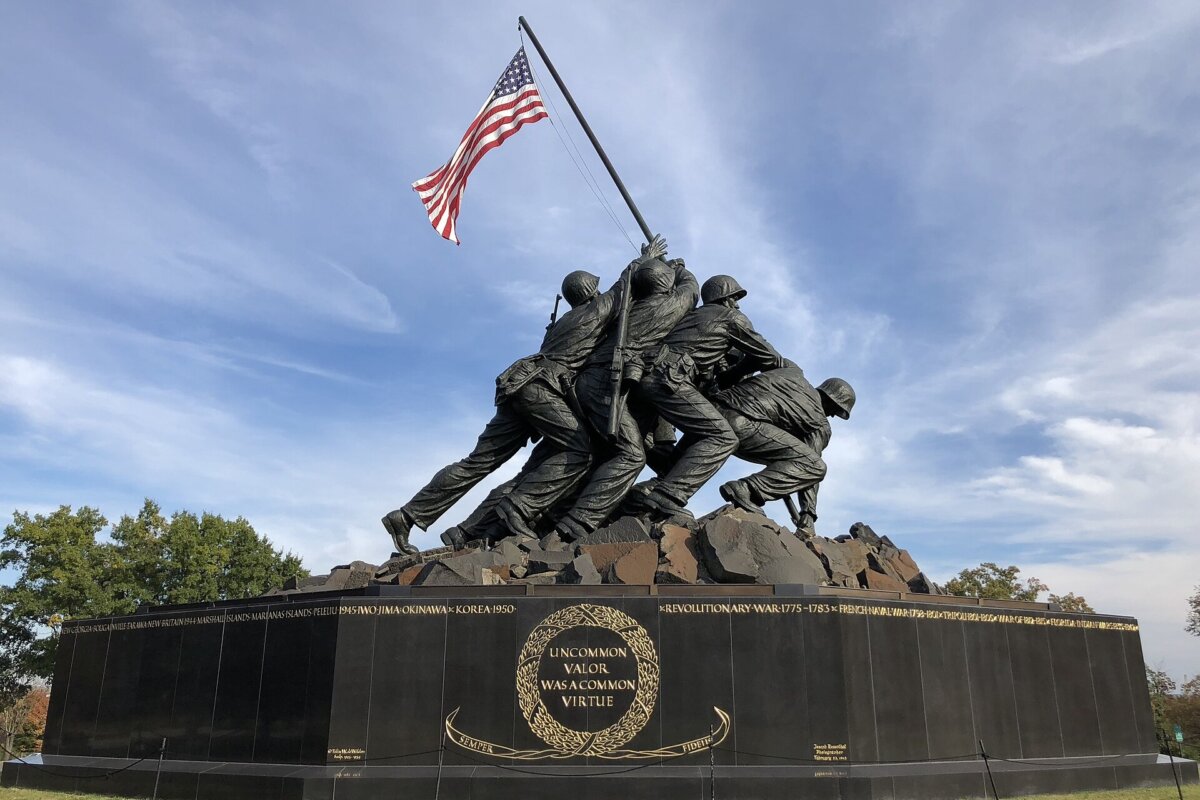
Joe Rosenthal’s iconic camera shot of the six Marines raising the flag added insurance to that possibility, won Rosenthal the Pulitzer Prize, and remains one of the most famous photographs in history. The statue based on that photograph with its 32-foot-tall figures and 60-foot-tall American pole and flag stands today as the Marine Corps War Memorial in Arlington, Virginia.
In his film “Flags of Our Fathers,” director Clint Eastwood took viewers into the lives of the three surviving Marines who raised that flag and set out on a war bond tour of America. That tour attracted massive crowds and raised more than $26 billion.
Most Americans today still recognize Rosenthal’s picture of the flag raising yet likely know much less, if anything at all, about the Battle of Iwo Jima. Such ignorance is both understandable and natural. Time ticks away, and the accumulation of events buries yesterday’s headlines.
Sometimes, however, it behooves us to pause in our rush into the future, look over our shoulder, and take heart and hope from those who came before us. In this case, we gather hope from the Marines who fought beneath that flag flying from Mount Suribachi.
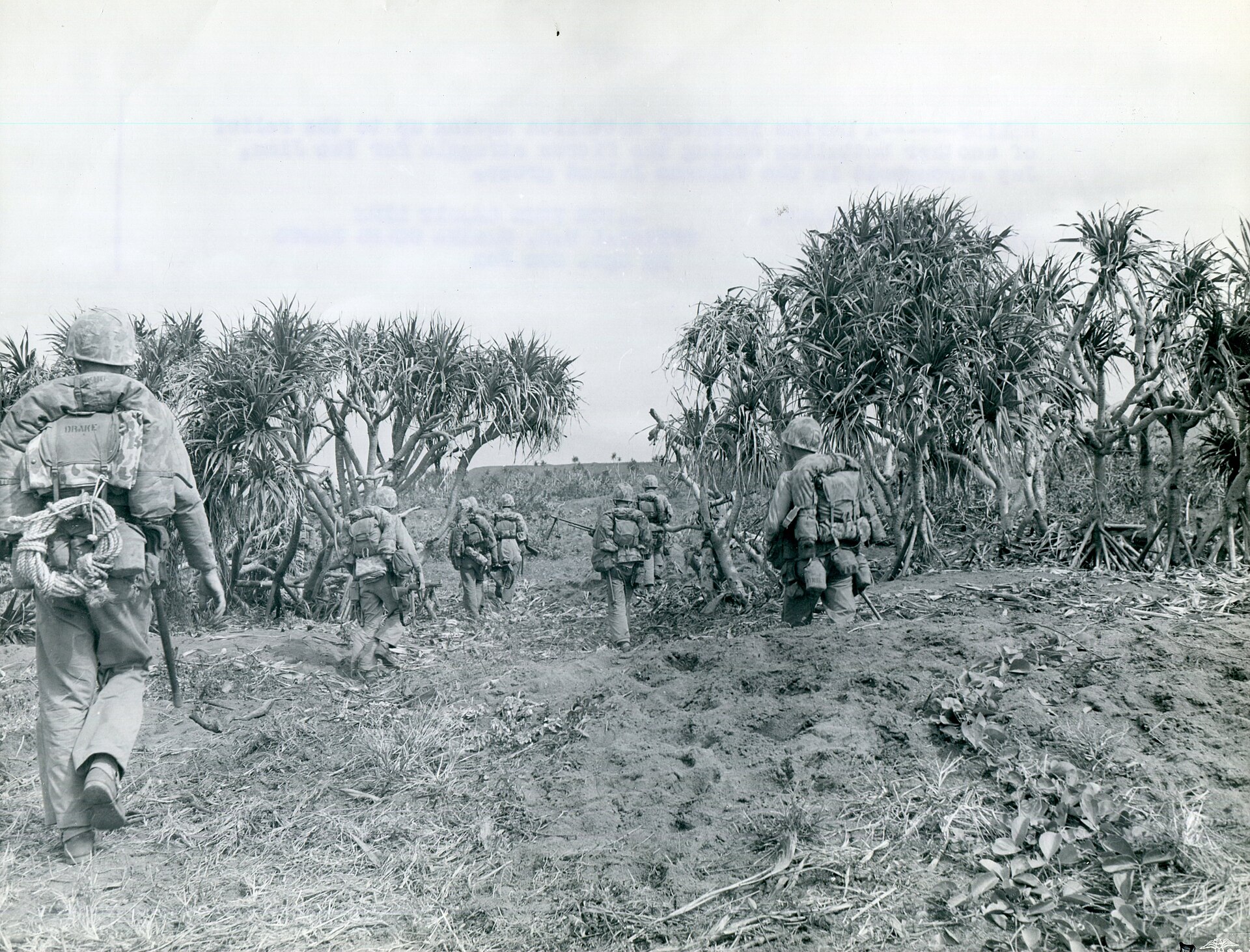 A Marine Infantry Battalion advances into Iwo Jima in February 1945. (USMC Archives/CC BY-SA 2.0)
Preliminaries
Though U.S. naval forces had shelled Iwo Jima several times in the months preceding the invasion, from Feb. 16 to 18, the bombardment began in earnest from the sea and the air. To the watching sailors, soon joined by the invasion fleet from the Marianas, it must have seemed impossible for anyone to have survived such a shellacking. Like the planners of the invasion, however, those onboard ships had yet to detect the latest defense built by the enemy.
The Japanese were not only on the island. They were in the island. Writing about the battle in “Flags of Our Fathers,” James Bradley noted, “For most of the young boys, it had not fully sunk in yet that the defenders were not on Iwo, they were in Iwo, prowling the sixteen miles of catacombs.”
Carved out beneath the island’s surface was a honeycomb of tunnels, miles of corridors, sleeping areas, storage rooms, and sickbays, a complex capable of concealing and housing thousands of Japanese troops. The bombs and shells left this underground warren largely intact.
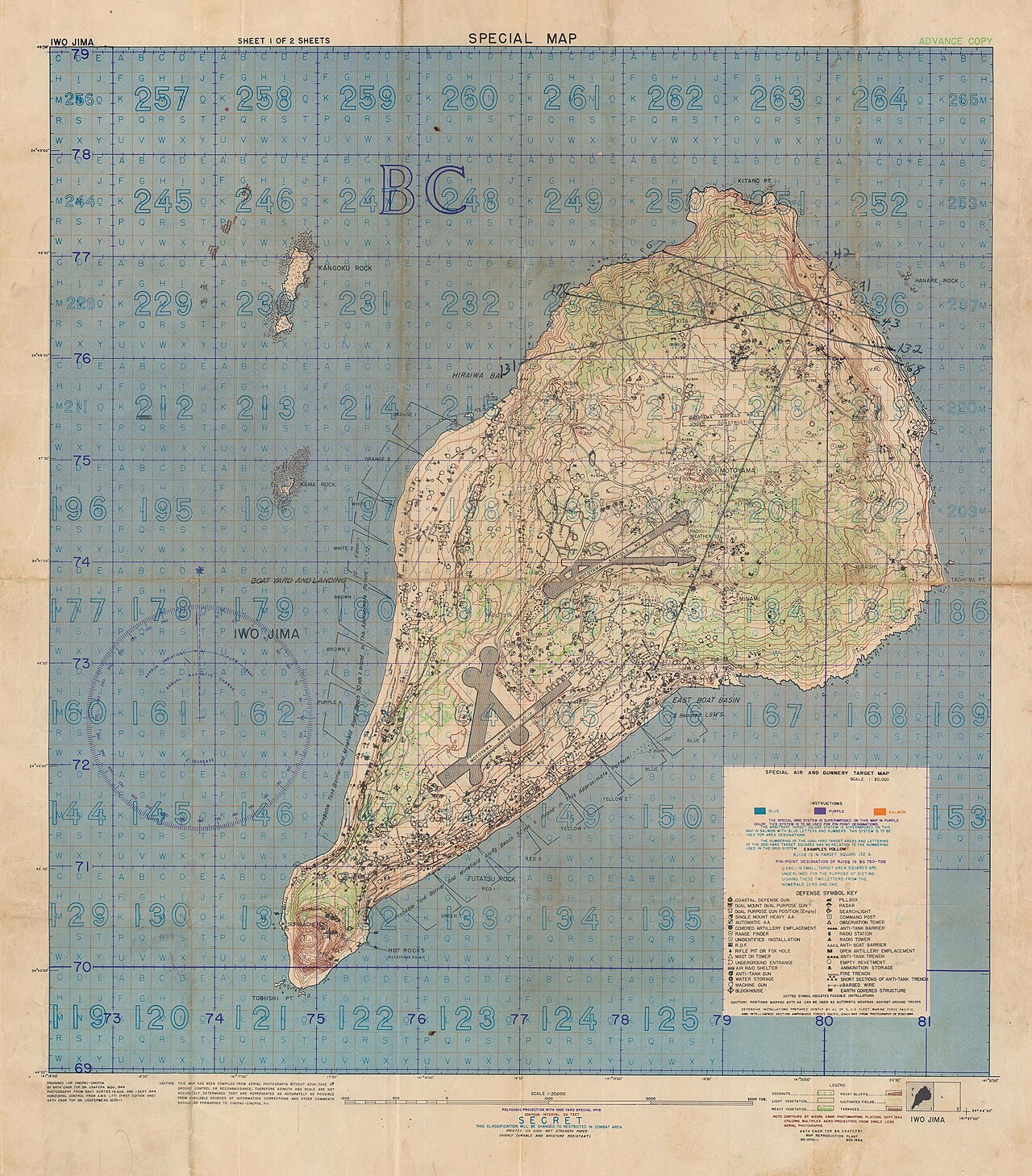 While the island was barely 10 square miles, thousands of men gave their lives on the volcanic sand at Iwo Jima. (Public Domain)
Nor had the planners taken into account the thick layer of volcanic ash covering most of the island’s surface. The ash absorbed some of the blast of the shells striking the island. Worse, the Marines who stormed ashore on Feb. 19 and afterwards found themselves sinking ankle deep into this volcanic ash as they advanced, slowing their pace and making them easier targets.
In addition, the island’s commander, Lt. Gen. Tadamichi Kuribayashi, had issued orders that the suicidal banzai charge typical of other engagements with the Americans was forbidden. Each man must guard his life dearly, bringing honor to the emperor by killing as many Americans as possible in hopes that the war might end in a negotiated rather than unconditional peace. Lt. Gen. Kuribayashi’s “Courageous Battle Vows” order imbued the men with a fanaticism and tenacity rarely seen in warfare.
‘A Nightmare in Hell’
For 36 days, in what journalist Robert Sherrod called “a nightmare in hell,” the Marines and the soldiers of Imperial Japan slugged it out before the Americans declared the island secure. Even then, the Army units that replaced the exhausted Marines battled the Japanese for months, rooting them out of the tunnels, engaging them here and there in sharp, quick skirmishes. The last two Japanese holdouts only surrendered in 1949, almost four years after the war had ended.
A handful of facts and statistics bring home the carnage and horror of this battlefield.
Iwo Jima was the only battle fought by the Marines in the Pacific in which their casualties—killed, wounded, and missing—outnumbered those of the Japanese. Reportedly 5,931 Marines died in action, of wounds, or were missing—twice as many Marines as had died in all of World War I. Total battle deaths were 6,140: total casualties, 24,053. Total Japanese battle deaths—only a few hundred surrendered—were estimated between 17,000 and 20,000.
All this bloodletting and death occurred in less than 10 square miles.
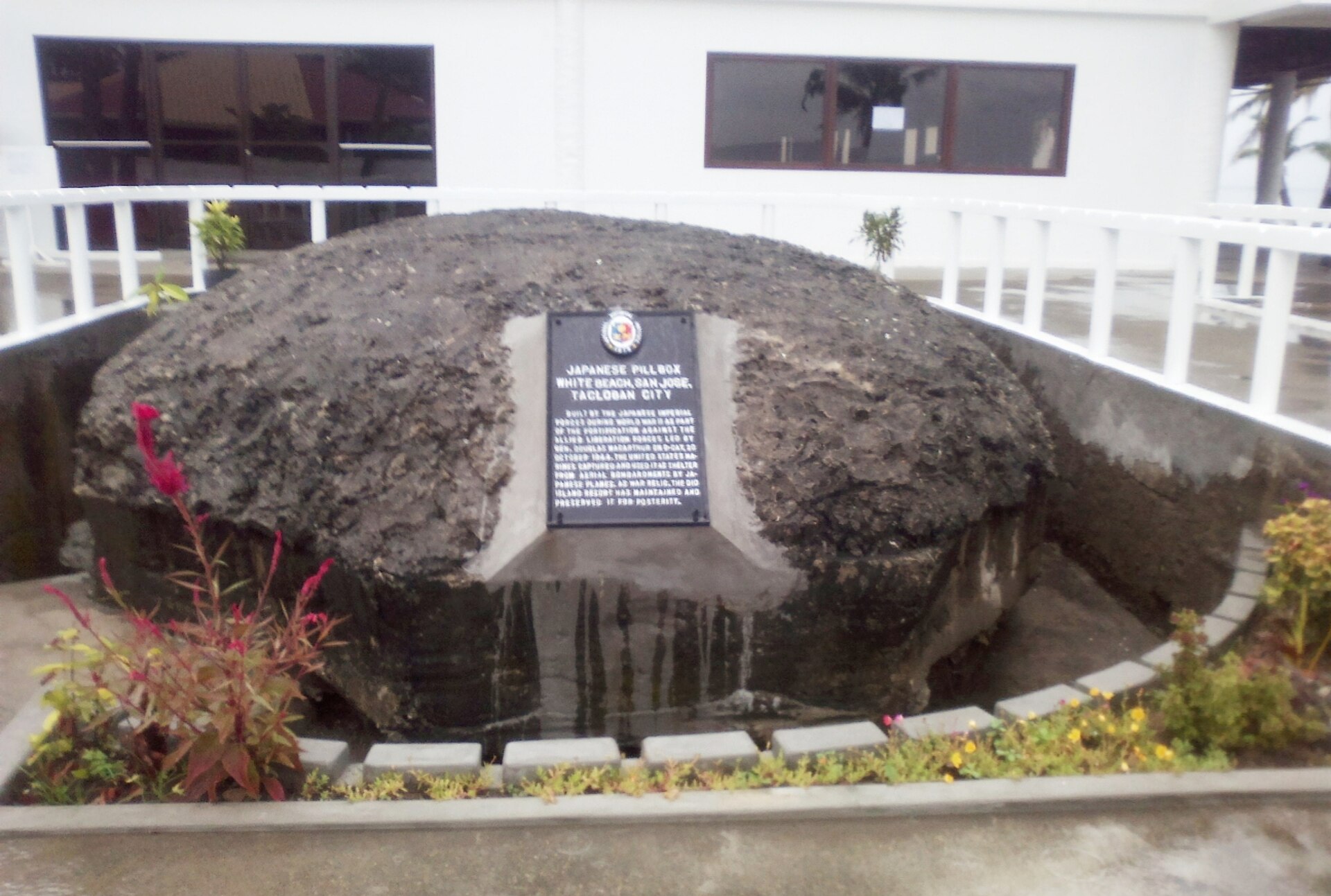 A WWII-era Japanese pillbox fortification in the Philippines. A “pillbox” was a fortification with strong walls meant to survive intense assaults. (Leocvlauzon/CC BY-SA 4.0)
The tunnels brought brutality and shock from both sides. Marines would neutralize a Japanese pillbox (a blockhouse) assault the next objective, and suddenly find themselves attacked in the rear or on the flank by men in the pillbox, fed there by the tunnels.
To clear the tunnels, the Marines frequently resorted to flamethrowers, sometimes calling first on the Japanese to surrender, then burning them in the pillboxes and tunnels when the only response were shots fired. Because the man carrying the flamethrower made an easy target for snipers, the Sea Bees had developed a flamethrower that worked from the inside of a Sherman M4A3 tank capable of shooting out its deadly jellylike gasoline 150 yards.
On Iwo Jima, these flamethrower tanks used 5,000 to 10,000 gallons of napalm per day against the tunnels and pillboxes. At least one company commander credited these tanks, which the troops called “Zippos” after the popular lighter, with winning the battle.
In those five weeks of combat, 22 Marines and five other combatants received America’s highest award for bravery in battle, the Medal of Honor. This stands as the record for the most Medal of Honors given in any single battle in U.S. history. Fourteen of the recipients were awarded their nation’s highest honor posthumously.
Above and Beyond
Sgt. Darrell S. Cole, age 24, had joined the Marines just after Pearl Harbor, but because of his musical talent, was made a bugler. Finally, he convinced his superiors to allow him to become a combatant. On the day of the initial landing, and armed only with a pistol and a grenade, Cole singlehandedly attacked a Japanese pillbox firing on his men. Twice he returned to his lines for more grenades and attacked the enemy before he was brought down by a grenade.
On that same day, 21-year-old Pfc. Donald J. Ruhl attacked eight Japanese, killing two. The next day, when a Japanese grenade hit the ground between two of his fellow Marines, Ruhl threw himself on it, saving their lives.
When Japanese machine gunners held up the advance of his platoon, 23-year-old Pvt. William Watson killed more than 60 of the enemy, enabling the platoon to move forward. Less than a week later, he was wounded in the neck and evacuated.
Eight days into the fighting, another 23-year-old, Navy corpsman John Willis, was wounded, ordered to an aid station, returned to the fighting of his own volition. He was assisting a wounded Marine when the enemy attacked them with grenades. Willis managed to throw seven of these grenades back at them, but the eighth exploded in his hand, killing him.
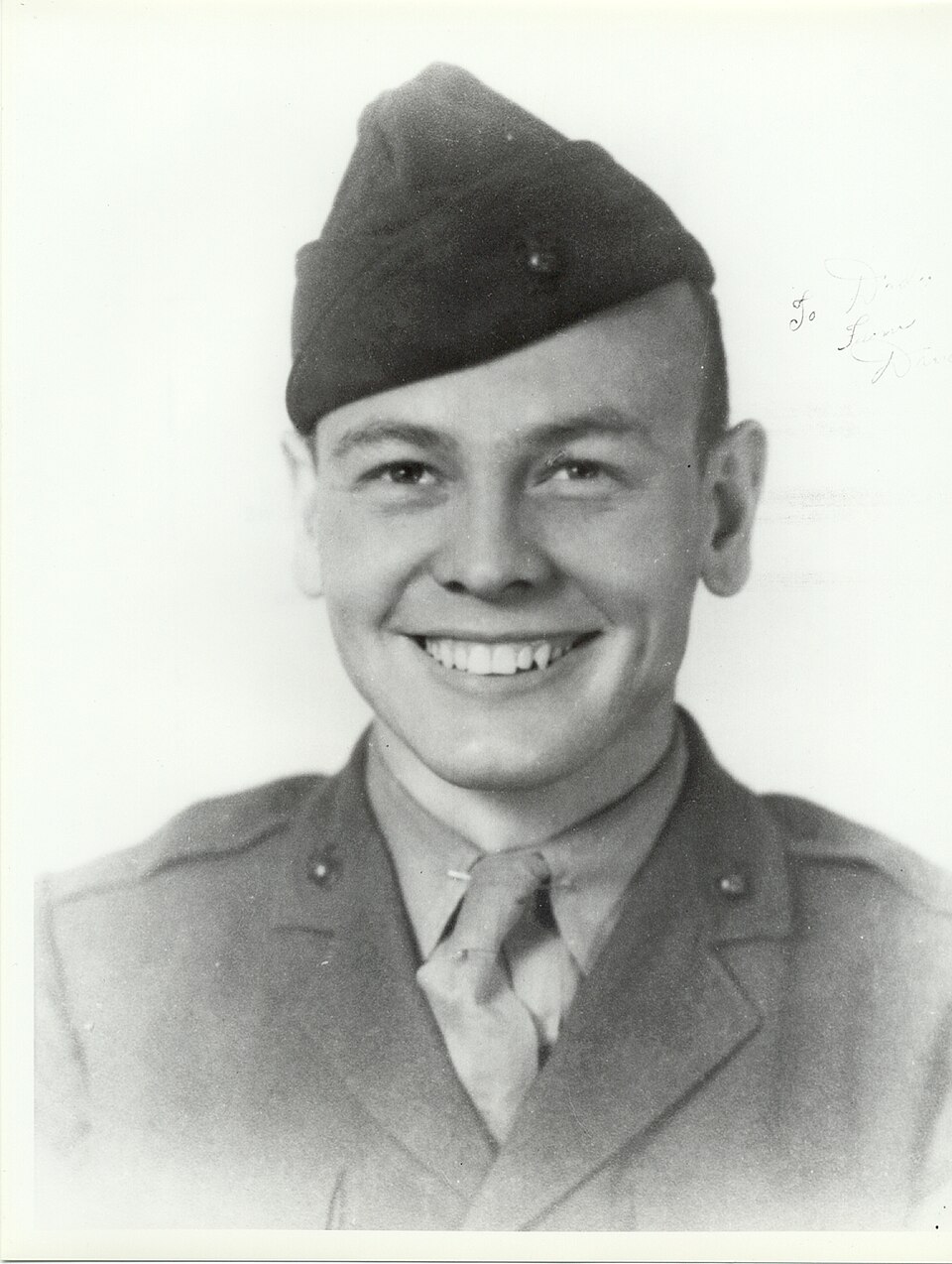 Sgt. Darrell S. Cole died serving his country and defending his fellow soldiers. (Public Domain)
This is a sampling of the Iwo Jima warriors awarded the Medal of Honor. Doubtless many other men who fell on the field of battle deserved recognition as well. As Marines who survived the battle often said, the real heroes of Iwo Jima were the men who never returned.
Here, we should also note the number of times grenades are mentioned in the Medal of Honor citations. Their use illustrates the close combat that was a feature of this battlefield. Moreover, when we run through the list of those awarded the Medal, we find several men who saved the lives of those around them by falling on grenades. Sacrifice, a form of heroism, was clearly the unspoken order of the day.
Speaking of Iwo Jima, Adm. Chester Nimitz once said, “Uncommon valor was a common virtue.” His words are inscribed on the Marine Corps Memorial in Arlington, where they serve as a reminder not only of the courage and sacrifice of the Marines who have fought in our nation’s wars, but also as a bugle call of inspiration for all who read them.
What arts and culture topics would you like us to cover? Please email ideas or feedback to features@epochtimes.nyc.