Not every discovery story unfolds like an Indiana Jones action adventure. Sometimes a fossil can sit collecting dust for 63 years only to suddenly reemerge, and upend decades of so-called scientific truth.
And it’s so much cooler when that fossil has the potential to rewrite the history of the dinosaurs.
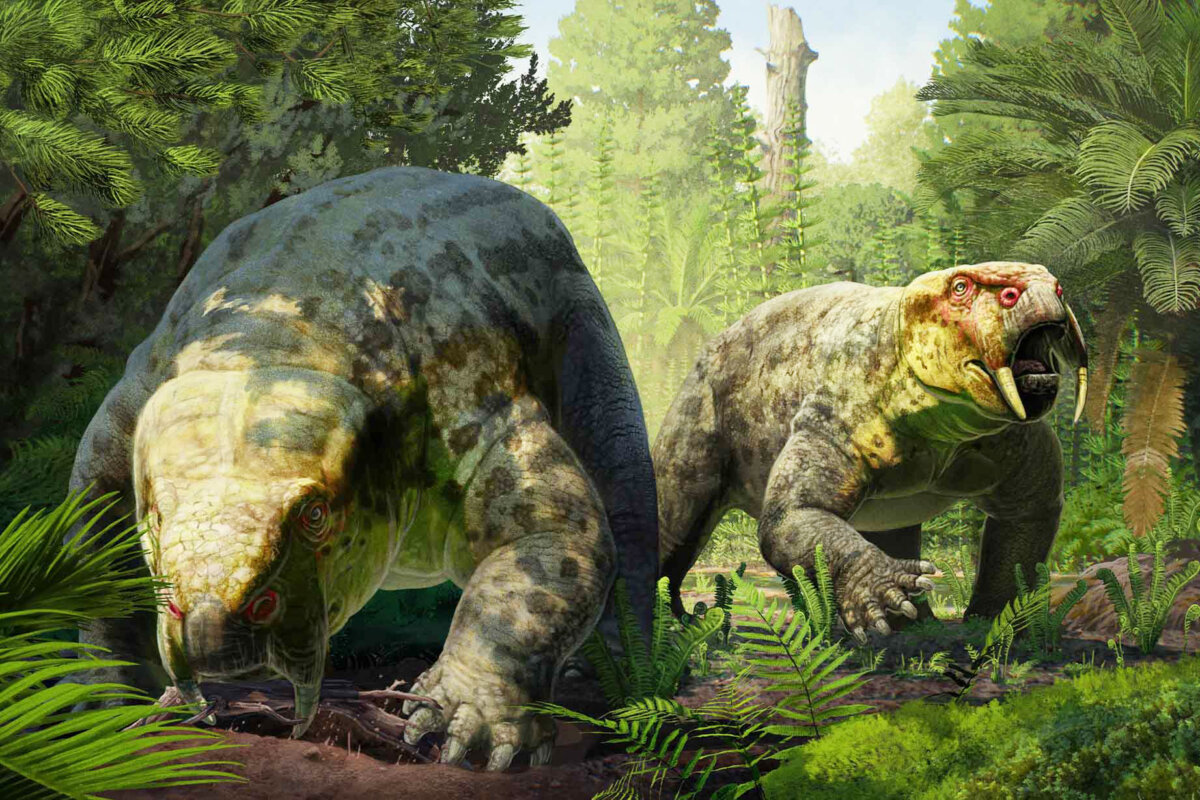
But this particular fossil was no dinosaur. It was a synapsid, a 240-million-year-old mammal relative, which ate plants and brandished huge tusks. The skull of one such massive beast emerged from a rugged valley in East Africa over six decades ago. Only now it’s revealing its mysteries.
Announced Sept. 16 by researchers at the University of Bristol in England, this new species, named Dinodontosaurus isiyavamanda, is a prehistoric animal from Tanzania dating back to the Triassic period, when it’s believed that dinosaurs first appeared.
The story begins in 1963 when British paleontologist Barry Cox and his team of researchers travelled to Tanzania and uncovered a very old bone puzzle—this prehistoric mammalian ancestor in what was once thought the oldest habitat where early dinosaurs lived.
The researchers stowed the bones and sent them to the Natural History Museum in London where they sat for unidentified decades, and were put aside after being only partially studied. Meanwhile, the accepted facts about the age of that ancient African habitat remained unchallenged.
That all changed in 1994.
Nigel Larkin, a student at University College London, dusted off the specimen while writing his master’s thesis. What a creature it was, with the beak of a turtle and tusks like a wild pig. Larkin gave the large swine-sized mammal cousin a wild name, Ruhuhuungualasaurus, though his paper was never formally published and instead sat on a library shelf, gathering dust. The case went cold. Three decades passed.
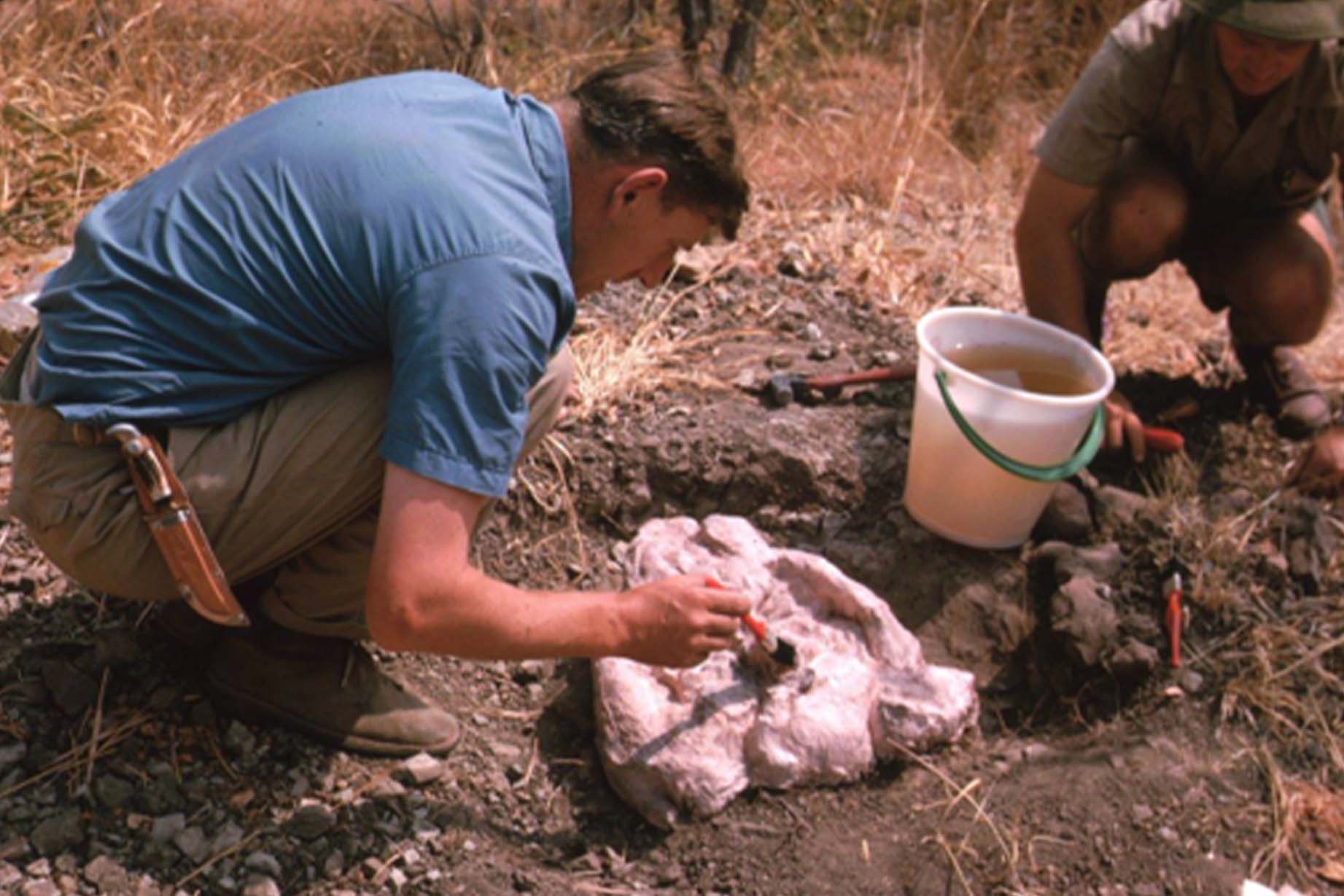 British paleontologist Barry Cox dusts off a fossil during a dig in Tanzania in 1963. (University of Bristol)
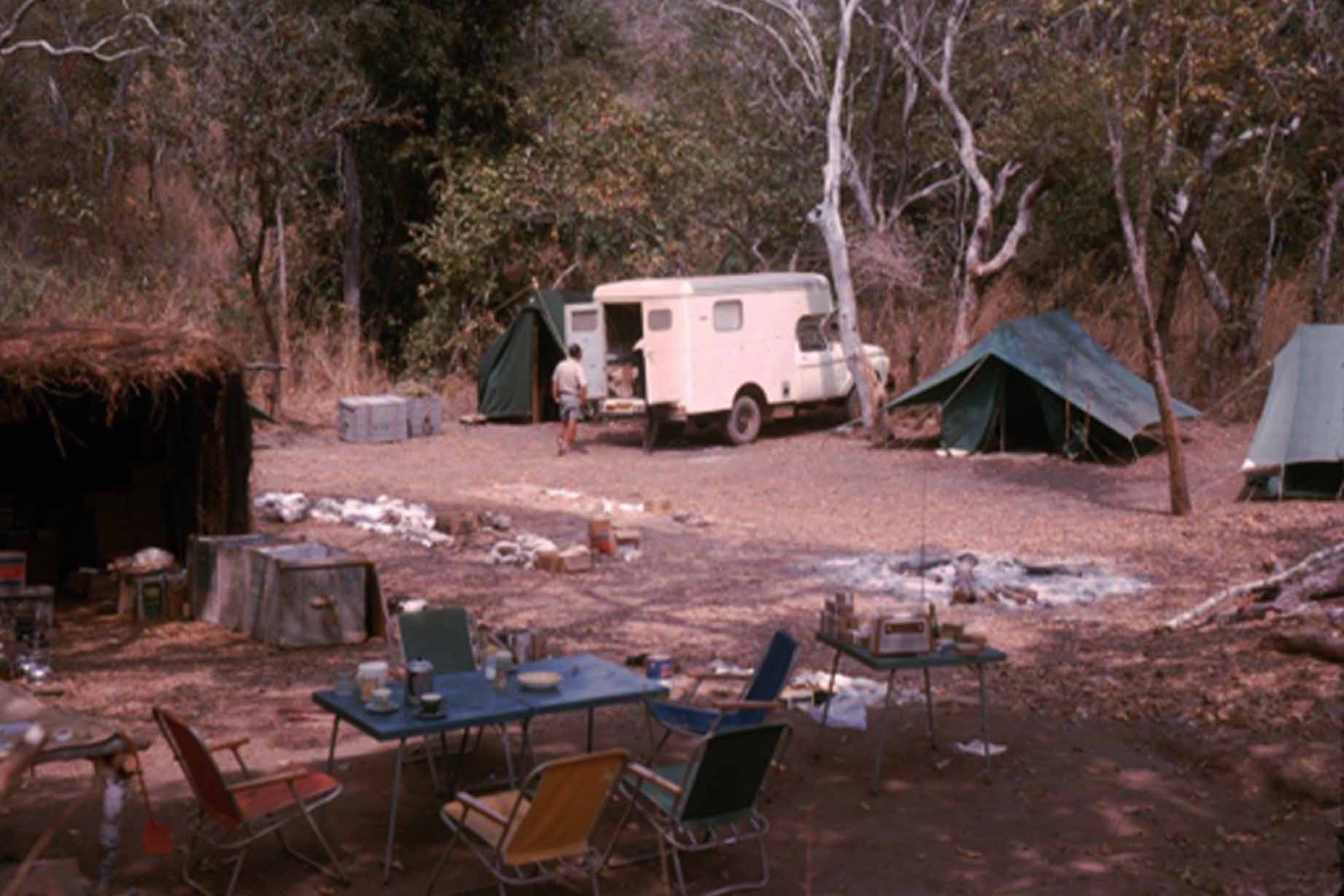 Cox’s low-tech base camp in the Ruhuhu Basin in Tanzania in 1963. (University of Bristol)
Enter the age of high technology. PhD student Hady George from the University of Bristol reopened the case and employed tools the original 1963 team never dreamed of. Micro-CT scanners helped George finish what Larkin had started. Bouncing X-rays through the rock, he created a perfect 3D model of the interior of the skull.
The scanners peeled back the stone to reveal a hyper-specific biological blueprint: a unique, bulbous ridge running down the center of the creature’s upper palate. This hidden mouth mechanic acted like a heavy-duty plant processor, letting the animal slice through tough Triassic vegetation unlike any other herbivore in its ecosystem. This subtle trait proved the beast didn’t have to compete with its neighbors for food—it carved out its own unique adaptation.
“Techniques have improved vastly over the last 30 years too – we can do so much more with Micro CT scanning etc to examine such specimens than we ever could have imagined in the 1990s, and international collaboration is so much easier,” Larkin said in a news release. “And what’s 30 years? It’s the blink of an eye compared to the age of this prehistoric specimen.”
The strange skull also carried a groundbreaking message. Its interior looked exactly like Dinodontosaurus, a creature that lived far away, across the Atlantic Ocean in Brazil and Argentina, leading the researchers to a startling discovery.
Because these heavy-set plant-eaters lived in both Tanzania and South America, it indicated that both pieces of land were the exact same age—geological twins. At one time, both continental plates were connected as part of the ancient supercontinent Gondwana, allowing these animals to walk across.
“The finding links the Tanzanian and South American fossil-bearing rocks, showing they are of equivalent age,” George said. “This helps confirm that the oldest dinosaur candidates from Tanzania are probably no older than those from South America, refining the timeline of dinosaur origins.”
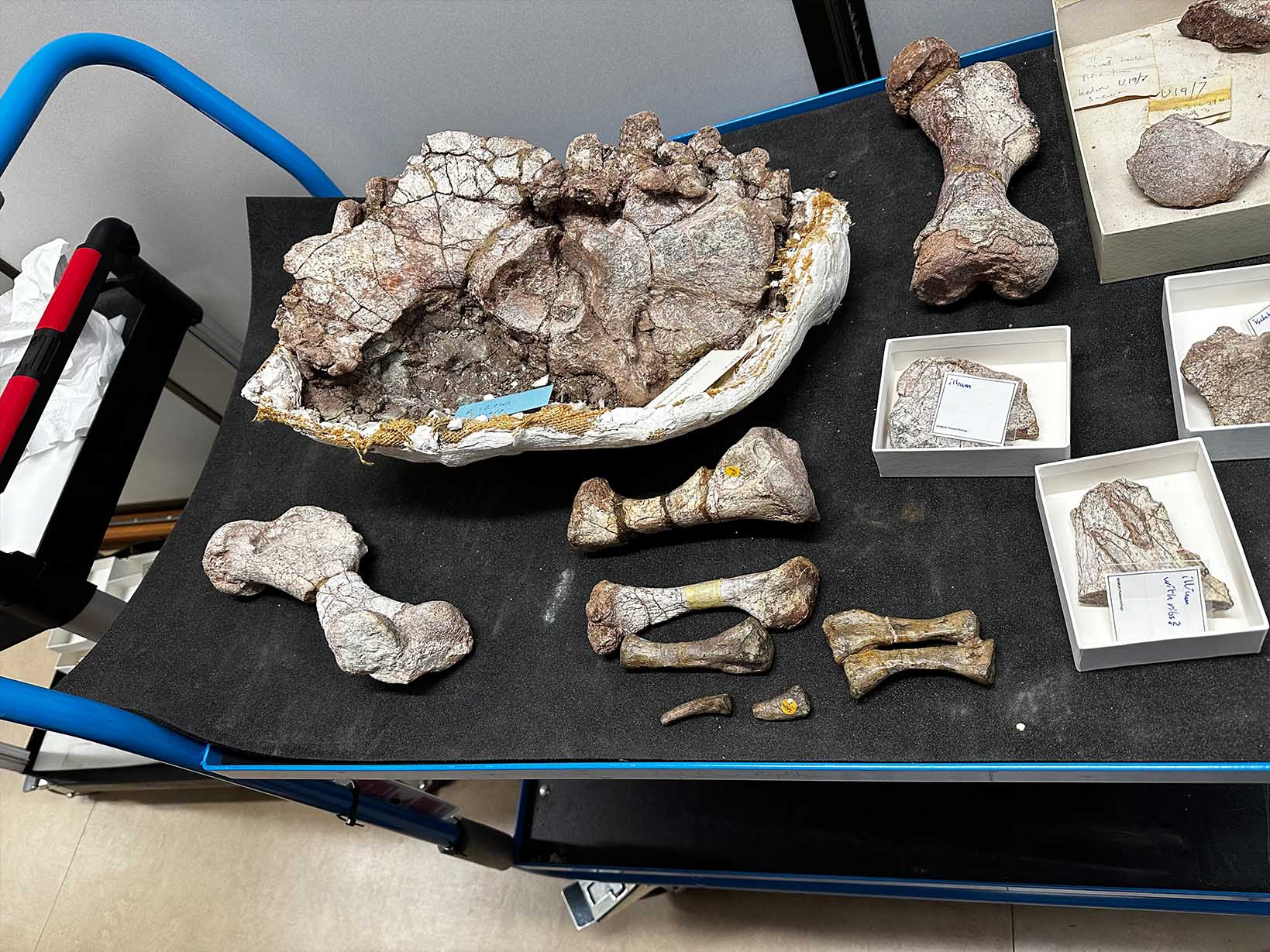 (University of Bristol/Hady George)
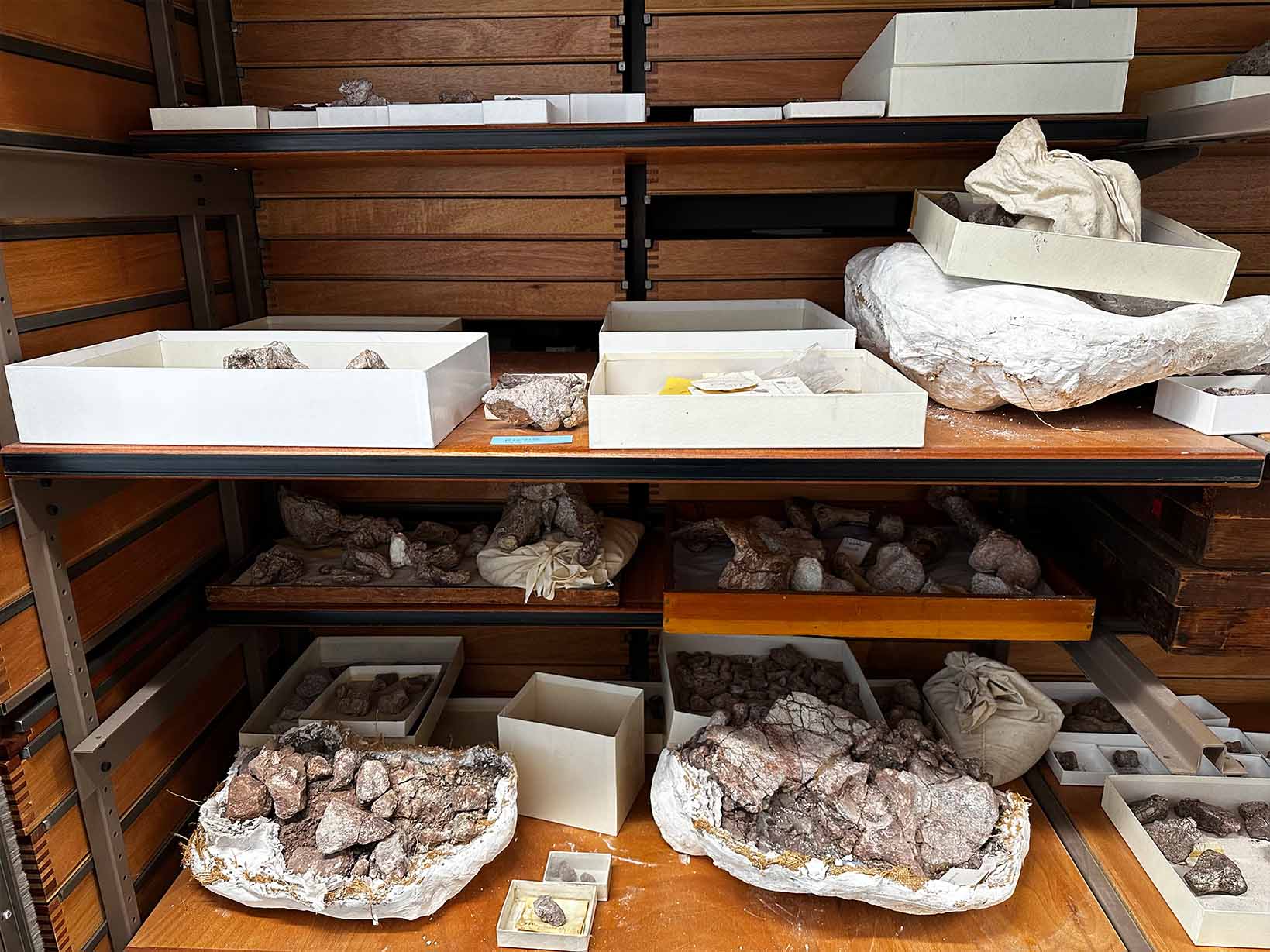 Photos of the fossils in plaster jackets at the Natural History Museum in London. (University of Bristol/Hady George)
George’s realization also shook the historical textbooks. Scientists already knew the exact birthday of the rocks in South America, but when they matched those dates to Tanzania it meant the Tanzanian rocks were up to 10 million years younger than everyone had assumed.
And in a dramatic twist, the find may also change our understanding of dinosaurs. Some of the world’s oldest dinosaur bones rest in the rocks of Tanzania. But because this early mammal, this pig-turtle beast, also lived there, it indicated the rocks are much younger. That means many famous early dinosaurs are probably millions of years younger, too.
The dinosaur timeline suddenly shrank.
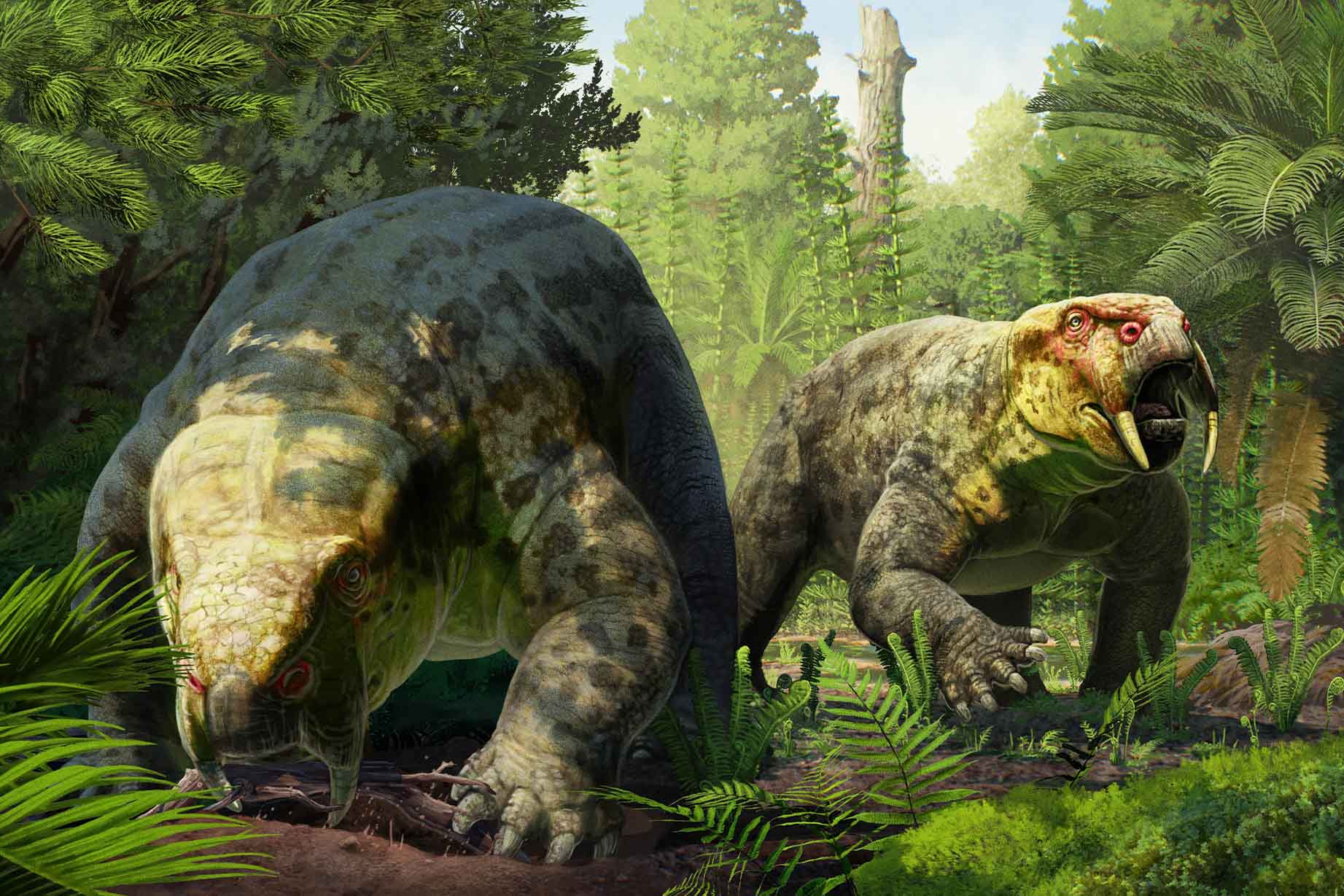 The 240-million-year-old mammal relative Dinodontosaurus isiyavamanda. (University of Bristol)
Larkin’s animal was renamed Dinodontosaurus isiyavamanda, honoring the indigenous people of Tanzania.
“It goes to show how revisiting museum collections can change our understanding of the past just as much as finding new fossils in the field, showing the importance of looking after these invaluable records of life on Earth,” said Mike Day, a curator at the Natural History Museum.
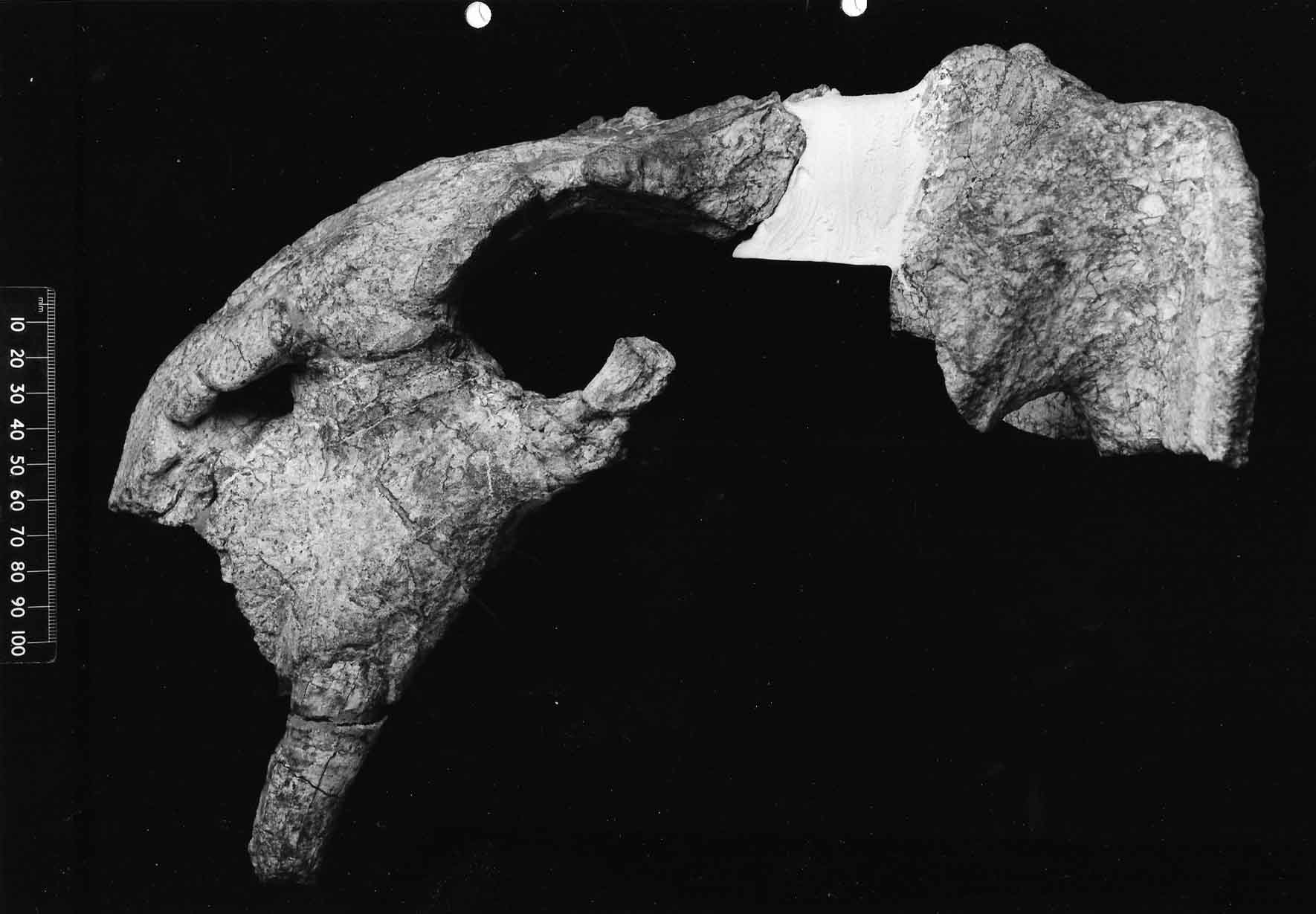 (University of Bristol)
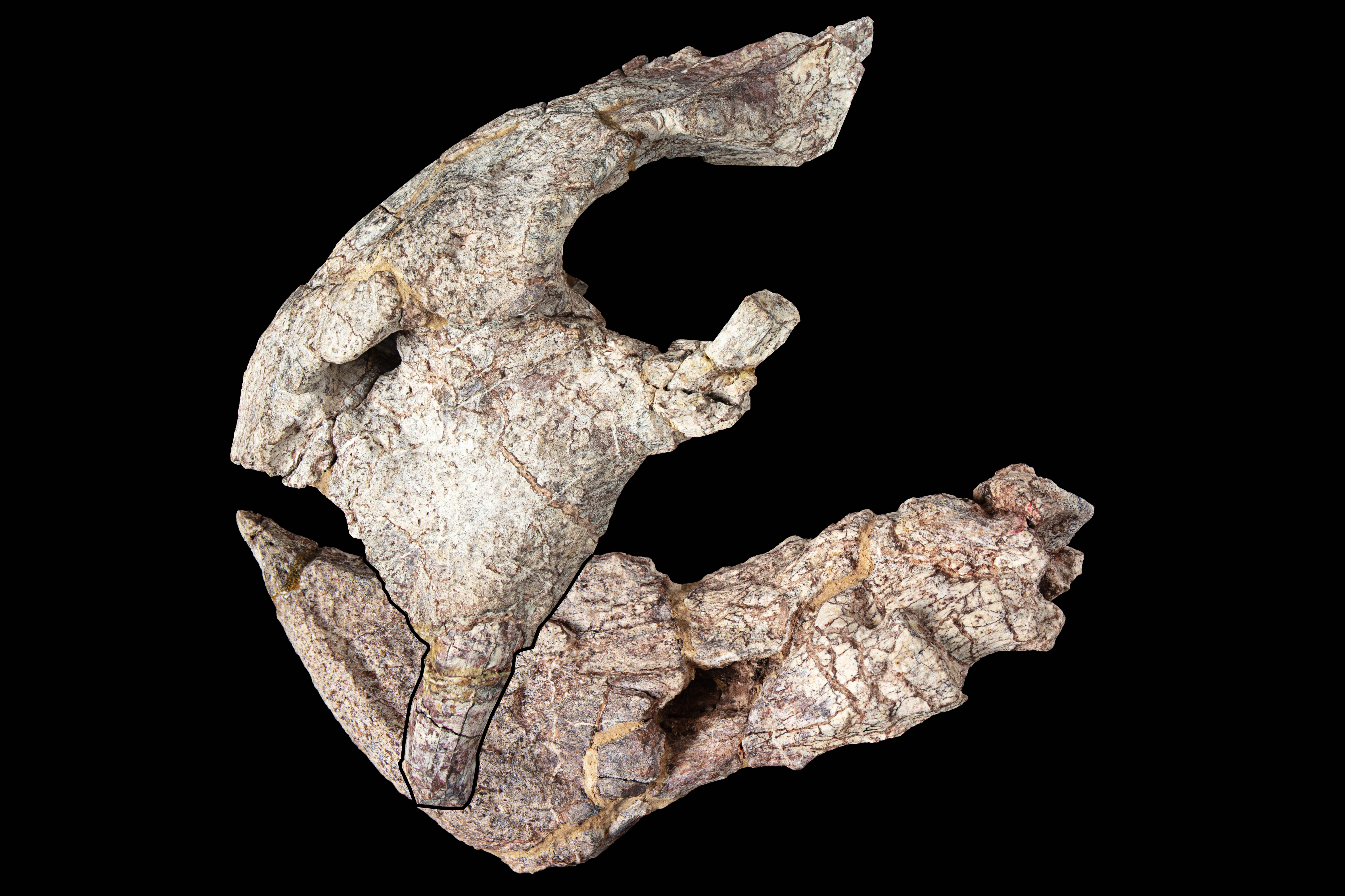 Reconstructions of the skull. (University of Bristol)
Looking back across the decades, it becomes clear how much this breakthrough relied on a multi-generational scientific relay race. The low-tech, boots-on-the-ground journey initiated 63 years ago had to wait patiently on a shelf until technology could catch up. Cox and his team’s 1963 field operation—living in tents in Tanzania’s unforgiving Ruhuhu Basin for months—had the skeleton wrapped in wet newspaper and plaster for shipment. They had no idea what they had truly unearthed.
When Larkin cracked open the crate three decades later, his sharp eyes pinpointed the skull’s unique features, which had never been recorded by science. Yet without publication, the fossil became a scientific ghost.
Now the saga ends—not a replacement of the past, but its fulfillment. George took what Cox had found, and what Larken had hypothesized, then proved it. The ultimate payoff? Larkin was included as one of the co-authors alongside George when their study was published this month in the Journal of Vertebrate Paleontology.
Thirty years is a long time to wait. But better late than never.