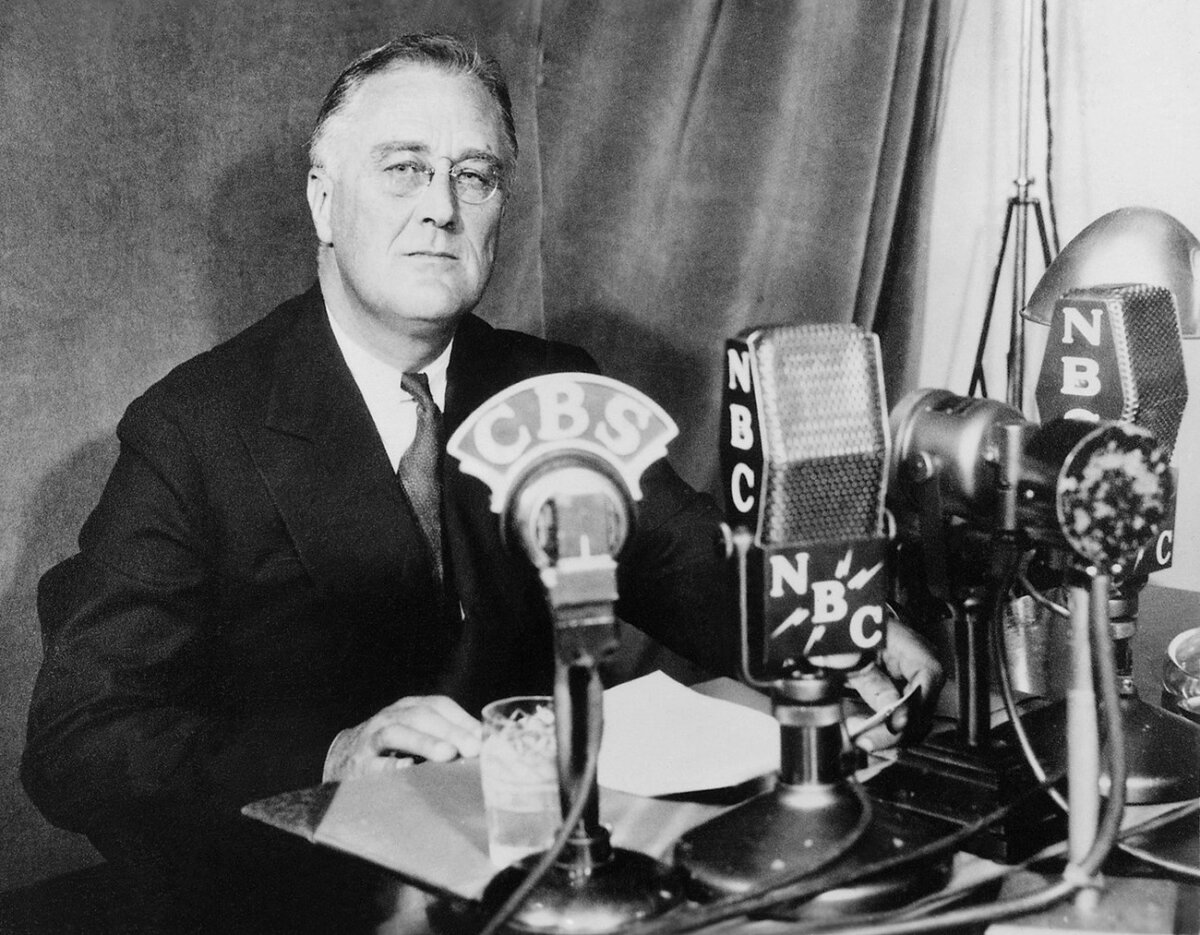
Franklin D. Roosevelt was the first U.S. president to recognize how broadcasting could help further a political agenda. On March 12, 1933, eight days after his inauguration, Roosevelt launched a series of radio-exclusive addresses. These “fireside chats” bypassed reporters and allowed him to communicate directly to the American public without fact checking or media spin.
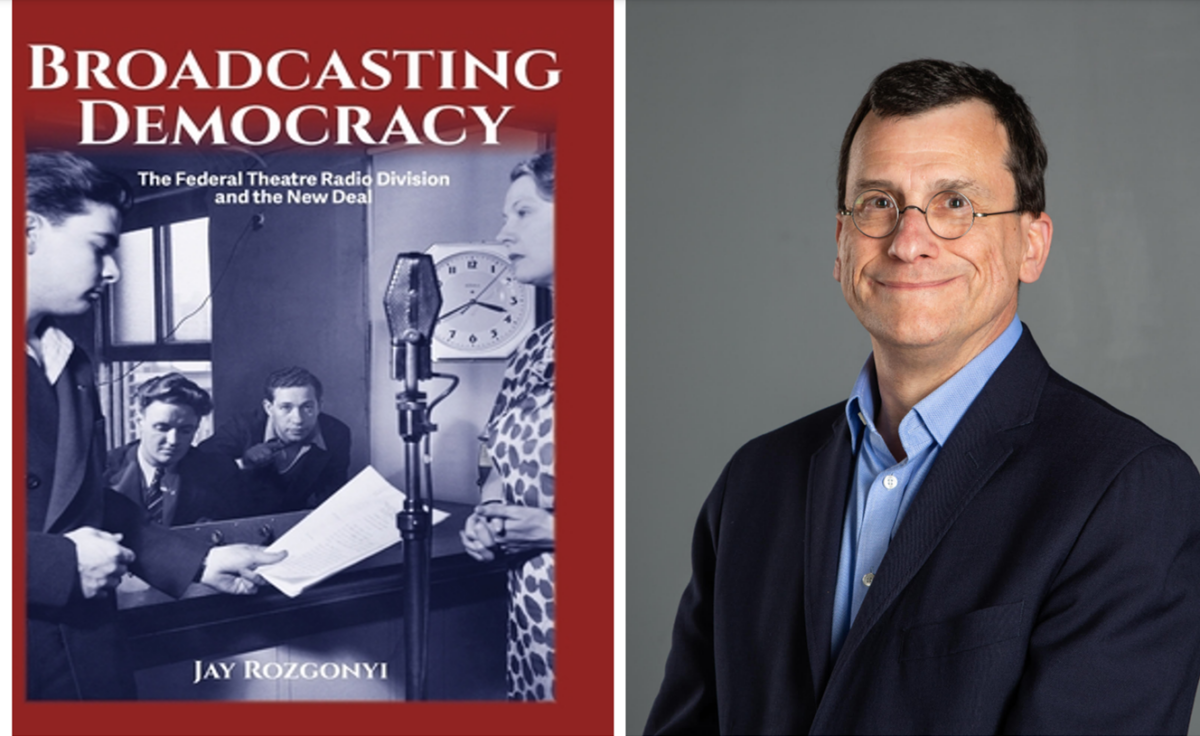
Jay Rozgonyi’s new book “Broadcasting Democracy” explores how the Roosevelt administration promoted its New Deal policies. Through an initiative that created original radio programming, the broadcasts injected political messaging into their entertainment content.
The Radio Landscape
Rozgonyi observes that radio in 1933 was primarily an entertainment medium, backed by consumer product advertisers. There were three major national networks: CBS, NBC-Red, and NBC-Blue (which later became independent as ABC in 1943).
A fourth network, the Mutual Broadcasting System, was established in 1934. Independent stations operated in urban and regional markets, providing listeners with local news and educational programming along with entertainment.
On May 6, 1935, Roosevelt used an executive order to create the Works Progress Administration (WPA); the program employed millions of Depression-impacted Americans. The WPA’s focus was on infrastructure and public works projects, but it also included endeavors to help unemployed professionals in the performing and visual arts.
Among those programs was the Federal Theatre Project. This initiative sponsored diverse presentations ranging from marionette and puppet shows for children to theatrical classics and new works that appeared on Broadway.
The program had an unexpected artistic and commercial hit in 1936 when a young Orson Welles arrived in the Harlem section of New York City to stage an all-black version of “Macbeth,” transplanted to a Caribbean setting.
Within this program was the Federal Theatre Radio Division. Rozgonyi estimates that, between 1936 and 1939, this division produced thousands of programs and distributed hundreds of scripts that radio stations and schools could perform on a royalty-free basis.
The Federal Theatre Radio Division launched with two innocuous series: “Pioneers of Science,” which profiled famous inventors and scientists, and “The Old Theatre,” a cycle of 16 Shakespearean plays.
Children’s programming quickly became a staple of this endeavor. Several contemporary writers, including microbiologist Paul de Kruif and historian James Truslow Adams, allowed their best-selling works to be adapted as radio series.
The Radio Division also established units in major cities, which produced shows aimed specifically at local listeners. Yiddish- and Italian-language shows were created for the immigrant communities in New York City; the Los Angeles unit produced shows on California history. Music and drama shows highlighted the African American experience.
Business-Critical Content
All the national networks and local stations donated time slots to broadcast the Radio Division’s episodes. This was an early example of putting paid advertising aside in favor of what was viewed as public service broadcasting.
The author notes that this is remarkable because the corporations that ran the radio networks and their advertisers were targeted in Roosevelt’s 1936 re-election campaign. The president campaigned on the declaration that the “concentration of wealth and power” in big business had become “a menace to the social system as well as the economic system we call American Democracy.”
The Radio Division took the cue from the president and began to reflect the administration’s business-unfriendly agenda in many of its offerings. Some of this content was painfully obvious. The 1936 production “Back to Business” presented what Rozgonyi described as “the accounts of real people who had been rescued from the vicissitudes of the free market by New Deal measures.”
The 1937 “Power” production supported the Roosevelt administration’s federally subsidized electrification projects. It presented a tale which pitted rural Americans against hostile private-sector power companies that were not eager to improve the lives of their impoverished customers.
“No Help Wanted” from 1939 indicted big business for its supposedly callous treatment of Americans while the Depression ravaged the economy.
The programming aimed at children and young adults often included themes of how social environments created poor health and juvenile delinquency, with solutions arising from New Deal government endeavors. Series that were aimed at adults would frequently include subplots that championed unionized workers fighting corporate exploitation.
Enter, Stage Left
Rozgonyi shares full scripts of four Radio Division dramas that were especially bold in pushing New Deal politics. “The South” (1936) condemned racism and economic exploitation as keeping the region from achieving its full potential. “One-Third of a Nation” (1938) considered the state of urban slums while making a plea for federally subsidized public housing.
“Altars of Steel” (1939) pointedly argued that steel industry executives took brutal advantage of their workers. “Women in Industry” (1939) challenged economic disparity impacting women in the industrial workforce.
Ultimately, the lack of subtlety sped the demise of this endeavor. The Radio Division, along with the Federal Theatre Project under which it operated, was shut down in 1939. Conservatives in Congress angrily called out the unapologetically propagandistic nature of these productions. Some lawmakers went so far as to suggest that a communist influence was being peddled to the public.
“Broadcasting Democracy” is highly effective in detailing the depth and scope of how the government pushed a partisan agenda on unsuspecting audiences. The book should be required reading for how it serves up a history lesson and highlights a forgotten chapter of the entertainment world.
‘Broadcasting Democracy: The Federal Theatre Radio Division and the New
Deal’
By Jay Rozgonyi
Sticking Place Books: Sept. 8, 2026
Hardcover, 300 pages
What arts and culture topics would you like us to cover? Please email ideas or feedback to features@epochtimes.nyc