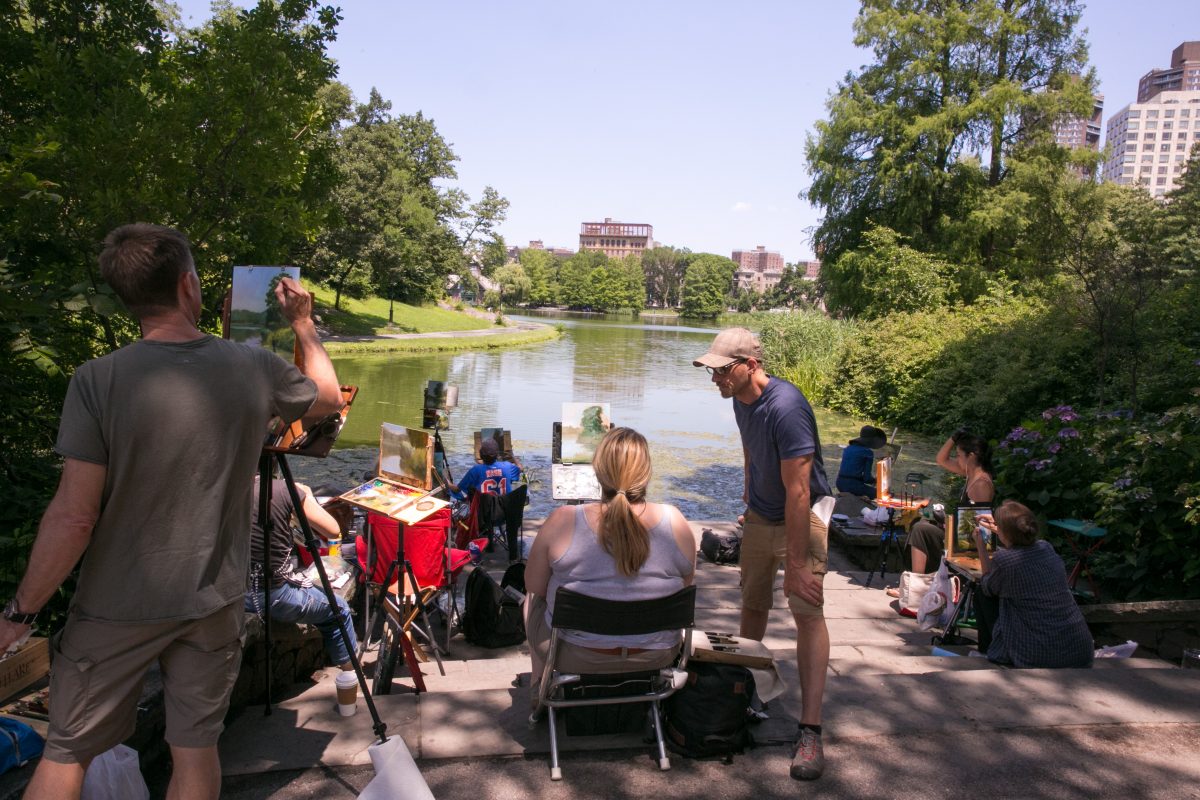
There’s something in the air—and it’s young people. To be more precise: Millennials and Gen Zers are beginning to set aside their phones and learn to paint en plein air, “in the open air,” directly from life, no screen required. New York art and design schools have experienced a spike in applications, and painting groups are popping up in parks around the world.
Stepping Away From the Screen
“I think people are increasingly craving experiences that feel simpler, more meaningful and more connected to nature,” Patrice-Rose McLean, founder of Ambient Art London, which has seen a surge of interest from young people, told Smithsonian magazine.
Instead of pecking away endlessly at their phones, young people are turning to the tangible and the traditional, hands-on activities that help them disconnect from the virtual and reconnect with the real. They’re embracing hobbies and pastimes that seemed, not so long ago, to be fading away as life went online. Today, it’s not primarily the older generation that’s taking up novels, knitting needles, puzzle pieces, paint brushes, violin bows, and vinyl records–it’s people in their 20s and 30s.
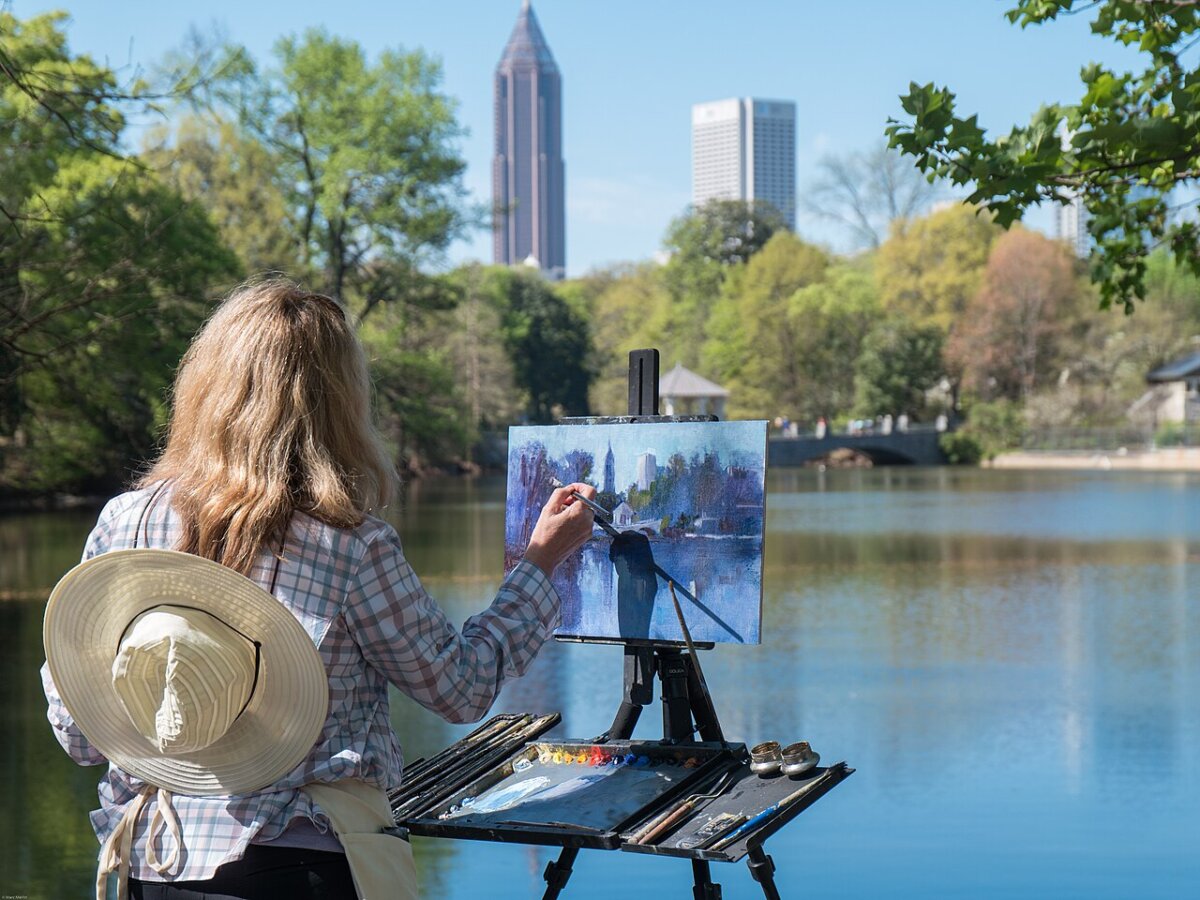
“Granny hobbies,” as they’re sometimes called, no longer belong exclusive to granny. Instead, they’re spreading across social media—witness, for instance, the TikTok trend of young painters posting time-lapses of their outdoor paintings coming to life.
“Gen Z is embracing hobbies once more associated with their grandparents or great grandparents: crochet and knitting circles, pottery cafes, mahjong nights and supper clubs,” Tara Russell observed for The Guardian. “These ‘slow’ pastimes are flourishing, not because they are a retro trend being revived, but because they offer something people feel is urgently missing: connection, purpose and respite from digital fatigue.”
The digital revolution may be giving way to an analog restoration as Gen Z comes of age. Even as digital technologies, such as AI, accelerate, younger generations respond by returning to the stability of the physical world and more enduring cultural traditions, along with the human connection they provide.
In the case of painting, today’s amateurs are recognizing that AI cannot replace the creative human experience. AI may be able to generate images, but the entirety of the artistic process, from mixing paint to polishing a portrait, is about so much more than that. Drawing or painting from life is about a process of human agency, decision-making, intentionality, interpretive meaning, connection, and problem-solving, completely unlike the blind generative abilities of AI.
The Human Element AI Can’t Replace
Itai Blitzer, a professor in the Department of Art History at Tel Aviv University, explained for The Epoch Times a key difference between AI and human art:
“Leon Battista Alberti defined beauty as a harmony in which nothing can be added, taken away, or altered except for the worse. A generated image fails that test: hit ‘regenerate,’ and you get something equally good. Nothing in it is necessary.”
He contrasts this with plein air painting: “In front of a landscape, every brushstroke is a decision made against light that will not return. The generation that grew up with free images is the first to feel what is missing from them.”
A human-made painting is unique, unrepeatable, engrafted into a particular time, place, and experience. Art and the artistic process help us become at one with the world. The conscious experience of artistic creation—something an AI-generated image lacks—helps us pierce into the present moment and into our immediate surroundings in a meditative encounter with the world.
Sometimes that meditation involves natural landscapes, as in plein air painting; sometimes it involves meditation on the human form itself, such as in figure painting, which has also seen increased interest in recent years.
Artistic creation allows us to exercise judgment, another faculty AI lacks. “Images are becoming cheap,” Blitzer said. “Judgment is becoming expensive. No tool supplied judgment in the 15th century, and no tool does today.” As “homo creator,” we yearn to choose and to make things.
The digital revolution transformed so many of us into consumers, but such an existence fails to fulfill our nature. The surge in painting is expressive of a desire to become a participant in the world, not someone who presses a button and passively watches an image appear. It is someone who comes into contact with the paint and painfully, intentionally, step by step, guides it to the canvas while the wind blows and the sun beats down. All this appeals to young people because they have experienced alienation from the world and from other people, at times, caused by life online and the digital vortex.
Reconnecting With the Present Moment
Maybe this is why artistic activities like painting bring equal or greater life satisfaction than employment, according to recent research from Anglia Ruskin University. Dr. Helen Keyes, head of the School of Psychology and Sports Science at the university, commented on the findings:
“Engaging in these activities is linked with a greater sense that life is worthwhile, increased life satisfaction, and happiness. The well-being effects were present even after we accounted for things like employment status and level of deprivation. It seems that crafting can contribute positively to your well-being above and beyond these other aspects of your life.” This doesn’t surprise those of us who recognize the innate human capacity—or rather, need—to create, to beautify the world simply for the sake of beautifying it.
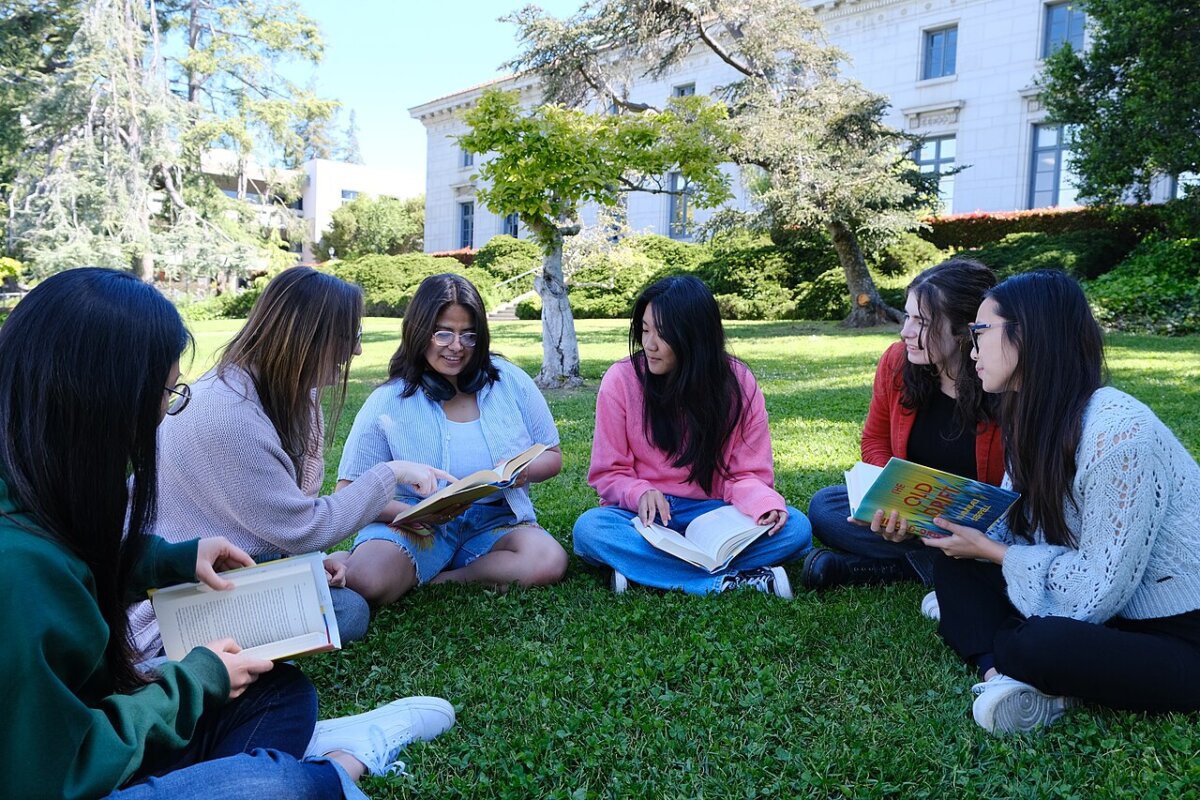
I think we’re witnessing an important cultural shift as these truths settle more firmly into the minds of a new generation. Over the past few months, I’ve written separate articles about Gen Z’s growing interest in live classical music and opera and vinyl records instead of online music streaming. Now, we can add traditional painting methods to the growing list of real-world artistic experiences this generation seems to hunger for.
The generation most steeped in technology as they were raised—Gen Z—is the generation now pushing back against it the hardest. The classic literature, classical music, and fine arts—this rich cultural repository—isn’t going to fade away. It’s like a field that has lain fallow but can now grow healthier crops than ever, or an apple tree that appears dead every winter yet always returns to life under the warm breath of spring, and bears fruit.
What arts and culture topics would you like us to cover? Please email ideas or feedback to features@epochtimes.nyc.