The Bayeux Tapestry has returned to England, albeit temporarily—for the first time in over 950 years.
When London’s British Museum released the first batch of tickets for its Bayeux Tapestry exhibition, it sold out within 24 hours. The museum expected visitors to view “A Historic Loan From France: The Bayeux Tapestry” for around 40 minutes, but the average visit is about 90 minutes.
The museum will release the next batch of exhibition tickets on Oct. 21, 2026. For those unable to reserve tickets, “The Bayeux Tapestry Online Experience” offers a free tour of the tapestry via the museum website.
The museum’s curators stress the tapestry’s importance as “a unique visual source for the events that sparked the Norman Conquest of England, one of the most significant events in British history: England was never successfully conquered again!” It’s also a monumental artistic achievement both in scale and craftsmanship.
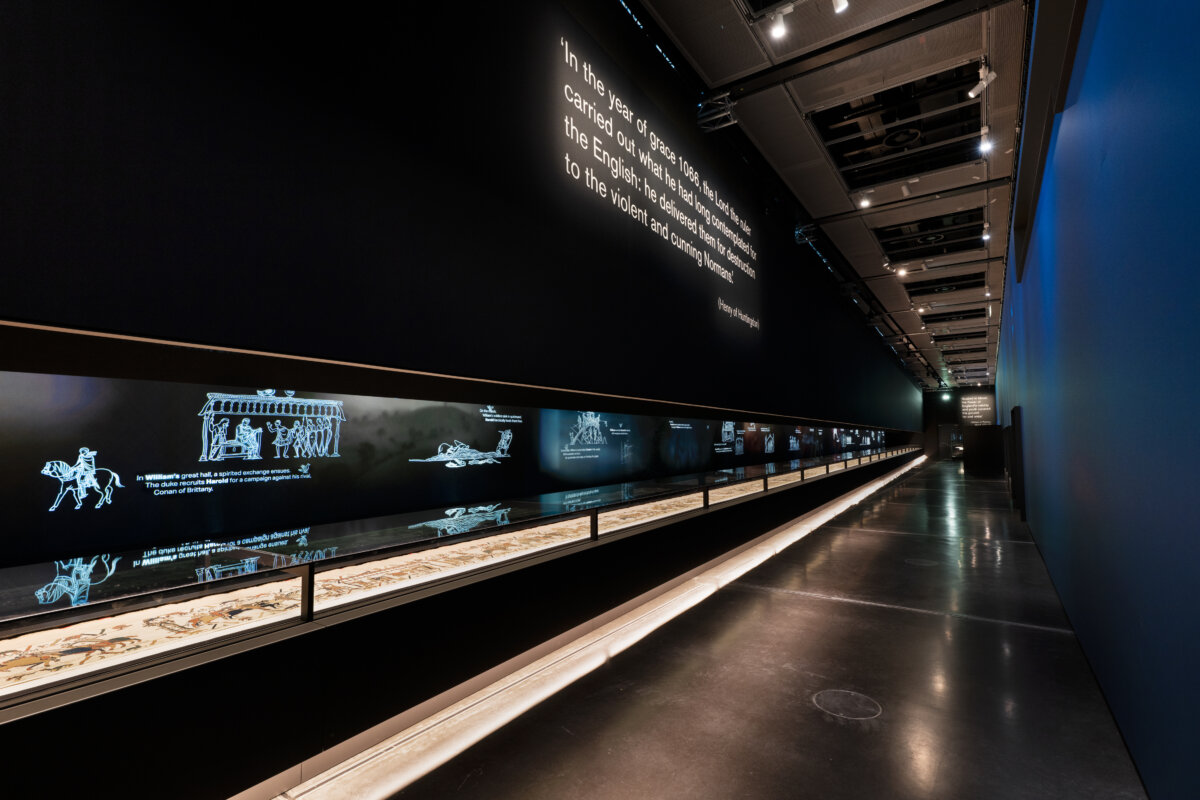 An installation view of “A Historic Loan From France: The Bayeux Tapestry,” at the British Museum, in London. The exhibition runs through July 11, 2027. (Copyright The Trustees of the British Museum)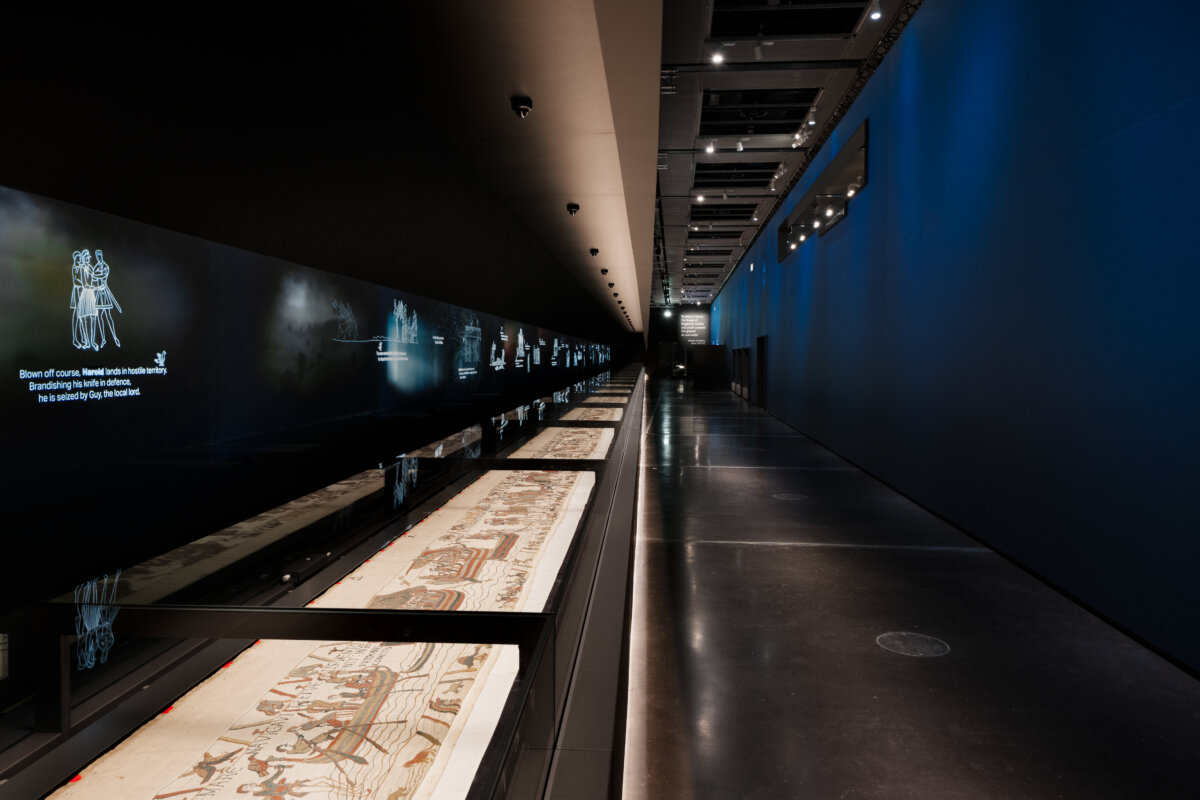
The Bayeux Embroidery
Most scholars believe William the Conqueror’s half-brother, Odo, Bishop of Bayeux, commissioned the tapestry for the nave of Notre-Dame Cathedral in Bayeux, France.
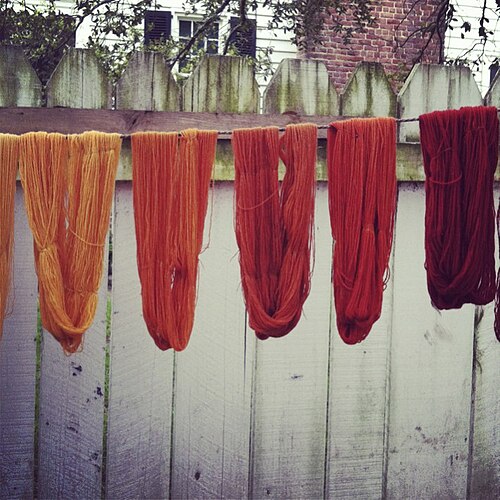
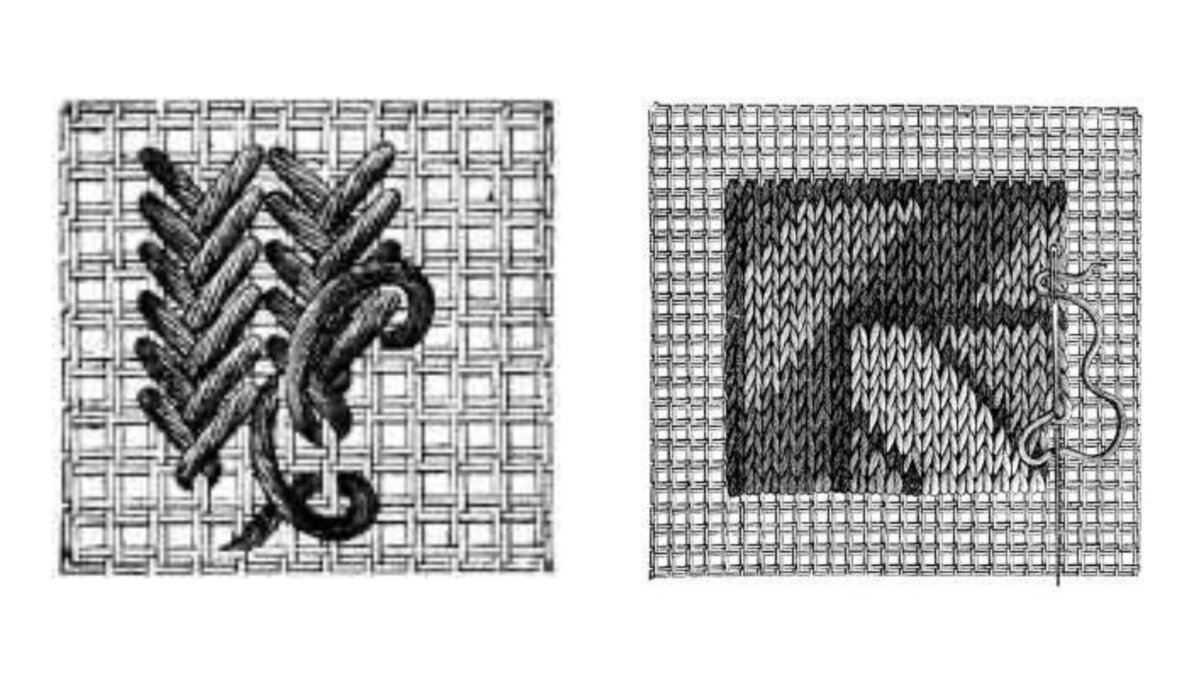
Despite its title, the Bayeux Tapestry is an embroidery. English embroiderers stitched the Bayeux Tapestry on nine flax-linen panels, using sheep wool thread in vibrant colors derived from plant parts such as woad leaves (blue), weld flowers (yellow), and madder roots (red). Remarkably, they used only 10 color shades and just four different embroidery stitches: stem, chain, couching, and double thread split, to create the action-packed narrative work that spans around 224 feet.
The Bayeux Museum noted how “[The embroiderers] managed to convey a sense of movement, as seen in the charging cavalry that gains momentum as they hasten into battle, and depth and texture using varying colors for the horses’ legs.”
Most of the 11th-century embroidery has kept its color and even outlived some of the 19th-century restorative embroidery, which has faded in parts.
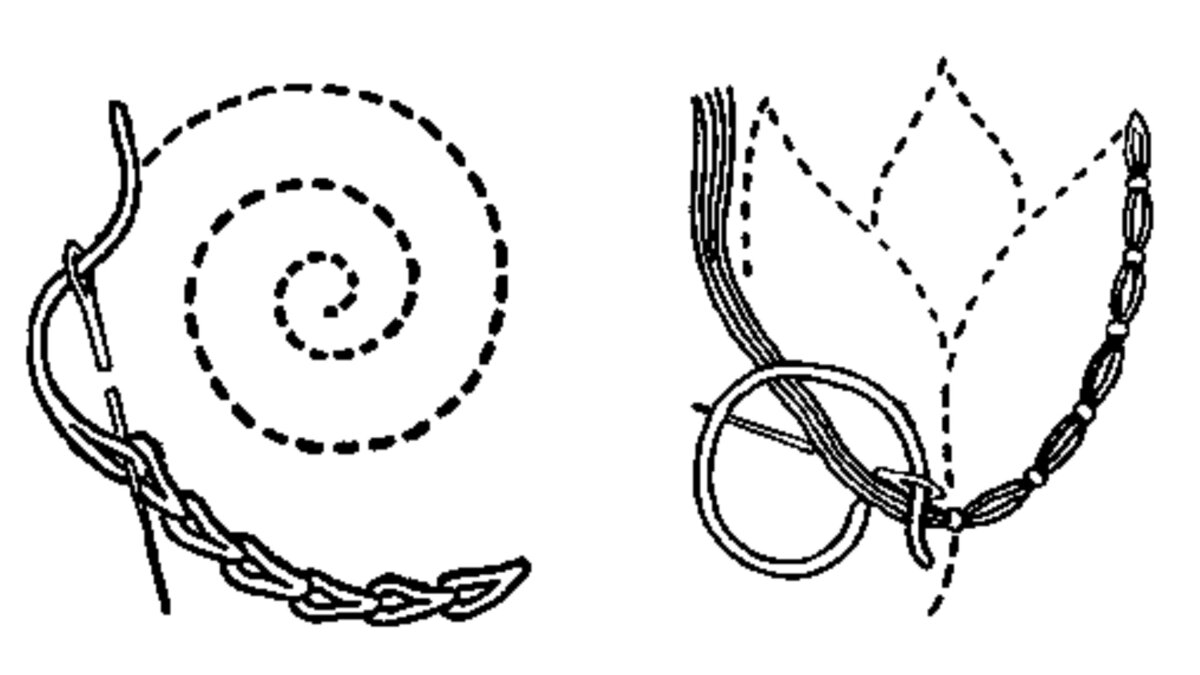
Replicating the Bayeux Tapestry
If “imitation is the sincerest form of flattery,” then the British have flattered the Bayeux Tapestry many times. They’ve replicated it in wax, paint, plaster, engraving, and, of course, embroidery. Two 19th-century Bayeux Tapestry imitations stand out.
In 1816, the Society of Antiquaries of London commissioned its historical draftsman Charles Alfred Stothard to draw a full replica of the tapestry. Engraver James Basire III created engravings of Stothard’s drawings, which the latter hand-painted in Bayeux. Between 1821 and 1823, the Society published Stothard’s hand-painted engravings in “Vetusta Monumenta (Ancient Monuments),” creating the first color reproduction of the tapestry available to the public.
Stothard also created a series of hand-painted plaster casts of the work by taking wax molds of the tapestry, an inconceivable practice today and one that conservators deem destructive.
In 1878, the British Museum acquired three of Stothard’s plaster casts featuring scenes from January to October 1066: scene 30 of Harold Godwinson’s coronation; scene 46 of Duke William of Normandy hearing of Harold’s location; and scene 48 of William decked in armor and holding a spear.
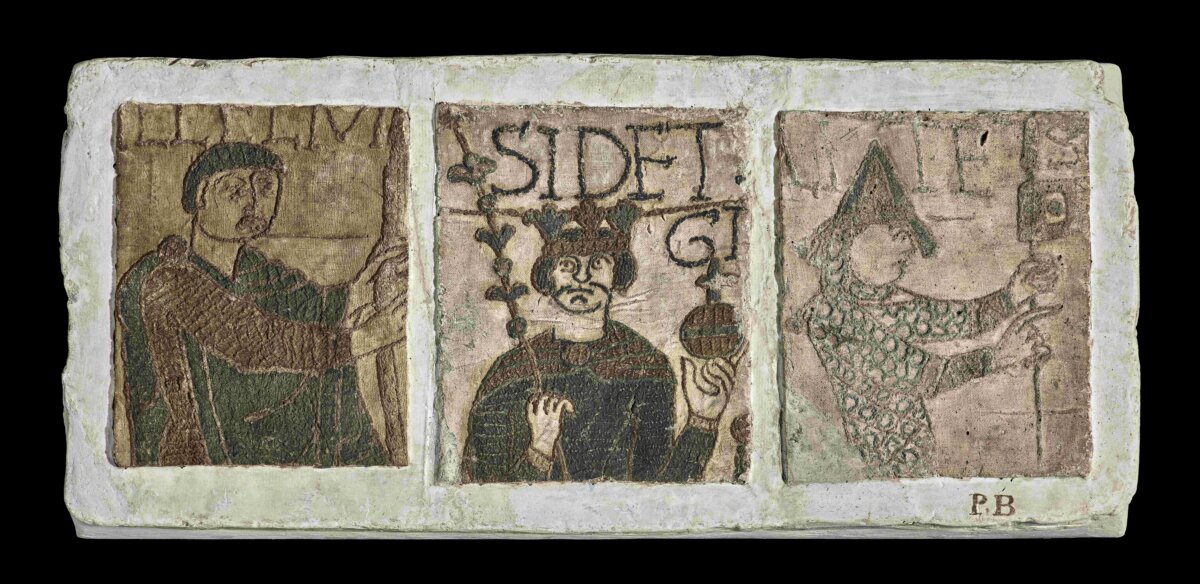
British Museum project curator, Millie Horton-Insch, said: “This trio of Stothard’s casts is almost as exceptional as the Bayeux Tapestry itself. Taken directly from the Tapestry, they capture the textures and imagery which make the Bayeux Tapestry such an absorbing work of art.”
While the British Museum exhibits the original Bayeux Tapestry through July 11, 2027, Stothard’s plaster casts will tour select UK venues in “Bayeux Around Britain: Casting a Masterpiece.”
It’s apt that the exhibition’s first stop is Hastings Museum & Art Gallery, near the site of the Battle of Hastings. Visitors can gain a deeper appreciation of the Bayeux Tapestry’s workmanship by handling a 3D-printed replica of Stothard’s casts, and several hand-embroidered details copied from the tapestry.
‘Britain’s Bayeux Tapestry’
In 1885, 35 Victorian women began embroidering a replica of the Bayeux Tapestry. Accomplished embroiderer Elizabeth Wardle, wife of a silk industrialist, led the embroidery effort after studying the original tapestry in Bayeux, France. The Reading Museum in Berkshire owns that copy, dubbed “Britain’s Bayeux Tapestry.”
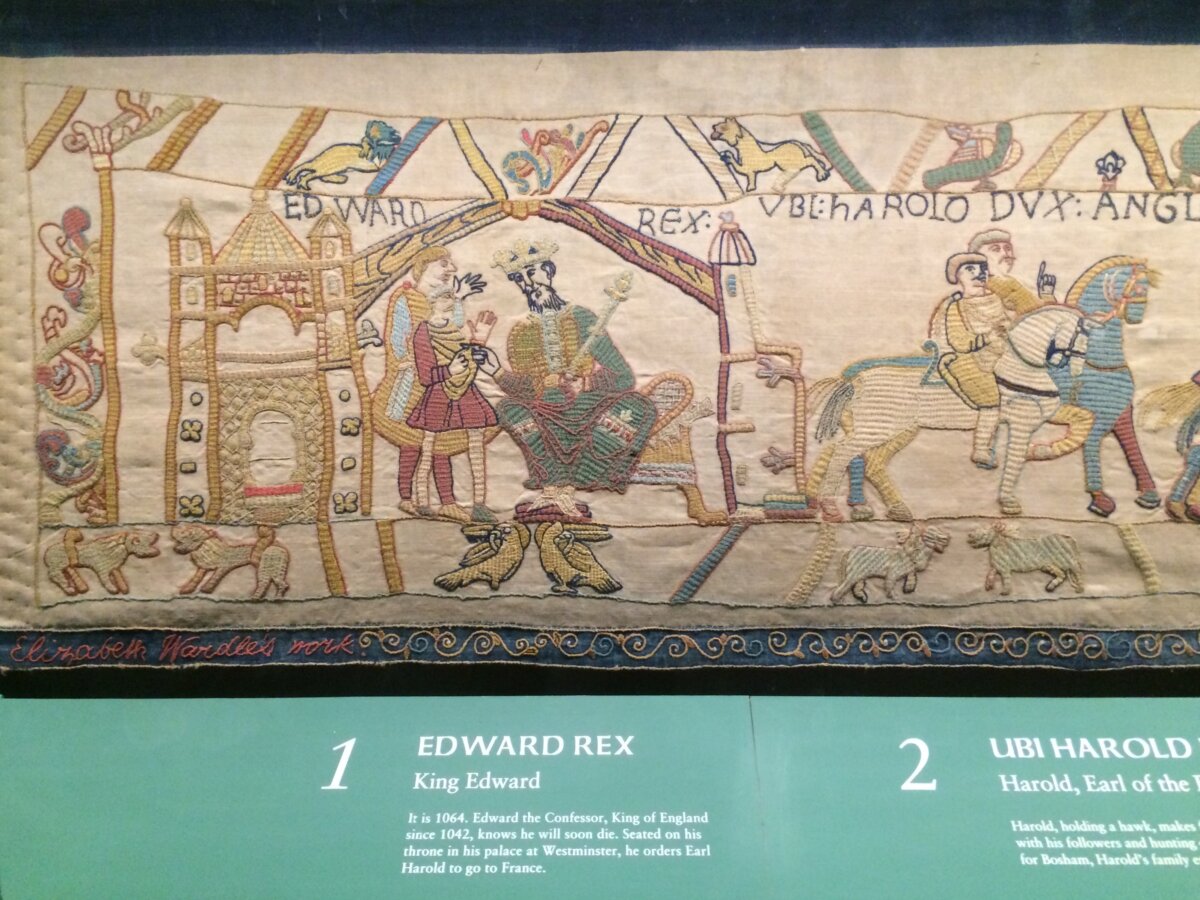
The women copied the tapestry from hand-colored photographs that London’s South Kensington Museum (now the Victoria & Albert Museum) had taken of the work in 1872. Wardle and her team stayed true to the hand-colored photographs. During the coloring process, the museum had censored parts too scandalous for Victorian sensibilities, so some of the figures now have underpants. The women completed the work in just over a year, with each woman embroidering her name under the scene that they stitched.
‘A Historic Loan From France: The Bayeux Tapestry,’ at the British Museum in London, runs through July 11, 2027. ‘Bayeux Around Britain: Casting a Masterpiece,’ at Hastings Museum & Art Gallery, runs through Nov. 8, 2026, before it tours five other UK venues. To find out more, visit BritishMuseum.org.
‘Britain’s Bayeux Tapestry’ is on permanent view at Reading Museum. To find out more, visit ReadingMuseum.org.
What arts and culture topics would you like us to cover? Please email ideas or feedback to features@epochtimes.nyc.