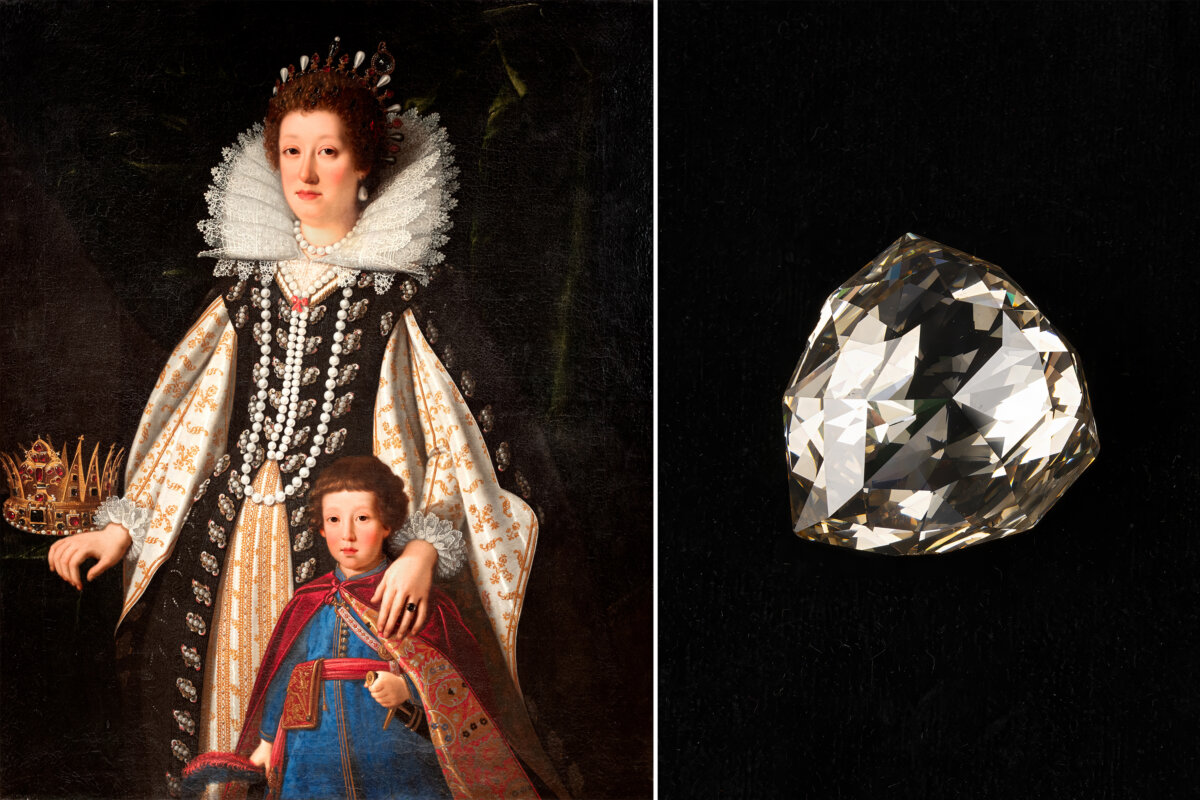
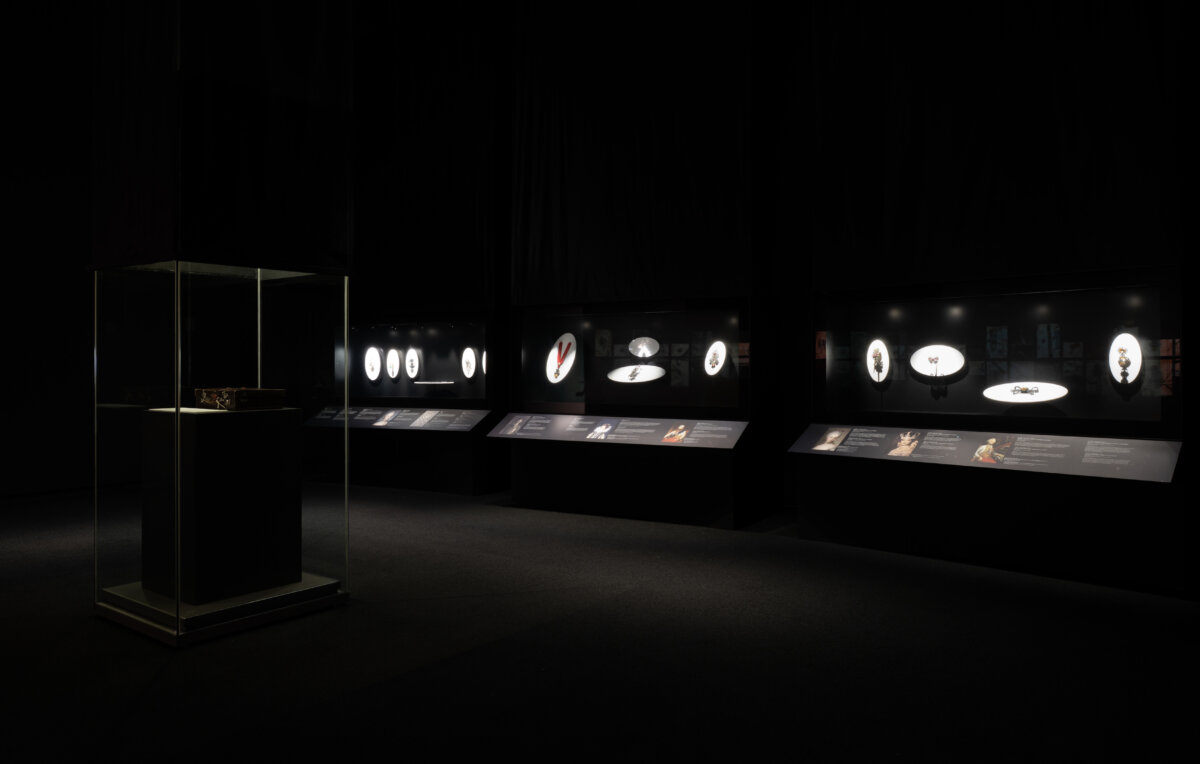
The whereabouts of 15 imperial jewels, including the legendary 137.27-carat Florentine Diamond, associated with the ruling Habsburg family of the Austro-Hungarian Empire, has been one of the great gemological mysteries of the modern era. The multifaceted story of this rediscovered collection is explored in the current exhibition, “Hidden Treasure: A Century of Mystery” at the National Fine Arts Museum of Québec. This marks the first display of these precious objects since they disappeared from public view in 1918, when Emperor Charles I of Austria and Hungary (1887–1922) sent them to Switzerland for safekeeping as World War I was ending.
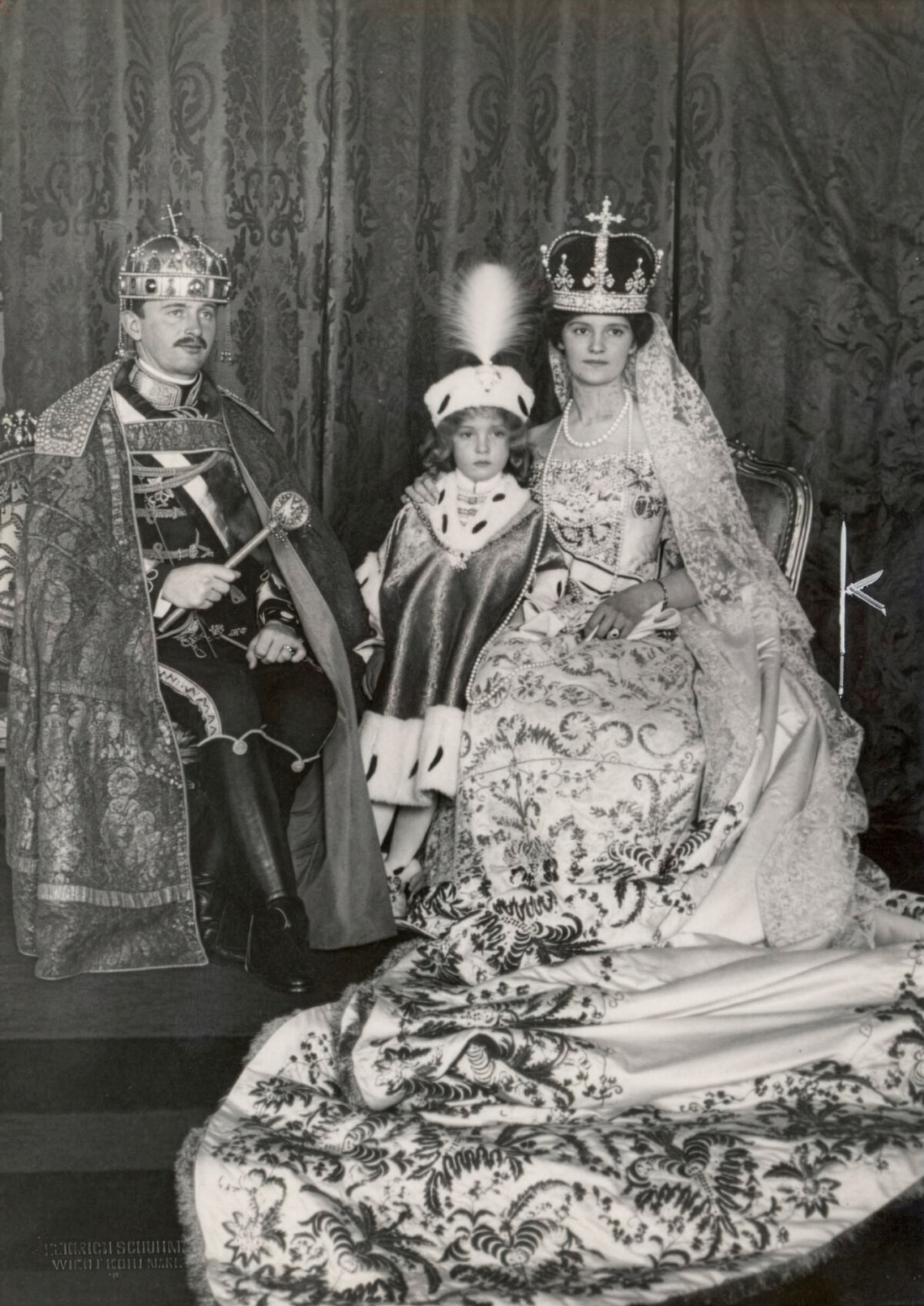
Charles I was the last ruling Habsburg monarch. After his empire collapsed, he and his wife, Empress Zita (1892–1989), along with their children, went into exile in 1919. Charles I died at 34, before the birth of his eighth child. The deposed empress was left to raise the children and protect the family’s legacy as cataclysmic political upheaval reared again in Europe with the rise of Hitler. Outspoken in their opposition to the dictator, Empress Zita and her children faced persecution from the Nazis. The family escaped the continent, finding refuge in Canada. They settled in the city of Québec in October 1940.
Protecting the Family Legacy
In the ensuing decades, the whereabouts of the Florentine Diamond, one of the largest known diamonds, was believed to be unknown. Rampant rumors suggested it had been lost, stolen, or even recut. In November 2025, international headlines were made: The Florentine Diamond, along with 14 other Habsburg dynastic jewels that had been kept by the imperial couple, despite other jewels being sold or stolen, had been stored safely since 1940 in a suitcase deposited by the empress at a Canadian bank.
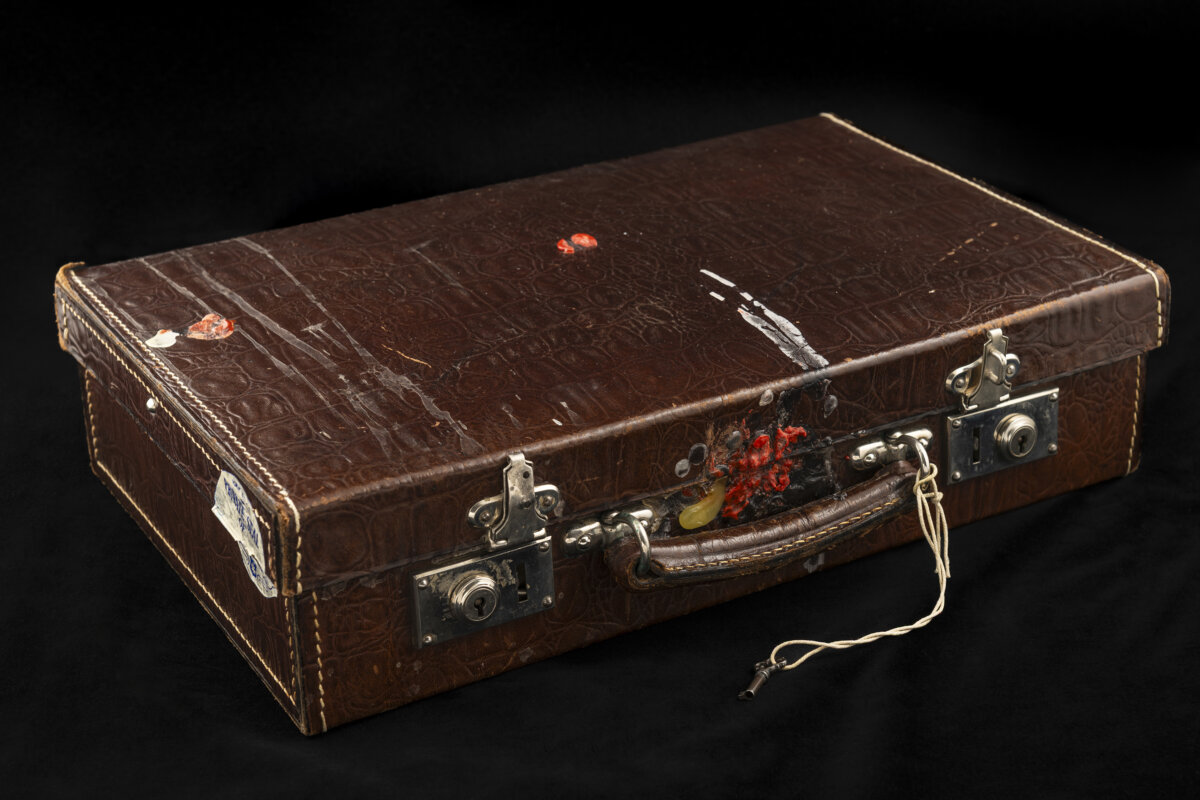
Even though Empress Zita returned to Europe permanently in the 1950s, the jewels remained secreted away in Canada. She told only two of her sons, Robert and Rodolphe, about their existence and instructed that the information be kept private until at least 100 years had passed since the death of Emperor Charles.
These sons, in turn, passed on the communication to their own sons who, along with the head of their House, cousin Karl von Habsburg-Lothringen, announced to the world in 2025 that the jewels had been preserved. Since then, the family has placed the collection in a Canadian trust. In gratitude for the safe harbor provided to their relatives during World War II, the Saint Joseph Trust has lent the jewels for exhibit at the National Fine Arts Museum of Québec.
Imperial Jewels
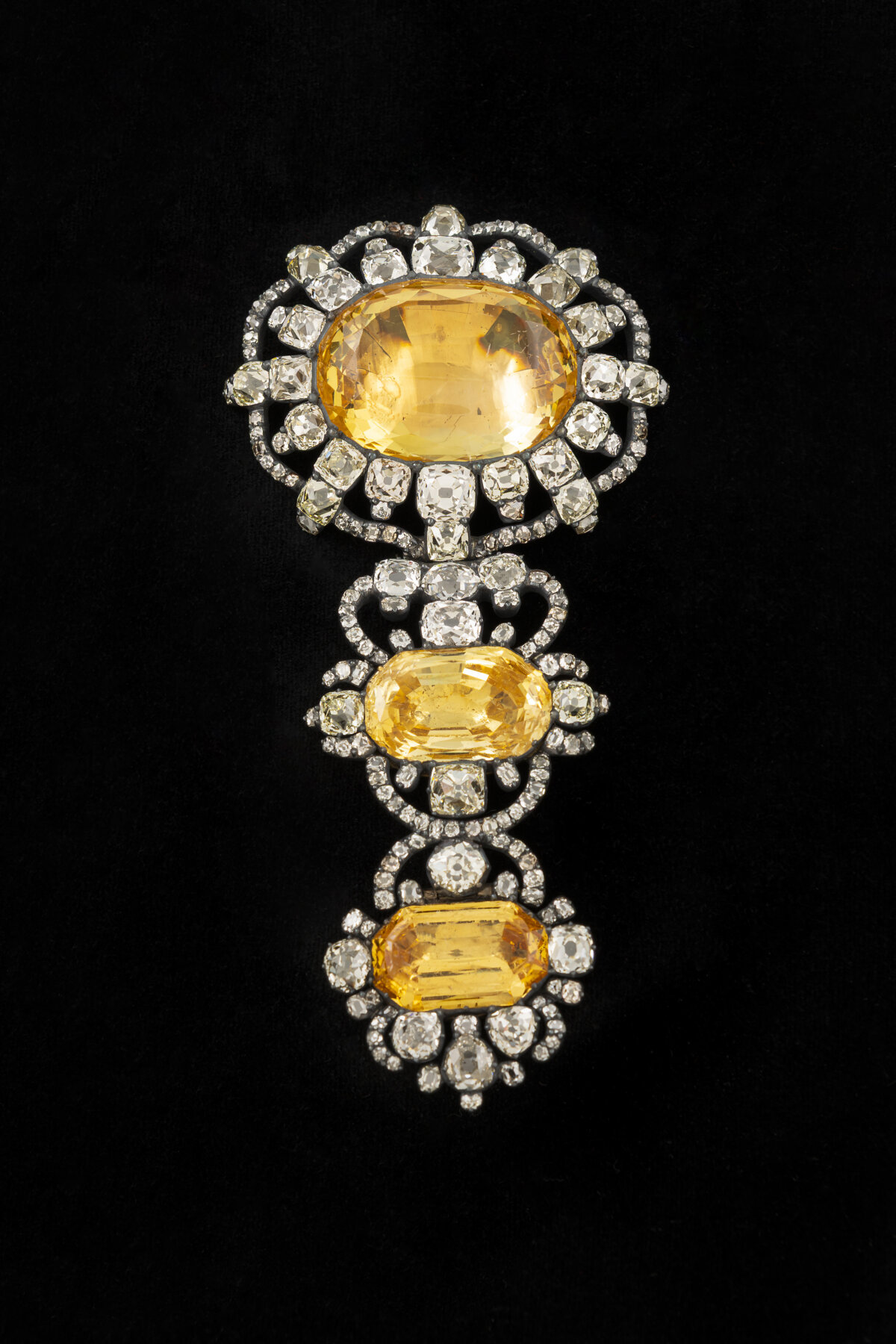
The treasures on display feature a variety of materials, form, function, and date of origin. Some were made for the 19th-century fashion icon Empress Elisabeth of Austria (1837–1898), known as Sisi, by the House of Köchert, jewelers to the imperial family. The jewelry firm A.E. Köchert is still in existence and is run by the sixth generation. The strong relationship between the Habsburgs and Köcherts continues today; Christoph Köchert was contacted by Empress Zita’s grandsons to examine and authenticate the jewels.
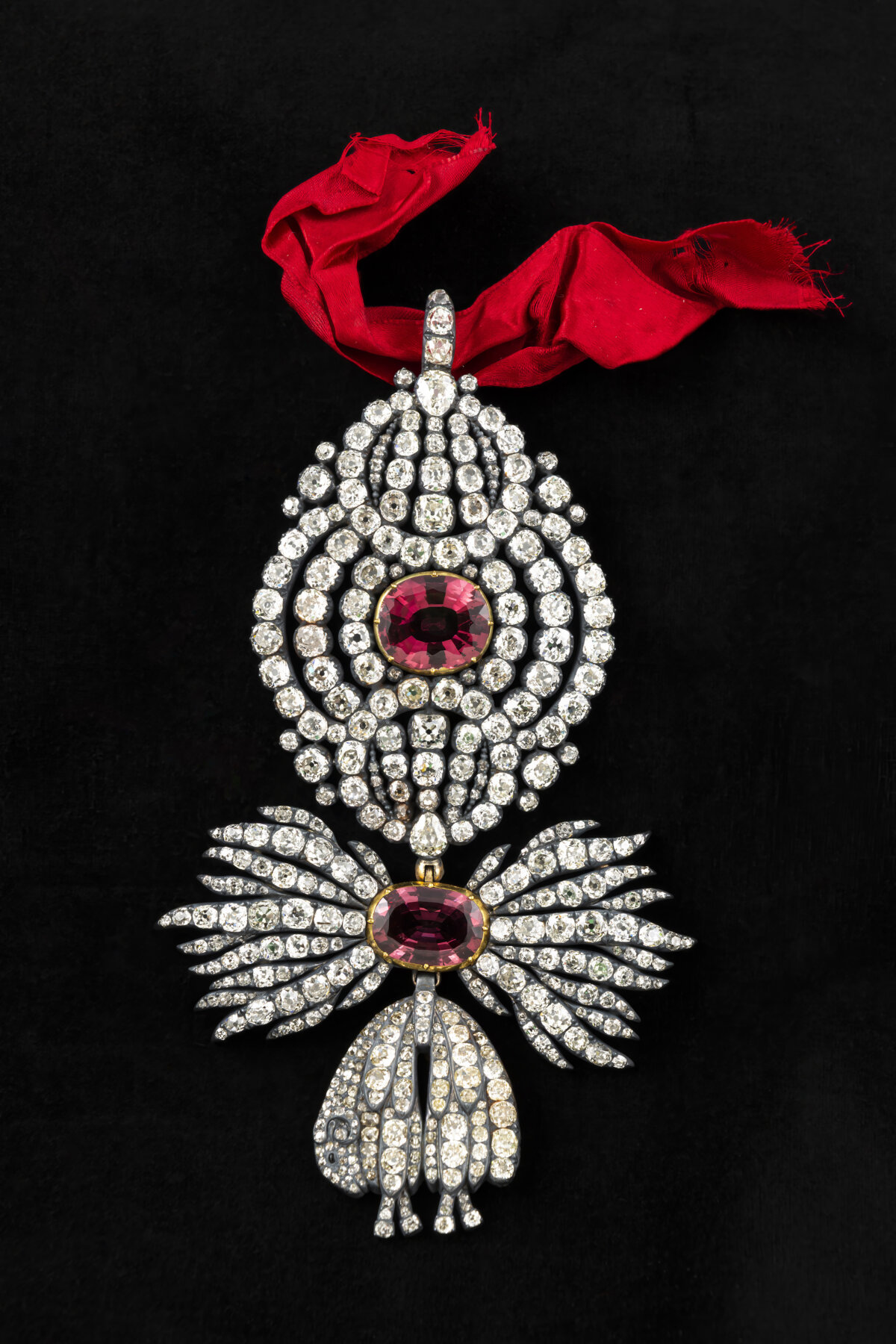
An important symbolic piece in the collection is an 18th-century Insignia of the Order of the Golden Fleece. The museum explains that this “is one of Europe’s most prestigious Catholic orders of chivalry and a core part of the Habsburgs’ dynastic identity.” Emperor Charles I and his wife were devout Catholics. Charles I wore this medallion, made of silver, gold and gilt silver, diamonds, and stones that may be tourmalines, during his wake.
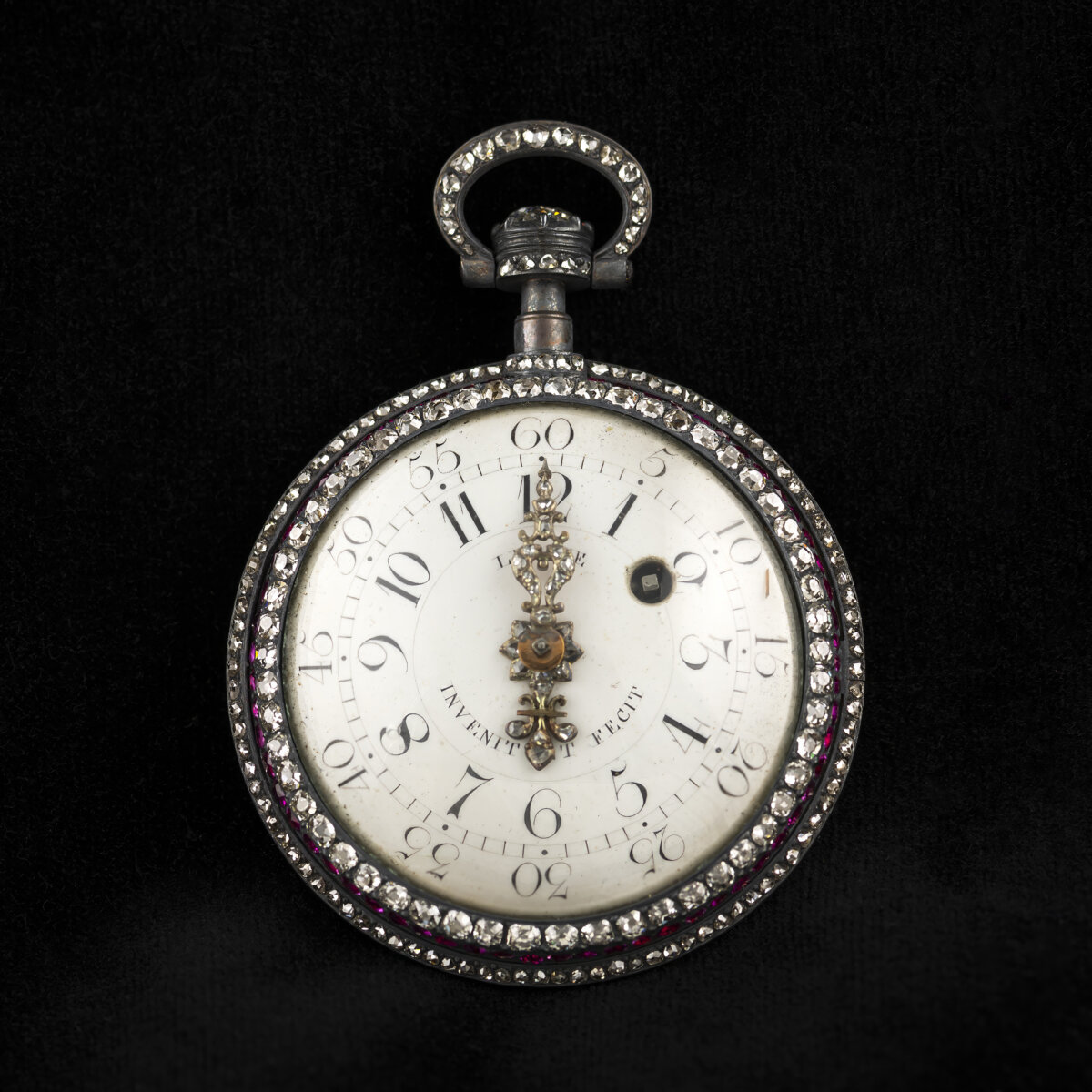
A highly personal item is a pocket watch from circa 1770 adorned with diamonds and what appears to be pink sapphires. It was crafted by Jean-Antoine Lépine, the great watchmaker of his era who worked for the French kings. A possession of Marie Antoinette (1755–1793), queen of France—it was part of her trousseau—the pocket watch’s back glass cover preserves a lock of hair. This may be a memento of Marie Antoinette’s mother, Empress Maria Theresa of Austria.
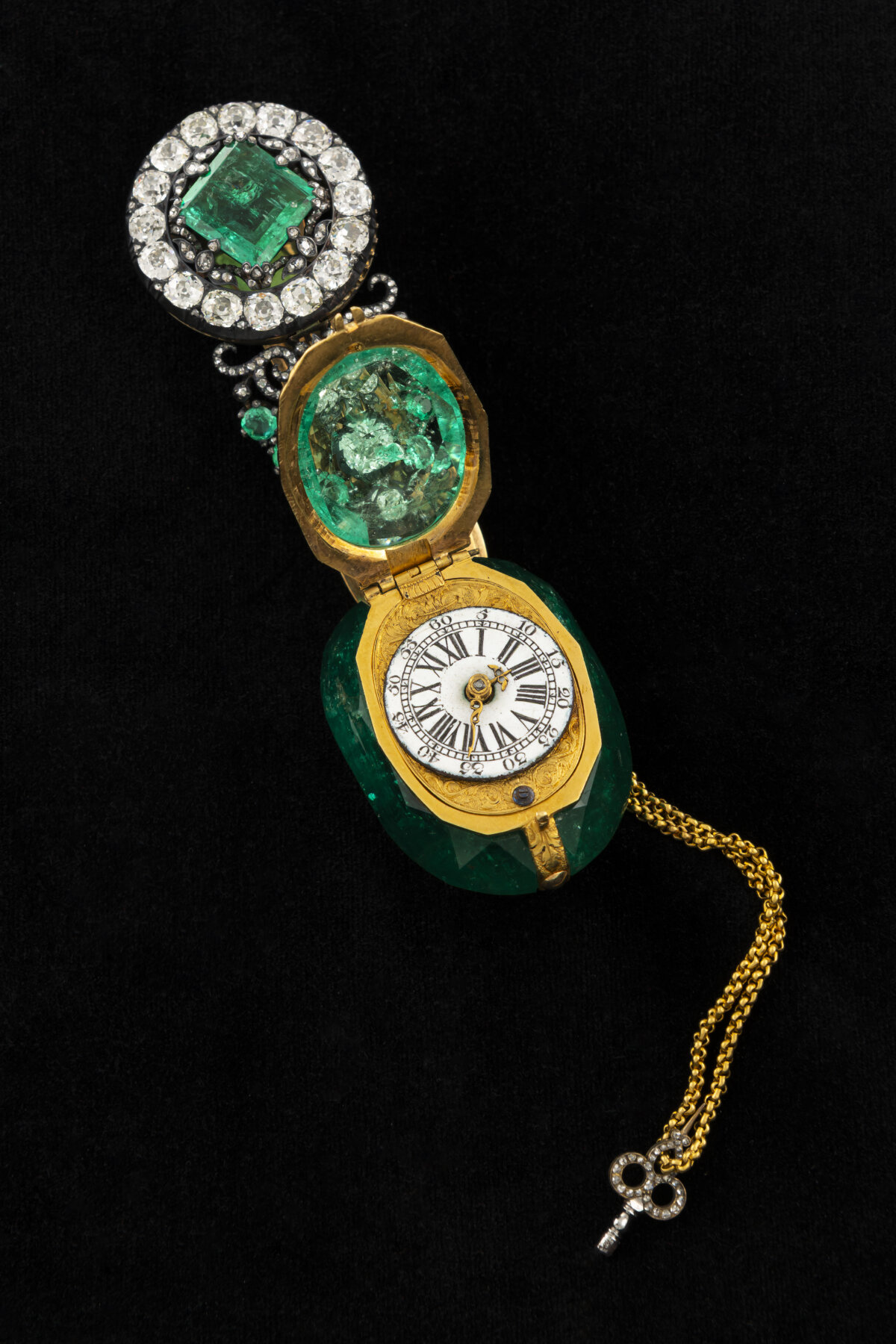
Another timepiece in the collection, which may have been owned by Empress Maria Theresa, is an astonishing watch set within an enormous faceted emerald the size of a hen’s egg. Its hinged cover is also made of an emerald. This piece was turned into a chatelaine by Köchert in the 1870s for Empress Elisabeth.
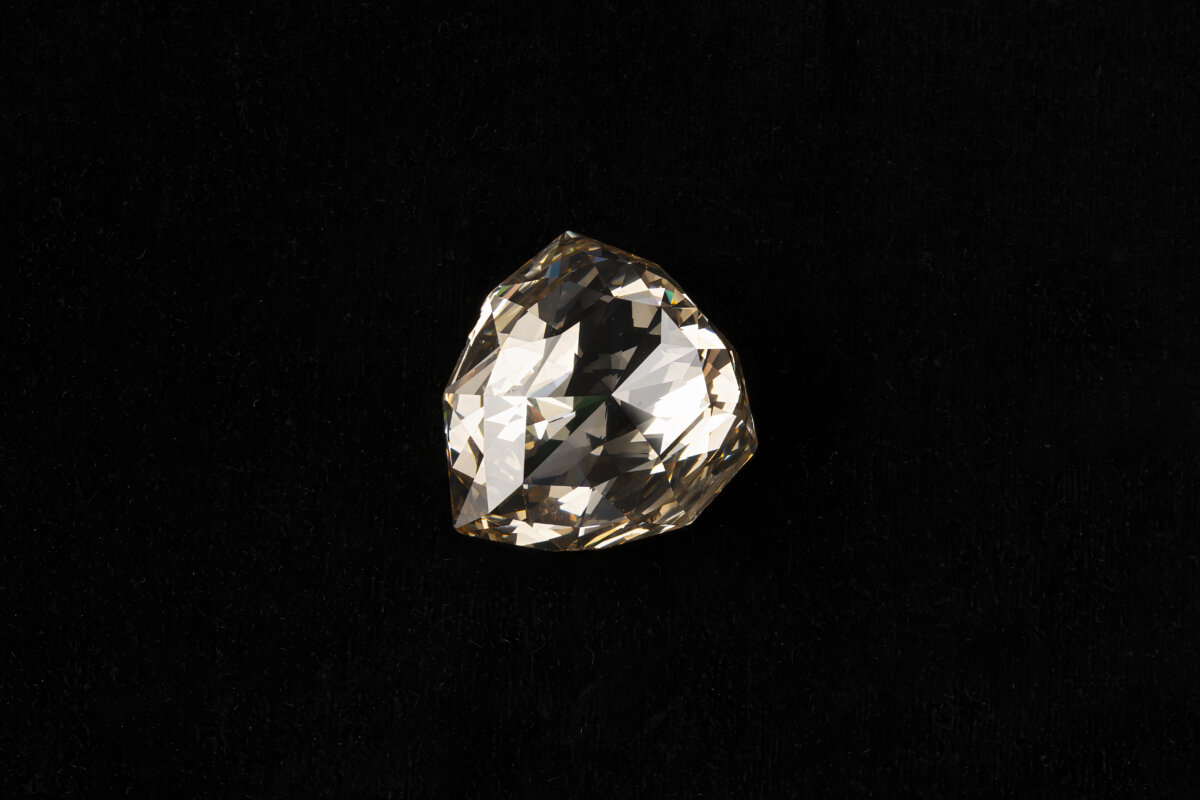
The standout of this collection is the spectacular Florentine Diamond, a nine-sided double rose cut. This uniquely cut colored stone is a soft pale yellow and has a hint of green undertones. It was mined in India’s famed Golconda region, probably during the 15th century. This area was the world’s only source of diamonds until the early 1700s.
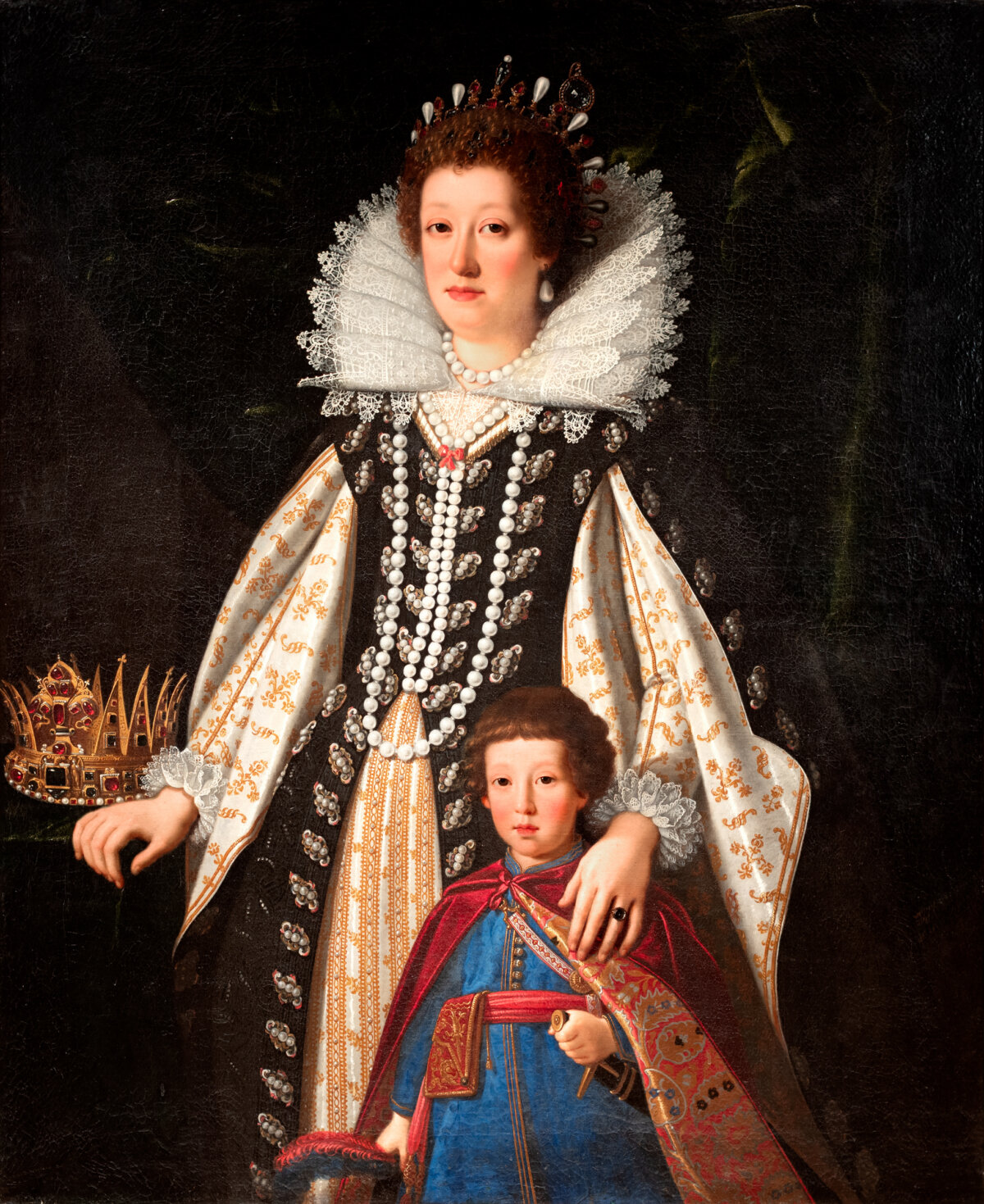
The diamond has passed through different European courts. It may have belonged to Charles the Bold, Duke of Burgundy (1433–1477), but the powerful Florentine Medici family was the first documented owner. A 1623 portrait of Maria Maddalena of Austria (1589–1631), the wife of Cosimo II de’Medici, grand duke of Tuscany (1590–1621), is believed to show her wearing the Florentine Diamond as a hair ornament.
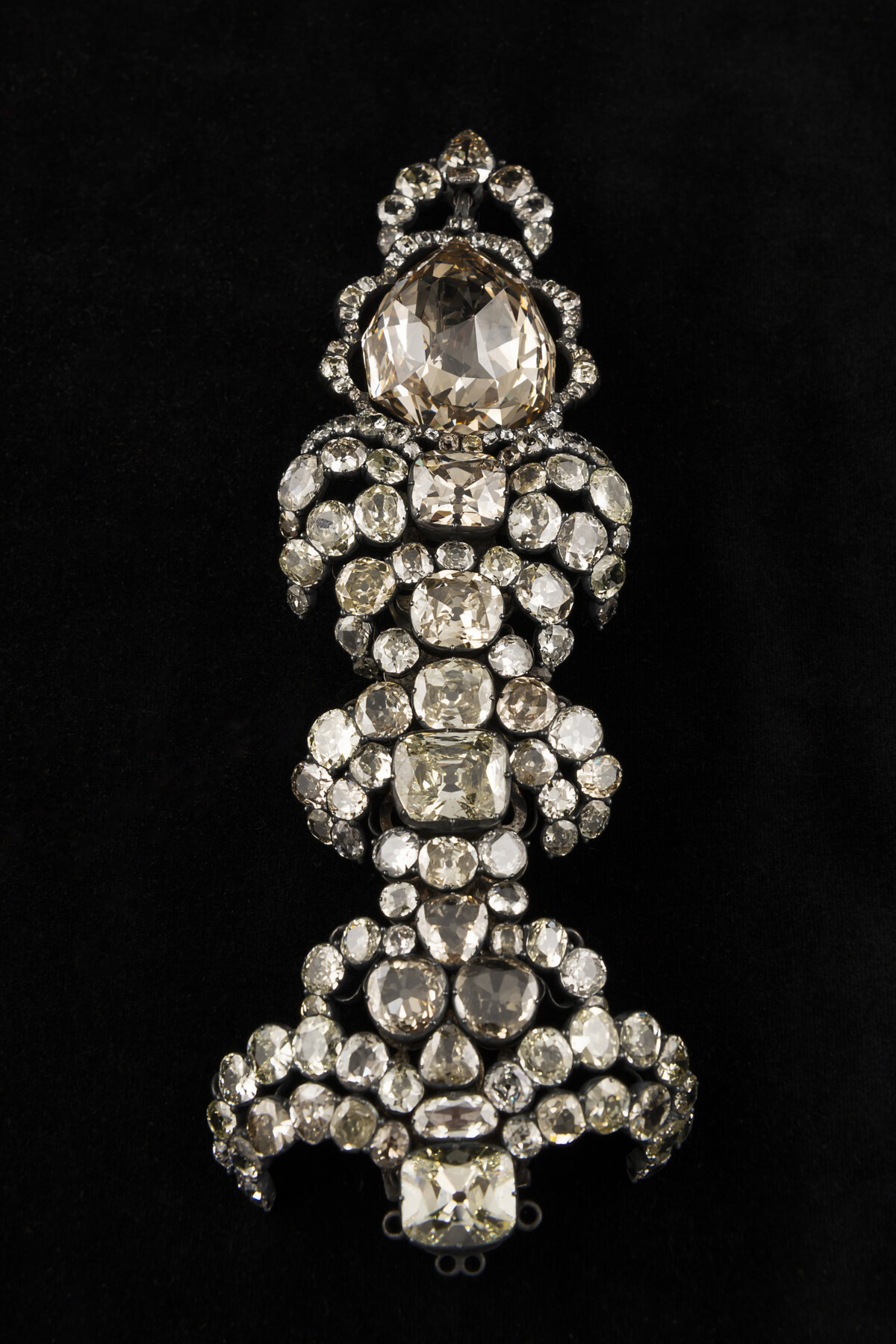
The last Medicean grand duke of Tuscany died in 1737 without a son. His heir was Francis, duke of Lorraine (1708–1765), who later became Holy Roman emperor and was the husband of Empress Maria Theresa. Thus, the Florentine Diamond was brought to Austria and the Habsburg court. It was set in a hat pin worn by Francis I. The diamond remains in this ornament.
The jewels on display do more than dazzle. They tell thrilling tales of political power, personal lives, craftsmanship, war, regime change, exile, and survival. One hopes that this exhibit will spark further opportunities to view the jewels in person and learn the details of their history.
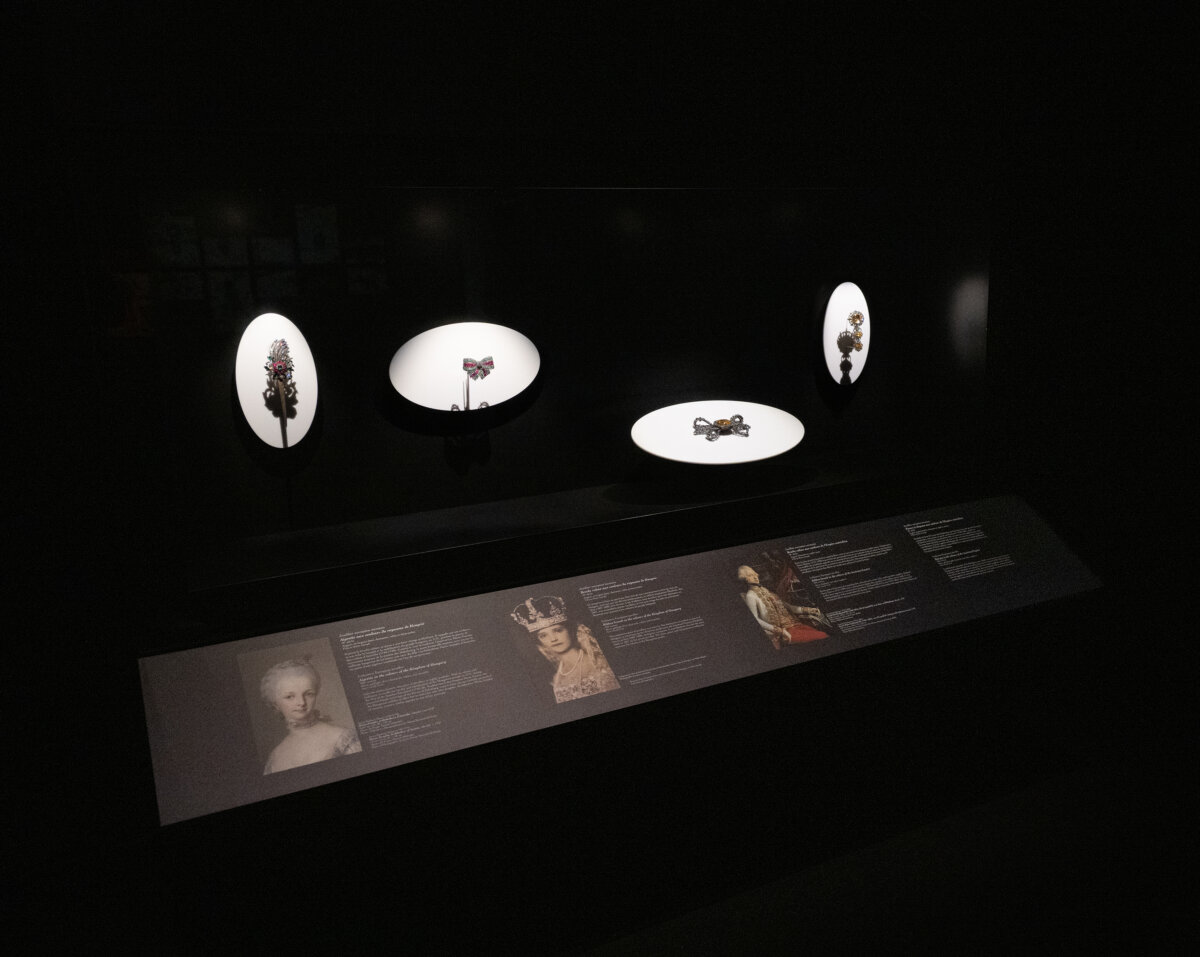
“Hidden Treasure: A Century of Mystery” at the National Fine Arts Museum of Québec debuted Sept. 4, 2026. To learn more, visit mnbaq.org.
What arts and culture topics would you like us to cover? Please email ideas or feedback to features@epochtimes.nyc.